Photo Credit: Featureflash / Shutterstock.com
 
What do you get when you combine satire with political news? The voice of a generation.
 
In 1996, Comedy Central debuted The Daily Show, a pop-culture news and information program. Hosted by comedian and former ESPN SportsCenter anchor Craig Kilborn, the show helped make the network a household name. Kilborn rode the program’s success all the way to becoming the host of The Late, Late Show on CBS in 1998.
 
With the program at a crossroads, executives turned to Jon Stewart.
 
Stewart, a stand-up comedian known at the time for his work with MTV, took over The Daily Show in 1999. Under Stewart, the program shifted its focus from tabloid news to a blend of daily top news stories and politics. His wit, intelligence and honesty proved to be a winning combination among one of the most desirable demographics—millennials.
 
The Daily Show reached new heights in the months shortly after his takeover.
 
Following his arrival, the show began gearing up for one of the hottest news topics of the year—the 2000 Presidential Election. Putting a new twist on political coverage, Stewart and his team of “correspondents” spoofed the election and the primaries, capturing the attention of young viewers with what they termed “Indecision 2000.”
 
“Indecision 2000” helped launch the careers of some of the most recognizable comedians today. As “correspondents” and “commentators”— Steve Carell, Stephen Colbert and Lewis Black to name a few—presented a unique take on American politics by way of their comedy stylings. Stewart quickly became the uncompromising alternative to the traditional news anchors that parents and grandparents tuned-in to see nightly. Meantime, the program’s unbiased approach to enlightening viewers through facts and comedy was a refreshing take on news.
 
Not only had The Daily Show become the go-to outlet for a new generation to become informed, but its host, Stewart, became the trusted voice of an era.
 
An Aug. 6, 2015, story in Fortune notes that many millennials and Generation-Xers found Stewart to be “humble and unassuming.” But what made Stewart even more endearing was his willingness to callout both conservatives and liberals without pulling punches.
 
Tha same Fortune article touched on an interesting point: “America’s 20 and early 30-somethings have never, as adults, experienced a presidential election or major world event that was not narrated or critiqued by Jon Stewart.” He and The Daily Show truly became the voice of a generation.
 
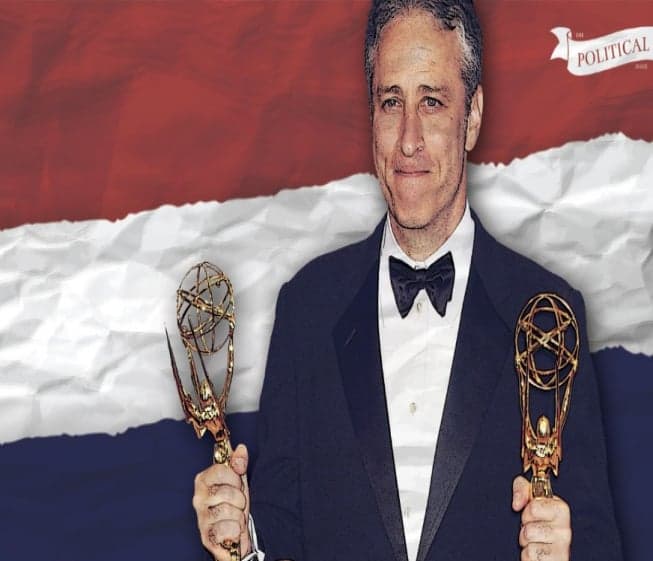
Stewart left the program after more than 16 years in August 2015, but not before he and The Daily Show earned numerous honors and recognitions, including 22 Primetime Emmy Awards and two Peabody Awards.
 
In Stewart’s battle for sharing news, he won over the hearts and minds of a generation using sincerity as his weapon and humor as his Band-Aid. 

Don’t Miss the Next Big Franchise Story

Sign up for the 1851 Franchise newsletter to get our biggest stories before everyone else

By signing up, you agree to our user agreement (including class action waiver and arbitration provisions), and acknowledge our privacy policy.

Nick Powills

About the Author

Nick Powills

Follow

Nick Powills, CFE, founded No Limit Agency in 2008 and serves as Chief Brand Strategist for the Chicago-based firm. No Limit is a full-service communications agency that establishes and elevates brands by bridging Public Relations, Social Media, Marketing, Advertising, Digital, and a lot of creativity, to best strategize well-rounded and successful campaigns for 50+ global franchise brands. By presenting visionary ideas and building real relationships, No Limit is able to create effective media branding strategies to help companies grow. Nick currently leads a staff of writers, media strategists, designers, social media experts and digital producers in an office think-tank where brands are humanized for strong, compelling media stories. Prior to starting No Limit at the age of 27, Nick spent four years working at a franchise PR agency where he mastered the art of building rapport with media outlets and creating newsworthy pitches for earned media placements. He holds a Bachelor of Journalism from Drake University in Iowa.