
No Limit Agency
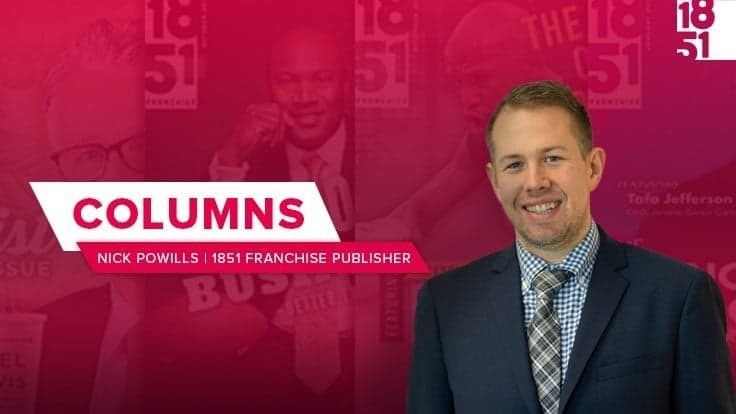
Nick Powills: Bill Buckner Died; Maybe we Should Stop Judging Someone by One Moment
Some mistakes are larger than others, but we all make them. So, why judge others so hard?
Let’s get this out of the way. We all make mistakes.
We all strike out. We all miss balls. We all do wrong things.
Certainly, some mistakes are larger than others, but we all make them. So, why judge others so hard?
I was saddened to learn of the passing of former Major League Baseball player Bill Buckner. Years ago, like many, I asked him to sign a baseball and he couldn’t have been nicer. Yet, while signing autographs for some fans, some jackass screamed, don’t miss my ball, Bill – implying that it may go under his legs.
Those screams never stopped. From the moment the ball went through his legs until the moment he died, Bill Buckner was judged – not for being in the one percent of baseball players who make it to the big leagues, not for being a good father of three, not for trying to battle through mistakes – he was always judged for missing a ball that went through his legs.
I get it – hate comes right alongside love when it comes to celebrities and athletes. Many feel that in exchange for the millions of dollars they make for entertaining us with a game, we, as fans, are allowed to expose them – celebrate the wins and criticize the losses. This is also rooted in our culture of drama – reality TV has such high ratings because we, as people, prey on the weaknesses of others, both in life and in business.
Will this need for drama ever stop? No. It will continue to be a vicious cycle because we are bullies to cover up our own insecurities, and then those insecurities are bullied by others so we bully again. This happens in fraternities. This happens in life.
But the truth is, at the end of the day, we will all end up six feet under. And the other truth is that we are in control of our decisions. We decide whether we give ‘ol Bill a high five for hitting 2,715 hits or rip him for letting one (albeit an important one) slip by.
I would love a world where we are judged for the collective of good versus the pain of a few. Realistically, though, that will never happen.
In business, too, you are often judged by your few mistakes versus the collective greatness you achieve. A spelling error, a wrong email – a mistake – that’s what you are remembered for. That is what you are fired for.
Unless you control the narrative.
Another man who was (and frankly still is) judged for one mistake is Steve Bartman. Bartman decided to disappear instead of addressing it straight on. That’s also a decision. He could have hit all of the morning shows and late night TV shows to poke fun at himself. He could have come back to Wrigley and wiped away the pain. But, he too decided his narrative.
Narratives are decided by both the person it happens to and the crowd that watches it.
For me, I choose to remember Bill Buckner for the kindness he showed when signing my baseball that is now safe in a case. That doesn’t mean I will always remain innocent in my judgments when it comes to sports – but I will try.
No Limit Agency
Some mistakes are larger than others, but we all make them. So, why judge others so hard?
Let’s get this out of the way. We all make mistakes.
We all strike out. We all miss balls. We all do wrong things.
Certainly, some mistakes are larger than others, but we all make them. So, why judge others so hard?
I was saddened to learn of the passing of former Major League Baseball player Bill Buckner. Years ago, like many, I asked him to sign a baseball and he couldn’t have been nicer. Yet, while signing autographs for some fans, some jackass screamed, don’t miss my ball, Bill – implying that it may go under his legs.
Those screams never stopped. From the moment the ball went through his legs until the moment he died, Bill Buckner was judged – not for being in the one percent of baseball players who make it to the big leagues, not for being a good father of three, not for trying to battle through mistakes – he was always judged for missing a ball that went through his legs.
I get it – hate comes right alongside love when it comes to celebrities and athletes. Many feel that in exchange for the millions of dollars they make for entertaining us with a game, we, as fans, are allowed to expose them – celebrate the wins and criticize the losses. This is also rooted in our culture of drama – reality TV has such high ratings because we, as people, prey on the weaknesses of others, both in life and in business.
Will this need for drama ever stop? No. It will continue to be a vicious cycle because we are bullies to cover up our own insecurities, and then those insecurities are bullied by others so we bully again. This happens in fraternities. This happens in life.
But the truth is, at the end of the day, we will all end up six feet under. And the other truth is that we are in control of our decisions. We decide whether we give ‘ol Bill a high five for hitting 2,715 hits or rip him for letting one (albeit an important one) slip by.
I would love a world where we are judged for the collective of good versus the pain of a few. Realistically, though, that will never happen.
In business, too, you are often judged by your few mistakes versus the collective greatness you achieve. A spelling error, a wrong email – a mistake – that’s what you are remembered for. That is what you are fired for.
Unless you control the narrative.
Another man who was (and frankly still is) judged for one mistake is Steve Bartman. Bartman decided to disappear instead of addressing it straight on. That’s also a decision. He could have hit all of the morning shows and late night TV shows to poke fun at himself. He could have come back to Wrigley and wiped away the pain. But, he too decided his narrative.
Narratives are decided by both the person it happens to and the crowd that watches it.
For me, I choose to remember Bill Buckner for the kindness he showed when signing my baseball that is now safe in a case. That doesn’t mean I will always remain innocent in my judgments when it comes to sports – but I will try.
Sign up for the 1851 Franchise newsletter to get our biggest stories before everyone else
By signing up, you agree to our user agreement (including class action waiver and arbitration provisions), and acknowledge our privacy policy.

About the Author
Nick Powills, CFE, founded No Limit Agency in 2008 and serves as Chief Brand Strategist for the Chicago-based firm. No Limit is a full-service communications agency that establishes and elevates brands by bridging Public Relations, Social Media, Marketing, Advertising, Digital, and a lot of creativity, to best strategize well-rounded and successful campaigns for 50+ global franchise brands. By presenting visionary ideas and building real relationships, No Limit is able to create effective media branding strategies to help companies grow. Nick currently leads a staff of writers, media strategists, designers, social media experts and digital producers in an office think-tank where brands are humanized for strong, compelling media stories. Prior to starting No Limit at the age of 27, Nick spent four years working at a franchise PR agency where he mastered the art of building rapport with media outlets and creating newsworthy pitches for earned media placements. He holds a Bachelor of Journalism from Drake University in Iowa.
No related articles found