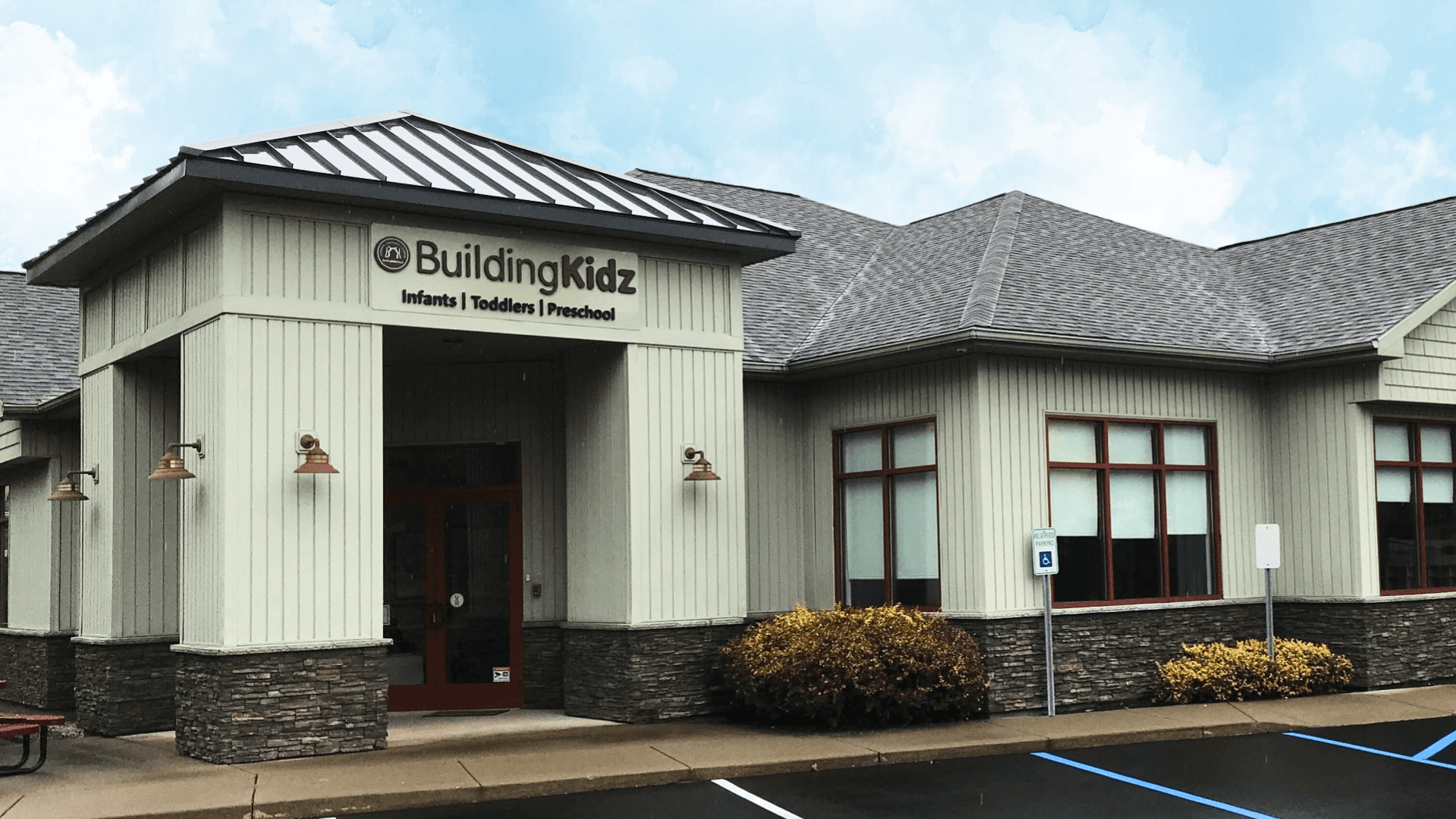
Building Kidz, the 50-plus-unit early childhood education franchise, is a refreshing alternative to what much of the industry expects. Rather than asking franchisees to buy dirt and build a multimillion-dollar facility, the brand leverages incredible real estate flexibility to give franchisees more autonomy, enter high-demand markets and meet the increasing need for early childhood education. Since the brand has optimized the initial investment to fit a variety of real estate models, many Building Kidz franchisees reach break-even relatively early and go on to secure industry-leading average EBITDA margins.

“We work in the rarified quadrant of doing really good work and capturing strong returns,” said Sanjay Gehani, partner and chief revenue officer. “When franchisees follow our program, they can absolutely reach their financial goals while changing the trajectory of children’s lives.”

Unrivaled Real Estate Flexibility

Building Kidz disrupts the traditional childcare and early childhood education models by simply adapting to the markets it enters. Whether it’s a converted residential structure or space within another community establishment, like a church, Building Kidz is flexible.

“Our model is the most flexible out there because we can adapt to physical settings that our competitors just won’t touch,” Gehani said. “Because of this, we have a lower initial investment compared to the larger early childhood education franchise space, and our owners are often able to secure sites and begin operating more quickly.”

The true range of build-out options is quite wide. Currently, there are both a 1,500-square-foot school and a 13,000-square-foot one (that accommodates over 300 students) in the system, and each operates in a way that caters to the real needs of its community.

Best-In-Class Unit Economics and Return on Investment

This real estate flexibility is a key contributor to the general accessibility of the model, but it is also instrumental to maintaining a lower initial investment and strong return on investment over time. With an estimated initial investment ranging from $309,500 to $1,538,000, Building Kidz can be much less financially demanding than traditional early childhood education franchises, but owners are still very well positioned for success.

The real estate flexibility Building Kidz offers can shorten the time required to get doors open, meaning owners can start bringing in revenue sooner. Further, franchisees typically reach financial break-even at around 40% enrollment capacity, which is often achieved during the first year of operation.

“If you’re committed to creating world-class environments for children, we have a playbook that has been successful for over two decades that’s generated over 25 points of EBITDA margin,” Gehani said.

Proprietary Performing Arts and “Whole Child” Educational Approach

Building Kidz’s investment and real estate model alone lays the foundation for a smart, long-term investment. Its curriculum further differentiates the opportunity. With a whole child approach, integrated performing arts and proprietary Learning Through Life Experiences program, Building Kidz supports the social and emotional development of students in addition to their academic advancement.

“We weave music, dance and theater directly into the curriculum, creating an environment that nurtures the Three Cs, confidence, commitment and character, in children,” Gehani said. “When we discuss things like our Broadway-style productions or how the curriculum builds the Three Cs, a parent’s decision to enroll their child in Building Kidz becomes both logical and emotional.”

By treating music, dance and theater as a part of everyday learning rather than optional add-ons, Building Kidz increases exposure to the arts, making them a natural part of the child’s development. 

The curriculum also focuses on real-world skills kids will need as they mature, developed through Learning Through Life Experiences modules. For example, students may practice social skills and math applications in a grocery store role-play, where one student is the cashier and another is the customer. 

While the traditional academic experience is still important to many parents, families are also beginning to prioritize experiences that have previously been viewed as optional. For Building Kidz, including these experiences is the default, and that is a major draw for many parents today. With an unmatched educational experience, franchisees have a clear advantage when it comes to enrollment and retention, which further strengthens the business opportunity, too.

The Future of Building Kidz in a Growing Category

The early childhood education sector only continues to grow. The gap between supply and demand is steadily expanding, and someone needs to fill it, but the standard daycare model is no longer enough to satisfy many parents. Building Kidz has solidified its place in the industry, proving that a franchise doesn’t necessarily require a multi-million-dollar investment or ground-up construction project to deliver meaningful returns to local owners and a world-class educational experience. 

Building Kidz has built much of its opportunity around that balance between financial performance and curriculum. For the right entrepreneur, it creates a franchise model that is difficult to match.

“If you want to leave an economic legacy for your family, Building Kidz is the right place for you,” Joel Lazarovitz, Franchise Development at Building Kidz, said. “But, more importantly, you’re building a community legacy. Knowing your business is impacting real families in your community brings a level of fulfillment many people can’t find in other industries. We’re looking to partner with franchisees who are just as excited about that impact as they are about the financials.”

To find out more information on costs to buy this franchise, please visit https://1851franchise.com/buildingkidzschool

Building Kidz, the 50-plus-unit early childhood education franchise, is a refreshing alternative to what much of the industry expects. Rather than asking franchisees to buy dirt and build a multimillion-dollar facility, the brand leverages incredible real estate flexibility to give franchisees more autonomy, enter high-demand markets and meet the increasing need for early childhood education. Since the brand has optimized the initial investment to fit a variety of real estate models, many Building Kidz franchisees reach break-even relatively early and go on to secure industry-leading average EBITDA margins.

“We work in the rarified quadrant of doing really good work and capturing strong returns,” said Sanjay Gehani, partner and chief revenue officer. “When franchisees follow our program, they can absolutely reach their financial goals while changing the trajectory of children’s lives.”

Unrivaled Real Estate Flexibility

Building Kidz disrupts the traditional childcare and early childhood education models by simply adapting to the markets it enters. Whether it’s a converted residential structure or space within another community establishment, like a church, Building Kidz is flexible.

“Our model is the most flexible out there because we can adapt to physical settings that our competitors just won’t touch,” Gehani said. “Because of this, we have a lower initial investment compared to the larger early childhood education franchise space, and our owners are often able to secure sites and begin operating more quickly.”

The true range of build-out options is quite wide. Currently, there are both a 1,500-square-foot school and a 13,000-square-foot one (that accommodates over 300 students) in the system, and each operates in a way that caters to the real needs of its community.

Best-In-Class Unit Economics and Return on Investment

This real estate flexibility is a key contributor to the general accessibility of the model, but it is also instrumental to maintaining a lower initial investment and strong return on investment over time. With an estimated initial investment ranging from $309,500 to $1,538,000, Building Kidz can be much less financially demanding than traditional early childhood education franchises, but owners are still very well positioned for success.

The real estate flexibility Building Kidz offers can shorten the time required to get doors open, meaning owners can start bringing in revenue sooner. Further, franchisees typically reach financial break-even at around 40% enrollment capacity, which is often achieved during the first year of operation.

“If you’re committed to creating world-class environments for children, we have a playbook that has been successful for over two decades that’s generated over 25 points of EBITDA margin,” Gehani said.

Proprietary Performing Arts and “Whole Child” Educational Approach

Building Kidz’s investment and real estate model alone lays the foundation for a smart, long-term investment. Its curriculum further differentiates the opportunity. With a whole child approach, integrated performing arts and proprietary Learning Through Life Experiences program, Building Kidz supports the social and emotional development of students in addition to their academic advancement.

“We weave music, dance and theater directly into the curriculum, creating an environment that nurtures the Three Cs, confidence, commitment and character, in children,” Gehani said. “When we discuss things like our Broadway-style productions or how the curriculum builds the Three Cs, a parent’s decision to enroll their child in Building Kidz becomes both logical and emotional.”

By treating music, dance and theater as a part of everyday learning rather than optional add-ons, Building Kidz increases exposure to the arts, making them a natural part of the child’s development. 

The curriculum also focuses on real-world skills kids will need as they mature, developed through Learning Through Life Experiences modules. For example, students may practice social skills and math applications in a grocery store role-play, where one student is the cashier and another is the customer. 

While the traditional academic experience is still important to many parents, families are also beginning to prioritize experiences that have previously been viewed as optional. For Building Kidz, including these experiences is the default, and that is a major draw for many parents today. With an unmatched educational experience, franchisees have a clear advantage when it comes to enrollment and retention, which further strengthens the business opportunity, too.

The Future of Building Kidz in a Growing Category

The early childhood education sector only continues to grow. The gap between supply and demand is steadily expanding, and someone needs to fill it, but the standard daycare model is no longer enough to satisfy many parents. Building Kidz has solidified its place in the industry, proving that a franchise doesn’t necessarily require a multi-million-dollar investment or ground-up construction project to deliver meaningful returns to local owners and a world-class educational experience. 

Building Kidz has built much of its opportunity around that balance between financial performance and curriculum. For the right entrepreneur, it creates a franchise model that is difficult to match.

“If you want to leave an economic legacy for your family, Building Kidz is the right place for you,” Joel Lazarovitz, Franchise Development at Building Kidz, said. “But, more importantly, you’re building a community legacy. Knowing your business is impacting real families in your community brings a level of fulfillment many people can’t find in other industries. We’re looking to partner with franchisees who are just as excited about that impact as they are about the financials.”

To find out more information on costs to buy this franchise, please visit https://1851franchise.com/buildingkidzschool

Don’t Miss the Next Big Franchise Story

Sign up for the 1851 Franchise newsletter to get our biggest stories before everyone else

By signing up, you agree to our user agreement (including class action waiver and arbitration provisions), and acknowledge our privacy policy.

Morgan Wood

About the Author

Morgan Wood

Follow

All Articles

No related articles found