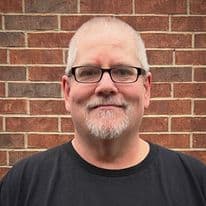
For Central Creativity, the move into franchising followed four years of real-world execution in Louisville, Kentucky. Chris and Kerry Wahl operated as early contractors, building school relationships, refining programs and helping shape a model designed to deliver hands-on science at scale while adapting to district needs.

In December 2025, the Wahls made that relationship official by signing Central Creativity’s first franchise agreement. Kerry, a former public school teacher of nearly 20 years, said she was motivated by a familiar reality in many classrooms: hands-on science is often the first thing cut when time and resources get tight. “We felt those opportunities were missing here in the classrooms where we were teaching, the hands-on science specifically,” she said.

That clarity, paired with the founders’ mission, is what turned a Louisville pilot into a franchise template. The model is built to stay consistent in the quality of instruction and materials while adapting to the specific needs, budgets and priorities of individual districts — an approach the Wahls have used to deepen school partnerships and drive repeat demand.

1851 Franchise sat down with the Wahls to discuss their longtime relationship with Central Creativity and what drew them to an education model built for real school needs and real community impact. Here’s what they had to say:

1851 Franchise: Frame your personal story for us. What do you want us to know?

Kerry Wahl: I’m a former teacher of almost 20 years in the public school system. When I met Jenny and Rhye — or heard about what they were doing — I heard about Central Creativity before I went down there from a former colleague of mine who was also interested in what they were doing. We felt those opportunities were missing here in the classrooms where we were teaching, the hands-on science specifically.

I was looking for a change. We planned to meet them. We had a phone conversation first, and I felt like there was chemistry just on that phone call. I think we realized we had a lot of things in common, so they invited us down, which was huge.

Chris came along as my support person, knowing that I was going to be pursuing something new, and he was very supportive of that. We went down and we really hit it off with them. One thing led to the next. I knew that I either wanted to work for them before they offered us the opportunity to franchise and bring it to Louisville, which ended up being the franchise.

I’ve had to learn how to run a business, which has been a new challenge, but we’ve been able to reach thousands of students, so it’s been really rewarding. I love working with Chris. We make a good team.

We did part ways with the other couple that went down with us to do this. I resigned almost immediately from my teaching position, and she was unable to do that as quickly as she anticipated, so we ended up parting ways with them, but the two of us stayed.

Chris Wahl: For the last 24 years, I’ve been a professional firefighter. I had various off-day jobs, and I went down with Kerry for the weekend just to get away, met with Rhye and Jenny, and totally connected with them.

I told Kerry for years it always took more courage to go into a classroom than it did a burning building. The transition was a little bit easy because it’s a very similar thing. I’ve always been a science nerd. Kerry always said I would have made a great teacher, so it seemed like a natural fit, and I had the opportunity to work with her.

I went from being an innocent bystander to a full-fledged franchisee with my wife. It’s been great. We get to work with each other.

Central Creativity is not just a franchise. It’s a mission to bring quality educational programs to kids that aren’t receiving them. We really believe in the mission and the franchise, and being able to provide a living for us and our family at the same time — it’s a win.

1851: What did you do before franchising, and how did you decide franchising made sense for you?

Kerry: I was a teacher in the public school system. I was looking for a change, and we felt hands-on science opportunities were missing in classrooms here.

Chris: We didn’t go down there intending to franchise. We were going to pick their brains, see what they were doing in Mississippi, bring it back to Kentucky, and replicate it. We went down and met them for a weekend. We really hit it off with Rhye and Jenny, the founders, and before we left, they asked us if we would be potential franchise candidates.

We saw what they had created and knew it would take us a significant amount of time to recreate that, so we said yes.

For the last four years, they’ve been building the infrastructure to franchise, and we’ve been operating as a contractor — I guess is the easiest way to say it. We’ve been doing Central Creativity business for the last four years.

When we signed the franchise agreement, it was pretty uneventful. We had them on speakerphone while we clicked the submit button on the digital signature. It took a little longer than we anticipated, but this was a first for all of us. There was no huge grand opening, ribbon cutting or anything like that.

1851: What was your perception of franchising prior to becoming a franchisee, and what do you want people to know about franchising now that you are in it?

Kerry: I didn’t know how this was going to look for this type of business because it’s not a one-size-fits-all. What we’re doing here in Louisville looks a lot different than what they’re doing in Laurel. We’re doing new, different things here than they’re doing in Laurel, and I love that we have the flexibility to change things.

One of our taglines is, “You’re learning your way.” When we go in to meet with a school, one of the first questions we ask is, “What are your needs? How can we support you?” Then our work with them goes from there. Their needs determine what our role will be and what it will look like when we come in — whether that’s a regular school-site field trip where we’re there for a shorter amount of time, or whether we’re there for the whole day and giving teachers time to plan, which is a need in our district right now.

If we sell any products to them — and I feel like we’re working more events than selling product right now — when we do, we don’t just sell the resources or kits. We provide support throughout the year whenever they need it, and consistently follow up with teachers and see how they’re doing.

And also, funding and where the money is has a lot to do with it, too.

Chris: If I can elaborate: When you go into a McDonald’s, the thing that makes McDonald’s is that you’re getting the same hamburger wherever you are, but that hamburger is not tied to the community.

In education, the learners and the people in that community are different everywhere. Even inside a community, schools are different. There’s a lot of uniqueness in the educational realm.

The thing about Central Creativity is you’re getting the quality instruction and materials — that’s the hamburger. But it’s flexible enough to fit the needs of every community and address gaps that may be here, while different gaps may be in another community.

When you think of franchising, you think McDonald’s — cookie-cutter. The great thing about Central Creativity is there’s a core philosophy that binds everything together, but there’s enough uniqueness that those Central Creativity franchises are going to be reflections of the communities they’re in. There’s a unique opportunity to assimilate into the community and fill the gaps that reside there.

And the great thing about Central Creativity — what we believe will make it a great franchise — is it’s like what makes a great franchise in general. The product is good, but it’s the service and the relationship with customers. It doesn’t always feel transactional. It feels like you’re in a relationship. We’re in the relationship business, and that’s education. We don’t look at schools as customers. We look at them as partners.

Kerry: We’re an educational company and we do a myriad of things — providing grab-and-go resources for formal instruction in classrooms. We’re NASA educational partners. We do kits — science kits in a box. We build capacity for other organizations to increase their outreach.

We go into schools and do hands-on science with students. It’s like bringing the science circus to a school. We bring our team — 10 to 12 people — with supplies, materials, tables, everything, set up different stations, and every kid gets to do science for the day.

It’s going to look different in each community. Funding plays a big role. A lot of the money right now is for us to come in while teachers plan professional growth or professional development. It might look different in Houston, where there may be more money available for actual resources for us to sell to teachers.

1851: What made you pick this brand? What excites you most about this company?

Kerry: Just the cool hands-on activities — tying science concepts into hands-on fun like slime, and all the science behind what goes into slime-making. I had no idea.

I taught third grade and, unfortunately, I didn’t have a lot of time to prepare hands-on science. It was either demonstrating something out of a big kit from the district, or we ended up reading about it or watching a video.

When we met Jenny and Rhye and they started doing activities with us — making bath bombs, learning about chemical reactions — it sparked excitement in me. I was in my 40s, and it made me realize this was such an important piece that was missing and needed to be incorporated in classrooms for engagement.

Chris: I’m a lifelong learner, and I’m from a family of helpers and community workers — firemen, cops, nurses. Kerry’s a teacher, so we’re naturally community-driven.

Rhye told a story about an impact they had on individuals in their community, and that’s what hooked me. Being able to bring that type of impact to our community — that’s where I went down as an innocent bystander. After hearing how they can impact the community, I was like, “Yeah, this is what we need to do. This is something positive we can bring to our town, our city, and have a greater impact than what we were currently doing.”

1851: How did you adapt Central Creativity’s model to meet the needs of Louisville?

Kerry: In the traditional school-site field trip, we go in with our team, set up six stations, and each station is 15 minutes. It’s about an hour and a half per large group of students.

We had a school that wanted us to stay longer so their teachers could go plan. We said, “OK, we could stay longer.” We increased the price per student and adapted the activities — extended them a little bit. It actually worked. We could dig deeper. We weren’t as rushed, because the 15 minutes sometimes wasn’t enough time, even just to talk a little bit more to the students. We built better relationships with students because we were there longer.

Another one was family STEM nights. They didn’t have anything for family engagement. We took the field trip model and did it open-house style. We set up the same stations with the same support and staff, but instead of the kids moving station to station, kids come in with their parents and meander. You get the kids engaged and the parents engaged, too. It extends engagement into the school and builds community.

Chris: The school district here wants student engagement, but they also needed time for teachers to get professional growth. Before we came in, the other way to do that was to bring in a bunch of subs for the day, which is costly because you’re paying subs and teachers.

When there’s a sub in, that’s a lost curriculum day. Behavioral issues arise from that. When teachers come back, the classroom has been disrupted.

When we come in with the extended field trip model Kerry came up with, we engage the kids. It’s edutainment — they’re having fun, but they’re learning. They’re doing complicated hands-on science. Some activities involve splitting molecules with electricity. You don’t get that every day in elementary school.

Teachers go off for professional growth, and when they come back, engagement alleviates discipline problems. Kids aren’t idle. When we’re there, those hands are occupied with meaningful activities that are engaging on an educational level. It’s a win.

1851: What do you hope to achieve with your business? What are your plans for growth?

Kerry: I would love to have a physical space eventually. This is a 10-year contract, so I would hope within those 10 years we have some kind of space, even if it’s just office space, because we are working out of our house.

I also want to get more of our hands-on resources — the grab-and-go — into classrooms during the school day, because we have seen many students, but there are so many others that are not getting these opportunities.

We’re working with mostly underperforming schools because they get a lot of grant money because they have more needs.

Chris: We want to be the go-to solution solver for schools in our community. I want to be statewide. I want to be a line item in the state budget because they understand the impact we can provide.

Build it to where it’s self-sustaining, and after we’re gone, it will continue to have positive impact on the community regardless of who’s running it.

1851: Is there anything else about your story you want us to know?

Chris: I really believe what Rhye and Jenny have created is a community-impact machine. It is a device to have positive impact on every community it touches.

The flexibility it possesses allows it to be successful in so many different communities. Rising tides raise all ships — if you want to get cliche — but those phrases have been around a long time because there’s truth to them.

We’re exposing kids to things they have never seen before. When they see those things, you see the spark, you see those “aha” moments, and you’re like, “This is why we’re doing it.” We’re having a positive impact on the place we live.

If you can make a living and have a positive impact on where you’re living, I don’t know a lot of opportunities that provide that. A great sandwich is a great sandwich, but I’m not really sure what that positive impact does beyond philanthropic stuff.

We do have a foundation, too — the Central Creativity Foundation — so there’s opportunity for that, but that’s different from the franchise stuff.

If you want to run a business and be a positive impact on where you live, then Central Creativity is the franchise you should be investigating.

1851: What advice do you have for other people thinking about becoming franchise owners?

Chris: Buy a hat rack that holds many hats because you’re going to be wearing several. You have to work very hard. Just because it’s somebody else’s idea that you’re adopting does not mean you don’t have to put in the hard work.

Kerry: Get a good team. Hire good people.

About Central Creativity:

Central Creativity is a STEM-enrichment education franchise that helps schools and community partners bring hands-on science to students through adaptable programs, professional development and classroom-ready “TO GO” kits. Founded in 2017 by Jenny and Rhye McLeod, the brand was built to close resource gaps and support educators with flexible, real-world learning experiences. Central Creativity also partners with national organizations, including NASA, and delivers Astro Camp programming designed to expand access to space-themed STEM learning. With long-running partnerships across the country, the company continues to grow its reach through franchising. For additional information, visit centralcreativity.com. To learn more about franchising opportunities, visit centralcreativity.com/franchise/.

Central Creativity

SPONSORED
How This Teacher and Firefighter Became Central Creativity’s First Franchisees After Proving the Model in Louisville

How This Teacher and Firefighter Became Central Creativity’s First Franchisees After Proving the Model in Louisville

Chris and Kerry Wahl signed their franchise agreement in December 2025 after helping refine a hands-on STEM model built to adapt to each district’s needs.

For Central Creativity, the move into franchising followed four years of real-world execution in Louisville, Kentucky. Chris and Kerry Wahl operated as early contractors, building school relationships, refining programs and helping shape a model designed to deliver hands-on science at scale while adapting to district needs.

In December 2025, the Wahls made that relationship official by signing Central Creativity’s first franchise agreement. Kerry, a former public school teacher of nearly 20 years, said she was motivated by a familiar reality in many classrooms: hands-on science is often the first thing cut when time and resources get tight. “We felt those opportunities were missing here in the classrooms where we were teaching, the hands-on science specifically,” she said.

That clarity, paired with the founders’ mission, is what turned a Louisville pilot into a franchise template. The model is built to stay consistent in the quality of instruction and materials while adapting to the specific needs, budgets and priorities of individual districts — an approach the Wahls have used to deepen school partnerships and drive repeat demand.

1851 Franchise sat down with the Wahls to discuss their longtime relationship with Central Creativity and what drew them to an education model built for real school needs and real community impact. Here’s what they had to say:

1851 Franchise: Frame your personal story for us. What do you want us to know?

Kerry Wahl: I’m a former teacher of almost 20 years in the public school system. When I met Jenny and Rhye — or heard about what they were doing — I heard about Central Creativity before I went down there from a former colleague of mine who was also interested in what they were doing. We felt those opportunities were missing here in the classrooms where we were teaching, the hands-on science specifically.

I was looking for a change. We planned to meet them. We had a phone conversation first, and I felt like there was chemistry just on that phone call. I think we realized we had a lot of things in common, so they invited us down, which was huge.

Chris came along as my support person, knowing that I was going to be pursuing something new, and he was very supportive of that. We went down and we really hit it off with them. One thing led to the next. I knew that I either wanted to work for them before they offered us the opportunity to franchise and bring it to Louisville, which ended up being the franchise.

I’ve had to learn how to run a business, which has been a new challenge, but we’ve been able to reach thousands of students, so it’s been really rewarding. I love working with Chris. We make a good team.

We did part ways with the other couple that went down with us to do this. I resigned almost immediately from my teaching position, and she was unable to do that as quickly as she anticipated, so we ended up parting ways with them, but the two of us stayed.

Chris Wahl: For the last 24 years, I’ve been a professional firefighter. I had various off-day jobs, and I went down with Kerry for the weekend just to get away, met with Rhye and Jenny, and totally connected with them.

I told Kerry for years it always took more courage to go into a classroom than it did a burning building. The transition was a little bit easy because it’s a very similar thing. I’ve always been a science nerd. Kerry always said I would have made a great teacher, so it seemed like a natural fit, and I had the opportunity to work with her.

I went from being an innocent bystander to a full-fledged franchisee with my wife. It’s been great. We get to work with each other.

Central Creativity is not just a franchise. It’s a mission to bring quality educational programs to kids that aren’t receiving them. We really believe in the mission and the franchise, and being able to provide a living for us and our family at the same time — it’s a win.

1851: What did you do before franchising, and how did you decide franchising made sense for you?

Kerry: I was a teacher in the public school system. I was looking for a change, and we felt hands-on science opportunities were missing in classrooms here.

Chris: We didn’t go down there intending to franchise. We were going to pick their brains, see what they were doing in Mississippi, bring it back to Kentucky, and replicate it. We went down and met them for a weekend. We really hit it off with Rhye and Jenny, the founders, and before we left, they asked us if we would be potential franchise candidates.

We saw what they had created and knew it would take us a significant amount of time to recreate that, so we said yes.

For the last four years, they’ve been building the infrastructure to franchise, and we’ve been operating as a contractor — I guess is the easiest way to say it. We’ve been doing Central Creativity business for the last four years.

When we signed the franchise agreement, it was pretty uneventful. We had them on speakerphone while we clicked the submit button on the digital signature. It took a little longer than we anticipated, but this was a first for all of us. There was no huge grand opening, ribbon cutting or anything like that.

1851: What was your perception of franchising prior to becoming a franchisee, and what do you want people to know about franchising now that you are in it?

Kerry: I didn’t know how this was going to look for this type of business because it’s not a one-size-fits-all. What we’re doing here in Louisville looks a lot different than what they’re doing in Laurel. We’re doing new, different things here than they’re doing in Laurel, and I love that we have the flexibility to change things.

One of our taglines is, “You’re learning your way.” When we go in to meet with a school, one of the first questions we ask is, “What are your needs? How can we support you?” Then our work with them goes from there. Their needs determine what our role will be and what it will look like when we come in — whether that’s a regular school-site field trip where we’re there for a shorter amount of time, or whether we’re there for the whole day and giving teachers time to plan, which is a need in our district right now.

If we sell any products to them — and I feel like we’re working more events than selling product right now — when we do, we don’t just sell the resources or kits. We provide support throughout the year whenever they need it, and consistently follow up with teachers and see how they’re doing.

And also, funding and where the money is has a lot to do with it, too.

Chris: If I can elaborate: When you go into a McDonald’s, the thing that makes McDonald’s is that you’re getting the same hamburger wherever you are, but that hamburger is not tied to the community.

In education, the learners and the people in that community are different everywhere. Even inside a community, schools are different. There’s a lot of uniqueness in the educational realm.

The thing about Central Creativity is you’re getting the quality instruction and materials — that’s the hamburger. But it’s flexible enough to fit the needs of every community and address gaps that may be here, while different gaps may be in another community.

When you think of franchising, you think McDonald’s — cookie-cutter. The great thing about Central Creativity is there’s a core philosophy that binds everything together, but there’s enough uniqueness that those Central Creativity franchises are going to be reflections of the communities they’re in. There’s a unique opportunity to assimilate into the community and fill the gaps that reside there.

And the great thing about Central Creativity — what we believe will make it a great franchise — is it’s like what makes a great franchise in general. The product is good, but it’s the service and the relationship with customers. It doesn’t always feel transactional. It feels like you’re in a relationship. We’re in the relationship business, and that’s education. We don’t look at schools as customers. We look at them as partners.

Kerry: We’re an educational company and we do a myriad of things — providing grab-and-go resources for formal instruction in classrooms. We’re NASA educational partners. We do kits — science kits in a box. We build capacity for other organizations to increase their outreach.

We go into schools and do hands-on science with students. It’s like bringing the science circus to a school. We bring our team — 10 to 12 people — with supplies, materials, tables, everything, set up different stations, and every kid gets to do science for the day.

It’s going to look different in each community. Funding plays a big role. A lot of the money right now is for us to come in while teachers plan professional growth or professional development. It might look different in Houston, where there may be more money available for actual resources for us to sell to teachers.

1851: What made you pick this brand? What excites you most about this company?

Kerry: Just the cool hands-on activities — tying science concepts into hands-on fun like slime, and all the science behind what goes into slime-making. I had no idea.

I taught third grade and, unfortunately, I didn’t have a lot of time to prepare hands-on science. It was either demonstrating something out of a big kit from the district, or we ended up reading about it or watching a video.

When we met Jenny and Rhye and they started doing activities with us — making bath bombs, learning about chemical reactions — it sparked excitement in me. I was in my 40s, and it made me realize this was such an important piece that was missing and needed to be incorporated in classrooms for engagement.

Chris: I’m a lifelong learner, and I’m from a family of helpers and community workers — firemen, cops, nurses. Kerry’s a teacher, so we’re naturally community-driven.

Rhye told a story about an impact they had on individuals in their community, and that’s what hooked me. Being able to bring that type of impact to our community — that’s where I went down as an innocent bystander. After hearing how they can impact the community, I was like, “Yeah, this is what we need to do. This is something positive we can bring to our town, our city, and have a greater impact than what we were currently doing.”

1851: How did you adapt Central Creativity’s model to meet the needs of Louisville?

Kerry: In the traditional school-site field trip, we go in with our team, set up six stations, and each station is 15 minutes. It’s about an hour and a half per large group of students.

We had a school that wanted us to stay longer so their teachers could go plan. We said, “OK, we could stay longer.” We increased the price per student and adapted the activities — extended them a little bit. It actually worked. We could dig deeper. We weren’t as rushed, because the 15 minutes sometimes wasn’t enough time, even just to talk a little bit more to the students. We built better relationships with students because we were there longer.

Another one was family STEM nights. They didn’t have anything for family engagement. We took the field trip model and did it open-house style. We set up the same stations with the same support and staff, but instead of the kids moving station to station, kids come in with their parents and meander. You get the kids engaged and the parents engaged, too. It extends engagement into the school and builds community.

Chris: The school district here wants student engagement, but they also needed time for teachers to get professional growth. Before we came in, the other way to do that was to bring in a bunch of subs for the day, which is costly because you’re paying subs and teachers.

When there’s a sub in, that’s a lost curriculum day. Behavioral issues arise from that. When teachers come back, the classroom has been disrupted.

When we come in with the extended field trip model Kerry came up with, we engage the kids. It’s edutainment — they’re having fun, but they’re learning. They’re doing complicated hands-on science. Some activities involve splitting molecules with electricity. You don’t get that every day in elementary school.

Teachers go off for professional growth, and when they come back, engagement alleviates discipline problems. Kids aren’t idle. When we’re there, those hands are occupied with meaningful activities that are engaging on an educational level. It’s a win.

1851: What do you hope to achieve with your business? What are your plans for growth?

Kerry: I would love to have a physical space eventually. This is a 10-year contract, so I would hope within those 10 years we have some kind of space, even if it’s just office space, because we are working out of our house.

I also want to get more of our hands-on resources — the grab-and-go — into classrooms during the school day, because we have seen many students, but there are so many others that are not getting these opportunities.

We’re working with mostly underperforming schools because they get a lot of grant money because they have more needs.

Chris: We want to be the go-to solution solver for schools in our community. I want to be statewide. I want to be a line item in the state budget because they understand the impact we can provide.

Build it to where it’s self-sustaining, and after we’re gone, it will continue to have positive impact on the community regardless of who’s running it.

1851: Is there anything else about your story you want us to know?

Chris: I really believe what Rhye and Jenny have created is a community-impact machine. It is a device to have positive impact on every community it touches.

The flexibility it possesses allows it to be successful in so many different communities. Rising tides raise all ships — if you want to get cliche — but those phrases have been around a long time because there’s truth to them.

We’re exposing kids to things they have never seen before. When they see those things, you see the spark, you see those “aha” moments, and you’re like, “This is why we’re doing it.” We’re having a positive impact on the place we live.

If you can make a living and have a positive impact on where you’re living, I don’t know a lot of opportunities that provide that. A great sandwich is a great sandwich, but I’m not really sure what that positive impact does beyond philanthropic stuff.

We do have a foundation, too — the Central Creativity Foundation — so there’s opportunity for that, but that’s different from the franchise stuff.

If you want to run a business and be a positive impact on where you live, then Central Creativity is the franchise you should be investigating.

1851: What advice do you have for other people thinking about becoming franchise owners?

Chris: Buy a hat rack that holds many hats because you’re going to be wearing several. You have to work very hard. Just because it’s somebody else’s idea that you’re adopting does not mean you don’t have to put in the hard work.

Kerry: Get a good team. Hire good people.

About Central Creativity:

Central Creativity is a STEM-enrichment education franchise that helps schools and community partners bring hands-on science to students through adaptable programs, professional development and classroom-ready “TO GO” kits. Founded in 2017 by Jenny and Rhye McLeod, the brand was built to close resource gaps and support educators with flexible, real-world learning experiences. Central Creativity also partners with national organizations, including NASA, and delivers Astro Camp programming designed to expand access to space-themed STEM learning. With long-running partnerships across the country, the company continues to grow its reach through franchising. For additional information, visit centralcreativity.com. To learn more about franchising opportunities, visit centralcreativity.com/franchise/.

Don’t Miss the Next Big Franchise Story

Sign up for the 1851 Franchise newsletter to get our biggest stories before everyone else

By signing up, you agree to our user agreement (including class action waiver and arbitration provisions), and acknowledge our privacy policy.

Chris Irby

About the Author

Chris Irby

Follow

All Articles

No related articles found