
Disc Replay
SPONSORED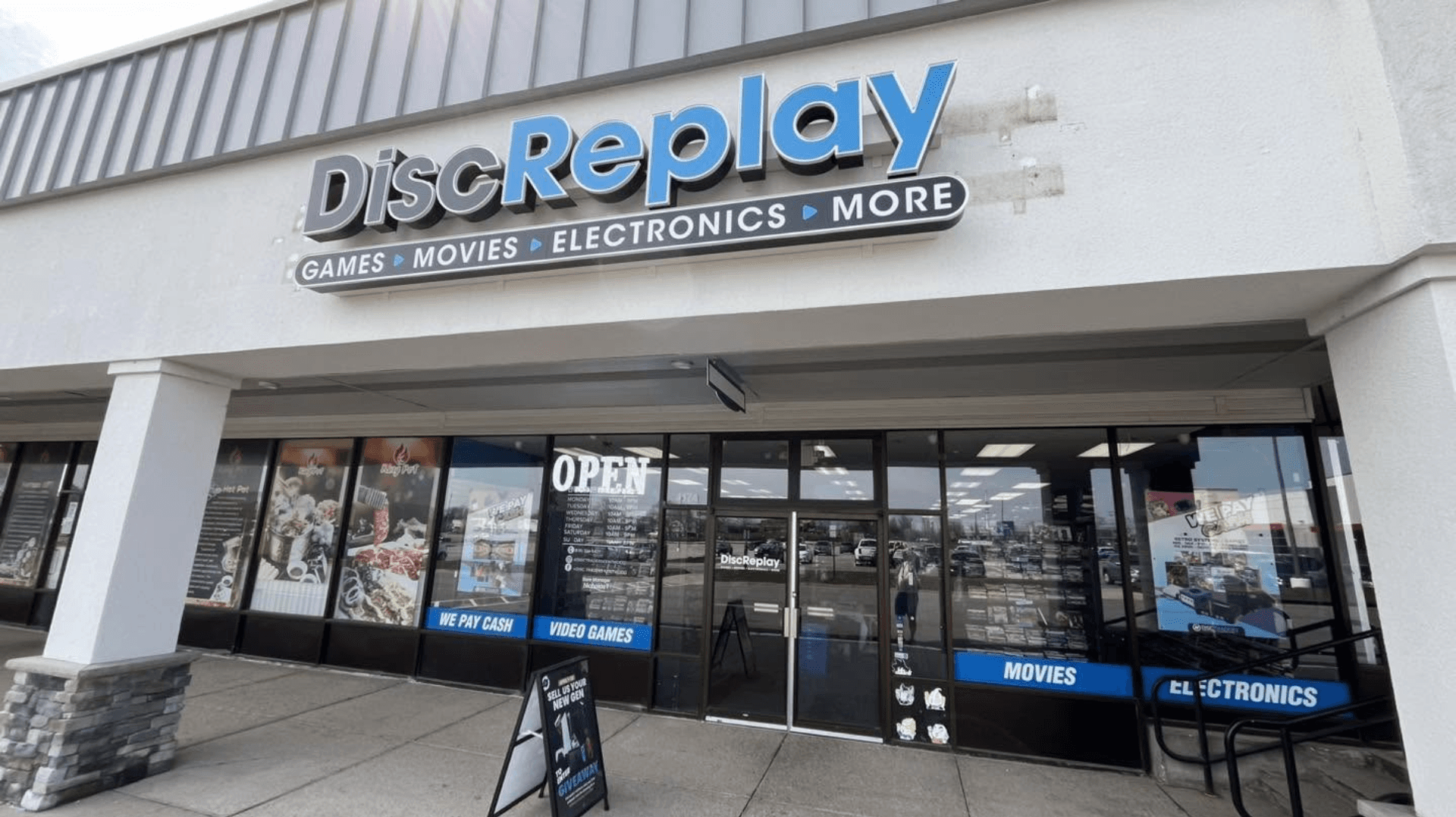
Entertainment Resale Has No National Leader. Disc Replay Is Defining the Category
With strong AUVs and a growing foothold in a wide-open market, the specialty resale franchise is preparing for steady growth across the Midwest.
Clothing resale has a national leader. Sporting goods resale has a national leader. But entertainment resale (video games, movies, music, vinyl, collectibles and trading cards) doesn't have one yet. Disc Replay, the 38-unit specialty resale franchise, is positioned to become it.
For years, many assumed streaming services and digital storefronts would make physical media obsolete. Recent years have shown the opposite. Consumers still want to own their media and collectibles, and with inflationary pressure squeezing budgets for half a decade running, resale has become one of the smartest ways to do it. A new video game controller can run $70, but consumers can buy it used for less and trade it back in when they’re done. That combination of ownership and value is exactly what's fueling demand, but retail concepts built to serve it are still hard to find.
"A decade ago, there was a common perception of our industry. People would ask, 'How are you still in business when Netflix exists and games are going digital?'" said Nick Leja, brand president. "Now, collector culture is huge. This isn't a Blockbuster-type scenario. People are collecting and want those physical things again, not just digital access. Timing, demand, and the fact that we're leading the pack in terms of breadth: there's an incredible opportunity right now."
Consumers are actively hunting for everything from retro video games and vinyl records to vintage consoles and electronics at a fraction of what new items cost. Disc Replay is built to serve all of it under one roof with a resale model that addresses the demand for secondhand tech and media directly. That mega selection is what sets the brand apart and why it sits in an unmatched market position.
People sometimes describe Disc Replay as "GameStop on steroids," and the comparison points to something real: GameStop is focused primarily on collectibles and new releases. Disc Replay sells current-gen games too, but that's just one category among many: retro games, movies, music, vinyl, electronics, collectibles and more, all under one roof. All those product lines provide customers with a much wider set of reasons to walk through the door. As media and collectibles culture keeps growing, that breadth of product lines is exactly the whitespace Disc Replay is built to fill.
Disc Replay was originally founded in 1994 by John Chesny, built on a framework of one simple philosophy: “Treasure your employees, and treasure your customers. Without them, you’re nothing.” Chesny prioritized paying customers more for trade-ins, selling products less and maintaining a massive, diverse storefront. The model proved itself and scaled to dozens of locations across the Midwest, and Chesny continued to support steady operations and healthy internal growth before he began planning his exit a few years ago.
When Chesny was ready to exit, he knew he didn't want to sell the brand to an outside investor. So, he chose to pass the business along to Leja, who had originally joined the brand as a franchisee, as well as three other long-term franchisees: Nathan Abner, Chad Capista and Jesse Hayes.
"I was excited to oversee this brand because, as a franchisee, I had so many ideas I wanted to implement for Disc Replay, but I didn't have the ability to implement them," Leja said. "I'm a video game nerd myself, and I'm genuinely interested in everything we buy and sell. For the past couple of years, we turned the franchise pipeline off to work on our foundation since we are laser-focused on franchisee success vs growth. Now that we’ve fortified our system, we're preparing to wake up the 'sleeping bear' and pivot our focus back to franchise growth."
Today, Leja and Abner still operate over a dozen locations each, and they both lead the franchisor entity as well. Because they remain in the trenches with their franchisees, they understand both sides of the business and can guide the system’s growth without sacrificing the qualities that franchisees and customers already value about Disc Replay.
The traditional resale space is crowded with small "mom-and-pop" hobby shops that specialize narrowly or corporate entities focused on new inventory rather than the retro and vintage stock collectors actually want. Disc Replay fills that gap, in the atmosphere customers actually want to experience.
While competitors may open in 1,000-square-foot spaces, the typical Disc Replay store is up to 4,000 square feet and has extensive stock. It's not a traditional retail space or experience. Customers who visit enjoy a true treasure hunt, browsing everything from vintage Nintendo cartridges to modern PlayStation releases, Pokémon cards and the latest electronics.
This alone is a key differentiator, but the products themselves are just part of what makes Disc Replay successful. The brand's ultimate differentiator lies in its specialized technology.
"We own our own proprietary POS system, whereas our competitors are using basic, off-the-shelf third-party software," Leja said. "Because we own the tech, we can track real-time marketplace data across all of our locations to instantly adjust our buy and sell prices. A local mom-and-pop shop simply cannot afford to build or maintain that kind of analytical capability."
The brand also uses a straightforward buying-and-selling process that’s easy for customers to understand. If a seller is missing a power cord or their product has some defect, for example, they're not turned away — the Disc Replay team strives to buy everything the customer brings in to help make Disc Replay the one-stop shop for their entertainment resale needs. Sellers can receive cash on the spot, or they can get a 30% bonus if they choose store credit, encouraging many to turn around and spend that money within the four walls. While there's an incentive, the brand doesn't push for hard upsells or high-pressure tactics; the goal is to deliver a great selling and buying experience every time.
"Our core focus is empowering people to thrive and discover joy through world-class buying and selling experiences,” Leja said. “We run all of our decisions through that filter, which helps ensure our stores remain vibrant and delivering something special to our team and customers.”
Disc Replay provides a unique risk-to-reward ratio that stands out in the larger franchise landscape. Because the business model doesn't require complex build-outs and specialized equipment, the initial capital is insulated.
"Disc Replay has a remarkably low risk profile compared to a restaurant or salon concept," Leja said. "When you build out a restaurant or salon, there are a lot of sunk costs. With Disc Replay, a large chunk of your initial investment is poured directly into tangible assets — the physical inventory and store fixtures. In a worst-case scenario, you can still 'sell the house.'"
That low-risk structure is paired with unit-level financials that position franchisees for success. With an initial investment range of $230,500 to $460,000, mature locations report average unit volumes of over $1.3 million*. Franchisees who choose to reinvest revenue into additional stock in the early stages only accelerate financial growth further, broadening offerings and drawing in more (and more frequent) customers. And as stores mature and revenue grows, franchisees have more cash on hand for buybacks and can steadily build up their inventory. This keeps the stock fresh and plays into the “treasure hunt” aspect of the model, which keeps customers coming back to buy, sell and trade on a regular basis.
As Disc Replay works toward its long-term vision of establishing around 250 high-performing locations within the next decade, Leja remains intently focused on quality development, not just selling to sell.
Leja is concentrating Disc Replay’s next phase of growth in Midwestern markets where the brand can build on its existing presence. He is also looking to grow with entrepreneurs who are aligned with Disc Replay’s mission and values, want to bring something special to their community, and execute the operational focus necessary to scale, not just anyone with a checkbook.
"This isn't about growing to crazy numbers so we can flip the business," Leja said. "My core fulfillment comes from helping other people achieve entrepreneurial success and lifestyle freedom. We're building management training directly into our franchisee onboarding to teach owners how to run a thriving business, not just how to trade media. Along these lines, we're not looking for ego-driven investors. We want to welcome humble, easygoing people who love the product and have a strong 'why' into our business family."
The total investment necessary to begin operation of a Disc Replay Outlet is from $230,500 to $460,000. This includes $30,000 to $39,000 that must be paid to the franchisor. To find out more information on costs to buy this franchise, please visit https://1851franchise.com/disc-replay
*Please see the 2026 FDD for further financial information.
Disc Replay
SPONSOREDWith strong AUVs and a growing foothold in a wide-open market, the specialty resale franchise is preparing for steady growth across the Midwest.
Clothing resale has a national leader. Sporting goods resale has a national leader. But entertainment resale (video games, movies, music, vinyl, collectibles and trading cards) doesn't have one yet. Disc Replay, the 38-unit specialty resale franchise, is positioned to become it.
For years, many assumed streaming services and digital storefronts would make physical media obsolete. Recent years have shown the opposite. Consumers still want to own their media and collectibles, and with inflationary pressure squeezing budgets for half a decade running, resale has become one of the smartest ways to do it. A new video game controller can run $70, but consumers can buy it used for less and trade it back in when they’re done. That combination of ownership and value is exactly what's fueling demand, but retail concepts built to serve it are still hard to find.
"A decade ago, there was a common perception of our industry. People would ask, 'How are you still in business when Netflix exists and games are going digital?'" said Nick Leja, brand president. "Now, collector culture is huge. This isn't a Blockbuster-type scenario. People are collecting and want those physical things again, not just digital access. Timing, demand, and the fact that we're leading the pack in terms of breadth: there's an incredible opportunity right now."
Consumers are actively hunting for everything from retro video games and vinyl records to vintage consoles and electronics at a fraction of what new items cost. Disc Replay is built to serve all of it under one roof with a resale model that addresses the demand for secondhand tech and media directly. That mega selection is what sets the brand apart and why it sits in an unmatched market position.
People sometimes describe Disc Replay as "GameStop on steroids," and the comparison points to something real: GameStop is focused primarily on collectibles and new releases. Disc Replay sells current-gen games too, but that's just one category among many: retro games, movies, music, vinyl, electronics, collectibles and more, all under one roof. All those product lines provide customers with a much wider set of reasons to walk through the door. As media and collectibles culture keeps growing, that breadth of product lines is exactly the whitespace Disc Replay is built to fill.
Disc Replay was originally founded in 1994 by John Chesny, built on a framework of one simple philosophy: “Treasure your employees, and treasure your customers. Without them, you’re nothing.” Chesny prioritized paying customers more for trade-ins, selling products less and maintaining a massive, diverse storefront. The model proved itself and scaled to dozens of locations across the Midwest, and Chesny continued to support steady operations and healthy internal growth before he began planning his exit a few years ago.
When Chesny was ready to exit, he knew he didn't want to sell the brand to an outside investor. So, he chose to pass the business along to Leja, who had originally joined the brand as a franchisee, as well as three other long-term franchisees: Nathan Abner, Chad Capista and Jesse Hayes.
"I was excited to oversee this brand because, as a franchisee, I had so many ideas I wanted to implement for Disc Replay, but I didn't have the ability to implement them," Leja said. "I'm a video game nerd myself, and I'm genuinely interested in everything we buy and sell. For the past couple of years, we turned the franchise pipeline off to work on our foundation since we are laser-focused on franchisee success vs growth. Now that we’ve fortified our system, we're preparing to wake up the 'sleeping bear' and pivot our focus back to franchise growth."
Today, Leja and Abner still operate over a dozen locations each, and they both lead the franchisor entity as well. Because they remain in the trenches with their franchisees, they understand both sides of the business and can guide the system’s growth without sacrificing the qualities that franchisees and customers already value about Disc Replay.
The traditional resale space is crowded with small "mom-and-pop" hobby shops that specialize narrowly or corporate entities focused on new inventory rather than the retro and vintage stock collectors actually want. Disc Replay fills that gap, in the atmosphere customers actually want to experience.
While competitors may open in 1,000-square-foot spaces, the typical Disc Replay store is up to 4,000 square feet and has extensive stock. It's not a traditional retail space or experience. Customers who visit enjoy a true treasure hunt, browsing everything from vintage Nintendo cartridges to modern PlayStation releases, Pokémon cards and the latest electronics.
This alone is a key differentiator, but the products themselves are just part of what makes Disc Replay successful. The brand's ultimate differentiator lies in its specialized technology.
"We own our own proprietary POS system, whereas our competitors are using basic, off-the-shelf third-party software," Leja said. "Because we own the tech, we can track real-time marketplace data across all of our locations to instantly adjust our buy and sell prices. A local mom-and-pop shop simply cannot afford to build or maintain that kind of analytical capability."
The brand also uses a straightforward buying-and-selling process that’s easy for customers to understand. If a seller is missing a power cord or their product has some defect, for example, they're not turned away — the Disc Replay team strives to buy everything the customer brings in to help make Disc Replay the one-stop shop for their entertainment resale needs. Sellers can receive cash on the spot, or they can get a 30% bonus if they choose store credit, encouraging many to turn around and spend that money within the four walls. While there's an incentive, the brand doesn't push for hard upsells or high-pressure tactics; the goal is to deliver a great selling and buying experience every time.
"Our core focus is empowering people to thrive and discover joy through world-class buying and selling experiences,” Leja said. “We run all of our decisions through that filter, which helps ensure our stores remain vibrant and delivering something special to our team and customers.”
Disc Replay provides a unique risk-to-reward ratio that stands out in the larger franchise landscape. Because the business model doesn't require complex build-outs and specialized equipment, the initial capital is insulated.
"Disc Replay has a remarkably low risk profile compared to a restaurant or salon concept," Leja said. "When you build out a restaurant or salon, there are a lot of sunk costs. With Disc Replay, a large chunk of your initial investment is poured directly into tangible assets — the physical inventory and store fixtures. In a worst-case scenario, you can still 'sell the house.'"
That low-risk structure is paired with unit-level financials that position franchisees for success. With an initial investment range of $230,500 to $460,000, mature locations report average unit volumes of over $1.3 million*. Franchisees who choose to reinvest revenue into additional stock in the early stages only accelerate financial growth further, broadening offerings and drawing in more (and more frequent) customers. And as stores mature and revenue grows, franchisees have more cash on hand for buybacks and can steadily build up their inventory. This keeps the stock fresh and plays into the “treasure hunt” aspect of the model, which keeps customers coming back to buy, sell and trade on a regular basis.
As Disc Replay works toward its long-term vision of establishing around 250 high-performing locations within the next decade, Leja remains intently focused on quality development, not just selling to sell.
Leja is concentrating Disc Replay’s next phase of growth in Midwestern markets where the brand can build on its existing presence. He is also looking to grow with entrepreneurs who are aligned with Disc Replay’s mission and values, want to bring something special to their community, and execute the operational focus necessary to scale, not just anyone with a checkbook.
"This isn't about growing to crazy numbers so we can flip the business," Leja said. "My core fulfillment comes from helping other people achieve entrepreneurial success and lifestyle freedom. We're building management training directly into our franchisee onboarding to teach owners how to run a thriving business, not just how to trade media. Along these lines, we're not looking for ego-driven investors. We want to welcome humble, easygoing people who love the product and have a strong 'why' into our business family."
The total investment necessary to begin operation of a Disc Replay Outlet is from $230,500 to $460,000. This includes $30,000 to $39,000 that must be paid to the franchisor. To find out more information on costs to buy this franchise, please visit https://1851franchise.com/disc-replay
*Please see the 2026 FDD for further financial information.
Sign up for the 1851 Franchise newsletter to get our biggest stories before everyone else
By signing up, you agree to our user agreement (including class action waiver and arbitration provisions), and acknowledge our privacy policy.

No related articles found