To successfully sell franchises, founders and development teams need more than a business model they’re proud of or an opportunity to operate in a novel industry. These can be factors that influence a candidate’s ultimate decision, but the baseline for any investment decision is strategy. Sometimes, the best thing a franchisor can do is to put themselves in the candidate’s shoes and take an objective look at the strength of the model.
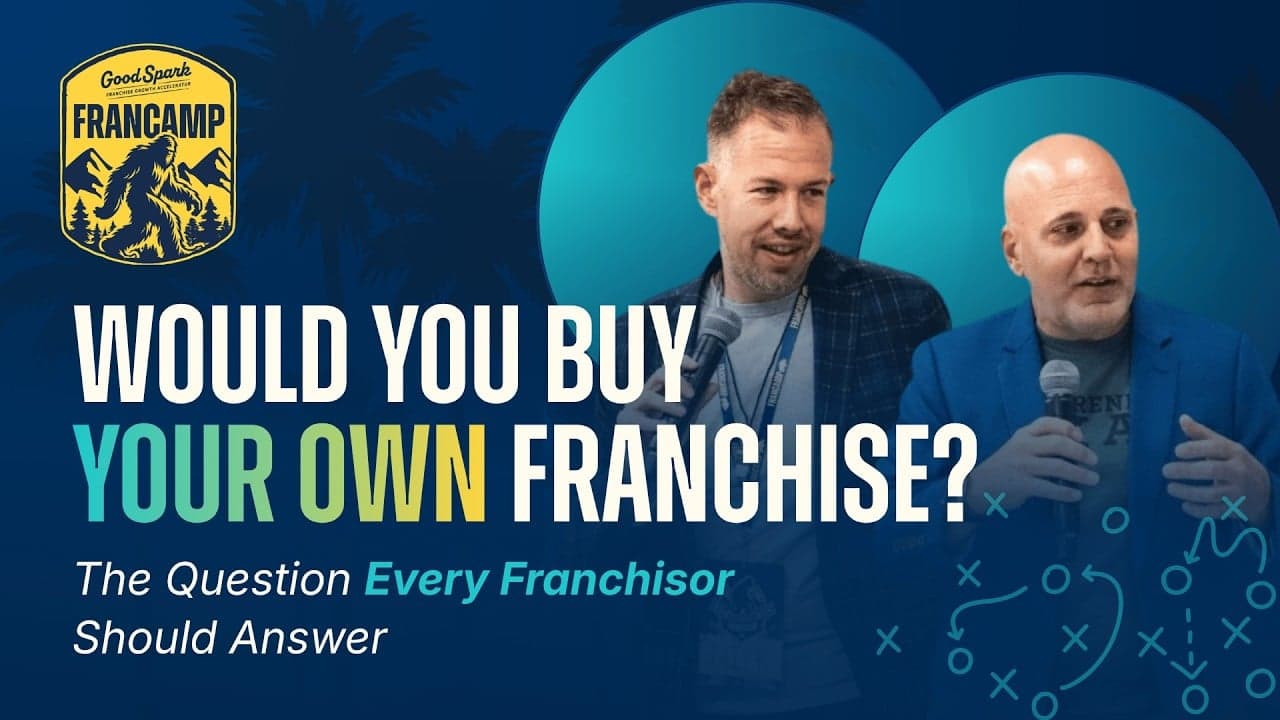
“I think, at the franchisor level, [whether you’re emerging or established], take a step back and reverse your thought process about your franchise: Would you invest your own money into the franchise you’re selling?” said Charles Internicola, founder of The Internicola Law Firm, on a recent episode of the Win Big at Franchising Podcast. “I think every franchise salesperson should ask it.”
“If there’s hesitation, it gives you an insight,” said Nick Powills, CEO and managing partner of Mainland*. “If you’re having that hesitation, so are your buyers.”
The answer to “Would I commit my own capital?” may be “no” because of a franchisee-persona reason, like the ability to operate as a semi-absentee owner. But this isn’t always the only case. If you’re hesitating because of higher-level concerns about the business, it’s time to do a more thorough evaluation of the opportunity to identify key gaps.
The evaluation should follow a simple framework:
- Unit Economics: Does the business make money? Is there a compelling return on investment?
- Brand Differentiation: What makes your franchise stand out in the larger marketplace? Are these traits clearly presented and easy for a candidate to understand?
- The Franchisee Value Proposition: What do franchisees get for the money they’re putting in? What does the support structure look like?
- The Candidate Experience: Does the discovery process encourage confidence?
- Franchisee Success: Are current owners successful? Does the system demonstrate clear growth potential?
- Growth Readiness: Are you actually working to grow a successful system, or are you just looking to sell units?
Here’s what you need to consider for each point.
Benchmark 1: Unit Economics and ROI
Franchisees are looking for a return on their investment, and a strong ROI points to strong scalability.
“I can take every dollar out of the business and pay off my investment in four years or less. The only way that a brand is going to be scalable is if you can do that,” Powills said. “So unit one opens in year one, unit two opens somewhere between 18 months and two years, unit three opens up at four years, and all of a sudden, unit one is starting to pay off money [that supports the growth of the subsequent units].”
This scenario is based on pure capital recovery, which many owners won’t be able to do. With the added variable of an owner drawing a modest salary in their first few years of ownership, the ROI timeline should still be between five and six years.
Benchmark 2: Brand Differentiation vs. Marketing Fluff
Franchisors need to understand what makes them different, and this needs to be clearly communicated to candidates.
“There’s a difference between differentiation and innovation,” Powills said. “You could be in a category of one and have a different product, but unfortunately, you’re competing against one, so the cost of marketing is tremendously higher because you have to educate customers to want to be a part of your business.”
Innovation doesn’t always create differentiation, either. Powills gave the example of the early self-serve frozen yogurt shops. While the first brand to do it was innovative, the model gained traction, and more, similar businesses started opening. Suddenly, there was no point of differentiation. All yogurt shops were the same.
“The next franchise that opened — they all used the same distributor for the frozen yogurt. They all had the same Snickers and the same sprinkles,” he said. “So there was no point of differentiation.”
For founders, it can be hard to realistically evaluate this point. Most founders will highlight things like better quality products or a different guest experience, but franchise candidates need to be able to see it objectively and with their own eyes.
In the food industry, for example, Powills said that real differentiation can be measured by guest frequency. The average customer doesn’t care if a brand’s website says it has better ingredients or a better experience; they care if it actually does. And when a brand is actually differentiated, guests respond. These are the proof points that franchise candidates care about.
Benchmark 3: The Franchisee Value Proposition
Even after a candidate understands the business model and its growth potential, they need to know why they would invest with a franchisor. A clear perspective on the resources and support provided by a franchise can make franchise-specific costs easier for a candidate to digest.
“I personally hate the term ‘royalty,’” Powills said. “I think it’s a franchisee support fee. Franchisees will ask, ‘Why do I have to pay this royalty?’ You’re paying it for all of these support mechanisms that you will get access to that you would not have if you started your own business.”
For 5% of their revenue, for example, a franchisee could not go start their own brand with a website, app, logo, supply chain and support system as robust as the one a franchisor offers. Franchisors must be specific about the value a franchisee gains in exchange for the royalty fee.
“Spend this next quarter with your team focusing on how [you] help franchisees succeed,” Internicola said. “Challenge it. If you have gaps in it, cover those gaps. Focus on your coaching, then you have a compelling story about what your success framework looks like”
Benchmark 4: Candidate Experience and Validation
A candidate’s experience during the due diligence process will stick with them, and it may even have a bigger impact on their final decision than any well-prepared development materials can.
Once a franchise brand has checked the “I’m interested in this business model” box for the candidate, that person’s attention shifts from things like the development website to validating that this really is the brand for them.
Validation is really what it comes down to, and it happens in three key places:
- Sales Team Interactions: Initial conversations are impactful. Can the sales team answer a candidate’s initial questions during the early stages of qualification?
- In-Person Interactions: When a franchisee visits for discovery day, how do interactions with the leadership and support teams feel?
- Franchisee Interactions: If, at any stage of the process, a candidate interacts with an existing franchisee, how does that conversation go? Is the current owner pleased with their investment? Are they conveying a positive experience?
“Be genuine and be consistent because the inconsistencies that a franchisee uncovers — it’s not something intentionally negative, but it’s an inconsistency in your culture, what you’re doing and what you’re promising,” Internicola said.
Benchmark 5: System Health and Growth Readiness
A prospective franchisee wants to join a system where they’ll succeed. Franchisors must consider what success looks like to a franchisee, not just a development team, to ensure they’re meeting that need.
Looking at unit performance across the board, rather than something like the annual revenue of the single highest-performing unit, is a good starting point.
“Percentage of open units above average; that’s the number that I’m curious about,” Powills said. “How many are actually performing above average? Because then there is alignment in the expectation setting of the franchisee.”
There will always be outliers, but showing a candidate a system in which healthy performance is the norm increases confidence. And discussing the norm or average in the development process also ensures franchisees have the right expectations coming into the investment.
A brand’s growth readiness is the other key consideration here. Franchisors must be able to stand behind the development efforts they’re pushing. Selling units to drive up the number of businesses in the development pipeline or capture the initial franchise fee isn’t the way to go. A franchisor that is truly ready to grow is able to support both its current owners and incoming franchisees to drive systemwide success.
Prospective franchisees may not have an inside look at a franchisor’s motivations, but when a franchisor is growing the right way and for the right reasons, the system’s performance reflects it. This is what candidates notice.
“When you shift the franchisor mindset to increasing unit volume and franchisee performance over franchise sales, I think you have the opportunity to create a compelling brand and change your trajectory,” Internicola said.
Conducting the Internal Audit and Resetting for Franchise Growth
Building a brand you’re proud of is an achievement, but sustained franchise growth requires a system and opportunity that appeals to the eyes of an investor, too. Prospective franchisees care about more than just the founder’s passions. They’re also weighing real financial risk and should be taking a logical approach to evaluating the brand’s unit economics, support and position in the market.
A franchisor who can flip the script, strip away their own excitement about the brand and look past marketing noise to evaluate whether they’d invest their own capital in the model can identify and address any potential vulnerabilities before those cracks stall franchise development.
Watch the full conversation here.
Growing and selling franchises is difficult. Want to learn more about how 1851 helps franchisors grow their franchises with confidence? Visit www.1851growthclub.com and see what we can do for you.