Franchisee Stories
Franchising Under Attack Part 2
1851 Asks the Franchise Legal Players Why
Franchisee Stories
1851 Asks the Franchise Legal Players Why
According to the International Franchise Association (IFA) nearly 4 percent of all small businesses in the U.S. are franchises; Government might not understand the true impact
It is estimated that there are more than 900,000 franchise businesses across 300 business categories in the U.S. which provide nearly 18 million jobs and generate more than $2.1 trillion to the economy. Franchising is a huge industry, yet, quite often, policymakers don’t understand the fundamentals of franchising enough to be mindful of its impact and the impact of their ideas.
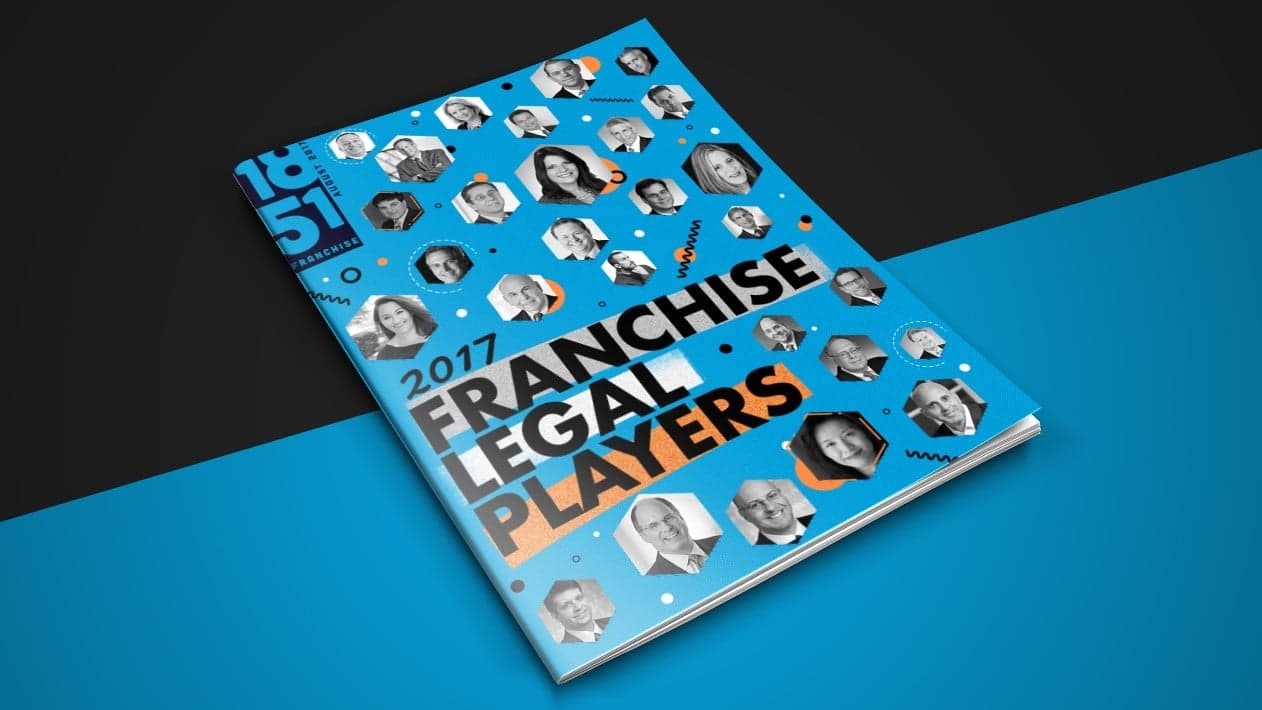
1851 interviewed its 2017 Franchise Legal Players, those charged with protecting the industry from a legal standpoint, about why they believe franchising is under attack:
Amy Cheng, Cheng Cohen: I definitely feel that franchising has received some negative publicity and has been misunderstood by the public and the politicians. However, franchising has survived other adversities and I’m certain that we will figure out a way to progress forward. I have no doubt that franchising will continue to thrive.
Michael Daigle, Cheng Cohen: I think American business generally has suffered as a result of overly burdensome regulation and taxation that have made it difficult to start and stay in business. We’ve stacked the deck against the entrepreneurial spirit that made this country an economic powerhouse. Franchised businesses have felt those burdens just as non-franchised businesses have. The focus on employment-based concepts (like joint employment) over the past few years started out as a means to facilitate the organization of workers and has expanded from there based on, I think, two factors: a lack of understanding by lawmakers and bureaucrats of the franchise model, and a general blurring of the lines by some high-profile franchisors that make it more difficult for lawmakers, bureaucrats, workers and consumers to understand the model. Franchising plays too important of a role in global distribution of products and services, so it will continue as a business model, but I think the recent waves will – or should – force franchisors to assess their systems, determine what kinds of controls are important for that particular system, and, ultimately, control what really needs to be controlled. That kind of gut-check isn’t necessarily a bad thing.
Bret Lowell, DLA Piper: Franchising has long had its legal tensions. But those tensions have largely related to the balance between franchisors and franchisees. And, in a similar fashion, employment relationships have always had their legal tensions – focused on the relationship between employer and employee. What is now new is the merging of these tensions, so that legal tension now exists between the franchisor and the franchisee (as so-called “joint employers”), on the one hand, and the franchisee employee, on the other hand. Franchisee employees are now seeking to hold the franchisor responsible for the employment acts of the franchisee. This effort is largely being driven by unions, who are seeking to bolster their membership, while justifying their actions as improving wages and working conditions for the employees.
Franchising will weather this current storm. The current union efforts – which are confronting push-back from both franchisors and franchisees on both legislative and judicial fronts – will no doubt lead to a new landscape. But, that landscape – with higher wages and different working conditions – will also bring about countervailing forces, such as the use of greater technology to offset higher employment costs. Ultimately, the tremendous power of franchising – with its built-in economies of scale and synergistic advantages – will enable it to persevere and achieve even greater success than it enjoys today.
Adam Siegelheim, Stark & Stark: I have a very positive view of the current state of franchising. The success of the franchising model will continue to be an attractive option for businesses that want to scale effectively.
Brian Schnell, Faegre Baker Daniels: The business model is under attack from a regulatory perspective, but franchising always finds a way to progress forward, in large part due to ingenuity, entrepreneurial spirit and the dedication of franchisors and franchisees across the country. No business model creates more jobs and connects better with customers.
Richard Morey, DLA Piper: Franchising is definitely under attack from a legal perspective, but these legal attacks can ebb and flow with the political landscape and public opinion. There have been other legal challenges over the years, too, whether from antitrust enforcement, restrictive relationship laws or other means, and franchising has survived those. I believe franchising will survive this storm as well, and emerge stronger than ever. It might look a little different than it did five years ago, with franchisors peeling back the controls and restrictions to only those that are critical to the brand – which in most cases is a good thing – but it will be stronger.
Sign up for the 1851 Franchise newsletter to get our biggest stories before everyone else
By signing up, you agree to our user agreement (including class action waiver and arbitration provisions), and acknowledge our privacy policy.

About the Author
Nick Powills, CFE, founded No Limit Agency in 2008 and serves as Chief Brand Strategist for the Chicago-based firm. No Limit is a full-service communications agency that establishes and elevates brands by bridging Public Relations, Social Media, Marketing, Advertising, Digital, and a lot of creativity, to best strategize well-rounded and successful campaigns for 50+ global franchise brands. By presenting visionary ideas and building real relationships, No Limit is able to create effective media branding strategies to help companies grow. Nick currently leads a staff of writers, media strategists, designers, social media experts and digital producers in an office think-tank where brands are humanized for strong, compelling media stories. Prior to starting No Limit at the age of 27, Nick spent four years working at a franchise PR agency where he mastered the art of building rapport with media outlets and creating newsworthy pitches for earned media placements. He holds a Bachelor of Journalism from Drake University in Iowa.