
GoodSpark
SPONSORED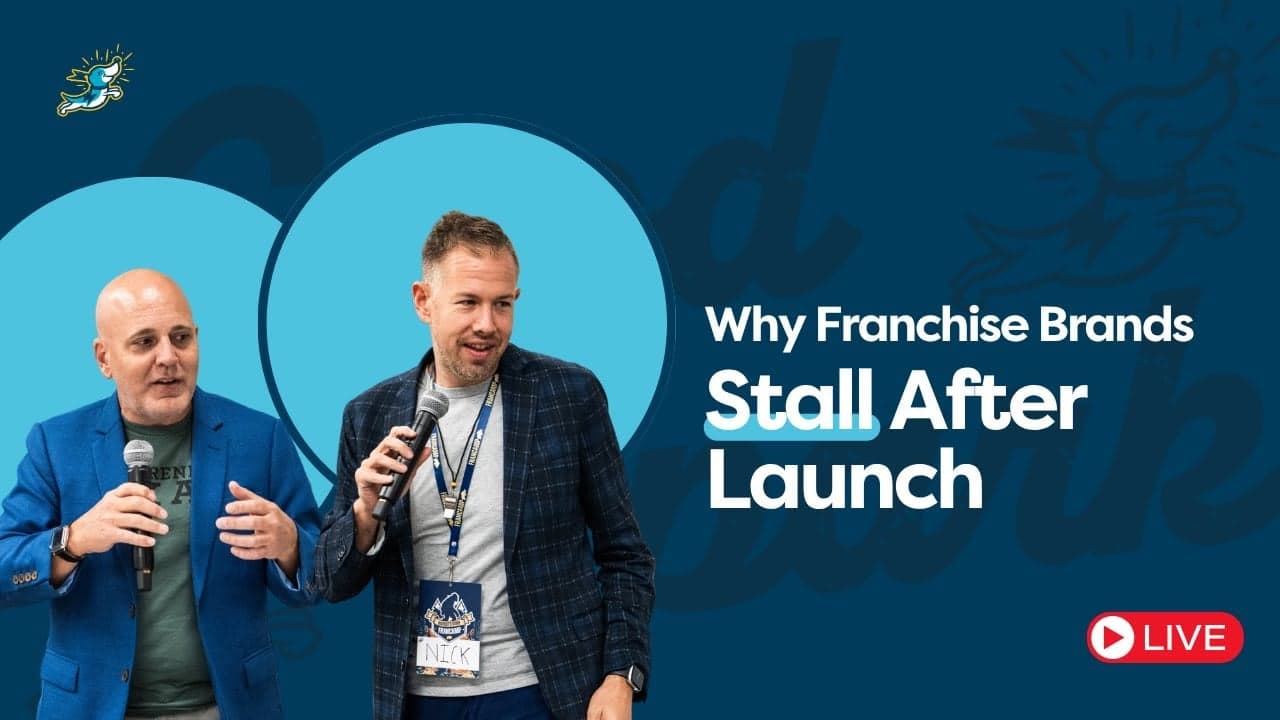
Why Franchise Brands Stall After Launch, and the Playbook to Start Scaling Again
Scaling a franchise starts with unit economics, the right franchise owners, actually investing in support and being capitalized enough to grow.
Some brands franchise and take off. Others launch, sell a few units and then hit a wall. It can happen three months in or sometimes three years in. Either way, the pattern is the same: deals slow down, franchisees struggle and growth stalls.
If a brand is stalling instead of growing after launch, it’s usually due to missed fundamentals, or fundamentals that were never fully built in the first place.
Here’s a practical, step-by-step playbook based on what actually drives franchise growth and what stalls it.
Most franchise problems trace back to one place: the numbers.
“When you look in the mirror and say, ‘Why am I not scaling?’’ You don't scale because two things. The brands that fail are the brands who sell multi-packs to franchisees who never become multi-unit owners. The brands that win, their franchisees are winning 50% of the same-store unit store growth…all that I’m talking about is unit level economics,” Nick Powills, chief strategy officer at GoodSpark Franchise Growth Accelerator, said in a recent podcast.
At the end of the day, a franchise has to work financially for the operator. That means:
A simple way to think about it is that if a unit can’t pay back the initial investment in a reasonable timeframe, the model isn’t really built to scale.
Additionally, brands shouldn’t be guessing when it comes to key numbers. Every dollar in Item 7 should connect back to customer acquisition cost and value, and how long it will take to stop losing money. This includes marketing.
“In your FDD Item 7, it says the grand opening has $10,000. I go, ‘Where did you get that?’…That needs to be calculated back to a rush to break even. If you're break even, where the franchisee stops bleeding cash, to say it's $10,000 a month, well, then the way that you design the grand opening is to drive them to have enough customers to get to $10,000 a month,” Powills said.
Even with strong economics, the wrong operators will stall a system. That means existing owners should purchase additional units instead of relying only on new buyers. But that can only happen when a brand is bringing the right people in in the first place.
“Those are the biggest frustrations for franchisors…I sold a franchise, but now the franchisee thinks I'm doing everything for them,” said Charles Internicola, CEO of GoodSpark. “I'm gonna make the phone ring. So we have the unit economics, and that's engineered and understood, and it's genuine to alignment with the right franchisees. Understand that if you pick the wrong ones, they're not gonna validate, they're gonna hurt themselves, they're gonna cost you money, and you're not going to grow.”
A franchisor relies on a franchisee to be the face in their community. This includes:
And most of that costs no money at all. If a franchisee isn’t willing to do that, or has a team member who will, they’re not set up to push growth.
It’s common for brands to invest heavily in franchise sales and celebrate deals. But some may underinvest in what comes next: supporting the franchisee. When support doesn’t match the promise:
“The franchisor says, ‘We support you like this.’ The reality is, you support them like that, which causes their unit level of economics not to perform, which causes them to fail. And so franchisors under-invest in the support, over-invest in franchise sales, and therefore can get the new blood in, but can't support them, which turns into multi-unit deals that are for single-unit operators,” said Powills.
A better approach is to focus on the success of the franchisees you already have. When they open up unit two, that’s when to celebrate.
Even if the first three pieces are in place, growth still requires capital. Capital is needed not just to market franchises but to:
“When you're talking about spending, we're gonna spend $4,000 a month. You are in a crapshoot zone. You have not spent enough funds to get the engine moving in,” Powills said. “So when you look around the room and blame everything for why you're not growing, it is a capitalization issue. I'm not saying come out of the gates with millions of dollars, but if you want to add four units in the next year, you'd better be prepared to budget $100,000 to build enough momentum.”
When brands stall, it’s rarely one issue. It’s usually a combination of economics that don’t work, franchisees who aren’t the right fit, and not enough support or capital.
Luckily, those are all fixable issues. But to fix it requires a shift in mindset. Franchisees should focus less on selling franchises and more on building up franchisees.
For more information on GoodSpark and its services for developing franchises, visit https://www.goodsparkfranchise.com/.
GoodSpark
SPONSOREDScaling a franchise starts with unit economics, the right franchise owners, actually investing in support and being capitalized enough to grow.
Some brands franchise and take off. Others launch, sell a few units and then hit a wall. It can happen three months in or sometimes three years in. Either way, the pattern is the same: deals slow down, franchisees struggle and growth stalls.
If a brand is stalling instead of growing after launch, it’s usually due to missed fundamentals, or fundamentals that were never fully built in the first place.
Here’s a practical, step-by-step playbook based on what actually drives franchise growth and what stalls it.
Most franchise problems trace back to one place: the numbers.
“When you look in the mirror and say, ‘Why am I not scaling?’’ You don't scale because two things. The brands that fail are the brands who sell multi-packs to franchisees who never become multi-unit owners. The brands that win, their franchisees are winning 50% of the same-store unit store growth…all that I’m talking about is unit level economics,” Nick Powills, chief strategy officer at GoodSpark Franchise Growth Accelerator, said in a recent podcast.
At the end of the day, a franchise has to work financially for the operator. That means:
A simple way to think about it is that if a unit can’t pay back the initial investment in a reasonable timeframe, the model isn’t really built to scale.
Additionally, brands shouldn’t be guessing when it comes to key numbers. Every dollar in Item 7 should connect back to customer acquisition cost and value, and how long it will take to stop losing money. This includes marketing.
“In your FDD Item 7, it says the grand opening has $10,000. I go, ‘Where did you get that?’…That needs to be calculated back to a rush to break even. If you're break even, where the franchisee stops bleeding cash, to say it's $10,000 a month, well, then the way that you design the grand opening is to drive them to have enough customers to get to $10,000 a month,” Powills said.
Even with strong economics, the wrong operators will stall a system. That means existing owners should purchase additional units instead of relying only on new buyers. But that can only happen when a brand is bringing the right people in in the first place.
“Those are the biggest frustrations for franchisors…I sold a franchise, but now the franchisee thinks I'm doing everything for them,” said Charles Internicola, CEO of GoodSpark. “I'm gonna make the phone ring. So we have the unit economics, and that's engineered and understood, and it's genuine to alignment with the right franchisees. Understand that if you pick the wrong ones, they're not gonna validate, they're gonna hurt themselves, they're gonna cost you money, and you're not going to grow.”
A franchisor relies on a franchisee to be the face in their community. This includes:
And most of that costs no money at all. If a franchisee isn’t willing to do that, or has a team member who will, they’re not set up to push growth.
It’s common for brands to invest heavily in franchise sales and celebrate deals. But some may underinvest in what comes next: supporting the franchisee. When support doesn’t match the promise:
“The franchisor says, ‘We support you like this.’ The reality is, you support them like that, which causes their unit level of economics not to perform, which causes them to fail. And so franchisors under-invest in the support, over-invest in franchise sales, and therefore can get the new blood in, but can't support them, which turns into multi-unit deals that are for single-unit operators,” said Powills.
A better approach is to focus on the success of the franchisees you already have. When they open up unit two, that’s when to celebrate.
Even if the first three pieces are in place, growth still requires capital. Capital is needed not just to market franchises but to:
“When you're talking about spending, we're gonna spend $4,000 a month. You are in a crapshoot zone. You have not spent enough funds to get the engine moving in,” Powills said. “So when you look around the room and blame everything for why you're not growing, it is a capitalization issue. I'm not saying come out of the gates with millions of dollars, but if you want to add four units in the next year, you'd better be prepared to budget $100,000 to build enough momentum.”
When brands stall, it’s rarely one issue. It’s usually a combination of economics that don’t work, franchisees who aren’t the right fit, and not enough support or capital.
Luckily, those are all fixable issues. But to fix it requires a shift in mindset. Franchisees should focus less on selling franchises and more on building up franchisees.
For more information on GoodSpark and its services for developing franchises, visit https://www.goodsparkfranchise.com/.
Sign up for the 1851 Franchise newsletter to get our biggest stories before everyone else
By signing up, you agree to our user agreement (including class action waiver and arbitration provisions), and acknowledge our privacy policy.

No related articles found