
GoodSpark
Why Franchisors Need Better Systems Between Signing and Opening Day
As franchise systems grow, the process between signing and opening can become harder to manage when updates live across spreadsheets, checklists and inboxes.
Franchise growth can sometimes bring a new operational challenge: getting franchisees from a signed agreement to open doors without losing momentum. Most brands already have a process in place, but as more locations are awarded and more departments get involved, that process can become harder to manage.
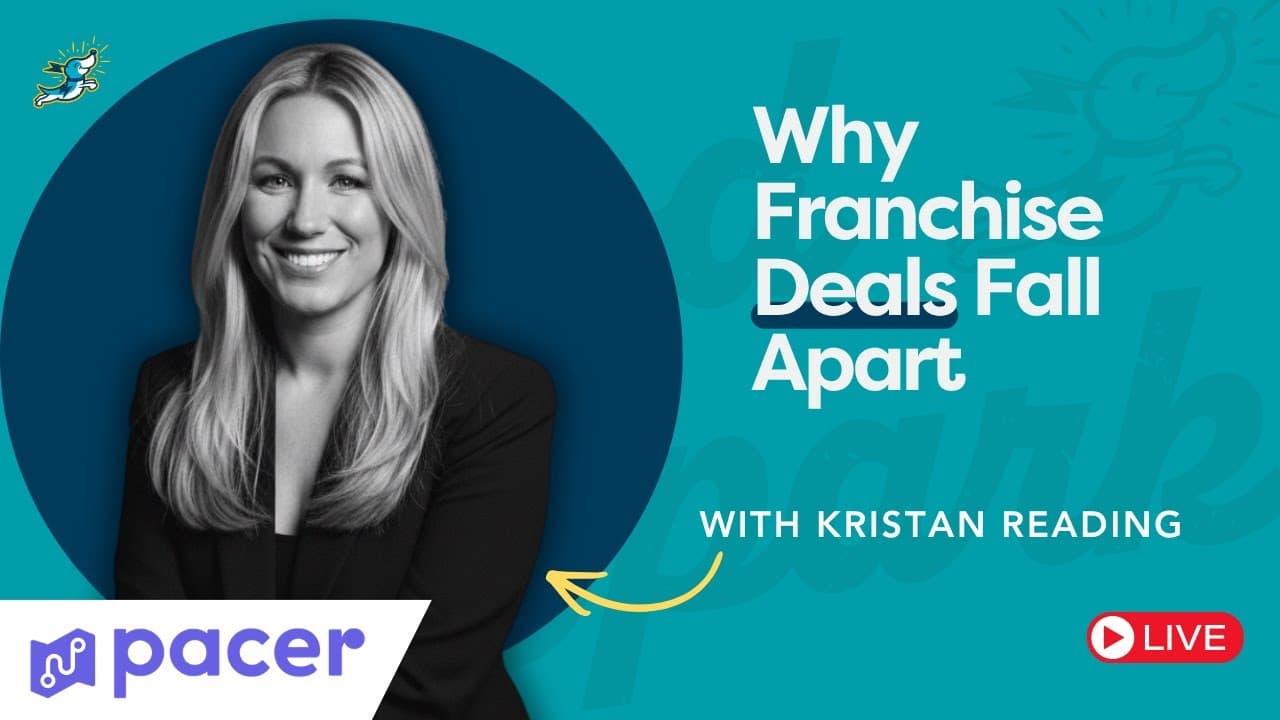
During a recent webinar hosted by GoodSpark Franchise Growth Accelerator, CEO Charles Internicola and Chief Strategy Officer Nick Powills discussed the challenges franchisors face between signing a franchise agreement and opening a location. They were joined by Kristan Reading, director of sales and client services at Pacer, who shared how project management software can help brands create more visibility and accountability throughout the onboarding process.
“We help to onboard and open your locations faster and easier,” Reading said. “We’re a project management software that allows you to keep control while also being able to have total visibility into all aspects of the onboarding and opening processes.”
Most franchisors are not starting from scratch. They already have an opening playbook built from experience. The challenge is often taking that process out of spreadsheets, PDFs or internal checklists and turning it into something repeatable as the system grows.
“Most times, people are using Excel,” Reading said. “They're literally sending PDFs to their franchisee, saying, ‘Hey, here's the list of things that you need to do in order to get up and running.’”
That can work in the early stages, but it becomes harder to manage as more units enter development at the same time. Pacer helps brands move that process into one place, giving franchisors and franchisees visibility into what needs to get done, who owns each step and where each opening stands.
As brands add more franchisees, visibility becomes more important. Franchise development, real estate, operations and franchisees may all be handling different parts of the opening timeline. Without one place to track progress, teams often end up spending time chasing updates instead of moving projects forward.
“All you have to do is go talk to your onboarding manager and ask them how many meetings they’re having, because they’re chasing after every single department finding out where they’re at during the onboarding process,” Reading said. “Everyone’s working off different systems. If everything is in one place, then they’re easily able to mitigate risks faster and get answers faster.”
A process that works when opening one location every so often can feel very different when multiple locations are moving at once. As growth picks up, small inefficiencies become much more noticeable.
This applies across franchise categories. Restaurant brands may be managing longer development timelines with more moving parts. Home service brands may move faster, but with less room for error. In both cases, organization becomes increasingly important as more units are added.
“If you're scaling to the point where you know you've got different territories that are working weeks apart from each other, it's just as important to be able to have that sort of visibility across the different franchisees,” Reading said.
The same systems used during onboarding can also help franchisors roll out projects across the system after opening.
“We are not only going to let you know what you have to do, but tell you how it gets done, and then be able to measure the success around that,” Reading said.
For franchisors, the same system can be used for projects that come after opening, from operational updates to brand-wide rollouts. Franchisees can see what needs to be done, while the brand can track whether the work is actually moving forward.
On the franchisee side, that kind of organization during onboarding and beyond can ultimately shape how they view the brand in the long run. And as they go through the validation process with prospective owners, it can shape who joins the brand.
“It’s a very different world if a prospective franchisee is validating and speaking to an existing franchisee, and the comment is they had everything covered,” Internicola said. “They made the process seamless to get open.”
Development is only part of the equation for growing franchise brands. Supporting the units that open is just as important.
“I think we all need to be building toward scalability,” Internicola said. “I think the biggest illusion for every business, not just franchisors, is that so many businesses focus on sales, and the ironic thing is, if you focus on the capacity and the execution, the sales are going to come.”
Watch the full webinar above or on YouTube.
For more information on GoodSpark and its services for developing franchises, visit https://www.goodsparkfranchise.com/.
GoodSpark
As franchise systems grow, the process between signing and opening can become harder to manage when updates live across spreadsheets, checklists and inboxes.
Franchise growth can sometimes bring a new operational challenge: getting franchisees from a signed agreement to open doors without losing momentum. Most brands already have a process in place, but as more locations are awarded and more departments get involved, that process can become harder to manage.
During a recent webinar hosted by GoodSpark Franchise Growth Accelerator, CEO Charles Internicola and Chief Strategy Officer Nick Powills discussed the challenges franchisors face between signing a franchise agreement and opening a location. They were joined by Kristan Reading, director of sales and client services at Pacer, who shared how project management software can help brands create more visibility and accountability throughout the onboarding process.
“We help to onboard and open your locations faster and easier,” Reading said. “We’re a project management software that allows you to keep control while also being able to have total visibility into all aspects of the onboarding and opening processes.”
Most franchisors are not starting from scratch. They already have an opening playbook built from experience. The challenge is often taking that process out of spreadsheets, PDFs or internal checklists and turning it into something repeatable as the system grows.
“Most times, people are using Excel,” Reading said. “They're literally sending PDFs to their franchisee, saying, ‘Hey, here's the list of things that you need to do in order to get up and running.’”
That can work in the early stages, but it becomes harder to manage as more units enter development at the same time. Pacer helps brands move that process into one place, giving franchisors and franchisees visibility into what needs to get done, who owns each step and where each opening stands.
As brands add more franchisees, visibility becomes more important. Franchise development, real estate, operations and franchisees may all be handling different parts of the opening timeline. Without one place to track progress, teams often end up spending time chasing updates instead of moving projects forward.
“All you have to do is go talk to your onboarding manager and ask them how many meetings they’re having, because they’re chasing after every single department finding out where they’re at during the onboarding process,” Reading said. “Everyone’s working off different systems. If everything is in one place, then they’re easily able to mitigate risks faster and get answers faster.”
A process that works when opening one location every so often can feel very different when multiple locations are moving at once. As growth picks up, small inefficiencies become much more noticeable.
This applies across franchise categories. Restaurant brands may be managing longer development timelines with more moving parts. Home service brands may move faster, but with less room for error. In both cases, organization becomes increasingly important as more units are added.
“If you're scaling to the point where you know you've got different territories that are working weeks apart from each other, it's just as important to be able to have that sort of visibility across the different franchisees,” Reading said.
The same systems used during onboarding can also help franchisors roll out projects across the system after opening.
“We are not only going to let you know what you have to do, but tell you how it gets done, and then be able to measure the success around that,” Reading said.
For franchisors, the same system can be used for projects that come after opening, from operational updates to brand-wide rollouts. Franchisees can see what needs to be done, while the brand can track whether the work is actually moving forward.
On the franchisee side, that kind of organization during onboarding and beyond can ultimately shape how they view the brand in the long run. And as they go through the validation process with prospective owners, it can shape who joins the brand.
“It’s a very different world if a prospective franchisee is validating and speaking to an existing franchisee, and the comment is they had everything covered,” Internicola said. “They made the process seamless to get open.”
Development is only part of the equation for growing franchise brands. Supporting the units that open is just as important.
“I think we all need to be building toward scalability,” Internicola said. “I think the biggest illusion for every business, not just franchisors, is that so many businesses focus on sales, and the ironic thing is, if you focus on the capacity and the execution, the sales are going to come.”
Watch the full webinar above or on YouTube.
For more information on GoodSpark and its services for developing franchises, visit https://www.goodsparkfranchise.com/.
Sign up for the 1851 Franchise newsletter to get our biggest stories before everyone else
By signing up, you agree to our user agreement (including class action waiver and arbitration provisions), and acknowledge our privacy policy.

No related articles found