Frontline workers are the backbone of the hospitality industry, driving guest satisfaction, operational success, and overall business performance. Yet, managing and retaining these critical team members in an ever-changing economic and regulatory landscape is no small feat. 

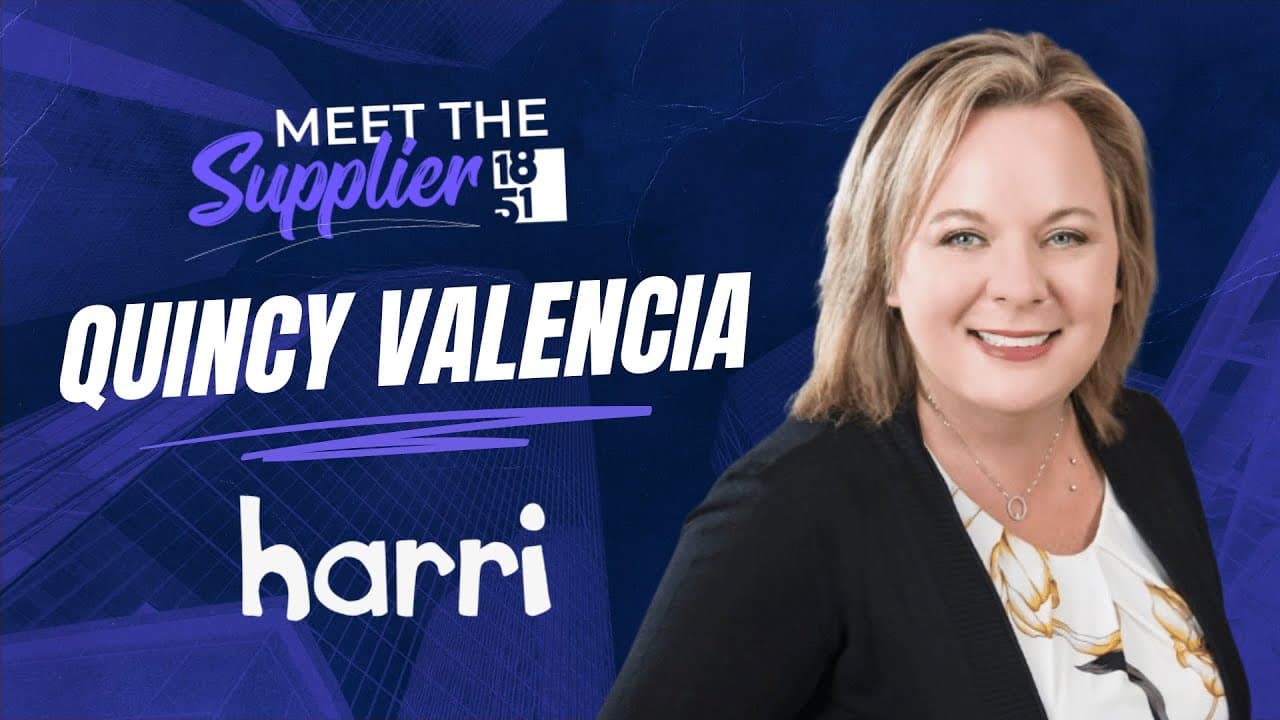
In a recent episode of the “Meet the Supplier” podcastNick Powills sat down with Quincy Valencia, senior vice president of innovation at Harri, to dive into how the company’s innovative people platform is helping hospitality businesses tackle these challenges head-on.

Harri specializes in providing end-to-end solutions designed to enhance employee engagement, streamline workforce management and address critical issues like turnover and operational inefficiencies. Drawing on decades of research and hands-on industry insights, Valencia explains how Harri bridges the gap between technology and human connection, creating an environment where employees feel valued and supported. From using real-time feedback tools to improve communication to leveraging data for actionable insights, Harri’s approach is helping hospitality operators unlock the full potential of their teams.

A transcript of Powills’ interview with Valencia has been provided below. It has been edited for brevity, clarity and style.

Nick Powills: All right, Quincy, before we dive into our main topic, I'd like to set the stage. What is Harri, and what's your background? This way, anyone watching has a sense of who you are and what we're discussing.

Quincy Valencia: Sure. Harri is an end-to-end people platform for the hospitality industry, primarily focusing on frontline workers. Our client base includes large enterprises, franchise organizations and even individual franchise owners, but our focus is squarely on the hospitality space, where frontline workers are critical to business operations and performance.

Powills: What is your specific role within the company?

Valencia: My title is senior vice president of innovation, which essentially means it's my job to understand the market and identify what's important from a software standpoint. This includes talent acquisition, workforce management, employee engagement, risk management, learning and development — everything we cover.

I focus on how these elements benefit our clientele in the hospitality space, which is quite different from the professional knowledge worker environment. Frontline workers drive the economy and their quality, along with the environment you provide for them, directly determines business success.

My role involves understanding the market from both a technology and business operations standpoint. I ensure we’re using our existing technology in the most beneficial way for operators and developing new technology that enhances their experience and business outcomes.

Powills: As silly as this question may sound, you've been at the company for a little over a year now. I assume a lot has changed and things move very quickly. What have you observed as you've tried to identify the challenges you can solve for your client base?

Valencia: There are a couple of ways to approach that. The big-picture issues — the huge ones — haven’t really changed. Our clients are still trying to hire in markets where it’s challenging to identify the best and most appropriate people to hire.

While conventional wisdom might suggest technology has made this easier, in some ways, it’s become harder because there’s access to a larger pool. Challenges like retaining employees, keeping them happy and operationalizing effectively amidst wage pressures, labor shortages and significant regulatory changes are still at the forefront.

At the core, it’s about how to provide the best guest experience to drive sales and revenue while creating the right environment for employees. While some things, like wage pressures and regulatory challenges, have become more difficult over the past year, the overarching challenges remain the same.

Powills: Yeah, when I think of what I perceive as a best-practice brand in today’s world, something like Chick-fil-A comes to mind. They have to navigate regulatory issues and hiring challenges, yet their guest perception is often tied to the friendliness of their employees.

That likely stems from the culture they’ve built and the way their operators foster a connected workforce, providing added value to employees. This approach probably reduces turnover.

It feels like they’ve developed a formula: take McDonald’s operational efficiency — where every employee knows their role and responsibilities — and layer in strong employee treatment to encourage retention. Then, leverage technology to operate as a best-in-class brand. That seems to be the equation for success. Any comments on that?

Valencia: That connected workforce, which is what we’re here to talk about today, is music to my ears. What we’re really discussing is engagement — how engaged employees are in the business they’re part of. Engagement is simply the degree to which an employee feels connected to their workplace.

Why does that matter? It might sound touchy-feely, but it’s incredibly important. Take Chick-fil-A, for example. They’re not just focused on delivering a great guest experience; they’ve built an employee experience that makes people proud to work there. Employees feel like part of the business and are motivated to deliver the best experience possible.

There are very tangible ways this kind of engaged, connected workforce drives better profitability and revenue for individual owners. This isn’t a new concept — it’s been studied for over five decades — but it’s our role to help operators connect the dots. It’s not just about feeling good; it’s about improving the bottom line.

For example, short-cycle turnover is a massive challenge in the restaurant and hospitality industries. Employees leave before they become productive, creating a costly cycle of recruitment, onboarding, uniforms, training and lost productivity. This disrupts labor forecasting and directly impacts profitability.

But reducing turnover is just one piece of the puzzle. Studies repeatedly show that engaged organizations see higher profitability, greater average ticket sales, fewer safety incidents and less shrinkage from wage or product theft. These benefits all lead to a more profitable operation.

When it comes to technology, Harri focuses on enhancing the employee experience. This includes everything from clocking in and trading shifts to providing effective surveys that give employees a voice. We ensure the process is seamless, integrated into the flow of work and fosters connection between employees, peers and management.

Ultimately, employees need to feel heard and know their management will act on their feedback. Regardless of the workplace, this sense of value and connection motivates employees to do their best. That’s where Harri steps in — to make engagement easier and more impactful for everyone involved.

Powills: I have a few thoughts and would love your take on them. Starting with the last point, the technology side of connecting employees seems like a worthwhile investment. If you give employees tools that automate processes and make them feel like they have a voice, it’s a win.

Now, going back to the start of our conversation — labor costs. Operators are often reluctant to increase wages, and I get it. Let’s put that reluctance aside for a moment. If you consider the cost of quick turnover — recruitment, onboarding, training, uniforms, and so on — as a line item on the P&L, it’s significant. In some cases, simply paying employees more from the outset might have mitigated those costs.

Another important point, if we think about employee turnover — whether in my company, your company, a multi-unit operator or a single-unit restaurant — there are consistent reasons why people leave. They might quit because they’re not getting the opportunities they want, they’re not making the money they want, they don’t like their boss or they don’t feel engaged.

But what else? There’s more to it, right?

Valencia: It’s interesting you say that because I’d agree — that’s where I would have started as well. And I still believe it boils down to those core reasons, but it’s much more granular than that. For example, someone might say, "I quit because I don’t like my boss." But the real question is why? What specifically about their management style is making the employee uncomfortable? You don’t get those answers unless you ask.

I know this from experience because over the past year, I’ve been running pilot programs with our product, Engage, which uses what we call "touchpoints." This involves connecting with employees where they work — at the clock — to ask questions about job satisfaction and what drives it. Questions like: Are you happy or sad? Why, specifically?

We also ask cyclical questions about the themes driving satisfaction or dissatisfaction. What we’ve found is that nearly everything falls into about ten core themes. While that may sound like a lot, it makes sense when you break it down. These include pay, hours, scheduling, management, culture, training and team support.

By asking these targeted questions — like, "What is it about the training?" or "What is it about the culture?" — owners and operators gain specific insights into the root causes of turnover or disengagement. This allows them to intervene where needed to improve conditions or replicate successful practices.

For example, if a franchise owner has five locations and notices that Location A consistently performs better than Location B — whether in sales, turnover or other metrics — they may assume it’s due to traffic flow or a better manager. But by directly asking employees, they’ll uncover specific, actionable insights.

These micro-themes allow for incremental changes that can have a significant impact. You can shorten the turnover cycle, improve engagement and make substantial differences to both the top and bottom lines of your organization. That’s the goal we’re working toward.

Powills: What I’m hearing from you is that most restaurant and hotel operators focus on operationalizing their business to create a great guest experience. But, in my opinion, many don’t put the same effort into operationalizing what I’d broadly call HR — the systems and processes to ensure employees feel valued. To me, the true number one customer is the employee. If they’re frustrated, your guests will never get the experience you want them to have.

It’s almost like there’s too much focus on driving top-line sales and not enough on supporting bottom-line sales by taking care of the people who make it all happen.

Valencia: It makes no sense not to prioritize employees because they’re the face of your business. Let me give you an example. There was a McDonald’s near where I used to live, and I’d go out of my way to visit that specific location because of the woman who worked the drive-thru every morning.

She was kind, cheerful and genuinely made my day better. Instead of a robotic “Welcome to McDonald’s, how can I help you?” she’d greet me with, “Good morning, hon! How are you? What are you up to today?” When I pulled up, she’d smile and say, “I hope you have a great day.” That warmth and enthusiasm made a real difference, and I chose that McDonald’s because of her.

The question is, how do you create an environment where employees feel that engaged? Some of it comes naturally to certain people, but she clearly enjoyed her job. She wasn’t just showing up and phoning it in — she embodied the brand’s values.

From an operator’s perspective, I often hear concerns like, “We don’t want to replace personal interactions with electronic systems that just ask employees questions when they clock in and out.” And I agree — nobody is trying to replace those human moments.

But the reality of being a manager in these environments is that you’re constantly putting out fires — dealing with angry guests, fixing broken equipment and handling the rush. What we aim to do is equip managers with conversation starters, data and insights so that when they do interact with employees, those conversations are meaningful.

Instead of just asking, “How was your weekend?” — which is fine but doesn’t impact the business — you can start discussions that show employees they’re being heard and valued while also driving better business results.

That’s the power of engagement. It’s about creating meaningful connections that benefit both the employee and the organization.

Powills: I love that last statement. As I was listening, I realized something. I mentioned earlier reasons like hating your boss, not being paid enough or not getting an opportunity, but if I break it down, the number one thing people have said when they’ve left our company is “a lack of communication.”

That’s such a broad umbrella term and can mean so many things. Obviously, we’re not a match for Harri since we’re a one-unit marketing company. But if we had a tool to supplement our busy days, even with the best intentions, we’d avoid failing to communicate as much. Sometimes, we hear a complaint from a co-worker, but we don’t really listen to it.

A supplementary tool like the one you’re describing could back us up. That’s the problem you’re solving. And solving it impacts the bottom line tremendously. Even if you avoid hiring one extra person over the next 12 months, that’s money that drops straight to the bottom line.

Valencia: Exactly. And as humans, we often focus on what’s going wrong — what’s bad, who’s leaving — but we should also look at what’s going right.

Let me share a story I’ve told before — I call it the pillow story. Early in my career, I worked at a big-box retailer. Different business, same idea: frontline workers driving the operation.

There was this guy who was an above-average performer — always on time, dependable and really good at his job. One day, a regional vice president came into the store, and we were walking around. The VP asked him, “How’s it going today?”

That day, he was mad — which was unusual for him. It turned out he was frustrated about how pillows were displayed on the shelves. They kept falling off, getting dirty and creating shrink because they had to be sent back. He suggested angling the shelves differently and using equipment to keep the pillows in place.

That simple idea sparked a lightbulb moment for the VP. Within weeks, the entire chain was mandated to change the layout. At the annual managers’ meeting, that employee was recognized onstage in front of 5,000 people. His idea had a seven-figure impact, increasing stock availability, sales and profitability.

Here’s the thing — this guy wasn’t disengaged. He was happy in his role. But someone took the time to ask him for input and it made a massive impact.

Now, not every idea will have a seven-figure impact, but what about the micro-improvements we miss every day? On the flip side, for those employees who are phoning it in, how often do they skip the upsell or fail to go the extra mile? How many pies aren’t being offered simply because they’re disengaged?

As owners and operators, it’s our responsibility to give employees a voice — to find out what’s working, what needs improvement and how we can act on even the smallest feedback. These seemingly minor changes can lead to meaningful impacts.

The key is simple: we have to ask.

Powills: I love that story. I think far too often — and maybe it’s because most organizations aren’t structured flatly — we assume that the person at the bottom doesn’t have the best ideas. But if we listen, the best ideas might not come from the VP in the ivory tower — they could come from someone lower down.

Have you ever heard the Tabasco story?

Valencia: No, I don’t think so.

Powills: The short version is that Tabasco ran a marketing campaign to come up with a big idea, and the ideas submitted were fine but not groundbreaking. So they opened it up to internal employees, offering a trip anywhere in the world for the best idea.

A guy who loaded Tabasco boxes for shipping suggested doubling the size of the hole on the bottle. His reasoning? It would make the sauce pour faster, people would use it up quicker and they’d buy more.

It was genius. That simple idea had a huge impact on sales, all because they asked someone who worked on the floor. It highlights how sometimes the biggest ideas are hidden within our teams. But if our infrastructure doesn’t empower employees to share those ideas, we miss out.

Just asking, “What do you think?” — whether through technology or conversation — builds relationships. Too often, workplaces become overly professionalized with rigid boundaries, likely for legal reasons. But this is our life. We spend so much time at work; why not give employees permission and the tools to have a voice?

Valencia: Exactly. And while that’s an extreme example, think about how small, everyday improvements within your own business can have a big impact. If employees feel valued, are asked for their input and see actions taken based on their feedback, it directly affects their work experience.

For instance, I might think my manager is the nicest person in the world. But if they’re not addressing the specific things that affect my job, I’m less likely to stay engaged. Sure, I might invite them to my wedding, but that doesn’t mean I want to keep working for them.

It’s critical to focus on areas needing improvement and track trends over time. Is the change we implemented making a difference? Employees will let you know, often down to an individual level.

Here’s an example from our product. During one pilot, we asked an employee a question during clock-in (compliant, since they’re on the clock) and the response turned into a rant. He was frustrated and even mentioned legal action.

We flagged it for the owner, who investigated. The root issue? The employee needed another trash bin at his workstation. He was responsible for cleaning, but there was only one bin located far away. Adding a trash bin resolved everything. The employee stayed and avoided escalating the situation.

Another example involved a woman who worked closing shifts. She reported feeling unsafe because the door locked behind her when she took the trash out, leaving her stranded by the dumpster. She mentioned it casually, but it didn’t reach the right person until later. Once it was addressed, she felt heard, valued and safer.

How easy was it to fix those issues? Yet before addressing them, those employees felt neglected and undervalued. When we listen and act, it impacts employee engagement, safety, absenteeism and turnover — all of which improve profitability.

Study after study has shown that engaged workplaces experience greater profitability, fewer safety incidents, less shrinkage, better sales and reduced tardiness. These small changes build a better, more productive workplace. I don’t know why anyone wouldn’t invest in this.

Powills: I love that statement. Out of curiosity, when Harri is implemented and provides these insights, how often do operators or leadership put the system in place, see the data but don’t act on it? Do you ever feel like shaking them and saying, “Guys, it’s all right here!” Does that still happen? And how do you see that being solved in the future?

Valencia: It does happen sometimes, though it depends on who has purview and who’s looking at the data. Typically, line managers are the ones having these conversations, so it’s crucial that they’re reviewing the information on a semi-regular basis.

When we implement Harri, we guide and consult with operators, advising them to check the data at least once a week. They should log in, review the insights and see what’s happening. To make this easier, we send push notifications to their email with a summary of the data, encouraging them to log in.

Operators may already be logging in to create schedules, but they’re not always looking at job satisfaction or sentiment dashboards. And they shouldn’t have to think about it constantly — our goal is to make it easier for them. The push notification provides a quick link to their dashboard so they can review the summary with minimal effort.

However, operators are busy running businesses. For example, a café manager might think, “I don’t have time for this.” They may still have conversations with employees but lack the bandwidth to analyze the data. That’s where we step in to help distribute the workload.

What’s equally important is having a secondary level of oversight. Managers might only see what’s happening in their store, but franchise owners or HR leaders in larger organizations have their own dashboards. They can monitor trends across all locations, identify problem areas (e.g., stores flagged in red) and direct attention where it’s needed.

This two-level approach — manager-level insights and high-level oversight — ensures nothing falls through the cracks. For instance, franchise owners with our premium product can view all their locations on one screen. They can spot trends, identify consistently high-performing stores and drill down into specific issues at lower-performing ones, even down to the individual employee level.

Powills: The stories you’ve shared today feel like games of inches. It’s not about moving mountains; it’s about solving small problems that yield big results. When you start analyzing this data, is it really that simple? Can addressing small issues lead to large, impactful outcomes?

Valencia: I think you hit the nail on the head — that’s completely true, especially when you notice trends. If one person is having an issue, it’s not that their issue isn’t valid, but it’s just one person. However, if you have 30 employees and 15 or 18 of them are consistently rating you a 1 or 2 out of 5 for the same issue, it’s incumbent upon you to address it.

Making small adjustments can have a huge impact on someone’s experience. Think about how many of us have quit a job because of the proverbial straw that broke the camel’s back. What if you could remove that straw? Not only do you keep the employee longer, but you also have more time to upskill them, help them hone their abilities and provide better experiences overall.

So yes, it’s absolutely a game of inches. But you can’t make those adjustments without the right information. If you’re just guessing, you’re missing the mark. The key is finding out for sure.

Powills: Take your McDonald’s story, for example. When you think about a game of inches, you had a woman who made you feel welcomed every morning. That story resonates, and I’m sure anyone listening to this can think of a similar experience.

There’s a place in Chicago called Stan’s Donuts. Every time I walk in, someone says, “Good morning, Nick.” It feels nice — it warms me up just thinking about it because it’s so rare.

Valencia: Sometimes you want to go where everybody knows your name, right? It makes a difference.

Powills: Exactly. And if you can gain insights into your high performers — your most engaged employees — and empower them to positively influence others, it also helps protect the workplace from toxic behaviors.

Valencia: It does, and that’s important to consider. It doesn’t always have to be strictly business-related. For example, while it’s certainly valuable to ask serious questions like “What is it about your manager that you like or don’t like?” we also encourage customers to use the platform for lighter, fun interactions.

Take McDonald’s as an example again. Last summer, they had a menu item called the Grandma McFlurry — which is a weird name — but one of our franchise owners asked their employees, “Have you tried this yet? What do you think?” Employees could respond with simple reactions like a sad face, vomit face or thrilled face. It’s just a fun way to engage. Starting your day with something like that can make the workplace feel cooler and more connected.

We’ve also seen franchises identify potential shift leaders or team members for leadership roles they might have otherwise overlooked. Sometimes the quieter employees, who consistently perform well but don’t draw attention to themselves, go unnoticed. These tools can help uncover hidden talent and build a leadership pipeline.

There are countless possibilities. For example, imagine it’s your first day at work, and when you clock in, there’s a quick video of your coworkers saying, “We’re so glad you’re here!” How would that impact your attitude and commitment to the organization?

It’s all about making the experience more engaging, fun and connected while still being part of the flow of work. Employees don’t have to download another app or go somewhere else — they’re already on the system.

Ultimately, it’s about creating the best experience for employees so they choose to work with you instead of the guy down the road. By automating these processes, managers and operators can quickly identify what needs attention and what can be replicated.

This helps deliver the best performance for employees and provides the best experience for guests. That’s the goal.

Powills: I'm going to close with this. Clearly, you’re a happy and passionate person. I can see it in the way you talk and your excitement about this topic. I’m excited about it too. Most of my career has revolved around frontline workers — the people who drive our economy, something we saw more clearly than ever during the pandemic.

We need to provide them with the tools and support to ensure our businesses are optimized. With your career and your work at Harri, your personal happiness, and all the research and insights you’ve gathered, how does this all translate back into the technology? How quickly does it turn into actionable improvements? Or does it take time to process and implement these insights in response to our ever-changing economic and employee climate?

Valencia: We monitor everything regularly, down to the micro-level of a single location. Operators can see insights instantly as they come in. On our side, we continuously analyze the data and make incremental product improvements all the time, alongside larger product updates.

For example, something fun we’re working on is gamification. Our next big release, coming next year, will include a rewards and recognition engine. Imagine gamifying operational goals — like reducing drive-through times — and using leaderboards, points or coins that employees can cash in for real rewards.

It makes work feel more engaging, almost like a game, while driving performance. By gathering insights and iterating on the product quickly, we ensure we’re addressing the most critical needs for employees while maximizing the impact on the business location and overall performance.

Powills: Quincy, I could talk to you for another two hours about this topic — I love it. It’s such an important conversation for all businesses, not just in multi-unit hospitality operations. I’m incredibly grateful you shared your insights with me today, and I hope this isn’t the last time we discuss this.

Valencia:  Thank you for the opportunity. This has been very enjoyable! And yes, I could talk about this all day, as you can probably tell. I’ll stop now, but I’d be happy to chat anytime.

Watch the full interview above or on YouTube

For more interviews with those influencing the franchise industry, check out these stories on 1851 Franchise:

Harri

SPONSORED
Quincy Valencia, Harri’s SVP of Innovation, on Empowering Frontline Workers Through Technology and Engagement

Quincy Valencia, Harri’s SVP of Innovation, on Empowering Frontline Workers Through Technology and Engagement

Learn how Harri’s end-to-end people platform is transforming the hospitality industry by improving employee engagement and operational efficiency.

Frontline workers are the backbone of the hospitality industry, driving guest satisfaction, operational success, and overall business performance. Yet, managing and retaining these critical team members in an ever-changing economic and regulatory landscape is no small feat. 

In a recent episode of the “Meet the Supplier” podcastNick Powills sat down with Quincy Valencia, senior vice president of innovation at Harri, to dive into how the company’s innovative people platform is helping hospitality businesses tackle these challenges head-on.

Harri specializes in providing end-to-end solutions designed to enhance employee engagement, streamline workforce management and address critical issues like turnover and operational inefficiencies. Drawing on decades of research and hands-on industry insights, Valencia explains how Harri bridges the gap between technology and human connection, creating an environment where employees feel valued and supported. From using real-time feedback tools to improve communication to leveraging data for actionable insights, Harri’s approach is helping hospitality operators unlock the full potential of their teams.

A transcript of Powills’ interview with Valencia has been provided below. It has been edited for brevity, clarity and style.

Nick Powills: All right, Quincy, before we dive into our main topic, I'd like to set the stage. What is Harri, and what's your background? This way, anyone watching has a sense of who you are and what we're discussing.

Quincy Valencia: Sure. Harri is an end-to-end people platform for the hospitality industry, primarily focusing on frontline workers. Our client base includes large enterprises, franchise organizations and even individual franchise owners, but our focus is squarely on the hospitality space, where frontline workers are critical to business operations and performance.

Powills: What is your specific role within the company?

Valencia: My title is senior vice president of innovation, which essentially means it's my job to understand the market and identify what's important from a software standpoint. This includes talent acquisition, workforce management, employee engagement, risk management, learning and development — everything we cover.

I focus on how these elements benefit our clientele in the hospitality space, which is quite different from the professional knowledge worker environment. Frontline workers drive the economy and their quality, along with the environment you provide for them, directly determines business success.

My role involves understanding the market from both a technology and business operations standpoint. I ensure we’re using our existing technology in the most beneficial way for operators and developing new technology that enhances their experience and business outcomes.

Powills: As silly as this question may sound, you've been at the company for a little over a year now. I assume a lot has changed and things move very quickly. What have you observed as you've tried to identify the challenges you can solve for your client base?

Valencia: There are a couple of ways to approach that. The big-picture issues — the huge ones — haven’t really changed. Our clients are still trying to hire in markets where it’s challenging to identify the best and most appropriate people to hire.

While conventional wisdom might suggest technology has made this easier, in some ways, it’s become harder because there’s access to a larger pool. Challenges like retaining employees, keeping them happy and operationalizing effectively amidst wage pressures, labor shortages and significant regulatory changes are still at the forefront.

At the core, it’s about how to provide the best guest experience to drive sales and revenue while creating the right environment for employees. While some things, like wage pressures and regulatory challenges, have become more difficult over the past year, the overarching challenges remain the same.

Powills: Yeah, when I think of what I perceive as a best-practice brand in today’s world, something like Chick-fil-A comes to mind. They have to navigate regulatory issues and hiring challenges, yet their guest perception is often tied to the friendliness of their employees.

That likely stems from the culture they’ve built and the way their operators foster a connected workforce, providing added value to employees. This approach probably reduces turnover.

It feels like they’ve developed a formula: take McDonald’s operational efficiency — where every employee knows their role and responsibilities — and layer in strong employee treatment to encourage retention. Then, leverage technology to operate as a best-in-class brand. That seems to be the equation for success. Any comments on that?

Valencia: That connected workforce, which is what we’re here to talk about today, is music to my ears. What we’re really discussing is engagement — how engaged employees are in the business they’re part of. Engagement is simply the degree to which an employee feels connected to their workplace.

Why does that matter? It might sound touchy-feely, but it’s incredibly important. Take Chick-fil-A, for example. They’re not just focused on delivering a great guest experience; they’ve built an employee experience that makes people proud to work there. Employees feel like part of the business and are motivated to deliver the best experience possible.

There are very tangible ways this kind of engaged, connected workforce drives better profitability and revenue for individual owners. This isn’t a new concept — it’s been studied for over five decades — but it’s our role to help operators connect the dots. It’s not just about feeling good; it’s about improving the bottom line.

For example, short-cycle turnover is a massive challenge in the restaurant and hospitality industries. Employees leave before they become productive, creating a costly cycle of recruitment, onboarding, uniforms, training and lost productivity. This disrupts labor forecasting and directly impacts profitability.

But reducing turnover is just one piece of the puzzle. Studies repeatedly show that engaged organizations see higher profitability, greater average ticket sales, fewer safety incidents and less shrinkage from wage or product theft. These benefits all lead to a more profitable operation.

When it comes to technology, Harri focuses on enhancing the employee experience. This includes everything from clocking in and trading shifts to providing effective surveys that give employees a voice. We ensure the process is seamless, integrated into the flow of work and fosters connection between employees, peers and management.

Ultimately, employees need to feel heard and know their management will act on their feedback. Regardless of the workplace, this sense of value and connection motivates employees to do their best. That’s where Harri steps in — to make engagement easier and more impactful for everyone involved.

Powills: I have a few thoughts and would love your take on them. Starting with the last point, the technology side of connecting employees seems like a worthwhile investment. If you give employees tools that automate processes and make them feel like they have a voice, it’s a win.

Now, going back to the start of our conversation — labor costs. Operators are often reluctant to increase wages, and I get it. Let’s put that reluctance aside for a moment. If you consider the cost of quick turnover — recruitment, onboarding, training, uniforms, and so on — as a line item on the P&L, it’s significant. In some cases, simply paying employees more from the outset might have mitigated those costs.

Another important point, if we think about employee turnover — whether in my company, your company, a multi-unit operator or a single-unit restaurant — there are consistent reasons why people leave. They might quit because they’re not getting the opportunities they want, they’re not making the money they want, they don’t like their boss or they don’t feel engaged.

But what else? There’s more to it, right?

Valencia: It’s interesting you say that because I’d agree — that’s where I would have started as well. And I still believe it boils down to those core reasons, but it’s much more granular than that. For example, someone might say, "I quit because I don’t like my boss." But the real question is why? What specifically about their management style is making the employee uncomfortable? You don’t get those answers unless you ask.

I know this from experience because over the past year, I’ve been running pilot programs with our product, Engage, which uses what we call "touchpoints." This involves connecting with employees where they work — at the clock — to ask questions about job satisfaction and what drives it. Questions like: Are you happy or sad? Why, specifically?

We also ask cyclical questions about the themes driving satisfaction or dissatisfaction. What we’ve found is that nearly everything falls into about ten core themes. While that may sound like a lot, it makes sense when you break it down. These include pay, hours, scheduling, management, culture, training and team support.

By asking these targeted questions — like, "What is it about the training?" or "What is it about the culture?" — owners and operators gain specific insights into the root causes of turnover or disengagement. This allows them to intervene where needed to improve conditions or replicate successful practices.

For example, if a franchise owner has five locations and notices that Location A consistently performs better than Location B — whether in sales, turnover or other metrics — they may assume it’s due to traffic flow or a better manager. But by directly asking employees, they’ll uncover specific, actionable insights.

These micro-themes allow for incremental changes that can have a significant impact. You can shorten the turnover cycle, improve engagement and make substantial differences to both the top and bottom lines of your organization. That’s the goal we’re working toward.

Powills: What I’m hearing from you is that most restaurant and hotel operators focus on operationalizing their business to create a great guest experience. But, in my opinion, many don’t put the same effort into operationalizing what I’d broadly call HR — the systems and processes to ensure employees feel valued. To me, the true number one customer is the employee. If they’re frustrated, your guests will never get the experience you want them to have.

It’s almost like there’s too much focus on driving top-line sales and not enough on supporting bottom-line sales by taking care of the people who make it all happen.

Valencia: It makes no sense not to prioritize employees because they’re the face of your business. Let me give you an example. There was a McDonald’s near where I used to live, and I’d go out of my way to visit that specific location because of the woman who worked the drive-thru every morning.

She was kind, cheerful and genuinely made my day better. Instead of a robotic “Welcome to McDonald’s, how can I help you?” she’d greet me with, “Good morning, hon! How are you? What are you up to today?” When I pulled up, she’d smile and say, “I hope you have a great day.” That warmth and enthusiasm made a real difference, and I chose that McDonald’s because of her.

The question is, how do you create an environment where employees feel that engaged? Some of it comes naturally to certain people, but she clearly enjoyed her job. She wasn’t just showing up and phoning it in — she embodied the brand’s values.

From an operator’s perspective, I often hear concerns like, “We don’t want to replace personal interactions with electronic systems that just ask employees questions when they clock in and out.” And I agree — nobody is trying to replace those human moments.

But the reality of being a manager in these environments is that you’re constantly putting out fires — dealing with angry guests, fixing broken equipment and handling the rush. What we aim to do is equip managers with conversation starters, data and insights so that when they do interact with employees, those conversations are meaningful.

Instead of just asking, “How was your weekend?” — which is fine but doesn’t impact the business — you can start discussions that show employees they’re being heard and valued while also driving better business results.

That’s the power of engagement. It’s about creating meaningful connections that benefit both the employee and the organization.

Powills: I love that last statement. As I was listening, I realized something. I mentioned earlier reasons like hating your boss, not being paid enough or not getting an opportunity, but if I break it down, the number one thing people have said when they’ve left our company is “a lack of communication.”

That’s such a broad umbrella term and can mean so many things. Obviously, we’re not a match for Harri since we’re a one-unit marketing company. But if we had a tool to supplement our busy days, even with the best intentions, we’d avoid failing to communicate as much. Sometimes, we hear a complaint from a co-worker, but we don’t really listen to it.

A supplementary tool like the one you’re describing could back us up. That’s the problem you’re solving. And solving it impacts the bottom line tremendously. Even if you avoid hiring one extra person over the next 12 months, that’s money that drops straight to the bottom line.

Valencia: Exactly. And as humans, we often focus on what’s going wrong — what’s bad, who’s leaving — but we should also look at what’s going right.

Let me share a story I’ve told before — I call it the pillow story. Early in my career, I worked at a big-box retailer. Different business, same idea: frontline workers driving the operation.

There was this guy who was an above-average performer — always on time, dependable and really good at his job. One day, a regional vice president came into the store, and we were walking around. The VP asked him, “How’s it going today?”

That day, he was mad — which was unusual for him. It turned out he was frustrated about how pillows were displayed on the shelves. They kept falling off, getting dirty and creating shrink because they had to be sent back. He suggested angling the shelves differently and using equipment to keep the pillows in place.

That simple idea sparked a lightbulb moment for the VP. Within weeks, the entire chain was mandated to change the layout. At the annual managers’ meeting, that employee was recognized onstage in front of 5,000 people. His idea had a seven-figure impact, increasing stock availability, sales and profitability.

Here’s the thing — this guy wasn’t disengaged. He was happy in his role. But someone took the time to ask him for input and it made a massive impact.

Now, not every idea will have a seven-figure impact, but what about the micro-improvements we miss every day? On the flip side, for those employees who are phoning it in, how often do they skip the upsell or fail to go the extra mile? How many pies aren’t being offered simply because they’re disengaged?

As owners and operators, it’s our responsibility to give employees a voice — to find out what’s working, what needs improvement and how we can act on even the smallest feedback. These seemingly minor changes can lead to meaningful impacts.

The key is simple: we have to ask.

Powills: I love that story. I think far too often — and maybe it’s because most organizations aren’t structured flatly — we assume that the person at the bottom doesn’t have the best ideas. But if we listen, the best ideas might not come from the VP in the ivory tower — they could come from someone lower down.

Have you ever heard the Tabasco story?

Valencia: No, I don’t think so.

Powills: The short version is that Tabasco ran a marketing campaign to come up with a big idea, and the ideas submitted were fine but not groundbreaking. So they opened it up to internal employees, offering a trip anywhere in the world for the best idea.

A guy who loaded Tabasco boxes for shipping suggested doubling the size of the hole on the bottle. His reasoning? It would make the sauce pour faster, people would use it up quicker and they’d buy more.

It was genius. That simple idea had a huge impact on sales, all because they asked someone who worked on the floor. It highlights how sometimes the biggest ideas are hidden within our teams. But if our infrastructure doesn’t empower employees to share those ideas, we miss out.

Just asking, “What do you think?” — whether through technology or conversation — builds relationships. Too often, workplaces become overly professionalized with rigid boundaries, likely for legal reasons. But this is our life. We spend so much time at work; why not give employees permission and the tools to have a voice?

Valencia: Exactly. And while that’s an extreme example, think about how small, everyday improvements within your own business can have a big impact. If employees feel valued, are asked for their input and see actions taken based on their feedback, it directly affects their work experience.

For instance, I might think my manager is the nicest person in the world. But if they’re not addressing the specific things that affect my job, I’m less likely to stay engaged. Sure, I might invite them to my wedding, but that doesn’t mean I want to keep working for them.

It’s critical to focus on areas needing improvement and track trends over time. Is the change we implemented making a difference? Employees will let you know, often down to an individual level.

Here’s an example from our product. During one pilot, we asked an employee a question during clock-in (compliant, since they’re on the clock) and the response turned into a rant. He was frustrated and even mentioned legal action.

We flagged it for the owner, who investigated. The root issue? The employee needed another trash bin at his workstation. He was responsible for cleaning, but there was only one bin located far away. Adding a trash bin resolved everything. The employee stayed and avoided escalating the situation.

Another example involved a woman who worked closing shifts. She reported feeling unsafe because the door locked behind her when she took the trash out, leaving her stranded by the dumpster. She mentioned it casually, but it didn’t reach the right person until later. Once it was addressed, she felt heard, valued and safer.

How easy was it to fix those issues? Yet before addressing them, those employees felt neglected and undervalued. When we listen and act, it impacts employee engagement, safety, absenteeism and turnover — all of which improve profitability.

Study after study has shown that engaged workplaces experience greater profitability, fewer safety incidents, less shrinkage, better sales and reduced tardiness. These small changes build a better, more productive workplace. I don’t know why anyone wouldn’t invest in this.

Powills: I love that statement. Out of curiosity, when Harri is implemented and provides these insights, how often do operators or leadership put the system in place, see the data but don’t act on it? Do you ever feel like shaking them and saying, “Guys, it’s all right here!” Does that still happen? And how do you see that being solved in the future?

Valencia: It does happen sometimes, though it depends on who has purview and who’s looking at the data. Typically, line managers are the ones having these conversations, so it’s crucial that they’re reviewing the information on a semi-regular basis.

When we implement Harri, we guide and consult with operators, advising them to check the data at least once a week. They should log in, review the insights and see what’s happening. To make this easier, we send push notifications to their email with a summary of the data, encouraging them to log in.

Operators may already be logging in to create schedules, but they’re not always looking at job satisfaction or sentiment dashboards. And they shouldn’t have to think about it constantly — our goal is to make it easier for them. The push notification provides a quick link to their dashboard so they can review the summary with minimal effort.

However, operators are busy running businesses. For example, a café manager might think, “I don’t have time for this.” They may still have conversations with employees but lack the bandwidth to analyze the data. That’s where we step in to help distribute the workload.

What’s equally important is having a secondary level of oversight. Managers might only see what’s happening in their store, but franchise owners or HR leaders in larger organizations have their own dashboards. They can monitor trends across all locations, identify problem areas (e.g., stores flagged in red) and direct attention where it’s needed.

This two-level approach — manager-level insights and high-level oversight — ensures nothing falls through the cracks. For instance, franchise owners with our premium product can view all their locations on one screen. They can spot trends, identify consistently high-performing stores and drill down into specific issues at lower-performing ones, even down to the individual employee level.

Powills: The stories you’ve shared today feel like games of inches. It’s not about moving mountains; it’s about solving small problems that yield big results. When you start analyzing this data, is it really that simple? Can addressing small issues lead to large, impactful outcomes?

Valencia: I think you hit the nail on the head — that’s completely true, especially when you notice trends. If one person is having an issue, it’s not that their issue isn’t valid, but it’s just one person. However, if you have 30 employees and 15 or 18 of them are consistently rating you a 1 or 2 out of 5 for the same issue, it’s incumbent upon you to address it.

Making small adjustments can have a huge impact on someone’s experience. Think about how many of us have quit a job because of the proverbial straw that broke the camel’s back. What if you could remove that straw? Not only do you keep the employee longer, but you also have more time to upskill them, help them hone their abilities and provide better experiences overall.

So yes, it’s absolutely a game of inches. But you can’t make those adjustments without the right information. If you’re just guessing, you’re missing the mark. The key is finding out for sure.

Powills: Take your McDonald’s story, for example. When you think about a game of inches, you had a woman who made you feel welcomed every morning. That story resonates, and I’m sure anyone listening to this can think of a similar experience.

There’s a place in Chicago called Stan’s Donuts. Every time I walk in, someone says, “Good morning, Nick.” It feels nice — it warms me up just thinking about it because it’s so rare.

Valencia: Sometimes you want to go where everybody knows your name, right? It makes a difference.

Powills: Exactly. And if you can gain insights into your high performers — your most engaged employees — and empower them to positively influence others, it also helps protect the workplace from toxic behaviors.

Valencia: It does, and that’s important to consider. It doesn’t always have to be strictly business-related. For example, while it’s certainly valuable to ask serious questions like “What is it about your manager that you like or don’t like?” we also encourage customers to use the platform for lighter, fun interactions.

Take McDonald’s as an example again. Last summer, they had a menu item called the Grandma McFlurry — which is a weird name — but one of our franchise owners asked their employees, “Have you tried this yet? What do you think?” Employees could respond with simple reactions like a sad face, vomit face or thrilled face. It’s just a fun way to engage. Starting your day with something like that can make the workplace feel cooler and more connected.

We’ve also seen franchises identify potential shift leaders or team members for leadership roles they might have otherwise overlooked. Sometimes the quieter employees, who consistently perform well but don’t draw attention to themselves, go unnoticed. These tools can help uncover hidden talent and build a leadership pipeline.

There are countless possibilities. For example, imagine it’s your first day at work, and when you clock in, there’s a quick video of your coworkers saying, “We’re so glad you’re here!” How would that impact your attitude and commitment to the organization?

It’s all about making the experience more engaging, fun and connected while still being part of the flow of work. Employees don’t have to download another app or go somewhere else — they’re already on the system.

Ultimately, it’s about creating the best experience for employees so they choose to work with you instead of the guy down the road. By automating these processes, managers and operators can quickly identify what needs attention and what can be replicated.

This helps deliver the best performance for employees and provides the best experience for guests. That’s the goal.

Powills: I'm going to close with this. Clearly, you’re a happy and passionate person. I can see it in the way you talk and your excitement about this topic. I’m excited about it too. Most of my career has revolved around frontline workers — the people who drive our economy, something we saw more clearly than ever during the pandemic.

We need to provide them with the tools and support to ensure our businesses are optimized. With your career and your work at Harri, your personal happiness, and all the research and insights you’ve gathered, how does this all translate back into the technology? How quickly does it turn into actionable improvements? Or does it take time to process and implement these insights in response to our ever-changing economic and employee climate?

Valencia: We monitor everything regularly, down to the micro-level of a single location. Operators can see insights instantly as they come in. On our side, we continuously analyze the data and make incremental product improvements all the time, alongside larger product updates.

For example, something fun we’re working on is gamification. Our next big release, coming next year, will include a rewards and recognition engine. Imagine gamifying operational goals — like reducing drive-through times — and using leaderboards, points or coins that employees can cash in for real rewards.

It makes work feel more engaging, almost like a game, while driving performance. By gathering insights and iterating on the product quickly, we ensure we’re addressing the most critical needs for employees while maximizing the impact on the business location and overall performance.

Powills: Quincy, I could talk to you for another two hours about this topic — I love it. It’s such an important conversation for all businesses, not just in multi-unit hospitality operations. I’m incredibly grateful you shared your insights with me today, and I hope this isn’t the last time we discuss this.

Valencia:  Thank you for the opportunity. This has been very enjoyable! And yes, I could talk about this all day, as you can probably tell. I’ll stop now, but I’d be happy to chat anytime.

Watch the full interview above or on YouTube

For more interviews with those influencing the franchise industry, check out these stories on 1851 Franchise:

Don’t Miss the Next Big Franchise Story

Sign up for the 1851 Franchise newsletter to get our biggest stories before everyone else

By signing up, you agree to our user agreement (including class action waiver and arbitration provisions), and acknowledge our privacy policy.

Victoria Campisi

About the Author

Victoria Campisi

Follow

All Articles

No related articles found