Growing a Franchise
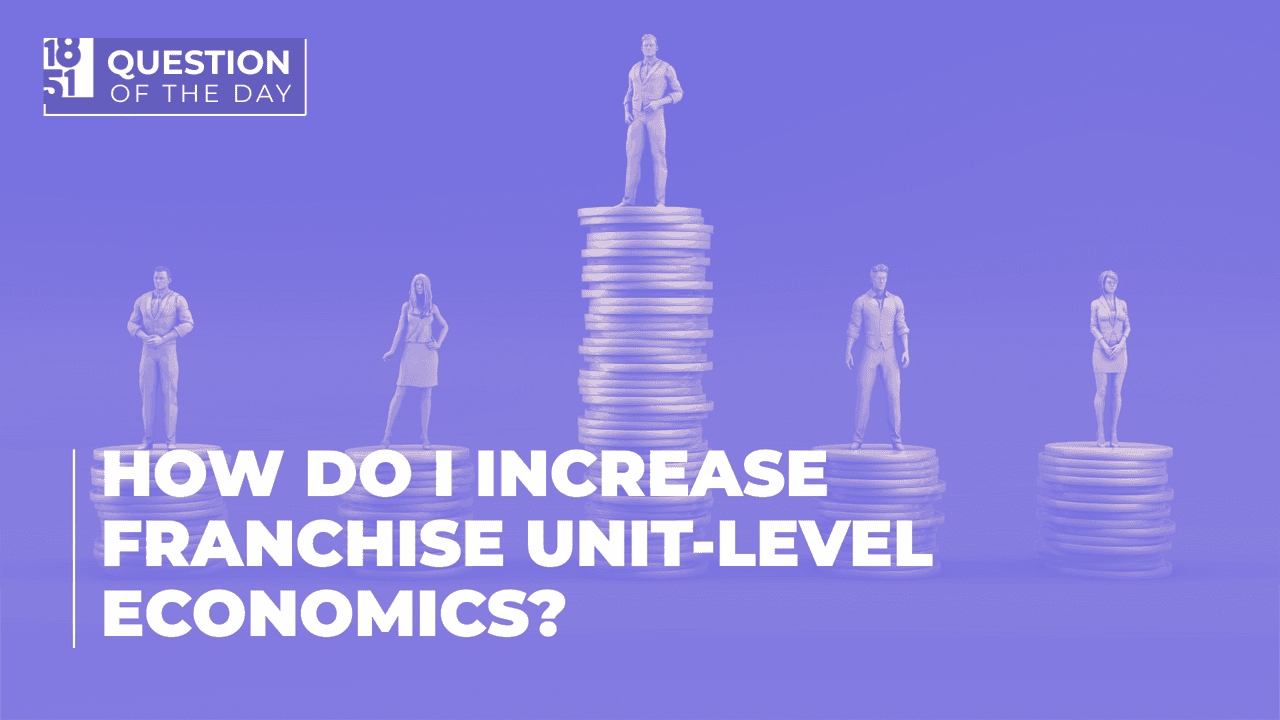
How Do I Improve Franchise Unit-Level Economics at Scale?
Stronger unit-level economics come down to disciplined cost control, steady revenue growth and systems that franchisees can execute consistently.
Growing a Franchise
Stronger unit-level economics come down to disciplined cost control, steady revenue growth and systems that franchisees can execute consistently.
Franchise brands often talk about growth in terms of new locations, but the real measure of a healthy system is what happens at the unit level. If individual locations are not profitable, expansion only compounds the problem. Improving unit-level economics means focusing on the fundamentals: labor, revenue, pricing and operational consistency.
Labor is typically the largest controllable expense in a franchise model. Even small improvements here can have a meaningful impact on margins.
“There are a number of different ways that they can increase unit profitability,” said Lloyd Notley, vice president of franchising at Escapology. “The first one is our biggest controllable, which is our labor. We're pretty lean on labor in most cases.”
That kind of discipline requires more than just cutting hours. Strong operators align staffing with demand, use scheduling tools to avoid overstaffing and train team members to handle multiple roles. The goal is not fewer employees but better utilization of the team you have.
More customers do not always translate to better economics. What matters is how much revenue each unit generates relative to its costs. Franchisees can improve this by refining pricing strategies, upselling effectively and creating bundled offerings that increase average ticket size.
“They can also improve profitability by improving levels of sales,” Notley said. “You can enhance with different marketing campaigns, increase opening hours and package certain things together for unique group sales in order to add to your top and bottom.”
That approach works across industries. Whether it is a restaurant adding family meal bundles or a fitness concept offering membership tiers, structured offers can drive higher spend without significantly increasing costs.
Before adding new locations, strong franchise systems look for ways to generate more revenue from existing units. Extending operating hours is one option, but it should be done strategically. Opening earlier, staying open later or adding dayparts only works if there is demand to support it. Otherwise, it can increase labor costs without delivering meaningful returns.
A more effective approach is to identify underutilized capacity. If a location has downtime during certain hours, targeted promotions, local partnerships or group bookings can help fill those gaps without major operational changes.
While labor is the biggest lever, other expenses also impact unit-level performance. For example, franchisors should help franchisees negotiate better supplier pricing, reduce waste and standardize purchasing. Clear operational playbooks can limit unnecessary spending and ensure that every unit follows the same cost structure.
Technology also plays a role. Systems that track inventory, monitor performance and provide real-time financial data allow franchisees to make faster, more informed decisions.
Improving unit-level economics is not a one-time effort. It requires ongoing attention as costs change, markets shift and new opportunities emerge. Franchisors that prioritize profitability at the unit level create a stronger foundation for long-term growth. When franchisees are making money, they reinvest in the business, open additional locations and become advocates for the brand.
In the end, unit-level economics are what determine whether a franchise system can scale sustainably. Growth may attract attention, but profitability is what keeps the system moving forward.
Want to learn more about how 1851 helps franchisors grow their franchises with confidence? Visit www.1851growthclub.com and see what we can do for you.
Sign up for the 1851 Franchise newsletter to get our biggest stories before everyone else
By signing up, you agree to our user agreement (including class action waiver and arbitration provisions), and acknowledge our privacy policy.