Franchisor Stories
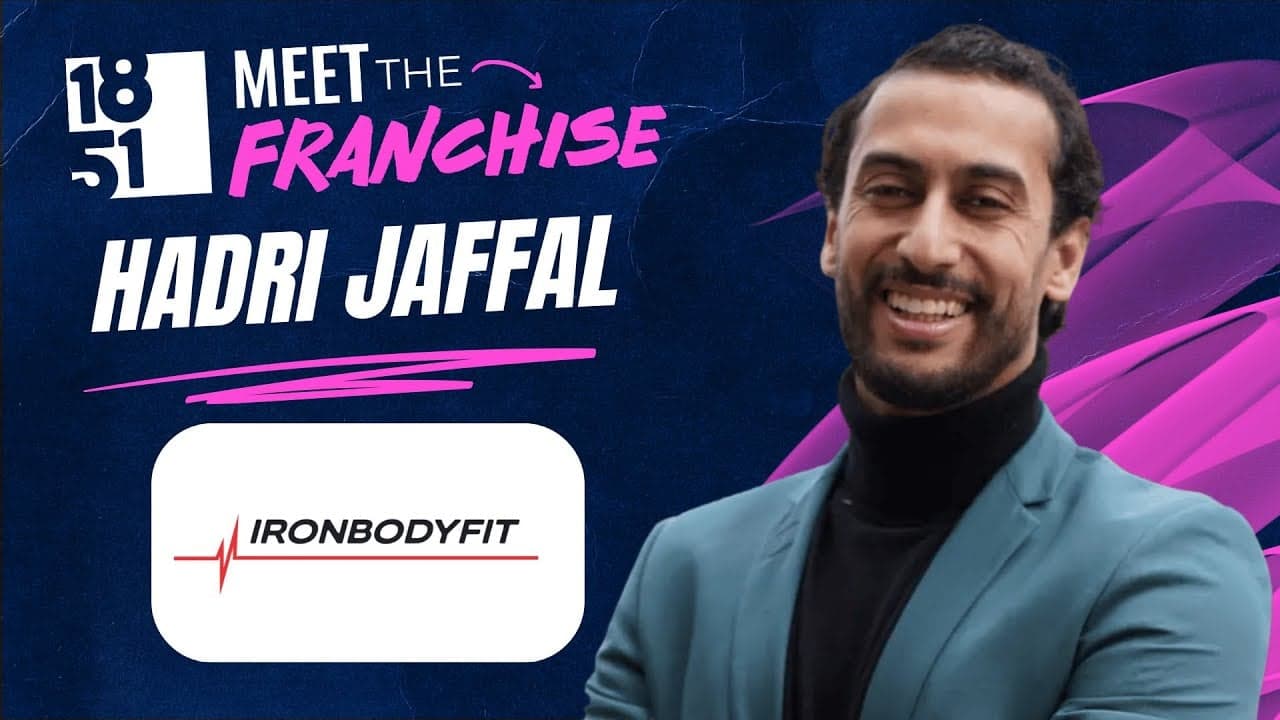
How Hadri Jaffal Built Iron Bodyfit Around Purpose, Culture and Helping Others
The Iron Bodyfit founder discusses why happiness matters more than money, what he looks for in franchisees and why culture should come before growth.
Franchisor Stories
The Iron Bodyfit founder discusses why happiness matters more than money, what he looks for in franchisees and why culture should come before growth.
After several business ventures, including a construction company, Hadri Jaffal realized he was making money but wasn't enjoying his work. That led him to the fitness industry and eventually to Iron Bodyfit, an EMS fitness concept that now has more than 280 locations in 12 countries. Today, as the brand continues expanding in the U.S., Jaffal says he's more interested in finding franchisees who believe in the company's mission than those simply looking for a financial opportunity.
“Of course, money is important. You need money to pay your rent or your mortgage. You need money to live,” Jaffal said. “But money should be the consequence of being happy doing something you're good at. You need to be good at what you do. For me, I'm good at managing franchises.”
Jaffal said that's how he looks for new franchise owners. Instead of starting with money, he wants to know why someone wants to own a business and whether they're a good fit for the brand.
“In the beginning, we made our discovery calls very differently,” he said. “We focused on showing our culture and our vision for the future. We wanted to be very attractive to some people and not attractive at all to others … For example, during our presentation, we don't talk about money. People ask, "When are you going to talk about money?" I tell them, “I'm not here to talk about money. I'm here to talk about you, about me, about the franchise, what the franchise can bring to your life and what you can bring to the franchise.”
Finding the right franchise owners is more important than growing as quickly as possible at Iron Bodyfit. The brand is looking for people who share the company's values and are excited about helping others, not just building a business.
"We're more like a tribe," Jaffal said. “A tribe shares the same vision and wants to go to the same place. If you say, 'That's exciting,' then let's take that journey together.”
Jaffal joined 1851 Franchise Publisher Nick Powills on a recent episode of the “Meet the Franchise” podcast. A transcript of his interview with Powills has been provided below. It has been edited for brevity, clarity and style.
Nick Powills: How did you accidentally fall into franchising? What's your franchise backstory?
Hadri Jaffal: That's a good question. I had never been in franchising before, and I like to say I'm in franchising because of my personal background. My father is an entrepreneur, and my mother is a social worker. For me, that's franchising. It's making money through a business by helping others.
That's how I grew up and how I was raised and educated by my family. When I discovered franchising, it made sense to me that you could make money by helping others.
Powills: At what point did you become an entrepreneur?
Jaffal: I started really early. I finished my bachelor's degree in business, and right after that I launched my first business, a fast-food restaurant selling pizza and burgers. I wasn't successful, so I sold it pretty quickly. After that, I tried two or three other projects. The one I remember most was a construction company. I wasn't happy. After two or three years, I realized I wasn't happy on a daily basis.
One day I looked at myself in the mirror and said, "Hadri, is this what you want to do with your life, even if you make money?" The answer was no. I realized what made me happy was teaching others, supporting others and making people happy. When I discovered EMS and focused on body transformation, I thought, "Okay, I need to build a franchise around this, and I need to spread it everywhere."
Powills: It's interesting. Some of the elements you just talked about, one is happiness, and sometimes that's not financial. If we take your mom and dad's story, one is entrepreneurial and one is a social worker. One focuses more on emotional happiness, and one focuses on financial success.
It's interesting because I think a lot of franchisees go through the same thing. At the end of the day, to become a franchisee, you usually have to make some money in your career so you can afford to buy a business. Most likely there's some trigger or pivot point where you realize you're unhappy with what you're doing, so you invest in something else.
I imagine a lot of franchisees go through that same internal struggle. Plenty of people have that struggle but are afraid to jump off the ledge and make the change. You don't seem afraid to make a change.
Jaffal: No, I like making changes. You're right. A lot of people are afraid. Sometimes even on my team, if we just move from one office to another, people say, "Oh no, how can we do that?" I tell them, "It's okay. It'll take us two hours."
I think people need something that pushes them. COVID was a good example. It gave people a reason to stop and say, "I don't want to go back to my old life. I want to change something." After COVID, we had a lot of people telling us they wanted to do something different, especially people over 40. They would say, "I don't want to finish my life like this. I want to change something."
Those people become the best franchisees because they have a real "why." They're not just trying something. They have a real reason. They don't want that kind of life anymore. They want a different life. That's the best motivation for becoming an entrepreneur.
Powills: How much of your construction company story do you use when talking to franchisees? Like you said, you were making okay money. It wasn't about the money. It was about no longer wanting to do that work. Is that part of how you tell your story and encourage people to bet on themselves?
Hadri Jaffal: For me, we only have one life. When I wake up every day, I need to be happy. We spend maybe eight to 10 hours a day working. It doesn't have to be painful. Of course, sometimes work is hard. It's like working out. Sometimes you have to do things you don't want to do.
But if you look at the big picture, you need to be happy on a daily basis. You need to feel that emotion, that joy, that makes you happy. Life is like a mountain. There are ups and downs. For me, in construction, I was making money, but everything was flat. There was no emotion, no happiness, no joy, no feeling of success. I was just managing construction projects. The client paid me, I paid my team and that was it.
One of my best pieces of advice is this: I know some people are driven by money, and maybe that's good for them. I'm not driven by money. Of course, money is important. You need money to pay your rent or your mortgage. You need money to live.
But money should be the consequence of being happy doing something you're good at. You need to be good at what you do. For me, I'm good at managing franchises.
Powills: I think, in this life, the majority of people don't have the benefit of what you're talking about, which is a different type of currency. I think currency, for many people, is measured in dollars in their pocket. But the truth is, currency is also measured in emotional happiness. If you said, "I can be a millionaire in emotional happiness," most people would say, "What?" But that's the truth.
What's interesting is franchising gives people a pathway where, if they really want to find both emotional and financial currency, they can. I also think that when you're emotionally happy, the odds of making more money go up.
Jaffal: Of course. It's a consequence. When you're happy, you're good at what you do. You're right about different kinds of currency. Now we're even learning about token currency. When you're working with Claude and you run out of tokens, you think, "Oh, I can't work today."
If I told anybody, "I'll give you $100 million, but you'll die tomorrow," nobody would accept. Or if I said, "You'll never experience happiness again, but you'll get $100 million," nobody would accept that either. What we're really looking for is moments in life with our kids, our wife and the people we love.
At the beginning, being happy means finding the courage to leave your comfort zone. Maybe you're not happy, but everything is familiar. You know where everything is. When you change, you go from control to uncertainty. You don't know what the future looks like. I think that's why people are afraid.
Franchising is a good way to make that transition because the franchisor is there to support you. They show you the path from where you are to where you want to go. They tell you, "Don't worry. I'm here to help you, listen to you and give you advice." That's why I like franchising. It really helps new entrepreneurs.
In the U.S., we have a little challenge because many entrepreneurs are already experienced business owners. We're looking more for first-time entrepreneurs. It could be someone who's 50 years old or someone who's 20 years old. What matters is that they want to learn, they're teachable, coachable and willing to grow. For me, franchising isn't just about investing money.
Powills: I think a lot of franchisors don't listen to what you're saying. That's where, down the line, you end up with franchisees who are labeled as "bad." In reality, they're often just misaligned with the core of the business.
When many franchisors evaluate a franchisee, they ask, "How much money do you have? Where do you want to buy? How quickly do you want to open?" They don't ask, "Why are you doing this? Are you looking for more happiness? Are you looking to make more money? How do we find the middle ground?"
If a franchisor qualifies people that way, the odds of that franchisee succeeding go up. When I hear franchisors say, "We have this awful franchisee," I always want to go back to the discovery process.
Jaffal: Did you talk to them about purpose? Or was your only purpose making money? Sometimes I understand the franchisor because they want new franchisees to grow the network. They need to make money, and they're driven by growth. But you're right.
In the beginning, we made our discovery calls very different. We focused on showing our culture and our vision for the future. We wanted to be very attractive to some people and not attractive at all to others. That became our filter.
For example, during our presentation, we don't talk about money. People ask, "When are you going to talk about money?" I tell them, "I'm not here to talk about money. I'm here to talk about you, about me, about the franchise, what the franchise can bring to your life and what you can bring to the franchise."
When you see that someone is only interested in money, that's okay. They're probably going to sign with another franchise, and that's fine. I'm looking for someone who's excited about changing people's lives by helping them lose weight, get healthier or work out.
I also tell franchisees that we're not a family. A lot of franchise systems talk about being a family. I don't. We're more like a tribe. A tribe shares the same vision and wants to go to the same place.
If you and I meet, I'll say, "This is where I want to go. What do you think?" If you say, "That's exciting," then let's take that journey together. It's not about asking how much money we're going to make. I don't know. You might make millions, or you might lose money. That depends on you.
Maybe it's different with McDonald's or another very large franchise system. At that point, you're investing in an established brand almost like you're investing in real estate. In my kind of franchise, from zero to maybe 1,000 locations, it's different. You need people who share your vision, your passion and your belief in the market. That's so important.
Powills: I believe everything you're saying. One of the challenges is that there are so many franchise opportunities that there are a lot of people making big promises. For a franchise buyer, especially the kind of person you're looking for, someone becoming a business owner for the first time, it's hard to know who to trust.
Many franchisors lead with a big Item 19 and say, "Look how much money you can make." Down the line, yes, maybe you can, but that's so dependent on the individual. What you're talking about is qualifying the right people and giving them the support they need so they can be successful, as long as they have the hustle and grit. It's hard for a prospective franchisee because they can get enamored by a big financial number.
Jaffal: That's why it's so important. In franchising, there are two kinds of consultants. There are consultants who support the franchisor and consultants who support the franchisee. Personally, I think it's very important for someone who wants to become a franchisee to work with a consultant who helps them find the right franchise.
For example, you know a lot about franchising. If I were a new entrepreneur looking to buy a franchise, I think your advice would be valuable because you know how to read an FDD. You know how to analyze the numbers, understand what's hidden and evaluate the growth of a franchise. You know how to read the real story, not just the cover the franchisor wants to show you.
If I had one piece of advice, it would be to dig deeper than the cover. A franchisor will tell you they have 10 locations and show you the two or three that are performing well. The others always have an explanation. That's natural because they're trying to sell. Sometimes people fake it until they make it. Sometimes they fake it and never make it.
If someone wants to buy a franchise, find a consultant. I have a friend who's a franchise consultant, and people like that know how to read the details. They know what to look for in an FDD and can help potential franchisees make better decisions.
Powills: A potential benefit of AI is that a first-time buyer can use it to better understand what they're looking at. The danger is that AI can also explain it incorrectly.
The bigger question for the future is whether people continue buying businesses they're passionate about, where they have the grit and determination to succeed, or whether they move toward wanting to make a lot of money while working less. Time will tell.
At the end of the day, every business has to be financially viable. Everyone gets into business to make money. The next question is whether you love what you're doing. If you do, your odds of succeeding with that brand are much higher. For anyone watching, tell us a little about the business. What's the opportunity?
Jaffal: For us, I like to say it's a dream for lazy and busy people. It's still pretty new in America. We provide small studios with three EMS, or electromagnetic stimulation, machines. In just 25 minutes, clients get the equivalent of a four-hour workout. We serve people who don't have time, lack motivation, don't like going to the gym or simply want to get back into shape. They come once a week for one session.
We started in France in 2015 with our first location. Today, we have 280 locations across 12 countries. In America, we currently have seven locations. We've been here for about four years. As the founder and CEO, I believe the next major trends will be longevity and healthy living.
People say AI may allow us to live much longer, maybe even to 150 or 200 years. Whether that's true or not, if people are going to live longer, they have to take care of their bodies. Living longer only matters if you're healthy enough to enjoy it. That's what we provide. Most of our clients are women between 30 and 60 years old, along with women over 60.
Powills: I love your business. Obviously, competitors have entered the space. Does that bother you since you were so early to the market? How do you handle competition emotionally?
Jaffal: I think competition is a good thing. First, competitors help create the market. Second, imagine you're a Formula One driver. If you're driving alone, you don't really know how good you are. But if someone is right behind you pushing you, you'll drive faster. Competition challenges you. It forces you to evaluate yourself, analyze your KPIs and compare them with others.
That said, sometimes you need to keep your eyes straight ahead instead of looking left and right. For a long time, I told my team not to worry about what competitors were doing. Sometimes a competitor tries a new machine or launches something different. People ask if we should do the same. I tell them, "No. Let them test it. If it works, maybe we'll copy it later. But right now, let's stay focused on what we're doing."
Competition motivates me. I'd rather compete in a growing market than be alone. At the same time, I believe in creating a blue ocean strategy. Even in a competitive market, you can succeed by doing things your competitors can't do or don't want to do. Competition doesn't bother me. It really doesn't.
Powills: I agree with you about longevity. It's great if you can live to 115 or whatever it may be, but if only your brain works and your body doesn't move, it won't be very enjoyable. I'll use the internet as an example. When I was growing up, I had to go to the library, find a book through the card catalog, read the book, write a paper and then submit it.
Everything has become easier. The same thing is happening with GLP-1 medications. Without exercise, people are becoming lazier. We still have to take care of our bodies. Your Formula One example applies here, too. If your business helps people stay healthy while making fitness easier, then your blue ocean strategy makes a lot of sense.
Two other things. First, I think you have a tremendous story. This may sound blunt, but your franchise website is awful because all it says is, "Buy my franchise." You're so much bigger than that. Your message is about joining a movement and joining a culture. If it were me, I'd completely rebuild the franchise website and lead with your culture because that's what people emotionally connect with.
The other thing you said that really stood out is that you don't need someone to have business experience. You're willing to take an entry-level entrepreneur and teach them how to become a business owner. There's a winning story there.
I also think your story about your mom and dad is a tremendous way to explain how your vision for the business developed. If it were me, I'd make culture the centerpiece of the website. You already have the material.
Hadri, thank you so much for joining me and sharing your story. I really appreciate your time.
Jaffal: Of course. Thank you.
Watch the episode above or on YouTube.
Sign up for the 1851 Franchise newsletter to get our biggest stories before everyone else
By signing up, you agree to our user agreement (including class action waiver and arbitration provisions), and acknowledge our privacy policy.