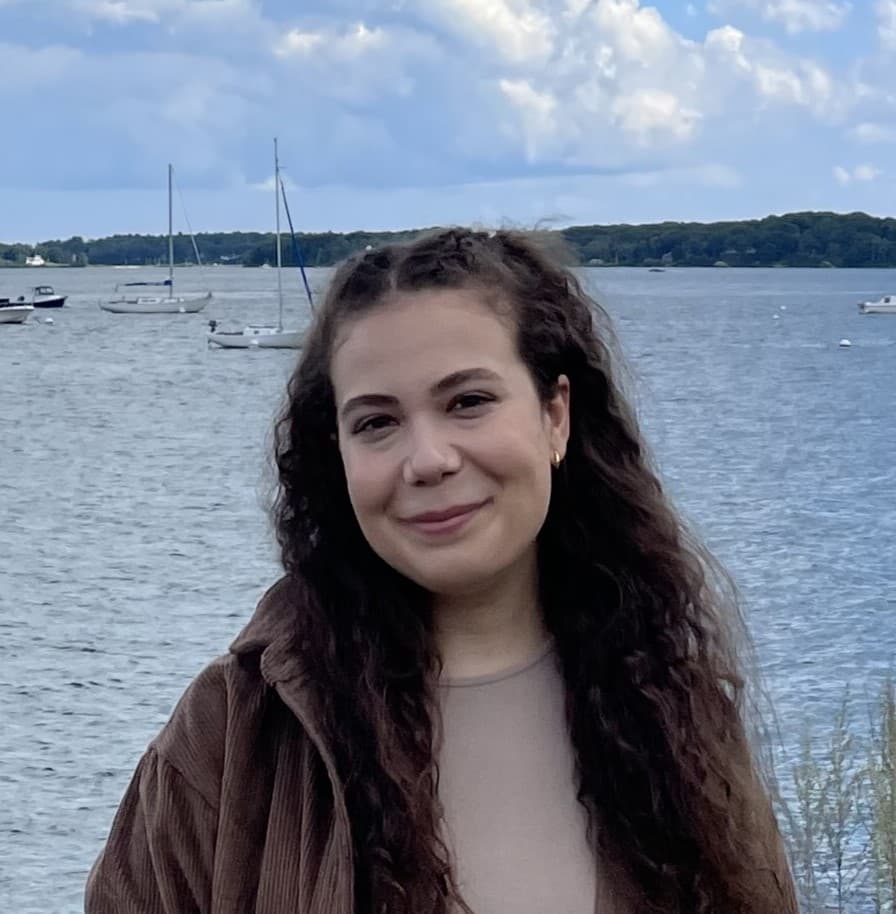
For Dena Stewart and Kouy Kolar, becoming Mathnasium franchisees wasn’t just about opening a business — it was about bringing a much-needed resource to their Park City community. With Stewart’s business expertise and Kolar’s background in education, the duo combined their skills to launch Mathnasium, a brand they both trusted as customers.
In a recent “Meet the Franchisee” podcast with Nick Powills, they discussed their path to franchise ownership, the support they received from Mathnasium, and their plans to expand their impact on students and families. Joining them was Mathnasium’s Chief Development Officer, Kevin Shen, who shared insights into how the brand empowers its franchisees to succeed.
A transcript of the interview has been provided below. It has been edited for brevity, clarity and style.
Nick Powills: I think the only thing that pumps me up more than that is actually talking to franchise owners. Dena, thanks for joining us. And Kevin, thanks for helping out with the conversation.
Now, Dena, I’ve read your bio, and it’s a great story. But I want to hear it directly from you. How did you accidentally fall into franchising? Tell me about your journey to becoming a franchise owner.
Dena Stewart: First of all, that intro was really cool — thank you.
So, about 20 years ago, my husband and I started looking into franchises. My husband's brother was the CFO at Taco Del Mar, so we started there. We also looked at Fish Window Cleaning, Whoop’s Macaron Kiosk and several other concepts.
What I love about franchises is that they take a proven model and share it — some more effectively than others. At the time, though, none of those options resonated with us, especially since we were still moving around a lot.
We eventually settled in Park City about five years ago. At the time, I was consulting, and a mutual friend introduced me to my now business partner, Kouy. She had a similar story — she’d looked at different franchise opportunities but hadn’t found the right fit.
During one of our conversations, Kouy mentioned that she used to take her daughter to Mathnasium when they lived in Dallas. After moving here, she was driving down to Salt Lake City — the closest location — to continue her daughter’s sessions. She asked if I had heard of Mathnasium. I had, but it wasn’t on my radar since we didn’t have one nearby.
I decided to check it out and enrolled my daughter. This was during the pandemic, in March 2020, when I had the kids home and was trying to support them as much as possible. I realized how much my kids could benefit from Mathnasium. We started out as customers, with all our kids attending.
One day, Kouy asked me what I thought about going to Los Angeles for a Discovery Day. And here we are!
Powills: Dena, I have a follow-up question for you, and it’s multi-part because I’m very curious. One of the assets of this conversation is the fact that you’ve looked at so many brands.
So, two parts: first, you take your kids to Mathnasium, and Kouy has a connection to the brand as a customer. At what point does the realization, "Oh, it’s a franchise," become a bridge for you?
Secondly, on a larger note, whenever I’ve spoken with franchise owners, I boil it down to two things that push them over the edge: culture and the business opportunity. Those are what make them say yes.
So, how did the franchise connection happen with Mathnasium for you? And was that the deciding factor that made you think, “Okay, this is the one I want to pursue”?
Stewart: Yeah, good question. I think I understand what you’re asking. So, the first part — you’re asking how Mathnasium being a franchise made sense for us? Is that it?
Powills: More so — you’re taking your kids there. It’s a franchise. At what point does it click, and you think, “Ooh, maybe we want to own this?”
Stewart: Honestly, it was Kouy who suggested it. So I might even let Kouy answer that piece of it. She was the one who said, "I’m taking my kid here, and by the way, it’s a franchise."
We didn’t have one in Park City. In fact, we didn’t really have anything like it here. That was something we were really focusing on — what does our community still need? Park City is constantly growing, and that made it a great opportunity for us since there wasn’t anything like it here already.
Powills: Okay, Kouy, nice to connect. So, you see this gap in the marketplace and you’re clearly a fan of the brand as a parent. How does that start transitioning into, “Okay, now we want to be business owners with this”?
Kouy Kolar: Even before the pandemic, I really wanted to find something similar. Like Dena, that’s how we connected — we both wanted to have a franchise or a small local business.
I had just moved from Dallas, Texas, where my daughter attended Mathnasium. When we got to Park City, I realized the community needed this kind of support. I already knew the business model worked, and students loved it. As Dena mentioned, there wasn’t anything like it in the area.
That desire and passion to own a small business — something I could share with my child and that worked with the school schedule — made it a perfect fit. It worked really well.
I also have a background in education, so it seemed like a great mix for me. I approached Dena, knowing she had a marketing and business background, and thought we’d make a great team.
Powills: Okay, so you guys decide to move forward and look into this. You go through the standard steps — filling out a form on the website, getting into the funnel. When you attended Discovery Day, what made you say, “This is our place”?
Kolar: I think I was already sold. As a parent, I had done a lot of research. I think Dena was really excited after Discovery Day because of what we learned about the business and its mission.
Stewart: Yeah, I went into it more skeptical. I had some hesitation, thinking, “Wow, franchises cost money.” It’s not necessarily more than starting another type of business, but you do pay royalties and an initial franchise fee.
What I realized quickly, though — and this totally erased my skepticism — was that they truly earn it. I still say this to anyone who will listen.
The big thing for me was knowing they are right beside you throughout the entire process. They helped us every step of the way as we opened, and they continue to provide support. We’re constantly getting new content and curriculum for the students, better tools to run the business and innovative ways to market to our community.
So, yes, we pay the fees that all franchises collect. But, wow, they really earn it.
Powills: Kevin, I have a question for you in a moment. But Dena, before I move on, I want to stick with that point. You mentioned hesitation — not a knee-jerk reaction to back out, but more like, “This costs a lot of money.”
You’ve obviously expressed how spectacular things were after signing the franchise agreement. But how did you personally get comfortable with moving forward? How did you overcome that skepticism while still working through the process?
Stewart: It just happened naturally. At Discovery Day, we got to meet Larry Martinek, who has an incredible story as one of our founders. Seeing the whole team, learning about everything they were working on and the things they had just implemented — it all clicked for me.
I didn’t have to actively work to overcome my hesitations. It just happened. Discovery Day was a really great experience.
Powills: All in one day. I love that.
Kevin, from your perspective, I’m always fascinated by the process. You’ve got people who are fans of the brand and are exploring the business opportunity. Dena and Kouy had both looked into franchising before. They get to the starting line and start going through the process, but there’s still some hesitation.
Do you see that hesitation? Are you anticipating things you’ll need to address to help franchisees move past it? Because in the end, the decision is often described as phenomenal. How do you facilitate that confidence throughout the sales process?
Kevin Shen: Yeah, I think it’s perfectly natural to have hesitations, questions and a degree of uncertainty coming into Discovery Day. In fact, I’d argue that anyone who’s seriously considering “walking down the proverbial franchise altar” should have those hesitations and questions. If you’re not asking the kinds of questions Dena mentioned, you’re probably not in the right mindset to make such a big decision.
Franchise agreements come with term requirements, operating requirements, fees and all these other factors. You want to make sure it’s the right decision for both parties, because, in some ways, it’s like a marriage — with all the legal implications that come with it.
As Dena referenced, part of our process is to host a Discovery Day that addresses these concerns. We aim to give candidates enough information to make an educated decision. We explain why it makes sense from a financial perspective, how we’re going to earn our fees and royalties, and the type of support we’ll provide.
Before Discovery Day, we ask participants to fill out a questionnaire about their top priorities and any lingering questions they have. That way, we have an inventory of topics to address. By the end of Discovery Day, we hope they can confidently say whether they still have questions or if they feel comfortable enough to move forward with the agreement.
Powills: Dena, thinking back on all the other brands you considered along this journey, was the hesitation at the finish line always tied to the investment? Was it that something just didn’t feel right? What prevented you from becoming a franchisee with other brands? It doesn’t have to be specific to any one brand — just in general.
Stewart: Well, I don’t want to name names, but my husband and I used to joke that we got really good at figuring out why a business wasn’t going to be viable. At some point, we started wondering, “Is it just us? Are we too risk-averse for any kind of business?”
We’d sit down and create spreadsheets and models: How many burritos do we need to sell? How many units, whatever the product, do we need to make it work? And, more importantly, could we afford to hire someone to manage it while still having a life outside of it? That was really important to us.
Another critical piece was the connection to what we’d be selling. Kouy comes from an education background — I don’t, so I didn’t have a deep connection to education. But what really stood out for me was providing something meaningful to the community.
I take a lot of pride in the fact that people come into our center and thank us for being here because there’s nothing else like this in Park City. I didn’t realize how much that kind of community impact would mean to me — it wasn’t something I thought about beforehand. But it felt different from anything else we had looked at.
Powills: When you’re already a fan of a brand, it’s easier to get to “yes” because there’s a foundational connection. Kevin, when you hear this story of transitioning from being a fan or user of the brand to a franchisee, is that a common journey? Do you see this as a high percentage of new franchisees entering the system?
Shen: Absolutely. It’s very representative of our franchise system. I see it as two primary paths that lead people to Mathnasium.
On one side, you have people from an education background — often parents themselves — who have used Mathnasium and identify with the mission. They’re drawn to the idea of operating a Mathnasium in a community that doesn’t have one.
On the other side, you have individuals coming from a business background who may have heard of Mathnasium but don’t fully understand the product or have direct experience with a center. They see it more as a strong business opportunity. With over a thousand units, 20-plus years of history and great unit economics, it’s appealing from a scalability perspective.
Ultimately, both paths converge as candidates realize that Mathnasium is a great business opportunity and a chance to make a real impact on their community. That’s when they become comfortable enough to move forward, knowing it checks all the boxes for them.
Powills: When I think about your journey, connecting with Kouy was clearly a big part of making this opportunity work. Talk about how finding the right partner helped make this possible.
Stewart: That was huge. Every time I felt that fear in the pit of my stomach — thinking, “What am I doing? This is crazy!” — it was reassuring to have Kouy there.
She helped me stay grounded and focused on the present. Instead of worrying about what might happen a year down the road, it was all about asking, “What do I need to be doing right now?” From the beginning, it was comforting to know I had a partner in crime who was on the same page. And, of course, we were also supported by corporate, which made a big difference.
Powills: Kouy, what about for you? What has having a partner who balances you out meant for the success of the business and your approach to everyday life?
Kolar: I have to say, Dena is such a great organizer. She really helps us stay focused. I think our balance works because I bring a bit of spontaneity and fun to the mix.
Being able to balance those qualities is key. We focus on the tasks and goals that need to get done, supported by all the resources and systems the franchise provides. But we also remember that, first and foremost, we’re working with students and doing something we love.
We make a point to celebrate our successes and live in the moment. It’s about continually improving, making the center a great place for the community and the students, and representing the franchise in the best possible way.
Powills: Kouy, what’s the vision for the future? Where do you go from here?
Kolar: We’ve talked a lot about the goal of one day having multiple centers. That’s definitely something we aspire to — being peak performers, not just as new franchisees in the Mathnasium system, but also by becoming a model center.
For now, though, our focus is on maximizing the potential of our single center. We’re exploring all the different types of revenue opportunities, like remote learning and hosting community events, which are strongly supported by the franchise. That’s probably our closer-term priority. Further down the road, we’d love to expand into multi-center ownership.
Powills: Dena, you had to overcome a lot in this journey, whereas Kouy mentioned being brought in after going to L.A. If someone watching this is grappling with their own fears about making such a significant commitment to becoming a business owner, what advice would you give them?
Stewart: Honestly, timing is everything. For me, it was about meeting Kouy, being in a town that had a clear need and finding something I felt truly comfortable and passionate about. The connection I made on Discovery Day really sealed it for me.
My advice would be to look for the right signs and connect with the right people. Talk about your goals as much as you can. That’s how Kouy and I met — I was telling everyone who would listen that I needed to make a change and what I was looking for and Kouy was doing the same. A mutual friend connected us, and it all fell into place.
The more you talk about it, the more people will know what to bring your way. I think that’s incredibly helpful.
Powills: Kevin, when I’m advising a franchise buyer, I often say, “Fill out the form and have the conversation,” because there are so many unknowns when it comes to franchising. Dena mentioned that once she was in, the experience was fantastic, but during the process, the fear of the unknown can be overwhelming.
From my standpoint, the knee-jerk reactions people have during the sales process come from not fully understanding the structure of a franchise. What advice would you give to a parent of a Mathnasium student or a candidate who hasn’t raised their hand yet but is considering the opportunity?
Shen: The first step is always to get educated. Start by researching brands and seeing what information is out there. It’s easy to look at reviews on platforms like Google or Yelp. A positive trend is a green flag, while bad reviews can be a red flag. Thankfully, Mathnasium has very strong reviews.
Next, reach out and submit your information to see if there’s a territory available that fits your needs. Stay inquisitive — go through the FDD (Franchise Disclosure Document), review the numbers and examine the information that’s most relevant to you. Write down your questions and bring them to the team.
Perhaps the most critical step is validation. Any reputable franchise should be able to connect you with existing franchisees who can share their experiences. They can tell you about the challenges they faced, what the startup process was like and how they found success. Having people like Dena and Kouy talk to prospective franchisees makes my job much easier.
Ultimately, it’s about finding the right fit. As Dena mentioned, there are countless franchise concepts, and new ones are popping up every day. It’s important not to rush into the journey of entrepreneurship. Wait until you find the opportunity that checks all your boxes and then dive in with confidence.
It’s also worth noting that Park City, where Dena and Kouy are located, wasn’t an obvious choice for a franchise like Mathnasium. Many might think, “This is a ski town. How can a year-round retail business thrive here? Will the student population be too transient?” But Dena and Kouy have proven that if you’re ingrained in your community, passionate about what you do and committed to delivering value to students and teachers, you can succeed anywhere.
That’s why finding the right fit for your community and ensuring you’re the right person or team to bring the concept to life is so important.
Powills: I’ll say this in closing: here’s what I love about this story. I love when a fan of the brand becomes a franchise owner because that’s how it should work. If brands do things the right way, people should be knocking on the door to become franchisees.
The fact that the two of you found each other and formed a partnership is remarkable. Dena, the journey you took — looking at so many brands to get comfortable with the idea of franchising — is equally incredible.
For both of you, take a moment to pinch yourselves. Becoming franchisees is a tremendous accomplishment that requires such bravery in business. To get to this point is something to be very proud of, and I look forward to seeing where your story goes from here.
It’s clear this is just the beginning, and I’m grateful you both took the time to share your story with us today.
Watch the full interview above or on YouTube.
For more interviews with those influencing the franchise industry, check out these stories on 1851 Franchise: