Across the restaurant industry, efficiency has increasingly come to mean doing less inside the restaurant. Menus are getting smaller, more ingredients are arriving preportioned or precooked, and production that once happened inside individual restaurants has moved to centralized facilities, leaving employees to assemble, heat and hand off orders. Those changes can reduce complexity and help restaurants operate with fewer employees, but they can also make it harder for one concept to distinguish its food from another.
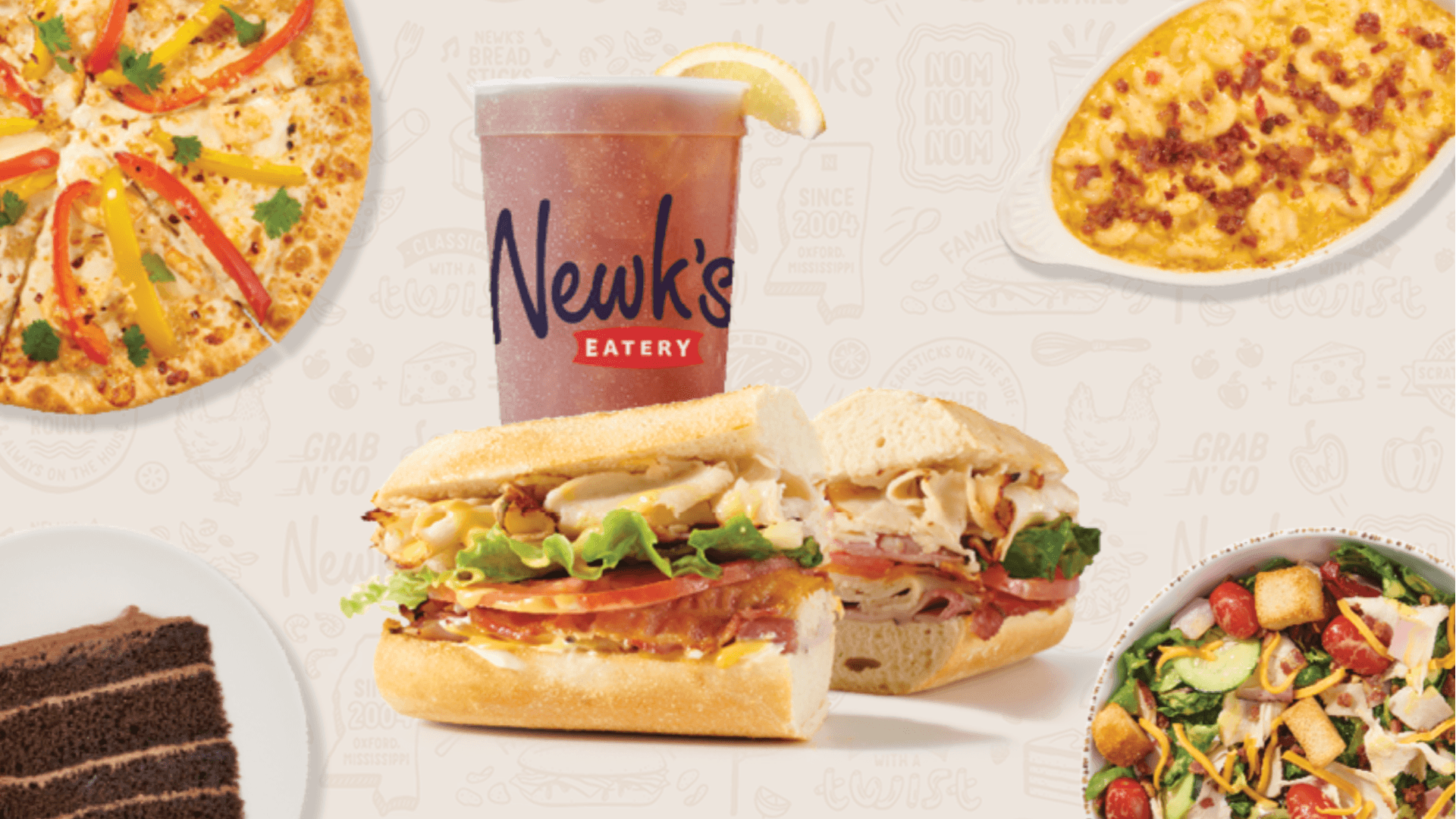
Newk’s Eatery has taken a different approach. The fast-casual restaurant continues to build its guest experience around food prepared in-house with fresh ingredients, without relying on fryers or microwaves. Its restaurants offer salads, sandwiches, soups and pizzas across a menu designed to serve guests looking for a quick lunch, a family meal or a catered gathering. That commitment asks more of the kitchen, but Newk’s does not view the kitchen simply as a place where labor and food costs must be controlled. It is where the brand creates much of the value guests see on the plate.
“Plenty of restaurant models are built around removing steps from the kitchen, and there are valid business reasons for doing that,” said Chris Cheek, chief development officer. “Newk’s has chosen to protect the steps that make our food distinctive. Our kitchen gives franchisees something meaningful to sell beyond speed convenience. It gives them a product guests can recognize, remember and seek out again.”
The Kitchen Is Part of the Guest Promise
For Newk’s, fresh preparation is not a secondary talking point added to a marketing campaign. It shapes how the restaurants operate each day. Ingredients must be prepared correctly, recipes must be followed and employees need to understand how each item should look and taste. The kitchen’s performance is reflected directly in the guest’s experience, whether the order is a single salad or a catered lunch for an office.
That connection is especially visible through Newk’s open-kitchen design, which allows guests to see parts of the preparation process. Skip Russell understood the implications of that setup when he moved into Newk’s after three decades operating quick-service restaurants, including a 13-unit Popeyes portfolio. He found that the Newk’s model required a different pace and a different kind of discipline.
“When I came in and started working in our first Newk’s, it drove me crazy that we were making customers wait seven or eight minutes when I was used to three minutes,” Russell said. “It took a little transition for me to slow my brain down and understand we’re doing something different.”
Speed still mattered, but Newk’s teams were doing more than moving a finished product through an assembly line. Preparing food to the brand’s recipes and standards required time, and Russell found that the open kitchen added another layer of accountability.
“We’re more under a spotlight, which I like because it makes us better at what we do,” Russell said. “In the past, employees could stand in a corner and take shortcuts, and we wouldn’t know. But here, our guests will tell us if we’re taking shortcuts. And we like that.”
Chief Technology Officer Adam Karveller said operational systems are essential because the brand’s culinary promise cannot depend on improvisation from one restaurant to the next. “Fresh preparation only becomes a scalable advantage when the processes behind it are repeatable,” he said. “Our responsibility is to give restaurant teams the training, tools and operating visibility they need to execute the menu consistently. Technology should make the kitchen more manageable and more precise without stripping away the work that makes the food Newk’s food.”
Quality Gives Newk’s Room to Be Different
Fast casual occupies an increasingly crowded middle ground. Guests expect the speed and convenience associated with quick service, but they also expect more from the food and overall restaurant experience. Newk’s aims to satisfy both expectations through a menu that includes lighter options as well as pizza, heartier sandwiches and soups. That variety helps the brand serve individuals and groups without becoming dependent on one signature product or narrow dining occasion.
Todd Jackson, one of the brand’s earliest franchisees, recognized that potential when Newk’s had only a few restaurants. Jackson had spent about a decade with Chili’s before joining Newk’s in 2006. He and his partners have since expanded to 11 locations across Alabama, Mississippi and Texas.
“Everything about Newk’s stood out — the systems and controls were well structured, the menu was great, the food quality was excellent and it was clearly duplicatable,” Jackson said.
Years later, Jackson continues to view the food and service model as central to Newk’s position in the market. He said the brand combines the convenience of fast casual with service elements more commonly associated with full-service dining, including delivering food, clearing tables and checking in with guests. That combination, along with the breadth of the menu, helps Newk’s avoid the “veto vote” that occurs when one person’s preference eliminates a restaurant from consideration for the entire group.
“While every brand might think that, the quality of our ingredients, the freshness of our products and the variety of offerings back it up,” Jackson said. “From pizzas and salads to soups, we offer something for everyone in a group.”
For Newk’s, variety is not about adding menu items simply to make the menu longer. Each category gives guests another reason to choose the restaurant and gives operators more opportunities to serve different occasions throughout the week. Director of Marketing Madison Newcomb said guests define value differently depending on the occasion.
“Sometimes value means getting lunch quickly. Sometimes it means finding a place where everyone in the family can order something they genuinely want,” Newcomb said. “The food has to give people a reason to choose Newk’s the first time, and the quality has to give them a reason to return.”
One Kitchen, Multiple Ways to Serve Guests
The value of Newk’s kitchen extends beyond the dining room. The same operation supports takeout, digital ordering, delivery and catering, allowing franchisees to reach guests without relying entirely on seats being filled throughout the day. Catering is a natural extension of the model because many Newk’s menu items can be prepared for groups and travel without losing the qualities guests expect.
Greg LaFoe, who owns six Newk’s restaurants across Georgia and Alabama, has used catering to grow sales beyond in-store traffic. LaFoe said sandwiches and salads are well suited to larger orders because they can be produced in volume and remain appealing during transport.
“The food holds well over a time period,” LaFoe said. “It doesn’t have to be piping hot all the time like a lot of restaurants. Sandwiches and salads just hold themselves well, and you can make them in bulk.”
That gives operators a way to pursue business rather than waiting for it to arrive at the restaurant. LaFoe has seen that strategy produce tangible results. After reopening a closed Newk’s location in Tucker, Georgia, his group grew the restaurant from about $1 million in annual sales when it was acquired to a projected $2.2 million in 2026.
Catering has also helped his restaurants generate more consistent work for employees. During the COVID-19 pandemic, when many restaurant operators were reducing their workforces, LaFoe’s group hired employees so it would be prepared to fulfill large catering orders as demand returned. A kitchen capable of serving both individual guests and large groups gives franchisees additional ways to build revenue and makes the restaurant relevant to more occasions, from an individual weekday lunch to a company meeting or family gathering.
Fresh Preparation Requires Operational Discipline
A scratch-made menu does not automatically become an advantage. Without training and consistent execution, complexity can create waste, slow service or lead to uneven food quality. That is why the brand’s kitchen philosophy must be supported by an operating model that helps franchisees manage the work. Recipes, preparation routines and food safety practices have to be teachable, and restaurant leaders need systems that allow them to identify problems before those problems reach the guest.
Newk’s franchisees have repeatedly cited the structure behind the concept as part of its appeal. When Wichita, Kansas, business partners Melody Matulewic and Scott Hatchett decided to enter the restaurant industry, they were impressed by the brand’s operational processes despite having no previous restaurant experience.
“Newk’s has answers to our questions and checklists for everything,” Matulewic said. “It’s made us feel confident that, as businesspeople, we can do this.”
The objective is not to make operating a restaurant effortless. No system can eliminate the need for engaged ownership, capable managers and employees who care about execution. Instead, the franchise model gives operators a framework for managing a more ambitious culinary operation.
“Anybody can simplify a menu by taking more preparation out of the restaurant,” Karveller said. “The harder job is creating systems that allow a team to produce fresh food consistently while still meeting expectations around speed, labor and cost. That is where operational excellence matters. The system has to support the food rather than asking the food to compensate for weaknesses in the system.”
A Competitive Advantage That Is Harder to Copy
Much of the restaurant business can be imitated. Competitors can introduce similar ingredients, add comparable menu categories or adopt the latest ordering technology. Replicating a culture of culinary execution across a growing system is more difficult.
Newk’s kitchen represents years of recipes, processes and operating knowledge working together. Its advantage does not come from one ingredient or one menu item. It comes from the ability to deliver a recognizable experience across salads, sandwiches, pizzas, soups and catering orders while preserving the convenience guests expect from fast casual.
The model demands steady training and hands-on attention from restaurant teams. In return, franchisees have a stronger way to explain what sets Newk’s apart from nearby competitors.
“Many brands are trying to win by making the restaurant simpler,” Cheek said. “We believe there is still enormous value in being able to do something well that not every competitor is prepared to execute. The kitchen is not separate from the investment case for Newk’s. It is the engine behind our craveable food, the catering opportunity, the guest loyalty and the long-term relevance of the brand.”
Prospective restaurant franchisees often evaluate labor requirements, real estate, build-out costs and unit economics. Those considerations matter, but so does the durability of the product itself. A model may be easy to operate yet still struggle if guests do not find the food memorable or meaningfully different.
Newk’s asks franchisees to run a full kitchen because the brand sees food quality as central to the guest experience. Even as other concepts move more preparation out of the restaurant, Newk’s continues to support its teams with systems and technology that improve efficiency without lowering its culinary standards.
The kitchen may sit behind a counter, but it is not merely a back-of-house function. It supports the menu, creates opportunities beyond the dining room and gives franchisees a point of differentiation that cannot be duplicated by changing packaging or adding another ordering channel. For Newk’s, the kitchen remains the engine because it powers nearly everything else.
To find out more information on costs to buy this franchise, please visit https://1851franchise.com/newks-eatery.