Over the past several years, Newk’s Eatery has examined what it costs franchisees to open and operate its restaurants. That work has led to a smaller prototype, more flexible real estate options and operational tools designed to help franchisees manage costs without changing what customers expect from the brand.

Chris Cheek, chief development officer of FSC Franchise Co., points to four primary levers behind the model: FSC's buying power and shared resources, a smaller restaurant footprint, a flexible kitchen and equipment package, and Newk’s 28 company-owned restaurants. Together, those pieces are designed to lower the financial hurdle of opening a Newk’s while giving operators more ways to manage the business once the doors open.

Lever 1: The Buying Power of FSC Franchise Co.

Newk’s is part of FSC Franchise Co., alongside The Brass Tap and Beef ‘O’ Brady’s. That relationship gives Newk’s access to resources beyond what its restaurant count would provide.

“One of the levers is that we are now part of a larger group of restaurants, which gives us and our franchisees more buying power for food and restaurant equipment, as well as more efficient franchisor support because we have shared services across multiple brands,” Cheek said.

The combined system includes more than 300 restaurants, compared with just under 100 Newk’s locations. That additional scale can give Newk’s greater negotiating power with suppliers of food, paper products and equipment.

“It gives us and our franchisees the buying power of a 300-plus restaurant chain when Newk’s is just shy of 100 restaurants,” Cheek said.

Lever 2: A Smaller Footprint With a Lower Break-Even Threshold

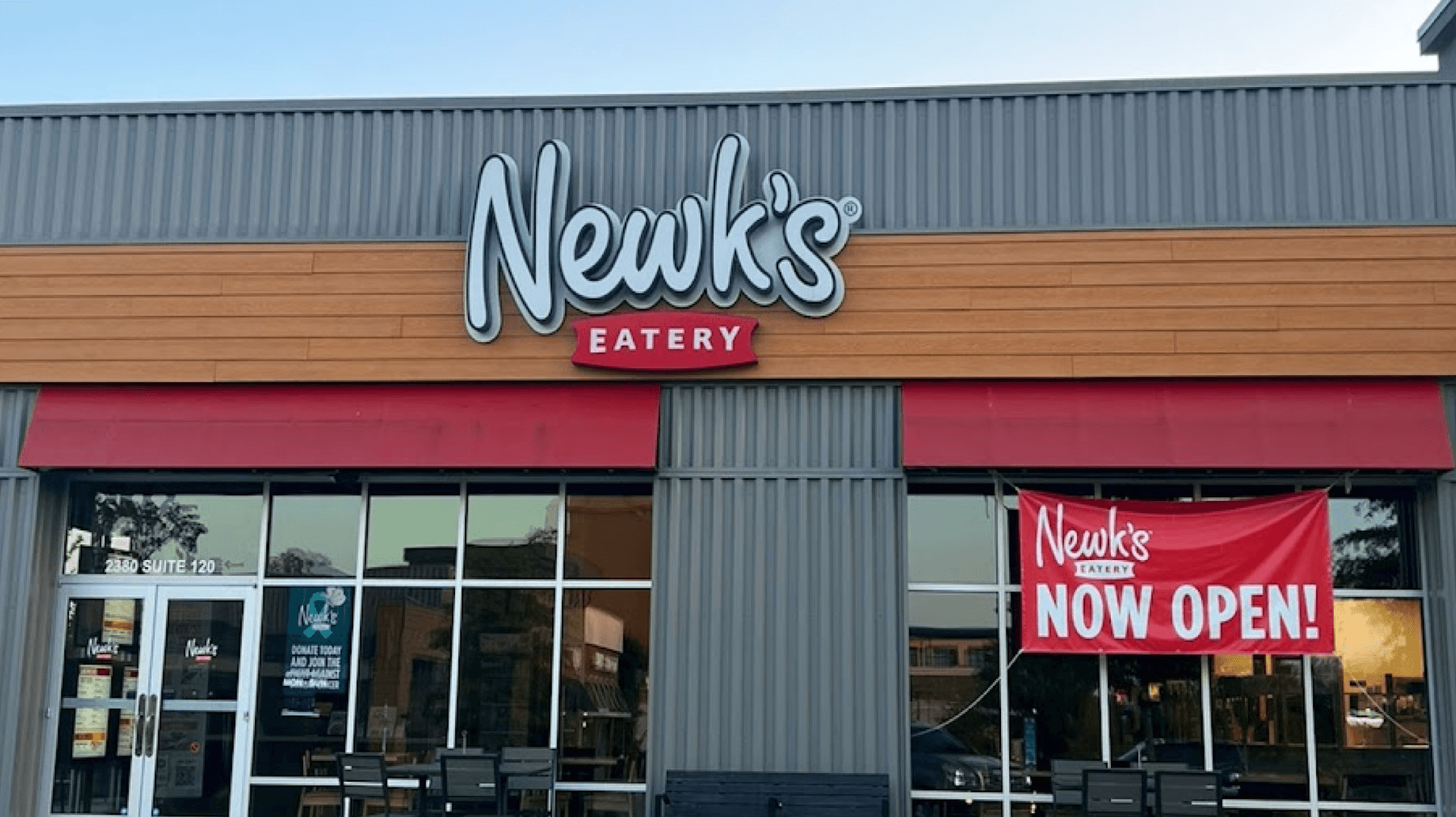
Newk’s has reduced its traditional prototype by roughly 1,000 square feet, with newer restaurants generally ranging from approximately 2,800 to 3,500 square feet. The change reflects how customers now use the restaurant. Last year, about 42% of systemwide sales came from dine-in business, while approximately 58% came from off-premise channels, including catering, digital pickup and third-party delivery. Cheek said that shift has been developing for several years. That means Newk’s can reduce dining room space without necessarily limiting its sales opportunity.

“Smaller restaurants lower the break-even threshold financially, mainly because the rent is lower,” Cheek said. “When you build and lease a smaller restaurant, you bring that break-even hurdle rate down and take some of the risk out of the equation for the franchise owner.”

The smaller footprint also works alongside a more flexible approach to real estate. Newk’s can consider inline, endcap and freestanding locations, as well as restaurants with full drive-thrus or takeaway windows. The system currently has six restaurants with full drive-thrus and another four with takeaway windows.

That flexibility matters because Newk’s typically leases its restaurant space rather than requiring franchisees to buy a specific parcel and build an identical freestanding building.

“We’re not going in and saying we must be 3,500 square feet or we must have a certain width on the front of the building,” Cheek said. “We’re not inflexible, because that would lead to slower development and fewer opportunities. We don’t control a lot of the shape and size of the units we pursue.”

Lever 3: A Kitchen Built for Menu Flexibility

The smaller restaurant still has the equipment Newk’s needs to prepare its existing menu and add new items. The restaurant includes grills and ovens that can accommodate a variety of proteins and menu items. Newk’s currently offers salmon and shrimp and has previously introduced limited-time products such as grilled tuna.

“Our equipment stack and our scratch kitchen allow us to do what others can’t or won’t do in the kitchen,” Cheek said. “We can be very innovative within the confines of fast casual, where the food still needs to come out in that three-to-five-minute timeframe.”

Newk’s also uses technology to keep a closer eye on labor and food costs. Operators can use scheduling software to plan staffing around expected business levels and track food costs against what the restaurant is actually using.

Lever 4: 28 Company-Owned Restaurants as a Testing Ground

Newk’s is the largest operator in its own system, with 28 company-owned restaurants stretching from Dallas, Texas, to Jacksonville, Florida. Those locations allow the company to test new menu items, equipment and operational changes before introducing them more broadly to franchisees.

“We can stand hip-to-hip with a franchisee and say, ‘We know what you’re dealing with,’” Cheek said. “We know what it takes to roll out a new piece of equipment times 28 or a new menu item. We can use our company-owned restaurants to test new products and new equipment, and we can make the mistakes with it before rolling it out to our franchise partners.”

That operating experience also gives the brand a way to evaluate changes against the same pressures franchisees face, including labor costs, rent and shifting customer behavior.

Building a More Flexible Newk’s

The four levers share a common goal of improving restaurant economics without losing the qualities that distinguish Newk’s in the fast casual category.

The smaller prototype reduces the amount of space an operator needs to lease. Flexible formats expand the range of potential real estate. FSC provides additional purchasing scale and shared resources. Newk’s kitchen and technology support menu innovation and cost management, while 28 company-owned restaurants give the brand a place to test changes before asking franchisees to implement them.

The result is a Newk’s model designed around how customers use restaurants today while giving franchisees more flexibility in where and how they open new locations.

To find out more information on costs to buy this franchise, please visit https://1851franchise.com/newks-eatery. 

Over the past several years, Newk’s Eatery has examined what it costs franchisees to open and operate its restaurants. That work has led to a smaller prototype, more flexible real estate options and operational tools designed to help franchisees manage costs without changing what customers expect from the brand.

Chris Cheek, chief development officer of FSC Franchise Co., points to four primary levers behind the model: FSC's buying power and shared resources, a smaller restaurant footprint, a flexible kitchen and equipment package, and Newk’s 28 company-owned restaurants. Together, those pieces are designed to lower the financial hurdle of opening a Newk’s while giving operators more ways to manage the business once the doors open.

Lever 1: The Buying Power of FSC Franchise Co.

Newk’s is part of FSC Franchise Co., alongside The Brass Tap and Beef ‘O’ Brady’s. That relationship gives Newk’s access to resources beyond what its restaurant count would provide.

“One of the levers is that we are now part of a larger group of restaurants, which gives us and our franchisees more buying power for food and restaurant equipment, as well as more efficient franchisor support because we have shared services across multiple brands,” Cheek said.

The combined system includes more than 300 restaurants, compared with just under 100 Newk’s locations. That additional scale can give Newk’s greater negotiating power with suppliers of food, paper products and equipment.

“It gives us and our franchisees the buying power of a 300-plus restaurant chain when Newk’s is just shy of 100 restaurants,” Cheek said.

Lever 2: A Smaller Footprint With a Lower Break-Even Threshold

Newk’s has reduced its traditional prototype by roughly 1,000 square feet, with newer restaurants generally ranging from approximately 2,800 to 3,500 square feet. The change reflects how customers now use the restaurant. Last year, about 42% of systemwide sales came from dine-in business, while approximately 58% came from off-premise channels, including catering, digital pickup and third-party delivery. Cheek said that shift has been developing for several years. That means Newk’s can reduce dining room space without necessarily limiting its sales opportunity.

“Smaller restaurants lower the break-even threshold financially, mainly because the rent is lower,” Cheek said. “When you build and lease a smaller restaurant, you bring that break-even hurdle rate down and take some of the risk out of the equation for the franchise owner.”

The smaller footprint also works alongside a more flexible approach to real estate. Newk’s can consider inline, endcap and freestanding locations, as well as restaurants with full drive-thrus or takeaway windows. The system currently has six restaurants with full drive-thrus and another four with takeaway windows.

That flexibility matters because Newk’s typically leases its restaurant space rather than requiring franchisees to buy a specific parcel and build an identical freestanding building.

“We’re not going in and saying we must be 3,500 square feet or we must have a certain width on the front of the building,” Cheek said. “We’re not inflexible, because that would lead to slower development and fewer opportunities. We don’t control a lot of the shape and size of the units we pursue.”

Lever 3: A Kitchen Built for Menu Flexibility

The smaller restaurant still has the equipment Newk’s needs to prepare its existing menu and add new items. The restaurant includes grills and ovens that can accommodate a variety of proteins and menu items. Newk’s currently offers salmon and shrimp and has previously introduced limited-time products such as grilled tuna.

“Our equipment stack and our scratch kitchen allow us to do what others can’t or won’t do in the kitchen,” Cheek said. “We can be very innovative within the confines of fast casual, where the food still needs to come out in that three-to-five-minute timeframe.”

Newk’s also uses technology to keep a closer eye on labor and food costs. Operators can use scheduling software to plan staffing around expected business levels and track food costs against what the restaurant is actually using.

Lever 4: 28 Company-Owned Restaurants as a Testing Ground

Newk’s is the largest operator in its own system, with 28 company-owned restaurants stretching from Dallas, Texas, to Jacksonville, Florida. Those locations allow the company to test new menu items, equipment and operational changes before introducing them more broadly to franchisees.

“We can stand hip-to-hip with a franchisee and say, ‘We know what you’re dealing with,’” Cheek said. “We know what it takes to roll out a new piece of equipment times 28 or a new menu item. We can use our company-owned restaurants to test new products and new equipment, and we can make the mistakes with it before rolling it out to our franchise partners.”

That operating experience also gives the brand a way to evaluate changes against the same pressures franchisees face, including labor costs, rent and shifting customer behavior.

Building a More Flexible Newk’s

The four levers share a common goal of improving restaurant economics without losing the qualities that distinguish Newk’s in the fast casual category.

The smaller prototype reduces the amount of space an operator needs to lease. Flexible formats expand the range of potential real estate. FSC provides additional purchasing scale and shared resources. Newk’s kitchen and technology support menu innovation and cost management, while 28 company-owned restaurants give the brand a place to test changes before asking franchisees to implement them.

The result is a Newk’s model designed around how customers use restaurants today while giving franchisees more flexibility in where and how they open new locations.

To find out more information on costs to buy this franchise, please visit https://1851franchise.com/newks-eatery. 
Don’t Miss the Next Big Franchise Story

Sign up for the 1851 Franchise newsletter to get our biggest stories before everyone else

By signing up, you agree to our user agreement (including class action waiver and arbitration provisions), and acknowledge our privacy policy.

Victoria Campisi

About the Author

Victoria Campisi

Follow

All Articles

No related articles found