Food and labor costs remain two of the biggest expenses restaurant operators have to manage. Newk’s Eatery has built systems around both, giving franchisees technology, training and ongoing support to help them run more efficient restaurants without changing the scratch-made food and hospitality that define the brand.

Chris Cheek, chief development officer of Newk’s, said the brand’s experience operating 28 company-owned restaurants also plays an important role in how it develops those systems.

“We view ourselves as much of a training organization as a restaurant organization,” Cheek said. “We are training new people all the time in our own restaurants, so we make sure our programs around managing food, managing and scheduling labor, and delivering hospitality are very well documented and thorough.”

Using Data To Manage Prime Costs

Newk’s gives franchisees access to restaurant-level data that can help them identify where costs need attention and make operating decisions based on demand.

“A lot of it comes down to using the tech stack we have to better manage the business,” Cheek said. “We can track theoretical versus actual food costs, schedule labor more effectively and understand the peaks and valleys in staffing needs throughout the week based on prior-year data.”

Purchasing power provides another opportunity to control costs. Newk’s is part of FSC Franchise Co., which also includes Beef ‘O’ Brady’s and The Brass Tap. Purchasing across the three brands gives the system greater leverage when negotiating costs for food, beverages, paper products and restaurant equipment.

“It gives us and our franchisees the buying power of a 300-plus restaurant chain when Newk’s is just shy of 100 restaurants,” Cheek said.

Making More of Each Daypart

Newk’s primary restaurant daypart is lunch, but its sales are not limited to customers eating inside the restaurant. Catering, takeout, digital ordering and third-party delivery allow operators to reach customers without adding more dining room traffic. Catering fits particularly well into the operating schedule because Newk’s does not serve breakfast.

“Most of our catering is lunch,” Cheek said. “We’re able to stage and produce catering orders in our restaurants without our team members being distracted from serving guests who are trying to dine because we’re not open when most of those orders are being produced.”

Catering can also expose the brand to customers who have never visited a Newk’s. An office meeting or event gives multiple people an opportunity to try the food and become loyal fans through a single order.

Matching the Restaurant to the Sales Mix

Off-premise demand has also influenced how Newk’s thinks about restaurant size. Cheek said only 42% of systemwide sales last year came from dine-in business, while 58% came through catering, app orders and third-party delivery.

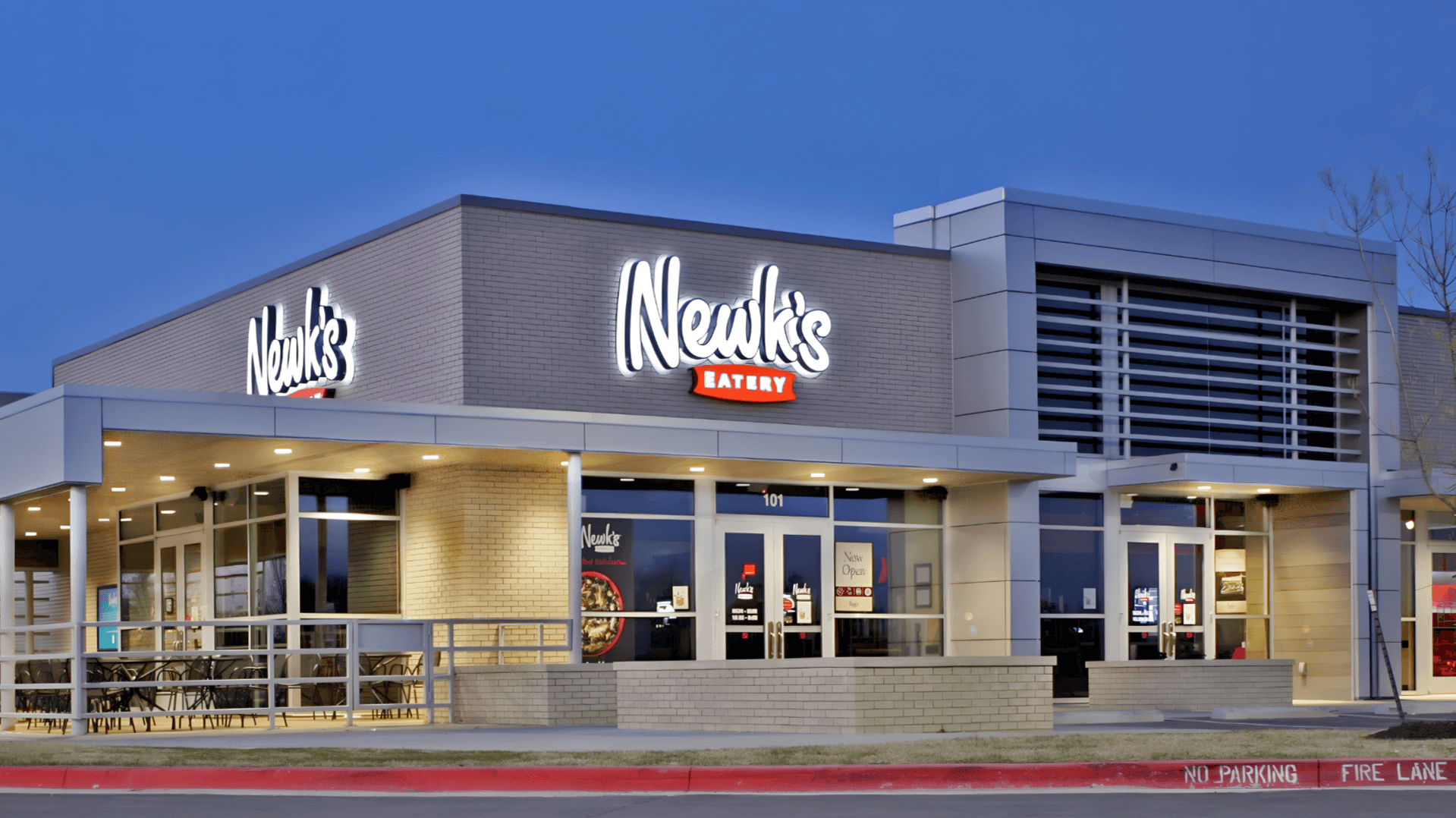
That sales mix supports Newk’s smaller prototype, which ranges from approximately 2,800 to 3,500 square feet. Less dining room space can reduce rent and buildout costs while still giving restaurants room to serve off-premise customers.

“When only 42% of your business is dine-in, you just don’t need as many seats,” Cheek said. “We’re not concerned that we’re shortcutting sales by making smaller units with fewer seats inside.”

Newk’s also offers several real estate configurations, including inline and endcap locations, freestanding restaurants, takeaway windows and full drive-thrus. That flexibility allows franchisees to consider more potential sites instead of requiring one specific building size or format.

Testing Operations Before Systemwide Rollout

Newk’s 28 company-owned restaurants give the brand another tool for improving efficiency. The franchisor can test products, equipment and operating changes itself before asking franchisees to implement them.

The company-owned restaurants span markets from Dallas, Texas, to Jacksonville, Florida, allowing Newk’s to see how changes work under actual restaurant conditions.

“We can stand hip-to-hip with a franchisee and say we know what you’re dealing with,” Cheek said. “We can make the mistakes with it before rolling it out to our franchise partners.”

Newk’s combines that operating experience with technology, purchasing scale, catering and a smaller restaurant footprint to help franchisees manage the costs they can control. The goal is an efficient restaurant model that supports profitability while preserving the food quality and hospitality guests expect from the brand.

To find out more information on costs to buy this franchise, please visit https://1851franchise.com/newks-eatery. 
Don’t Miss the Next Big Franchise Story

Sign up for the 1851 Franchise newsletter to get our biggest stories before everyone else

By signing up, you agree to our user agreement (including class action waiver and arbitration provisions), and acknowledge our privacy policy.

Victoria Campisi

About the Author

Victoria Campisi

Follow

All Articles

No related articles found