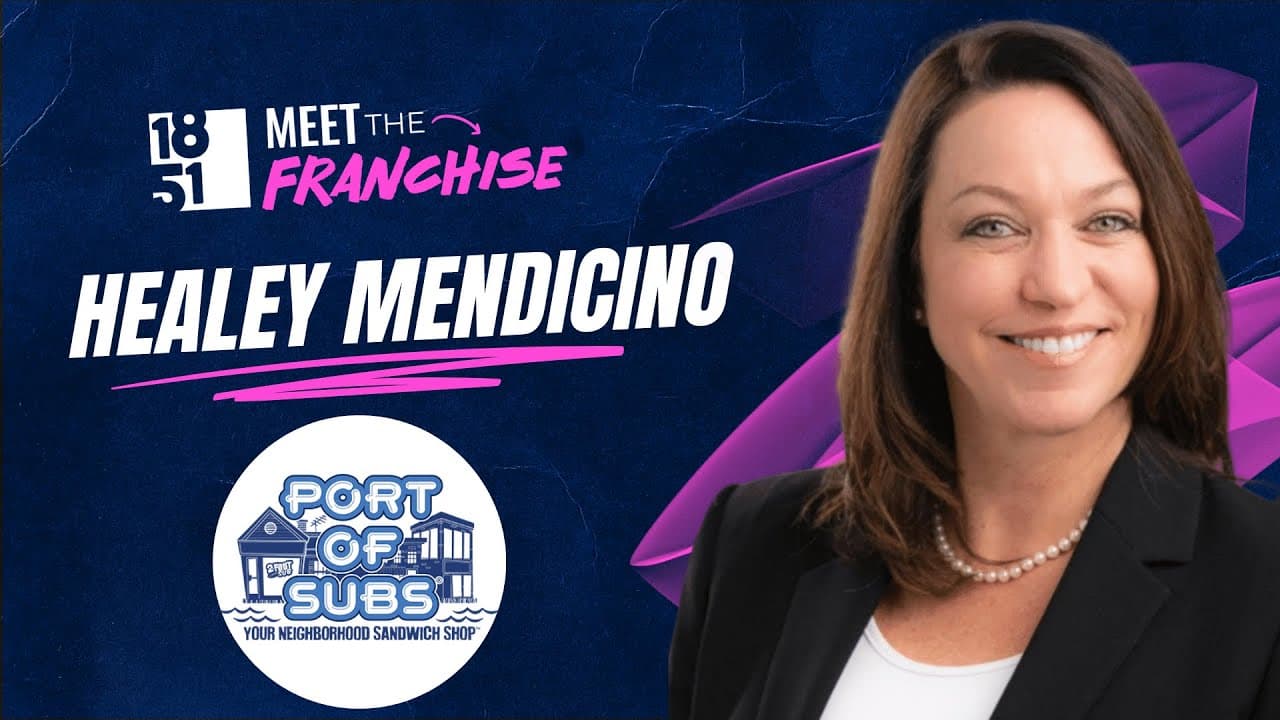
As Port of Subs, the sandwich shop franchise, prepares for its next chapter of national expansion, the brand is relying on a model built around strong franchisee support and a new regional development strategy designed to scale the concept into new markets.
“We focus heavily on fundamentals,” said Healey Mendicino, president and CEO of Port of Subs. “Many brands skip the fundamentals and jump straight to ‘we need more leads.’ But if you don’t educate someone early about franchising — especially in restaurants, which are complex — expectations won’t be met. Franchising is powerful, but it’s not for everyone.”
Founded in 1972, Port of Subs is a premium sandwich-based quick-service restaurant brand with more than 130 locations across Nevada, California, Arizona, Utah, Idaho, Oregon and Washington. Known for its fresh-sliced sandwiches and community-focused culture, the company spent decades building a loyal following across the western United States. In 2023, the brand entered a new phase of growth after receiving investment from the franchise experts at Area 15 Ventures, led by RE/MAX founder Dave Liniger and former RE/MAX CEO Adam Contos.
Mendicino initially joined the brand as a franchisee in Reno, Nevada, operating two locations before transitioning into a corporate leadership role. Her operational success eventually led the company to recruit her as executive vice president, and in 2023 she was promoted to president to lead the brand’s expansion.
“We started with very simple concepts that still guide us today: serve great food, treat others well and be a true part of the communities we serve. That still guides us today,” she said.
Today, Port of Subs is building on that foundation as it shifts its development strategy from primarily single-unit growth to a regional developer model. The approach allows experienced operators to develop multiple locations within a territory while building their own local franchise networks. With 230 units currently under development across four new states, the brand is entering its most ambitious expansion phase in decades.
Maintaining strong relationships with franchisees is important to the brand’s growth strategy. Mendicino’s own experience operating restaurants helps shape how the company approaches support, expectations and long-term success within the system.
“Having that firsthand experience really helped me realize that the franchisee is the customer,” Mendicino said.
Healey Mendicino joined 1851 Franchise Publisher Nick Powills on an episode of “Meet the Franchise” to discuss her path from franchisee to CEO, how Port of Subs is preparing for national expansion and why strong franchisee relationships remain central to the brand’s growth strategy. A transcript of Mendicino’s interview with Powills has been provided below. It has been edited for brevity, clarity and style.
Nick Powills: Healey, one scripted question. The rest is off the cuff. But the question is one I always ask: How did you accidentally fall into franchising?
Before you answer that, I have to say it’s rare and awesome that someone goes from franchise development into the CEO seat. That’s a win for the industry already. So tell me a franchise story. How did you accidentally fall into it?
Healey Mendicino: Thanks for that preamble. For context, many of your listeners may not know our brand, Port of Subs. As amazing as it is, Port of Subs is a 54-year legacy sandwich brand. We started with very simple concepts that still guide us today: serve great food, treat others well and be a true part of the communities we serve. That still guides us today.
The brand was founder- and family-led for 50 years. Then, in the spring of 2023, we were acquired by the partners of Area 15 Ventures, led by Dave Liniger, founder of RE/MAX, obviously with global franchise expertise, and Adam Contos, the former CEO of RE/MAX and managing partner for Area 15.
They have franchising expertise. We have food expertise. So it was a great marriage. Based on that, Port of Subs is in a very exciting chapter where we go from a very successful, beloved regional brand into national expansion. That’s a little bit about our brand before I get into your original question, which is how I got involved in franchising.
Once upon a time, long ago, I started my career in commercial real estate. Through that experience, I learned site selection, leasing, SBA financing and construction — all things related to commercial real estate that obviously connect to where I sit today.
Through that SBA franchising experience, I was invited and appointed by our governor at the time to participate in the White House Conference on Small Business. The chairman of our delegation was John Larson, the founder of Port of Subs. That’s how I got introduced to the brand.
It was such an exciting time because I had never been involved in franchising. I had been a customer. This was in Las Vegas, where we had many units, so I had always been an avid fan and passionate customer. But I never understood the franchising part of it. That’s where I absolutely fell in love with franchising and realized how franchising can change lives and what that means for everyone involved. That’s how I got involved in franchising.
Fun fact: when John and I met at the conference, we became fast friends. That eventually led to him inviting me to become a partner and franchisee. I became the franchisee of the 100th unit, which, as we all know in franchising, is a huge milestone for a brand. To be able to reach that level and be the 100th franchisee with the founder was really exceptional.
Powills: That’s a really fun time, right? You meet him at a conference. Every franchisor wants to sell franchises, so he’s like, “Oh, I like you.” But you have to have some financial strength and risk tolerance to say, “All right, I’m ready to be a franchise owner.”
How do you navigate that? How long does it take from that chance meeting to you actually becoming the franchisee?
Mendicino: It was a little over a year. We obviously had to get to know each other. He’s such a generous person. Being founder- and family-run, his drive was also to have a little bit of cash flow outside of company dollars, because it was the whole family involved. He also wanted to help me.
You talk about risk tolerance. At that time, I was having great success in my commercial real estate career. However, when it came down to writing the check for the franchise, it was literally every dollar — minus $800 — that I had in my entire savings account. I said, “OK, we’re off to a franchising adventure.”
I felt confident in site selection, construction and being able to put together the loans because of my past experience. I also had a bit of a safety net because I was partnering with the founder. It wasn’t 100 percent on my own.
But I’ll never forget writing that check and becoming a franchisee, and sitting in that seat of everything that happens when you’re a franchisee. That gives me a very unique lens as I sit here today with our franchise network.
Powills: What year did you become a franchise
Mendicino: 1997.
Powills: So in 1997, there was a Uniform Franchise Offering Circular. You’re handed this document because you still have to go through the process. Are you feeling overwhelmed at any point? You’re about to make this big investment. You’ve got $800 left in your bank account. You’re reading this giant document and signing a franchise agreement. Is there stress going on behind the scenes?
Mendicino: There’s no doubt in your mind that you’re going to make this work. It’s a highly motivating factor. You’re thinking, “There are no ifs, ands or buts. We’re going to make this work.” The UFOC didn’t overwhelm me. I came from a contracts background, so I wanted to understand it. It was a great learning experience.
What better way to learn franchising than to read a UFOC, now called the FDD? The overwhelming part was operations. I had never been in the back of house of a restaurant. I was an office person. Offices are slow. Restaurants are fast. Everything happens at once. Restaurants are wild. Those of you in restaurants know that.
We’re brick-and-mortar and customer-facing. So the overwhelming part was learning operations. No individual component was difficult — it was everything happening so quickly at once.
Powills: Did you become a multi-unit operator?
Mendicino: Yes. We opened our second unit about a year later. Two is very manageable. The first one is the hard one. Later, I became a multi-unit franchisee of a national diner brand that operated 24 hours and never closed. That gave me real operator knowledge.
You think you know what you’re getting into, but when you operate a business that never closes, you say, “Holy moly, what did I do?” It was a fantastic journey. I loved being a franchisee.
Powills: How long did you hold the Port of Subs units?
Mendicino: About 11 years. Then the financial crisis in 2008 and 2009 happened, which wasn’t much fun. I was also building commercial real estate for myself and other restaurants.
So we sold the units back to the corporation, and they became corporate-run units. At the time, Port of Subs already operated about 25 percent of the chain as corporate stores, so it was a very easy transition.
Powills: Here’s what I love about that part of the story. One of the gaps between franchisor and franchisee is understanding what it feels like to walk a day in the shoes of the franchisee.
Sometimes, franchisors rule with an iron fist instead of listening to feedback. Yet so many iconic menu items — the Happy Meal, the Big Mac and others — came from franchisees raising their hands and saying, “Have we thought about this?”
You also experienced turbulent periods. You saw the tech bubble, Sept. 11 and then the 2008 recession. So when COVID hits, does that change your lens? Because you can instantly go back to how you felt when you didn’t know what tomorrow would bring.
Mendicino: You unpacked a lot there, but I’ll try to be brief. Having walked in those shoes and experienced everything that happens to entrepreneurs — like worrying about making payroll — you understand why that matters. Many of us have been there.
Back in those days, you could float payroll for a couple of days. You can’t even do that now. Having that firsthand experience helped me realize that the franchisee is the customer.
After going through a major financial reversal in 2008 and 2009, which was not fun, I eventually joined the corporate office in 2013. That was the first time I had been an employee since I was about 22 years old. I couldn’t help myself and started getting involved in many roles. That’s when I became executive vice president.
During COVID, I had very clear memories of what it’s like to be in the restaurants and deal with team members. People were very afraid, especially younger team members working in restaurants. Our franchisees are our customers.
For us, during COVID it was the founder, the family and a small leadership group asking, “How do we make this work for the franchisees?” We implemented royalty forgiveness for a period of time because franchisees were trying to figure out payroll, keeping stores open and everything else.
We also had constant communication. Sometimes you get lucky in life. Shortly after that difficult period, we started turning around. In 2021 we had the highest sales volume in the company’s history.
We had incredible brand loyalty and trust from our customers. Our marketing team is very young, and in 2019 we had already adopted DSPs, curbside pickup, online ordering, strong apps and delivery. We were already set up for that. Sometimes you get lucky, and in that instance, we certainly did.
Powills: As you say that, I think about the magic of 2021. Many franchisors talk about record sales that year. My opinion is that it wasn’t just customers — it was the highest level of support franchisors ever gave franchisees. When franchisees feel empowered, supported and backed up, they perform differently. Now, five years later, support is still good, but it’s not COVID-level support. If franchisors want another 2021, the driver isn’t just customers — it’s franchisees.
How do you feel about that?
Mendicino: I agree with that, though it’s a little complicated. In 2021, there was also a lot of money in the system and widespread debt forgiveness across the economy. That played a role.
We had record sales but fewer team members because of labor shortages. Many single-unit operators worked extremely hard but also made great profits. Trust was key.
We had strong relationships with our franchise network and strong trust with our end customers. We also saw off-premises strategies accelerate. Delivery platforms and digital ordering would have taken years to become mainstream. COVID compressed that timeline dramatically. Now we have this huge new platform that’s both required and accepted. That’s part of the future of franchising.
Powills: Another thing I want to unpack from your opening statement is leadership. In franchising, people say they buy the product. But if you’re investing your life savings into a business you don’t fully control, you’re betting on the leader. Your journey started that way. You weren’t buying the sandwich — you were buying the person.
Two things I see from the outside. First, franchisors often lead with the product when the real story is the people and the support behind the brand. Second, the industry needs to do a better job of educating prospective franchisees about what franchising actually is before asking them to buy.
Mendicino: I like both of those points. And I’ll say this: our sandwiches are over-the-top delicious. I challenge anyone to say there’s a better sandwich out there. But yes, you’re not just buying the sandwich. You’re buying the system and the leadership. We focus heavily on fundamentals.
Many brands skip the fundamentals and jump straight to “we need more leads.” But if you don’t educate someone early about franchising — especially in restaurants, which are complex — expectations won’t be met. Franchising is powerful, but it’s not for everyone.
Success starts with unit economics. If your first franchisee isn’t profitable, you shouldn’t sell a second franchise. We’re a 54-year brand with tremendous franchisee tenure. Many franchisees have been with us 15, 20 or even 30 years.
As we move from a regional brand into national expansion, we’re revisiting fundamentals — unit economics, support and customer experience — while using the data that’s now available to make better decisions.
Powills: I think the two things I want to pull from that are expectation setting and simplifying the model.
Unfortunately, the industry is a business, and I understand that. But too many brands over-index on Item 19 and show these big, fancy numbers. That’s great as long as the franchisee can actually hit those numbers.
Some of those numbers come from high-performing locations that benefit from better real estate, better access to customers or other factors. When franchisees sign multi-unit agreements, open their first location and it doesn’t meet expectations, they say, “I don’t want to do this anymore.” That actually hurts franchise sales more than anything.
The second thing I hear from you is advice to simplify and to continue operating like a startup. Go back to being a startup multiple times in your business. I was on a board call with a consultant recently, and he said something interesting. If I were you, I would take pictures of franchisee stores and make them look like they’re closed, and say, “If we don’t reset the basics, this is what your store could look like in the future.”
Leadership matters. The franchisee isn’t the ultimate leader — they buy into a system. They’re looking to the franchisor for leadership. So when I hear you talking about adjusting expectations and fundamentals, if I’m a buyer listening from the outside, I hear that today might not be what you buy tomorrow. But leadership is responsible for making sure the system evolves so franchisees can succeed. People are betting on you, not just the product.
Mendicino: When you have that franchisee lens, it’s very important to ask whether a decision is good for the franchisee. We all want higher average unit volumes. Everyone wants that in every business across the globe. But I like to break that down unit by unit.
Because we’re a mature brand, our Item 19 is presented in quartiles. We have newer units and also many single-unit operators who have been around for a long time. They’re still making great money, but it impacts the overall AUV. I want the focus to be on individual units.
Some units are doing extremely well. Sometimes they get a little neglected because they’re already thriving. So we focus on the middle group — the operators who are engaged and just need direction to achieve that next level. For franchisees who may be struggling, we provide additional support.
We also shifted our development model from single-unit growth to a regional developer model for national expansion. That’s not for the faint of heart. Our regional developers commit to a minimum of 10 units, and most have 20 units in their development agreements. They control the territory and build their own franchise network.
Our focus is on providing end-to-end tools and full life-cycle support to help regional developers and their franchisees succeed. In new markets, that’s a different challenge as well. It’s an aggressive way to grow, but it’s very exciting.
We just signed our 19th regional developer. Last month we opened three units. One of our newest markets, Spokane, Washington, broke all of our previous opening records. Then we have other operators who are building more gradually.
We have a strong heritage and proven systems, but there are no guarantees in new markets. Taste profiles differ and market conditions vary. So we stay closely connected with franchisees, because the best ideas often come from the field.
Powills: From the data you mentioned — and the experience you had during COVID — you can go back to how you personally felt during turbulent situations. You also now have the historical experience of the brand. You’ve seen everything from explosive openings to slower growth markets. That gives you the ability to tell franchisees, “We’ve seen this before. Here’s what typically happens.”
Part of the franchisor’s role is talking franchisees down from the ledge when they start to panic. In closing, unless there’s something else you’d like to add for someone watching who may be considering franchising, any final words of wisdom?
Mendicino: If I could encapsulate it, I would say that franchising is truly incredible. It is one of the most powerful wealth-creating and community-building business models in the world. It creates a tremendous opportunity. We focus on what opportunities and successes we can create for people through the way we choose to do business.
We put people first. We focus on performance. And we want to be purpose-led and make meaningful differences in people’s lives. You can’t skip the foundation. Make sure your foundation and proof of concept are strong. Make sure people love your product, your brand or your service. Then put your heart into it and stick to the basics. If you stick to those basics, you will grow your brand.
Powills: Healey, I’m grateful that you gave me so much time and shared your story.
Mendicino: Thank you for having me. I really appreciate being here.
Watch the episode above or on YouTube.