Growing a Franchise
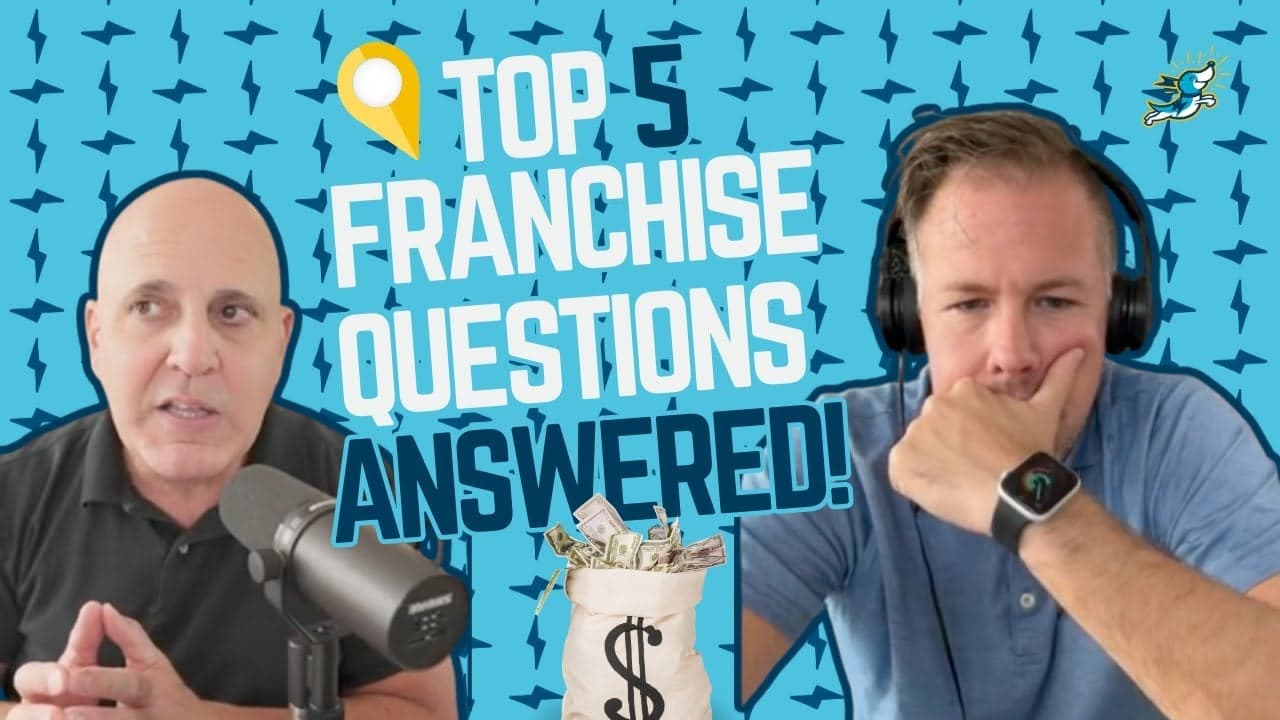
Before You Franchise: Answers to the Top 5 Questions of Franchisors-To-Be
From calculating real costs to maintaining brand control, here’s what prospective franchisors want to know before taking the leap.
Growing a Franchise
From calculating real costs to maintaining brand control, here’s what prospective franchisors want to know before taking the leap.
Franchising is a great way to grow a brand, but it’s about far more than just opening more units. Successful franchisors must create a sustainable system that can be replicated while maintaining profitability and brand integrity. The choice to franchise should be made after thoughtful consideration and an evaluation of a few key factors.
Here are five top questions prospective franchisors have — answered by the experts.
There is a choice to be made surrounding franchising, but it doesn’t have to be entirely binary.
“You have your corporate locations; you’re successful. Now, there’s two pathways,” said Charles Internicola, CEO of GoodSpark Franchise Growth Accelerator. “Organic growth, where you open up more locations, or your franchise. Or you do both.”
Capital Position Assessment
If you have strong capital reserves and your locations generate significant cash flow, continuing with corporate expansion might make sense.
“Most brands decide to franchise their business because they don’t have the strongest capital position to be able to scale corporate locations at the scale they want,” said Nick Powills, chief strategy officer at GoodSpark. “It’s another strategy. I think it’s a genius strategy where, if it works out, the franchisee operates the unit and can make a good return on their investment.”
Energy and Capacity
While financial considerations are one side of the franchise decision, founders should also consider their energy. Those who don’t have the energy or are not interested in hustling to open and operate multiple corporate locations can funnel available energy toward supporting franchisees, instead.
Many successful franchisors don’t choose one approach exclusively. Some systems start with one corporate location and grow to dozens of franchised locations. Other brands maintain franchise and corporate-led growth simultaneously. Understanding the level of resources you have available at a given time and evaluating how to best use them will help you decide how to grow.
Starting a franchise isn’t cheap. While $50,000 is technically enough to get you started as a franchisor, you need to evaluate whether it will create the launchpad you want and need.
“Could you get an FDD and an ops manual for that price point? Yes,” Powills said. “So, technically, you can have two of the pieces that are going to be fundamental to franchising your business. After $50,000 is spent, do you have money left over to now build a franchise development website? To market your franchise opportunity beyond your four walls and your network? To build a plan to either grow organically or through a broker network? No.”
“We’ve seen so many new franchisors enter the space, and they’ve spent $100,000, or they spent $20,000. And worse than the wasted capital is the wasted time — the lost opportunity,” Internicola added. “I’ll see someone who says, ‘Charles, I spent this on this consulting company. They did modeling, they did operations manuals, they did projections, they did all these things. They gave me this big booklet, and they promise all these relationships, but when I look under the hood, it’s very generic.”
In the consulting space, it’s crucial to focus on relationships. Find someone you trust. Someone who will empower you and give you real, personalized support and facts-based answers to guide your franchise journey. Not all franchise founders and brands are the same, and it’s worth it to find and invest in the right fit to help you grow — even if it means waiting to franchise until you have more capital available to spend on the growth phases.
There are genuine people in the development space, and there are those selling what Powills calls “snake oil.”
Use a critical eye to find the right group. Ask thoughtful questions about deliverables and approach, and consider the evolving marketplace. Development groups that boast clients who found success in totally different business landscapes, or clients whose stories do not at all align with your own, may not be a fit.
“I would say, ‘Give us three of your brands. Your biggest success story is great; let us talk to them. Then we want a brand that you helped franchise three years ago that is stuck. And then we want one brand that you helped franchise recently that is stuck,’” Powills said. “Talk to the stuck ones and ask them, ‘What would you have done differently in the process?’ And it’s not to validate out that consultant. It’s more so to ask those franchisors, ‘What was the miss here?’ Because if you understand that, then you make a decision if you want to correct that or not.”
As you conduct the search, you must remember what the development group will and won’t do for you.
Most development companies will not sell franchises for you. There are three steps to the process — franchising your business, selling your first franchise, and onboarding that franchisee, and they’re there to help you with the first.
First, you must recognize that franchising inherently means giving up some control. You can control the foundation of the brand, but the franchisees will be in control of some operations. They aren’t employees; they’re owners and investors who should be treated like partners.
“Where I see brands get in trouble is they want to rule with an iron fist, and then franchisees are disengaged because they feel like it’s them versus us. And these are people’s life savings,” Powills said. “If you have a fear of, ‘How am I going to be in complete control?’ You’re not. And if you can’t get over that, don’t franchise.”
To find a happy middle ground, you should define your non-negotiable brand standards and identify areas where you’re comfortable allowing franchisee flexibility.
If you find yourself running a business that is stable and profitable, people may ask you, “Have you ever thought about franchising?”
Self-Education: “I would use ChatGPT, and I would say, ‘What should I know about franchising my business? What are the pros and cons?’” Powills said. “Have a basic conversation with AI.”
This will help you understand what franchising will mean for you and provide helpful facts to inform your choice.
Professional Consultation: “I would probably pick two consultancies, fill out the form, and test it for a culture match,” Powills said.
Financial Planning: “Before I say yes, I’m probably working through my pro forma so that I have some sort of sense of how much this is going to cost me,” Powills said. “At what point do I start seeing a return? You franchise your business, you sell your first franchise in your first year. That franchisee gets open by year two, and you collect the full year of royalty in year three. In that scenario, you’re going to go two years. Does the cash flow from your business support everything you’re doing to get to the point where royalties are coming in?”
The entrepreneurs who succeed in franchising approach it with discipline and realistic expectations. Rather than focusing on a quick franchise launch or quick profits, take the time to explore the realities of franchising; find a qualified, dedicated partner; and proceed in an intentional, measured way.
Watch the full video above or on YouTube.
For more information on GoodSpark and its services for developing franchises, visit https://www.goodsparkfranchise.com/.
Sign up for the 1851 Franchise newsletter to get our biggest stories before everyone else
By signing up, you agree to our user agreement (including class action waiver and arbitration provisions), and acknowledge our privacy policy.