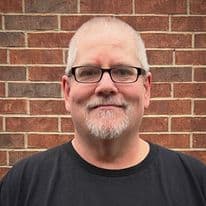
After years of corporate work and multiple cross-country moves, Nathan Peterson found himself at a personal and professional crossroads. In 2018, his older brother was in a car accident that left him quadriplegic. Peterson and his family moved to Idaho in 2019 to help support him through the transition. “That was kind of the first thing that turned me toward caretaking,” Peterson said. Over the following years, he also supported his aging father through the complications of diabetes and the loss of mobility. Additionally, Peterson watched his in-laws struggle to find care in a rural area as his mother-in-law’s health rapidly declined due to a brain tumor and other age-related challenges.

Eventually, Peterson faced a turning point of his own. After working remotely for several years, his company issued a return-to-office mandate that would have uprooted his family for another cross country move.  “I took the ‘or else’ route,” he said. “I felt like, for personal reasons — for my brother, for my kids and family who were now established here — I wasn’t willing to relocate again.” He began looking for other opportunities and quickly realized that he wasn’t interested in more of the same. “If I was going to change, I wanted to do something that felt good, something I was excited about, something that would make a positive impact.”

That’s when he was introduced to Seniors Helping Seniors® by a franchise broker. “Immediately, the concept resonated with me,” Peterson said. “I thought I would enjoy it and be passionate about it, and that’s the route I went down.” Reflecting on his family’s recent experiences, he added, “The thought has occurred numerous times that if we had known about Seniors Helping Seniors® three or four years ago, my in-laws could have stayed in their house a lot longer.” Now, his goal is to help other families avoid that same uncertainty and provide the care that allows seniors to remain safely and comfortably in their homes.

Peterson purchased three and a half territories across southern and southeastern Idaho, with plans to expand further into surrounding states. But more than financial growth, he sees his new business as a way to set an example for his children and build strong connections in his community. “I want them to see what it looks like to make a meaningful impact. I hope it inspires them to serve throughout their lives,” he said. “I want to provide opportunities for as many people as possible to live meaningful lives and contribute to others lives in a meaningful way.”

1851 Franchise spoke with Peterson to learn more about his franchising journey with Seniors Helping Seniors® and his passion for making a positive impact through his business. Here’s what he had to say:

1851 Franchise: Frame your personal story for us. What do you want us to know?

Nathan Peterson: I grew up in southern Nevada. I'm an outdoorsman at heart — love anything outdoors. While I was going to college at UNLV, I had hoped to start a recreational services company: guided tours, camping, horseback riding, rappelling — that kind of stuff. That just so happened to be about the time of the housing bubble, and I figured that was not a good time to start a company that depends on people's disposable income. I ended up continuing my education, got an MBA from Weber State University and then took a corporate job.

We moved to Tennessee and had an awesome experience. We were introduced to the Southern culture — Kind, good hearted people and I loved it. The company I worked for went public, moved to Chicago, and we went with them. Then, I was contacted by a chemical manufacturer in Tennessee, so we changed companies and moved back. I kind of did the corporate ladder thing for a while — it was nice. It was stable.

While in Tennessee, the company I was with bought a division of Dow Chemicals. We ended up moving to Houston for a couple of years, and we were really enjoying life there.

In 2018, my older brother, who lived in Idaho, was in a car accident and became quadriplegic. My wife and I decided that we wanted to move to Idaho to help; this was a turning point in our lives. We packed up the family in 2019 and moved in with my brother and started helping him. Over the years, he’s gone back to work. He’s built a new house that’s ADA-compliant and he’s on the path to being more self-sufficient. He’s still in a wheelchair, still quadriplegic and needs help, but doing much better now. I am so glad I could help him when he needed it.

That was kind of the first thing that turned me toward caretaking. About a year after we moved to Idaho, my parents did too. That was fun — our kids had only known their grandparents from summer and Christmas vacations. To have them coming to ball games and over for dinners; it was really fun.

In 2023, my dad passed away. We went through that whole downhill process — he was diabetic, had an amputation  — and then his health declined quickly. That required a lot of care and concern.

My mother-in-law’s health challenges was another event that had a major impact on my family and I.. They lived in eastern Idaho, and both she and my father-in-law were super active and healthy. Then a few years back, she developed a brain tumor. All of a sudden, in a very short period of time, she had multiple surgeries and her health declined pretty quickly. They lived out in the country, and none of the children lived close enough to provide the long term care they needed, so we started trying to talk them into moving in with one of the kids or downsizing and moving into town. When we didn’t know what else to do, they ended up moving to Oklahoma for six months to live with one of their kids, then Utah for a year with friends, and eventually bought a townhouse. It just wasn’t ideal.

So jumping around a little — I’d been working remotely since we moved to Idaho. Last year, we got a new CEO and there was a big push to get everybody back in the office. I was basically told to move back to Houston or else. I took the “or else” route. I felt like, for personal reasons — for my brother, for my kids and family who were now established here — I wasn’t willing to relocate again.

I started looking for another job. I was sitting in an interview one day and I just remember thinking, “I don’t even want this job. I’m not excited about this.” I didn’t want to keep doing the same thing. If I was going to change, I wanted to do something that felt good, something I was excited about, something that would make a positive impact.

About that time — and I believe God is very involved in the details of our lives — I was contacted on LinkedIn by a company called The Perfect Franchise. They’re a franchise broker. They asked, “Would you consider franchising?” I said, “Maybe,” and we started that process. They introduced me to a number of different franchises, one of them being Seniors Helping Seniors®. Immediately, the concept resonated with me. I thought I would enjoy it and be passionate about it, and that’s the route I took.

The thought has occurred numerous times that if we had known about Seniors Helping Seniors® three or four years ago, my in-laws could have stayed in their house a lot longer. But we did the best we could with the options we knew were available. I’m looking forward to helping people in similar situations stay in their homes and get the care they need to live the life they want to live.

1851: What did you do before franchising, and how did you decide franchising made sense for you? 

Peterson: I’ve always had a desire to be a business owner. From the time I was in college, I thought it was something I would enjoy. Over the years, working in the corporate world, I’ve come to understand a lot of different aspects of running a business. I’ve had family members and friends who started their own companies, and I’ve seen the struggle — all the details you don’t think about.

It was very appealing to me to join a franchise that had processes and procedures in place, that had a model you could follow and tools already set up so I wouldn’t have to learn everything the hard way or start from scratch. From the beginning, Seniors Helping Seniors® felt like they had a very good model, good tools and good processes — on top of just being a good business concept. That’s what pushed me over the edge. I don’t know if I’d call it low risk, but it felt a lot lower risk than just going out and doing something on my own.

1851: What was your perception of franchising prior to becoming a franchise owner, and what do you want people to know about franchising now that you are in it?  

Peterson: I always had a positive view of franchising. I thought it was a good way to get into business. I guess I always considered it more of a first step — a way to gain business experience so that someday you could go off and do your own thing. I thought the royalties and other fees might take away from profitability.

Again, I’m still relatively new. I don’t even have my first client or first caregiver hired. But as I’ve gone through the business planning, orientation and training, I’m a lot more optimistic. I think there’s a good opportunity to make a good living and a positive impact. I think I’ll be able to do it on a larger scale and at a faster pace than I would have on my own. I’m excited about that.

1851: What made you pick this brand? What excites you most about this company?

Peterson: One thing throughout my career that I wish I’d been able to do more of was provide employment opportunities. I’ve had friends and neighbors who lost jobs, and working in a corporate environment, I wasn’t really in a position to help. I’ve known seniors who have gone to work for Walmart or other places just because they needed a little extra income — not because they loved it.

Everyone I’ve known wanted to have more of an impact, to do something more meaningful. That’s something that really resonated with me. I’m excited to work with seniors who are still healthy and want to stay active — who want to do something meaningful. Maybe they’re grateful for the income, maybe they don’t care about it. I’m excited to build those relationships, too.

1851: What do you hope to achieve with your business? What are your plans for growth? 

Peterson: I purchased three and a half territories. I own part of the Treasure Valley — the Boise area: Fruitland, Caldwell, Middleton and Nampa. Then as you move across the state, from Mountain Home to the southeastern corner, and north near Yellowstone, I own those territories.

Over the next year and a half, I’d like to get those three territories up and running. I want to hire someone as an operations manager to help keep things going and growing, and then I’d like to buy a couple more. There’s opportunity in northern Idaho and maybe northern Utah or Montana. 

But I do want to scale. I picture having events where we bring caregivers together to share stories — a family feel, where we celebrate success and all the good things we’re doing. I want this to be a successful business. I want to expand and grow.

1851: Is there anything else about your story you want us to know?

Peterson: I want to be successful. I want to be a good provider for my family. But I also want to be a good example for my kids. It’s been hard working in a corporate environment where you go to work, but your kids never see what you do. Even working remote — all they see is me sitting at a computer.

I’m excited for the change — to be interacting more with people. I hope I find clients and caregivers who say, “Hey, I know someone who could use a little yard work,” and I can take my kids with me. I want them to see what it looks like to make a meaningful impact. I hope it inspires them to serve throughout their lives.

I want to provide opportunities for as many people as possible to live meaningful lives and contribute to meaningful lives. I hope it’s an inspiring story — that years down the road we can look back and say, “Wow, we really did it,” and that it made a positive impact.

1851: What advice do you have for other people thinking about becoming franchise owners?  

Peterson: I hope to have a lot more advice a year or two from now when I’ve got some more experience. But it’s exciting. I think for anybody considering a change — I’ve heard throughout my life, “If you love what you do, you won’t work a day in your life.” And I thought, yeah, that sounds good for people making a ton of money, but sometimes you’ve just got to pay the bills.

I’ve done what I had to do for 20 years. I’m excited now to be in the mindset of, “You know what? I’m ready for a change. I want it to be something I love and want to do.” And I think for anybody considering a change — take that into consideration. What do you love to do? What do you feel will be meaningful and make an impact?

I wish I would have been in this position sooner, but I think things happen for a reason. I’m grateful for the experiences I’ve had in the corporate world. Now is the perfect time for me to make that change.
 

ABOUT SENIORS HELPING SENIORS:

Seniors Helping Seniors® franchise system was founded by husband-and-wife duo Kiran and Philip Yocom. Kiran, who grew up in India, later worked to advance humanitarian efforts alongside Mother Teresa. After moving to the U.S. in 1995 and marrying her husband Philip, the Yocoms felt called to provide loving care to seniors and to cultivate an exchange of gifts at every generational level. Together, the Yocoms founded Seniors Helping Seniors® in-home services in 1998, opening the brand up to franchising in 2006. With a mission to be the most respected and rewarding home care provider in the U.S., Seniors Helping Seniors® locations stand apart from competitors as the only company that prioritizes hiring active seniors to provide care services to their less-active counterparts. Seniors Helping Seniors® service aligns caregivers and care recipients based on the abilities and needs of both by offering a wide range of care services. Seniors Helping Seniors® network has grown to 350 territories nationwide and over 180 franchise partners in 38 states. For more information on Seniors Helping Seniors® in-home care, visit https://seniorshelpingseniors.com/.  

Seniors Helping Seniors®

SPONSORED
Nathan Peterson Turns Passion for Helping Others into a Purpose-Driven Business with Seniors Helping Seniors Franchise

Nathan Peterson Turns Passion for Helping Others into a Purpose-Driven Business with Seniors Helping Seniors Franchise

After years in the corporate world, Peterson is launching a senior care franchise rooted in his family values and caregiving experience, opening in Caldwell, Idaho, at the end of April.

After years of corporate work and multiple cross-country moves, Nathan Peterson found himself at a personal and professional crossroads. In 2018, his older brother was in a car accident that left him quadriplegic. Peterson and his family moved to Idaho in 2019 to help support him through the transition. “That was kind of the first thing that turned me toward caretaking,” Peterson said. Over the following years, he also supported his aging father through the complications of diabetes and the loss of mobility. Additionally, Peterson watched his in-laws struggle to find care in a rural area as his mother-in-law’s health rapidly declined due to a brain tumor and other age-related challenges.

Eventually, Peterson faced a turning point of his own. After working remotely for several years, his company issued a return-to-office mandate that would have uprooted his family for another cross country move.  “I took the ‘or else’ route,” he said. “I felt like, for personal reasons — for my brother, for my kids and family who were now established here — I wasn’t willing to relocate again.” He began looking for other opportunities and quickly realized that he wasn’t interested in more of the same. “If I was going to change, I wanted to do something that felt good, something I was excited about, something that would make a positive impact.”

That’s when he was introduced to Seniors Helping Seniors® by a franchise broker. “Immediately, the concept resonated with me,” Peterson said. “I thought I would enjoy it and be passionate about it, and that’s the route I went down.” Reflecting on his family’s recent experiences, he added, “The thought has occurred numerous times that if we had known about Seniors Helping Seniors® three or four years ago, my in-laws could have stayed in their house a lot longer.” Now, his goal is to help other families avoid that same uncertainty and provide the care that allows seniors to remain safely and comfortably in their homes.

Peterson purchased three and a half territories across southern and southeastern Idaho, with plans to expand further into surrounding states. But more than financial growth, he sees his new business as a way to set an example for his children and build strong connections in his community. “I want them to see what it looks like to make a meaningful impact. I hope it inspires them to serve throughout their lives,” he said. “I want to provide opportunities for as many people as possible to live meaningful lives and contribute to others lives in a meaningful way.”

1851 Franchise spoke with Peterson to learn more about his franchising journey with Seniors Helping Seniors® and his passion for making a positive impact through his business. Here’s what he had to say:

1851 Franchise: Frame your personal story for us. What do you want us to know?

Nathan Peterson: I grew up in southern Nevada. I'm an outdoorsman at heart — love anything outdoors. While I was going to college at UNLV, I had hoped to start a recreational services company: guided tours, camping, horseback riding, rappelling — that kind of stuff. That just so happened to be about the time of the housing bubble, and I figured that was not a good time to start a company that depends on people's disposable income. I ended up continuing my education, got an MBA from Weber State University and then took a corporate job.

We moved to Tennessee and had an awesome experience. We were introduced to the Southern culture — Kind, good hearted people and I loved it. The company I worked for went public, moved to Chicago, and we went with them. Then, I was contacted by a chemical manufacturer in Tennessee, so we changed companies and moved back. I kind of did the corporate ladder thing for a while — it was nice. It was stable.

While in Tennessee, the company I was with bought a division of Dow Chemicals. We ended up moving to Houston for a couple of years, and we were really enjoying life there.

In 2018, my older brother, who lived in Idaho, was in a car accident and became quadriplegic. My wife and I decided that we wanted to move to Idaho to help; this was a turning point in our lives. We packed up the family in 2019 and moved in with my brother and started helping him. Over the years, he’s gone back to work. He’s built a new house that’s ADA-compliant and he’s on the path to being more self-sufficient. He’s still in a wheelchair, still quadriplegic and needs help, but doing much better now. I am so glad I could help him when he needed it.

That was kind of the first thing that turned me toward caretaking. About a year after we moved to Idaho, my parents did too. That was fun — our kids had only known their grandparents from summer and Christmas vacations. To have them coming to ball games and over for dinners; it was really fun.

In 2023, my dad passed away. We went through that whole downhill process — he was diabetic, had an amputation  — and then his health declined quickly. That required a lot of care and concern.

My mother-in-law’s health challenges was another event that had a major impact on my family and I.. They lived in eastern Idaho, and both she and my father-in-law were super active and healthy. Then a few years back, she developed a brain tumor. All of a sudden, in a very short period of time, she had multiple surgeries and her health declined pretty quickly. They lived out in the country, and none of the children lived close enough to provide the long term care they needed, so we started trying to talk them into moving in with one of the kids or downsizing and moving into town. When we didn’t know what else to do, they ended up moving to Oklahoma for six months to live with one of their kids, then Utah for a year with friends, and eventually bought a townhouse. It just wasn’t ideal.

So jumping around a little — I’d been working remotely since we moved to Idaho. Last year, we got a new CEO and there was a big push to get everybody back in the office. I was basically told to move back to Houston or else. I took the “or else” route. I felt like, for personal reasons — for my brother, for my kids and family who were now established here — I wasn’t willing to relocate again.

I started looking for another job. I was sitting in an interview one day and I just remember thinking, “I don’t even want this job. I’m not excited about this.” I didn’t want to keep doing the same thing. If I was going to change, I wanted to do something that felt good, something I was excited about, something that would make a positive impact.

About that time — and I believe God is very involved in the details of our lives — I was contacted on LinkedIn by a company called The Perfect Franchise. They’re a franchise broker. They asked, “Would you consider franchising?” I said, “Maybe,” and we started that process. They introduced me to a number of different franchises, one of them being Seniors Helping Seniors®. Immediately, the concept resonated with me. I thought I would enjoy it and be passionate about it, and that’s the route I took.

The thought has occurred numerous times that if we had known about Seniors Helping Seniors® three or four years ago, my in-laws could have stayed in their house a lot longer. But we did the best we could with the options we knew were available. I’m looking forward to helping people in similar situations stay in their homes and get the care they need to live the life they want to live.

1851: What did you do before franchising, and how did you decide franchising made sense for you? 

Peterson: I’ve always had a desire to be a business owner. From the time I was in college, I thought it was something I would enjoy. Over the years, working in the corporate world, I’ve come to understand a lot of different aspects of running a business. I’ve had family members and friends who started their own companies, and I’ve seen the struggle — all the details you don’t think about.

It was very appealing to me to join a franchise that had processes and procedures in place, that had a model you could follow and tools already set up so I wouldn’t have to learn everything the hard way or start from scratch. From the beginning, Seniors Helping Seniors® felt like they had a very good model, good tools and good processes — on top of just being a good business concept. That’s what pushed me over the edge. I don’t know if I’d call it low risk, but it felt a lot lower risk than just going out and doing something on my own.

1851: What was your perception of franchising prior to becoming a franchise owner, and what do you want people to know about franchising now that you are in it?  

Peterson: I always had a positive view of franchising. I thought it was a good way to get into business. I guess I always considered it more of a first step — a way to gain business experience so that someday you could go off and do your own thing. I thought the royalties and other fees might take away from profitability.

Again, I’m still relatively new. I don’t even have my first client or first caregiver hired. But as I’ve gone through the business planning, orientation and training, I’m a lot more optimistic. I think there’s a good opportunity to make a good living and a positive impact. I think I’ll be able to do it on a larger scale and at a faster pace than I would have on my own. I’m excited about that.

1851: What made you pick this brand? What excites you most about this company?

Peterson: One thing throughout my career that I wish I’d been able to do more of was provide employment opportunities. I’ve had friends and neighbors who lost jobs, and working in a corporate environment, I wasn’t really in a position to help. I’ve known seniors who have gone to work for Walmart or other places just because they needed a little extra income — not because they loved it.

Everyone I’ve known wanted to have more of an impact, to do something more meaningful. That’s something that really resonated with me. I’m excited to work with seniors who are still healthy and want to stay active — who want to do something meaningful. Maybe they’re grateful for the income, maybe they don’t care about it. I’m excited to build those relationships, too.

1851: What do you hope to achieve with your business? What are your plans for growth? 

Peterson: I purchased three and a half territories. I own part of the Treasure Valley — the Boise area: Fruitland, Caldwell, Middleton and Nampa. Then as you move across the state, from Mountain Home to the southeastern corner, and north near Yellowstone, I own those territories.

Over the next year and a half, I’d like to get those three territories up and running. I want to hire someone as an operations manager to help keep things going and growing, and then I’d like to buy a couple more. There’s opportunity in northern Idaho and maybe northern Utah or Montana. 

But I do want to scale. I picture having events where we bring caregivers together to share stories — a family feel, where we celebrate success and all the good things we’re doing. I want this to be a successful business. I want to expand and grow.

1851: Is there anything else about your story you want us to know?

Peterson: I want to be successful. I want to be a good provider for my family. But I also want to be a good example for my kids. It’s been hard working in a corporate environment where you go to work, but your kids never see what you do. Even working remote — all they see is me sitting at a computer.

I’m excited for the change — to be interacting more with people. I hope I find clients and caregivers who say, “Hey, I know someone who could use a little yard work,” and I can take my kids with me. I want them to see what it looks like to make a meaningful impact. I hope it inspires them to serve throughout their lives.

I want to provide opportunities for as many people as possible to live meaningful lives and contribute to meaningful lives. I hope it’s an inspiring story — that years down the road we can look back and say, “Wow, we really did it,” and that it made a positive impact.

1851: What advice do you have for other people thinking about becoming franchise owners?  

Peterson: I hope to have a lot more advice a year or two from now when I’ve got some more experience. But it’s exciting. I think for anybody considering a change — I’ve heard throughout my life, “If you love what you do, you won’t work a day in your life.” And I thought, yeah, that sounds good for people making a ton of money, but sometimes you’ve just got to pay the bills.

I’ve done what I had to do for 20 years. I’m excited now to be in the mindset of, “You know what? I’m ready for a change. I want it to be something I love and want to do.” And I think for anybody considering a change — take that into consideration. What do you love to do? What do you feel will be meaningful and make an impact?

I wish I would have been in this position sooner, but I think things happen for a reason. I’m grateful for the experiences I’ve had in the corporate world. Now is the perfect time for me to make that change.
 

ABOUT SENIORS HELPING SENIORS:

Seniors Helping Seniors® franchise system was founded by husband-and-wife duo Kiran and Philip Yocom. Kiran, who grew up in India, later worked to advance humanitarian efforts alongside Mother Teresa. After moving to the U.S. in 1995 and marrying her husband Philip, the Yocoms felt called to provide loving care to seniors and to cultivate an exchange of gifts at every generational level. Together, the Yocoms founded Seniors Helping Seniors® in-home services in 1998, opening the brand up to franchising in 2006. With a mission to be the most respected and rewarding home care provider in the U.S., Seniors Helping Seniors® locations stand apart from competitors as the only company that prioritizes hiring active seniors to provide care services to their less-active counterparts. Seniors Helping Seniors® service aligns caregivers and care recipients based on the abilities and needs of both by offering a wide range of care services. Seniors Helping Seniors® network has grown to 350 territories nationwide and over 180 franchise partners in 38 states. For more information on Seniors Helping Seniors® in-home care, visit https://seniorshelpingseniors.com/.  

Don’t Miss the Next Big Franchise Story

Sign up for the 1851 Franchise newsletter to get our biggest stories before everyone else

By signing up, you agree to our user agreement (including class action waiver and arbitration provisions), and acknowledge our privacy policy.

Chris Irby

About the Author

Chris Irby

Follow

All Articles

No related articles found