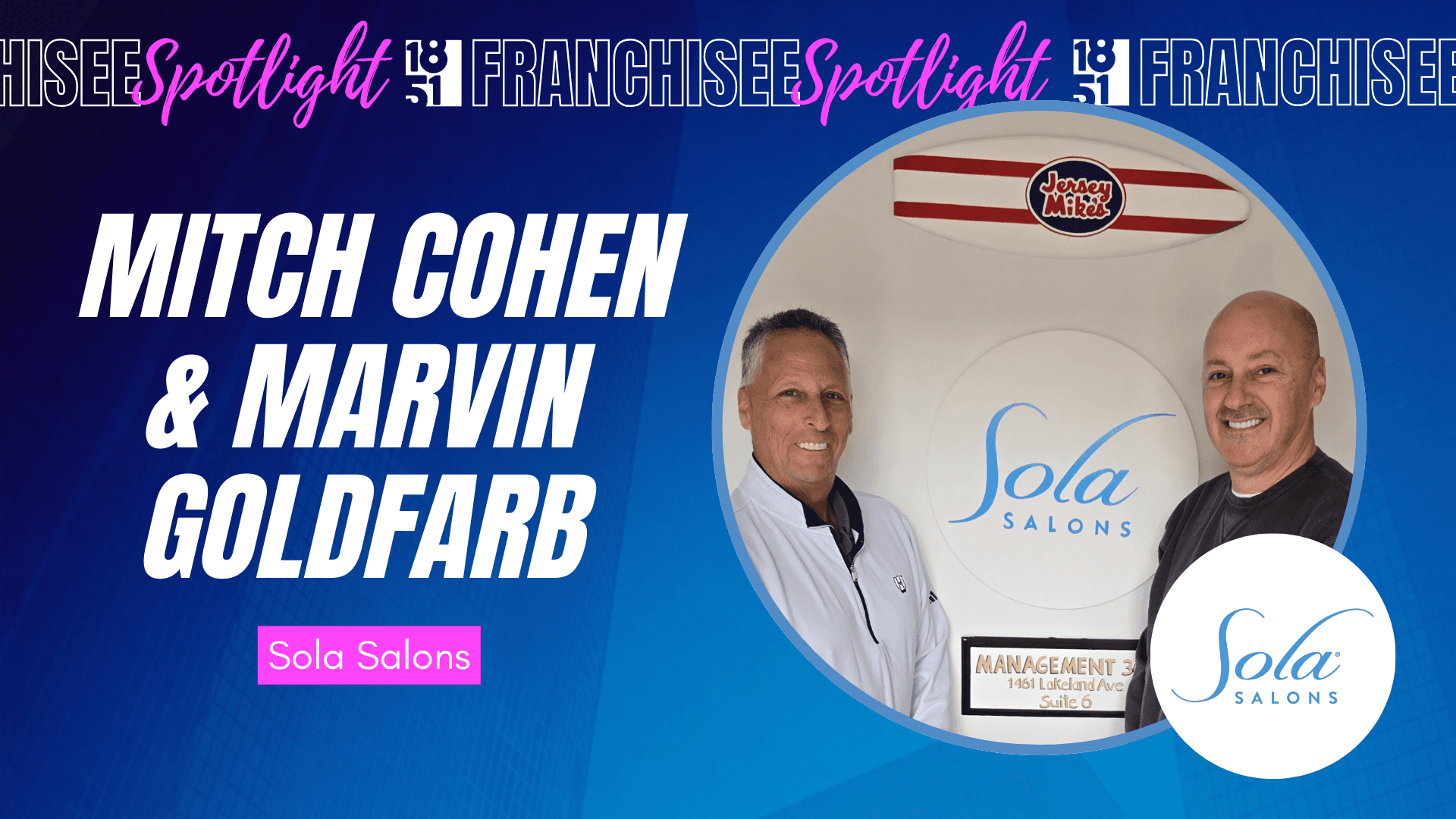
After decades of success with quick-service restaurant brands, franchise veterans Mitch Cohen and Marvin Goldfarb are bringing their business expertise to the beauty industry with Sola Salons in Centereach, New York. The duo, who are part of a partnership group that has built and operated multiple Dunkin' and Jersey Mike's locations, were drawn to Sola's innovative business model that helps beauty professionals become independent entrepreneurs.
The pair was attracted to Sola not just for the strong business model and better work-life balance but for the opportunity to help others become small business owners themselves. With extensive experience in the franchising world, Cohen and Goldfarb understand the importance of supporting professionals who want to focus on their craft while building sustainable businesses.
The Centereach location represents the fourth Sola Salons studio for Cohen and Goldfarb, with three already open and ambitious plans to add one to two locations annually throughout Long Island.
Cohen and Goldfarb took the time to chat with1851 Franchise to discuss all of this and more. Here’s what they had to say:
1851 Franchise: Frame your personal story for us. What do you want us to know?
Mitch Cohen: I started my journey in 1983 as a counterperson at Baskin-Robbins. I worked with a franchisee who is now my business partner. About six months in, I saw an opportunity for growth and expressed my desire to become a franchisee. I went to Baskin-Robbins University with my partner, Seth Goldstein. Together, we developed 15 locations in three different states, mainly in malls, before getting into Dunkin’ Donuts.
Marvin Goldfarb: I began working in bakeries as a kid, where I learned the values of hard work, freshness, and, most importantly, customer service. Over time, I took on various roles, including waitering and selling shoes and women’s accessories, before eventually becoming a manager.
Driven by the goal of owning my own business, I saw an opportunity and purchased my first Hallmark card shop. As my business grew, I built relationships with other retail business owners, including my current partners, who operated Baskin-Robbins stores. Looking to diversify, they approached me about partnering in the Dunkin’ Donuts business, recognizing my bakery background.
In 2000, we officially became partners and opened our first Dunkin’ location. Over time, we expanded to 15 stores before selling the business in 2015. Impressed by Jersey Mike’s and their strong franchisee support system, we opened our first Jersey Mike’s in 2017 and have since grown to eight locations.
While running our Jersey Mike’s stores, we learned about the Sola Salon Studios concept. Intrigued, we explored it further and were amazed by the opportunity it presented.
1851: What did you do before franchising, and how did you decide franchising made sense for you?
Cohen: Before franchising, I was hoping to work with Philip Morris. I had worked for them in college. When I moved to New York, the job I expected was unavailable. So, I worked for a bank and also at Baskin-Robbins in the evening.
I didn’t really know what I wanted to do, but I saw the opportunity for growth with the Baskin-Robbins franchisee and decided to take a chance on becoming a franchisee. Once I got involved and saw how franchising works, I realized it gave me the opportunity to be an entrepreneur, which I had considered in college. I realized that I could never open my own business after seeing everything involved in running an operation, like marketing, recipes and training. Franchising allowed me to be an entrepreneur without doing it all alone
Goldfarb: While the Hallmark store wasn't a franchise, it operated under a license agreement, which gave me a preview of some aspects of the franchise world. I had to meet certain standards and requirements, similar to a franchise, to be designated as a Gold Crown store. This involved adhering to brand guidelines, ensuring consistency in customer experience, and maintaining specific product offerings. However, unlike a traditional franchise, I didn’t pay royalties or franchise fees.
Later, when my partners were looking to diversify from their Baskin-Robbins stores into Dunkin' Donuts, they asked me to join them, and that’s when I entered the world of franchising. One of the most significant advantages I quickly realized was the value of a strong franchise support system. Franchising provided a proven business model, comprehensive training, marketing assistance, and ongoing operational support, all of which helped streamline processes and reduce risks. Having access to an established brand’s expertise and resources allowed us to focus on growing the business with confidence.
1851: What was your perception of franchising prior to becoming a franchisee, and what do you want people to know about franchising now that you are in it?
Cohen: I believe the biggest misnomer about franchising is that people don’t understand that it’s a small business and that I’m an independent business person. I have the support of a brand, but I’m still an independent, small business owner working within my community. I would like people thinking about entering franchising to know that you have to trust and believe in the system you invest in. This is a long term relationship not a get rich quick business. You need to be present and understand no matter what you are selling, we are in the people business first.
Goldfarb: Franchising isn’t necessarily best for everyone. Some people believe they can improve on the franchise model, but a franchise is built on consistency, delivering the same message, product, and service across all locations. If your priority is complete control or doing things your own way, franchising might not be the best fit.
On the other hand, some assume that buying a franchise means automatic success with little effort. But like any business, owning a franchise requires hard work, commitment, and a willingness to learn. The key advantage of franchising is the built-in support system; training, marketing, operational guidance, and a community of fellow franchisees who can offer insights and best practices. Instead of starting from scratch, you’re leveraging a proven business model with brand recognition and an established customer base, which can increase your chances of success.
Franchising offers a balance between independence and structure, making it a great option for those who want to be in business for themselves but not totally by themselves.
1851: What made you pick this brand? What excites you most about this company?
Cohen: When the salon studios business caught my eye, I was talking to someone in the financing industry who suggested I look into it, mentioning the great work-life balance and financeability. The potential for a better work-life balance and the financeability of the brands were the first things that attracted me.
As I learned more, two other things stood out. One was the smaller number of employees, which is beneficial for growth and scalability, especially with the current labor pool. The other was the opportunity to give back and help others become small business owners.
Our beauty professionals want to be small business owners, but they often lack the business knowledge because they're focused on their craft. This business allows us to help them become entrepreneurs in their own right, teaching them how to set up their business, manage their finances, grow their business and become independent.
Golfdfarb: What excites me most about Sola is how fulfilling the experience is. I’ve had the privilege of meeting with many stylists multiple times before they make the decision to join. Understandably, they’re often nervous, as many have never run their own business before. At Sola, we provide coaching and unwavering support, and shortly after they join, they share how happy they are. There’s nothing more rewarding than hearing, “This turned out even better than I imagined!” or “I wish I had done this sooner.
1851: What do you hope to achieve with your business? What are your plans for growth?
Cohen: Our growth plan is to open one to two salons per year. Our long-range goal is to connect with a financial partner to grow more strategically and a little quicker. We believe we have the potential to grow more in our market and with the right financial partner, we could increase our growth from one to two units a year to two to four.
Goldfarb: We are committed to expanding Sola Salon Studios in the Long Island and Queens markets, driven by our belief in the brand’s immense growth potential. Our focus is on creating opportunities for stylists by securing prime locations and negotiating favorable terms, even in competitive real estate markets. As we build momentum, more landlords are recognizing the value of Sola, supported by a strong 20-year reputation, 700+ locations, and a thriving community of over 20,000 stylists. With this increasing awareness and demand, we anticipate an accelerated growth trajectory in the coming years.
1851: Is there anything else about your story you want us to know?
Cohen: What I bring to the table from my experience in other franchise businesses is the business acumen that can help some of the beauty professionals. Also, coming from the QSR business, I have a unique thought process on how to please customers. In the QSR business, we focused on pleasing a high volume of customers daily. Now, in the salon studio business, our customers are the beauty professionals. We can use our experience to ensure our beauty professionals are happy and feel welcomed in our studios. We view them as our customers and want to ensure they are always happy.
Goldfarb: While everyone's story is different and unique, the one consistency I find with all franchisees is that we’re incredibly positive. A strong, optimistic attitude helps us navigate challenges and see a bright future ahead. No matter where we start, our mindset plays a huge role in shaping our success.
1851: What advice do you have for other people thinking about becoming franchise owners?
Cohen: My advice would be to do something you're passionate about, something that will motivate you to be involved in your business every day. Franchising isn't just about investing and expecting success without active involvement. Also, it’s a relationship business. You're entering a partnership with a franchisor that could last 10 or 20 years, so you need to be very comfortable with that relationship. Do your due diligence, ensure you're comfortable with the franchisor, talk to franchisees within that brand and understand everything about the brand to make sure it's a good fit for you. This relationship will likely last longer than some marriages do, so it’s important to get it right!
Goldfarb: Many small businesses face challenges with undercapitalization, and it's important to go in with realistic expectations. While success won’t always happen overnight, being financially and emotionally prepared can set you up for long-term growth. Choosing a franchisee-friendly brand can make all the difference, providing the support and resources needed to navigate the early stages. Stay patient, stay committed, and remember that while it takes hard work, the rewards can be incredible!
ABOUT SOLA SALONS:
In 2004, Sola Salons was established with the opening of its first location in Denver, Colorado. Now with more than 735 locations open in the U.S. and Canada, Sola is proud to offer 20,000+ independent beauty professionals the freedom and benefits of salon ownership without the risk and overhead of opening a traditional salon. Its innovative salon model empowers hairdressers, estheticians, nail techs, massage therapists and other like-minded professionals to take control of their lives and their careers. Sola provides beauty professionals with beautiful, fully-equipped salon studios alongside the support and tools they need to launch their salon business in no time. For more information about Sola Salons, please visit https://www.solasalonstudios.com/.