
Sola Salons
SPONSORED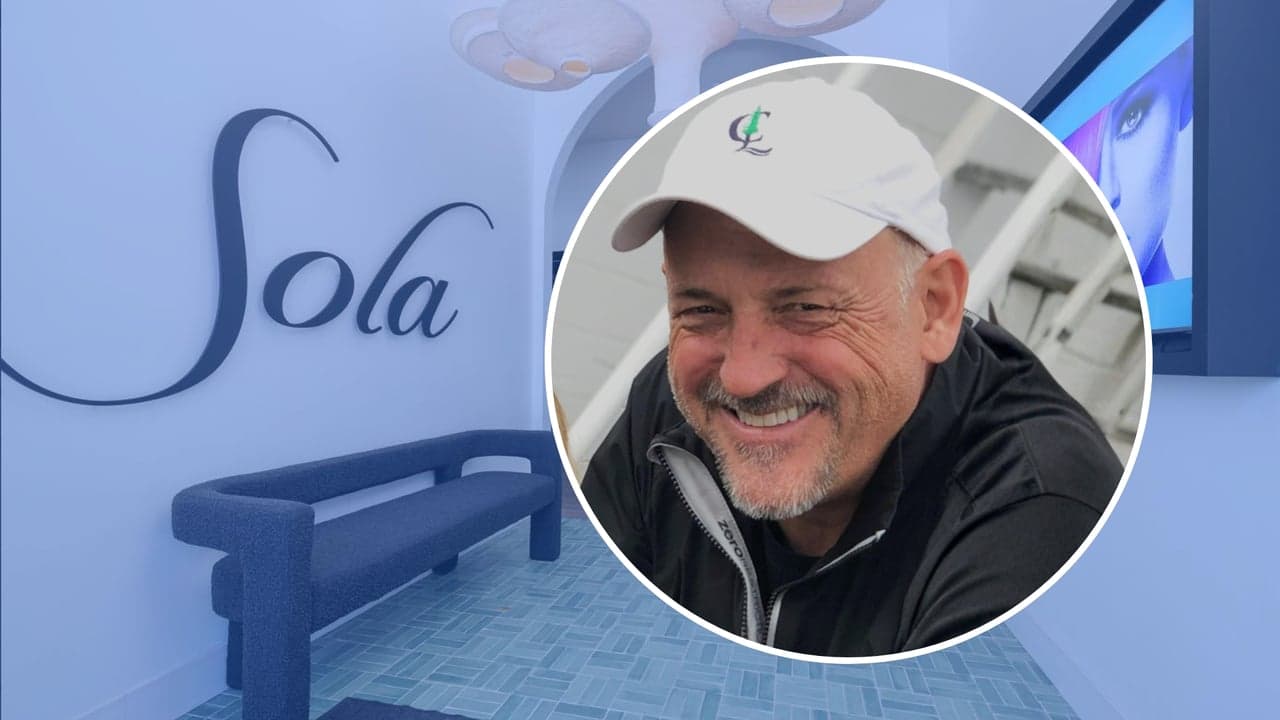
Why a Supercuts Area Developer Bet Big on Sola Salons
The veteran Supercuts operator explains how he pivoted from employing 500 stylists to empowering entrepreneurs and building a 41-unit Sola Salons empire.
For nearly four decades, Steve Breuner has lived and breathed the beauty industry, but before his introduction to the industry and franchising, he spent a decade in advertising. After working with major franchise brands like Burger King and Baskin-Robbins, Breuner realized he had a knack for driving traffic and was fascinated by consumer behavior. Over time, he began to take note of the money he was making for his clients, and he started to think it might be time to make money for himself through franchising. Sitting in a chair one day, having his hair cut, he felt the beauty industry was clearly calling him.
"I was completely entranced by the recurring demand,” he said. “Looking out the window of my car, everyone I see has to get a haircut every month. It can’t be outsourced overseas, and Amazon won’t bother the category. And maybe best of all, there are no receivables.”
At the time, Breuner was a regular customer of Supercuts, and he admired that they created a new, convenient option between the old-fashioned barbershop and the high-end beauty salon that didn't require an appointment and was open seven days a week. He thought it was a “brilliant” idea, and he began researching opportunities with the brand.
Breuner learned that his home market was already saturated. But he was committed to the dream and dedicated to making a path for himself in the beauty space, so he signed on as an area developer and relocated his young family to Pittsburgh. Breuner was warned that the people would be unreceptive in his new market, and he found that to be true. Though he was partnered with a relatively established franchise brand, Breuner was still new to the market, and he had a lot of development to do.
"It was extremely difficult to launch it,” he said. “I opened the first store and it was dead. The second and third were also fairly slow. We were doing two haircuts a day, and the breakeven is around 45. It was grim."
Notably, the biggest challenge was attracting quality people. At Supercuts, success required hiring, training and retaining employees. As the new guy in town, many stylists were hesitant to take the leap and join a new salon operation. Slowly but surely, though, he built a reputable culture, focusing relentlessly on his team while interviewing primarily for “attitude and ambition.”
As he grew, he employed 500 stylists, but this required consistent, hands-on management.
"Being a Supercuts owner was like being a college football coach,” he said. “You have to make a connection with each and every player to light their fuse and drive their total potential. I needed team members, and it really takes a unique individual to succeed in an environment like Supercuts."
After learning about culture and team growth through experience, a divorce led to the sale of his 58-store Supercuts empire. Around the same time, a fraternity brother called Breuner about a new concept: Sola Salons, which leases turnkey salon suites to beauty professionals. At first, he was unsure.
"I thought, 'Are you kidding me? You're going to put competing hairstylists right next to each other — 25 of them?’ You’ll create a cataclysmic free-for-all!" he said.
Then, he visited a Sola in Denver. That visit changed everything.
"Once I visited it and came home, I realized this is one of those clarion moments in a category where everything is going to change,” Breuner said. “When I returned from visiting, I thought it was an ingenious idea and that it would reshape everything in the beauty industry."
So, he partnered up and opened Sola locations in Nashville and San Francisco. Similar to his experience with Supercuts, Breuner interacted with many beauty professionals who were hesitant to pursue work in the salon suites model — just for a slightly different reason. They feared going out on their own and being independent beauty professionals. Over time, though, they began to realize the benefits of working for themselves, and the salon achieved 100% occupancy.
For a former beauty or hair salon owner like Steve, the Sola model shifts the entire business equation. You are no longer a "coach" managing employees. You are a partner to entrepreneurs.
"Your customers are the entrepreneurs, and they need a supportive partner. They need a collaborator,” Breuner said. “Leasing them a clean, well-lit studio is just the beginning. You’re going to partner with them to help them grow their businesses. If they’re successful, you are successful. It’s that simple."
You trade the headache of employee scheduling and performance reviews for the rewarding challenge of supporting independent business owners.
Breuner’s love for the salon suites model and commitment to his future wife in Pennsylvania put him in an interesting position when he tried to bring the Sola model home. Pennsylvania prohibited “booth renting,” which regulators insisted encompassed the salon suites model. Additionally, it required a bathroom “continuous to every single salon.” In the context of a Sola building, this would mean a bathroom would need to be built contiguous with each salon suite.
These restrictive regulations, which Breuner notes were originally authored by established salon operators to create a "captive labor pool," made opening a multi-suite Sola location with a central restroom nonsensical as it would never pass license inspection. That’s precisely when the challenge became personal for Breuner.
“I’m a real patriot and a dramatic, emotional guy,” he said. “These rules really agitated me. I kept thinking, ‘This is restraint of trade.’ And I realized, sometimes you do things not because they make financial sense but because you’re the one who’s going to make a difference.”
With this theory in mind, Breuner and his partner, David, did “the scariest, most expensive thing” they had ever done. They sued the state of Pennsylvania. After countless attorneys, a major risk in building a Sola location before the rule was amended — just to get a state inspector on site to see it for themselves, and over a quarter-million dollars spent, they succeeded. In August 2017, the Pennsylvania court ruled in Sola’s favor, declaring the bathroom regulation was preempted.
"It was an incredible moment," he said. "Not just for Sola ... but for the single mom in Harrisburg that now can use her spare bedroom and the bathroom down the hall as her home salon. It prevented people from illegally doing hair in their basements.”
Breuner and his partner continued to grow their Sola empire to over 40 units across multiple states. Though he has now taken a step back from the business, functioning in more of a board role, Breuner’s journey exemplifies a key philosophy: “The difference between ordinary and extraordinary is that little ‘extra,’” he said.
Breuner encourages entrepreneurs considering the leap to Sola Salons to keep this in mind.
"You can be successful in Sola without this love and support that I'm talking about. But you'll be pretty successful," he said. "If you want to be extraordinarily successful, which is a giant difference, you’re going to need a lot of passion, effort and love.”
To find out more information on costs to buy this franchise, please visit https://1851franchise.com/sola-salons.
Sola Salons
SPONSOREDThe veteran Supercuts operator explains how he pivoted from employing 500 stylists to empowering entrepreneurs and building a 41-unit Sola Salons empire.
For nearly four decades, Steve Breuner has lived and breathed the beauty industry, but before his introduction to the industry and franchising, he spent a decade in advertising. After working with major franchise brands like Burger King and Baskin-Robbins, Breuner realized he had a knack for driving traffic and was fascinated by consumer behavior. Over time, he began to take note of the money he was making for his clients, and he started to think it might be time to make money for himself through franchising. Sitting in a chair one day, having his hair cut, he felt the beauty industry was clearly calling him.
"I was completely entranced by the recurring demand,” he said. “Looking out the window of my car, everyone I see has to get a haircut every month. It can’t be outsourced overseas, and Amazon won’t bother the category. And maybe best of all, there are no receivables.”
At the time, Breuner was a regular customer of Supercuts, and he admired that they created a new, convenient option between the old-fashioned barbershop and the high-end beauty salon that didn't require an appointment and was open seven days a week. He thought it was a “brilliant” idea, and he began researching opportunities with the brand.
Breuner learned that his home market was already saturated. But he was committed to the dream and dedicated to making a path for himself in the beauty space, so he signed on as an area developer and relocated his young family to Pittsburgh. Breuner was warned that the people would be unreceptive in his new market, and he found that to be true. Though he was partnered with a relatively established franchise brand, Breuner was still new to the market, and he had a lot of development to do.
"It was extremely difficult to launch it,” he said. “I opened the first store and it was dead. The second and third were also fairly slow. We were doing two haircuts a day, and the breakeven is around 45. It was grim."
Notably, the biggest challenge was attracting quality people. At Supercuts, success required hiring, training and retaining employees. As the new guy in town, many stylists were hesitant to take the leap and join a new salon operation. Slowly but surely, though, he built a reputable culture, focusing relentlessly on his team while interviewing primarily for “attitude and ambition.”
As he grew, he employed 500 stylists, but this required consistent, hands-on management.
"Being a Supercuts owner was like being a college football coach,” he said. “You have to make a connection with each and every player to light their fuse and drive their total potential. I needed team members, and it really takes a unique individual to succeed in an environment like Supercuts."
After learning about culture and team growth through experience, a divorce led to the sale of his 58-store Supercuts empire. Around the same time, a fraternity brother called Breuner about a new concept: Sola Salons, which leases turnkey salon suites to beauty professionals. At first, he was unsure.
"I thought, 'Are you kidding me? You're going to put competing hairstylists right next to each other — 25 of them?’ You’ll create a cataclysmic free-for-all!" he said.
Then, he visited a Sola in Denver. That visit changed everything.
"Once I visited it and came home, I realized this is one of those clarion moments in a category where everything is going to change,” Breuner said. “When I returned from visiting, I thought it was an ingenious idea and that it would reshape everything in the beauty industry."
So, he partnered up and opened Sola locations in Nashville and San Francisco. Similar to his experience with Supercuts, Breuner interacted with many beauty professionals who were hesitant to pursue work in the salon suites model — just for a slightly different reason. They feared going out on their own and being independent beauty professionals. Over time, though, they began to realize the benefits of working for themselves, and the salon achieved 100% occupancy.
For a former beauty or hair salon owner like Steve, the Sola model shifts the entire business equation. You are no longer a "coach" managing employees. You are a partner to entrepreneurs.
"Your customers are the entrepreneurs, and they need a supportive partner. They need a collaborator,” Breuner said. “Leasing them a clean, well-lit studio is just the beginning. You’re going to partner with them to help them grow their businesses. If they’re successful, you are successful. It’s that simple."
You trade the headache of employee scheduling and performance reviews for the rewarding challenge of supporting independent business owners.
Breuner’s love for the salon suites model and commitment to his future wife in Pennsylvania put him in an interesting position when he tried to bring the Sola model home. Pennsylvania prohibited “booth renting,” which regulators insisted encompassed the salon suites model. Additionally, it required a bathroom “continuous to every single salon.” In the context of a Sola building, this would mean a bathroom would need to be built contiguous with each salon suite.
These restrictive regulations, which Breuner notes were originally authored by established salon operators to create a "captive labor pool," made opening a multi-suite Sola location with a central restroom nonsensical as it would never pass license inspection. That’s precisely when the challenge became personal for Breuner.
“I’m a real patriot and a dramatic, emotional guy,” he said. “These rules really agitated me. I kept thinking, ‘This is restraint of trade.’ And I realized, sometimes you do things not because they make financial sense but because you’re the one who’s going to make a difference.”
With this theory in mind, Breuner and his partner, David, did “the scariest, most expensive thing” they had ever done. They sued the state of Pennsylvania. After countless attorneys, a major risk in building a Sola location before the rule was amended — just to get a state inspector on site to see it for themselves, and over a quarter-million dollars spent, they succeeded. In August 2017, the Pennsylvania court ruled in Sola’s favor, declaring the bathroom regulation was preempted.
"It was an incredible moment," he said. "Not just for Sola ... but for the single mom in Harrisburg that now can use her spare bedroom and the bathroom down the hall as her home salon. It prevented people from illegally doing hair in their basements.”
Breuner and his partner continued to grow their Sola empire to over 40 units across multiple states. Though he has now taken a step back from the business, functioning in more of a board role, Breuner’s journey exemplifies a key philosophy: “The difference between ordinary and extraordinary is that little ‘extra,’” he said.
Breuner encourages entrepreneurs considering the leap to Sola Salons to keep this in mind.
"You can be successful in Sola without this love and support that I'm talking about. But you'll be pretty successful," he said. "If you want to be extraordinarily successful, which is a giant difference, you’re going to need a lot of passion, effort and love.”
To find out more information on costs to buy this franchise, please visit https://1851franchise.com/sola-salons.
Sign up for the 1851 Franchise newsletter to get our biggest stories before everyone else
By signing up, you agree to our user agreement (including class action waiver and arbitration provisions), and acknowledge our privacy policy.

No related articles found