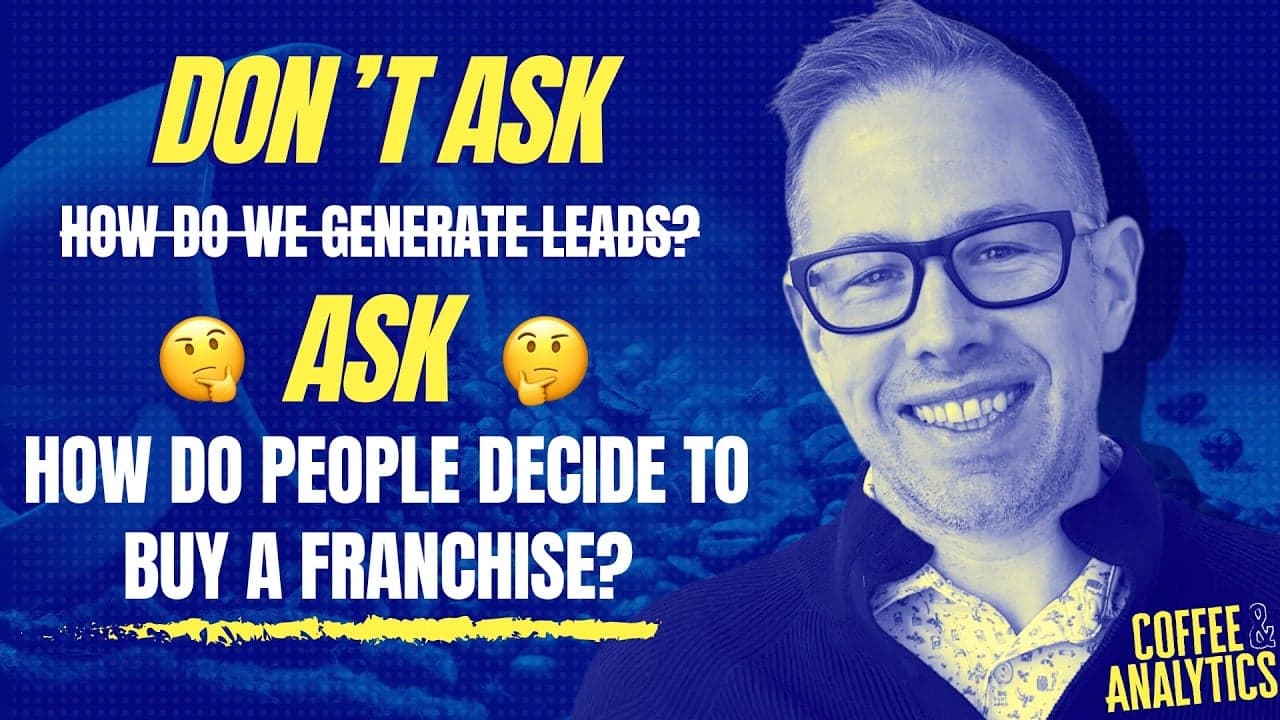
Most franchisors enter a new planning cycle with the same goal: sell more franchises. What’s far less common is a clear, disciplined understanding of the system required to make that growth repeatable.
As brands begin mapping their 2026 strategies, one pattern has become increasingly clear. Growth doesn’t stall because franchisors lack ambition or effort. It stalls because they skip the foundational work that makes growth sustainable in the first place.
According to industry-wide data collected from franchisors at all stages of scale, the challenge isn’t identifying what needs to improve. It’s sequencing the work correctly and implementing it with discipline.
“It's not about identifying one factor,” said Charles Internicola, CEO of GoodSpark Franchise Growth Accelerator. “It's about the detail and it's about implementation.”
Why Lead Generation Isn’t the Real Constraint
When franchisors are asked what would unlock faster growth, the most common response is a need for more leads. That answer shows up consistently across brands of every size, from emerging systems to those with hundreds of locations.
The problem is that lead flow is rarely the true constraint. It’s simply the most visible symptom.
“Brands start with, ‘I want to sell franchises.’ What they don’t start with is the equation for how they’re going to sell franchises,” said Nick Powills, chief strategy officer at GoodSpark.
Many brands move directly into buying traffic, joining broker networks or increasing ad spend without first understanding why previous leads failed to convert. The result is predictable: higher costs, lower-quality candidates and disappointment when sales goals go unmet.
Reversing the Growth Model
The most effective franchise systems don’t treat growth like a funnel that starts with marketing and ends with signed agreements. Instead, they build from the inside out.
Leadership alignment, internal capacity and operational clarity create the conditions for real validation. Validation supports a credible brand story. That story makes the sales process more effective. Only then does lead generation become a force multiplier rather than a cost center.
Internicola described this dynamic as an inverted pyramid. What most brands treat as the top of the system — lead flow — actually belongs at the end. “In reality,” he said, “it’s about flipping it: focusing on your leadership and capacity, what your validation looks like, then brand story positioning, then sales process conversion.”
Fix the First Message Before Spending a Dollar
One of the most overlooked growth levers in franchising costs nothing to fix: the first message a prospective franchisee sees.
Many franchise websites rely on generic positioning that fails to explain why the opportunity exists, who it’s for or what makes it economically compelling. Messages like “be your own boss” don’t differentiate because they apply to nearly every franchise in the market.
Strong brands treat their opening message like a high-stakes commercial. It should clearly articulate the business opportunity, acknowledge the risk franchisees take and explain why the model works in real terms.
“Go to your website right now and look at your first message,” Powills said. “Does it tell you exactly what you want to do or why you want to buy this brand? Think of this as your Super Bowl commercial. You have 30 seconds to tell me why this matters, so there's an action beyond it, because you're spending a million dollars on an ad.”
One Franchisee Is the Unit of Growth
Many franchisors plan growth without fully understanding the economic value of a single franchisee. Without that clarity, budgeting becomes reactive rather than strategic.
“It just takes one franchise sold,” Powills said. “You have the baseline to start building the foundation for explosive growth.”
Knowing what one franchisee is worth over time — through fees, royalties, renewals and systemwide impact — changes how capital is deployed. It also reframes expectations around what a “successful” year actually looks like. Rather than chasing volume, effective brands focus on executing well around one deal and allowing that success to create momentum.
Amplify Momentum Instead of Resetting
Every franchise signing creates multiple moments of visibility: the announcement, the opening, the grand opening campaign and milestone anniversaries. Each of those moments generates awareness within a market.
Instead of spreading resources thin across dozens of geographies, strong brands reinvest around success. Concentrating effort within a single market builds credibility faster and attracts the next qualified buyer more efficiently.
Internicola emphasized that many brands miss this opportunity by jumping ahead too quickly. “There’s no granular game plan of what types of leads, how are we qualifying franchises?” he said. “Some would mention sales processes, but not a deeper dive.”
Use Your Own Data Before Buying Someone Else’s
Before changing strategies or increasing spend, franchisors should look inward. Where did deals convert last year? Where did they stall? What buyer profiles moved forward with confidence, and which didn’t?
For 2026, Internicola encourages brands to adopt what he calls a year of integrity. “Own the space you're in. Own what you are,” he said. “Acknowledge what you're not. Gaps, weaknesses, challenges, and opportunities. If you explore those, especially now in Q1, you're going to start differentiating and identifying pathways.”
This internal analysis is often more valuable than any external benchmark. It reveals whether the issue is positioning, qualification, process or alignment — and prevents brands from solving the wrong problem.
For more information on GoodSpark and its services for developing franchises, visit https://www.goodsparkfranchise.com/.