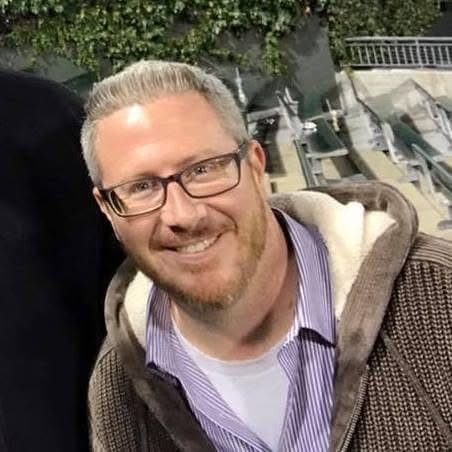
What does a three-star admiral’s aide in the Pentagon have in common with a manager in training at Domino’s Pizza? For Ralph Bower, CEO of The Melt, the answer is everything. 

In this episode of the “Meet the Franchise” podcast, 1851 Franchise Publisher Nick Powills sat down with the man who traded a prestigious military career for a $4.75-an-hour entry-level restaurant job because he saw a newspaper ad claiming pizza managers made more than admirals. That leap of faith kicked off an impressive trajectory through the executive ranks of Yum! Brands, Popeyes and Domino’s, led Bower to his current mission: transforming The Melt from a startup into a high-volume powerhouse.

Under Bower’s leadership, The Melt didn’t just grow. It exploded. By stripping away complex corporate mission statements and replacing them with a single core value, he pushed average unit volume from a modest $700,000 to a staggering $3.5 million, with some locations topping $6 million.

As The Melt brings its fanatical culture to the national stage through franchising, Bower shares the operational playbook he learned at sea and perfected in the kitchen.

A transcript of Bower’s interview with Powills has been provided below. It has been edited for style, brevity and clarity.

Nick Powills: All right, Ralph. I usually start with a scripted question, and I’m still going to ask it in some form. You’ve got plenty of credibility, so you don’t need to give the full backstory. I usually ask how people accidentally fell into franchising, because everyone seems to fall into it. Start with your story before The Melt, then we’ll get into The Melt.

Ralph Bower: I came to franchising in a pretty unconventional way. I went to Annapolis, was aboard a ship and then stationed in the Pentagon. While I was there, I was getting ready to go back to sea and saw an ad in the newspaper saying Domino’s Pizza store managers were making more than the admiral I was working for.

I thought, “I think I could be an average Domino’s Pizza store manager.” So I went from being an admiral’s aide to a three-star admiral in the Pentagon to being a manager in training at Domino’s making $4.75 an hour. I had a 1-year-old at the time. I’m proud that it only took me six months to work my way up to $5.25 an hour.

But I worked my way up through the Domino’s system and then spent several great years at Yum!, eventually becoming COO and president of Popeyes and CEO of Pei Wei.

Powills: I hear something in that opening story that I think will matter as we go: A military background teaches operational discipline better than almost any other kind of training. You didn’t have a traditional restaurant background when you saw that ad. Did your time in the military set you up for success? Did it give you a playbook you could rely on when you got to Domino’s?

Bower: I think running a restaurant is more similar to being in the military than one might guess. The first thing the military teaches you is how to work with people from all walks of life. Aboard a ship, you’re going to have people who are extraordinarily smart and people who maybe aren’t. You’re going to have extremely hard workers and others not so much. You’ll have people with a ton of natural talent who need very little leadership and others who need a lot more. That’s not all that different from being in a restaurant. One of the things I love about the restaurant business is the opportunity to work with an extraordinarily varied cross-section of people.

Great leaders figure out how to adapt their leadership style to what each individual needs. Those individuals shouldn’t have to adapt to you. You learn that in the military and it’s true in restaurants.

People often say it must be easier in the military because everyone has to do what you tell them to do. But that’s an extraordinarily broad misconception. The military is no different than anywhere else. The best way to build alignment and a team is through influence. It’s always better to lead people to self-discovery than to force them to do things your way.

Powills: Another aspect that seems transferable is the ability to deal with crises. Business owners who can push through brick walls succeed and those who can’t stall out. Is that another part of this?

Bower: I definitely think that’s true. I talk about three principles of running a shift at The Melt: be in charge, give direction and attack bottlenecks. That’s true in anything you do. In a crisis, you want a leader who’s in charge and giving direction. Where things break down is when leaders go silent. The crises in the military are different from those in restaurants, but the leadership requirement is the same.

Powills: You’re a humble guy, but I’m going to say this: your principles and philosophy on leadership give foundational elements from the bottom all the way to the top. And they carry on beyond Domino’s, Popeyes or Pei Wei.

Is part of the magic that instead of putting pressure on the business, you put pressure on operational leadership and people development?

Bower: People misunderstand what makes a restaurant successful. As leaders, it’s important to take the complicated and make it simple. I always say simple is better than perfect.

I believe two things are required to be a great restaurant company: You have to run great restaurants and you have to have great food. If you do those two things, you’ll be successful.

Most people understand the great food part. What’s harder to grasp is how important it is to run great restaurants. That’s the blocking and tackling you do every day, and it’s probably more important than the food.

During COVID-19, over an 18-month period, our sales more than doubled and nearly tripled. If we hadn’t had the processes and systems to run great restaurants, guests would have come once, seen chaos and never returned.

The reason we’ve quintupled our average unit volumes is that when the business came, we were fanatical about running great restaurants. Today, our average unit volumes are $3.5 million. We have several restaurants over $5 million and a couple over $6 million. Back when our AUVs were $700,000, we were just as fanatical about what we called peak-period performance.

What we thought was a peak period at $700,000 is very different at $6 million. But because we built those foundational steps early, we were ready when sales came.

Powills: That speaks to negative and positive crises. At $700,000 or $6 million, you still need a leader who calms nerves and keeps consistency so things don’t go off track.

Bower: I was fortunate early in my career to meet Tom Monaghan, the founder of Domino’s. He was a former Marine and I was a former Navy guy. I asked him one day, “What’s the best way to raise sales in a restaurant?” He said, “Handle the rush.”

That’s what he told every franchisee. Handle the rush. I think that gets lost sometimes. I talk to my operators seven days a week at 9 a.m., and we talk about how we handled the rush the night before.

If you handle the rush and deliver what we call an “I Love It Here” experience, guests will come back.

Powills: Handling the rush applies to customers, but also to your staff. Showing compassion, empathy and appreciation afterward matters too.

Bower: Absolutely. The guest experience will never exceed the team member experience. If you don’t deliver an “I Love It Here” experience to your team, it’s hard for them to deliver it to guests.

We had a situation recently where two team members had to leave early due to a family emergency. We were short-staffed for hours late at night. Service suffered a little. But what I thought about the next morning was the stress on those team members.

Powills: You once told me you only have one core value: “I Love It Here.” You shared a story about an employee who didn’t speak English and what that meant to you. Why just one core value?

Bower: Leaders need to make things easy to execute. When I first came to The Melt, our average unit volumes were about $700,000. I thought $1.5 million would be nirvana.

I’m fanatical about guest feedback. One day, a guest review at one of our highest-volume restaurants said, “I love it here.” I started thinking about what would happen if every guest felt that way. Within weeks, we ripped up every mission and vision statement and replaced them with one goal: deliver an “I Love It Here” experience to every guest. We don’t tell our teams how to do it. Twice a day we rally and ask team members what “I Love It Here” means to them. And then we say, “Just do that.”

I’ve worked for companies with beautiful mission statements that never translated to the restaurant level. At The Melt, any team member can tell you our number one goal.

I once asked a team member who spoke almost no English what our goal was. Seeing him work so hard to say, in English, “Deliver an ‘I Love It Here’ experience to every guest,” gave me goosebumps.

Powills: Was that a moment where you paused and realized you’d done something bigger than building a good burger brand?

Bower: Absolutely. Recognition matters. I had a fry cook named Zach in downtown San Francisco. I asked him what it meant to deliver an “I Love It Here” experience on fries. He said, “I want my fries so hot they burn your hands.” I gave him a “baddest alligator in the swamp” pin in front of his team. He cried and told me it was the first recognition he’d ever received. He said he’d be buried wearing that pin.

I’ve thought about that every day for the past 10 years.

Powills: You’ve built volumes that put you at the top of franchising. How long did it take you to realize culture is currency?

Bower: I’d like to say I knew it right away, but it took me 25 years. It wasn’t until The Melt and “I Love It Here” that I fully understood the power of alignment. Everyone has values. The magic is getting everyone aligned around them.

Achieving something as a team is far more meaningful than achieving it as an individual. I learned that in the military, then again at Domino’s and throughout my career.

Powills: As you launch franchising, does it worry you that franchisees need to be true extensions of the culture? And how do you build a team within a franchise system?

Bower: The only people we want at The Melt are those who get excited about delivering an “I Love It Here” experience. If you can’t be fanatical about that, it’s not a fit. As a franchisor, your job isn’t to deliver “I Love It Here” to the guest; it’s to deliver it to the franchisee. That means profitable restaurants, great training and great support.

At Popeyes, the turning point was realizing the franchisee was our customer. We’ll have that same culture at The Melt.

Powills: What’s the dream now?

Bower: I want to deliver “I Love It Here” to every state in the country. The best way to do that is with franchisees who know their markets. With the right partners, I believe we can take this nationwide.

Powills: Love it, Ralph. Seeing this in action changed my perception. The foundation here is incredibly strong. The sky’s the limit. Thank you for sharing your story.

Bower: Thank you, Nick. I appreciate the time.

Powills: For Ralph, I’m Nick. This was another episode of “Meet the Franchise.”

Watch the full interview here.

The Melt

SPONSORED
How Military Leadership Helped The Melt Achieve Record AUVs

How Military Leadership Helped The Melt Achieve Record AUVs

CEO Ralph Bower discusses the "I Love It Here" philosophy that took The Melt to $3.5 million in average unit volume and why simple execution is the key to his new national franchise expansion.

What does a three-star admiral’s aide in the Pentagon have in common with a manager in training at Domino’s Pizza? For Ralph Bower, CEO of The Melt, the answer is everything. 

In this episode of the “Meet the Franchise” podcast, 1851 Franchise Publisher Nick Powills sat down with the man who traded a prestigious military career for a $4.75-an-hour entry-level restaurant job because he saw a newspaper ad claiming pizza managers made more than admirals. That leap of faith kicked off an impressive trajectory through the executive ranks of Yum! Brands, Popeyes and Domino’s, led Bower to his current mission: transforming The Melt from a startup into a high-volume powerhouse.

Under Bower’s leadership, The Melt didn’t just grow. It exploded. By stripping away complex corporate mission statements and replacing them with a single core value, he pushed average unit volume from a modest $700,000 to a staggering $3.5 million, with some locations topping $6 million.

As The Melt brings its fanatical culture to the national stage through franchising, Bower shares the operational playbook he learned at sea and perfected in the kitchen.

A transcript of Bower’s interview with Powills has been provided below. It has been edited for style, brevity and clarity.

Nick Powills: All right, Ralph. I usually start with a scripted question, and I’m still going to ask it in some form. You’ve got plenty of credibility, so you don’t need to give the full backstory. I usually ask how people accidentally fell into franchising, because everyone seems to fall into it. Start with your story before The Melt, then we’ll get into The Melt.

Ralph Bower: I came to franchising in a pretty unconventional way. I went to Annapolis, was aboard a ship and then stationed in the Pentagon. While I was there, I was getting ready to go back to sea and saw an ad in the newspaper saying Domino’s Pizza store managers were making more than the admiral I was working for.

I thought, “I think I could be an average Domino’s Pizza store manager.” So I went from being an admiral’s aide to a three-star admiral in the Pentagon to being a manager in training at Domino’s making $4.75 an hour. I had a 1-year-old at the time. I’m proud that it only took me six months to work my way up to $5.25 an hour.

But I worked my way up through the Domino’s system and then spent several great years at Yum!, eventually becoming COO and president of Popeyes and CEO of Pei Wei.

Powills: I hear something in that opening story that I think will matter as we go: A military background teaches operational discipline better than almost any other kind of training. You didn’t have a traditional restaurant background when you saw that ad. Did your time in the military set you up for success? Did it give you a playbook you could rely on when you got to Domino’s?

Bower: I think running a restaurant is more similar to being in the military than one might guess. The first thing the military teaches you is how to work with people from all walks of life. Aboard a ship, you’re going to have people who are extraordinarily smart and people who maybe aren’t. You’re going to have extremely hard workers and others not so much. You’ll have people with a ton of natural talent who need very little leadership and others who need a lot more. That’s not all that different from being in a restaurant. One of the things I love about the restaurant business is the opportunity to work with an extraordinarily varied cross-section of people.

Great leaders figure out how to adapt their leadership style to what each individual needs. Those individuals shouldn’t have to adapt to you. You learn that in the military and it’s true in restaurants.

People often say it must be easier in the military because everyone has to do what you tell them to do. But that’s an extraordinarily broad misconception. The military is no different than anywhere else. The best way to build alignment and a team is through influence. It’s always better to lead people to self-discovery than to force them to do things your way.

Powills: Another aspect that seems transferable is the ability to deal with crises. Business owners who can push through brick walls succeed and those who can’t stall out. Is that another part of this?

Bower: I definitely think that’s true. I talk about three principles of running a shift at The Melt: be in charge, give direction and attack bottlenecks. That’s true in anything you do. In a crisis, you want a leader who’s in charge and giving direction. Where things break down is when leaders go silent. The crises in the military are different from those in restaurants, but the leadership requirement is the same.

Powills: You’re a humble guy, but I’m going to say this: your principles and philosophy on leadership give foundational elements from the bottom all the way to the top. And they carry on beyond Domino’s, Popeyes or Pei Wei.

Is part of the magic that instead of putting pressure on the business, you put pressure on operational leadership and people development?

Bower: People misunderstand what makes a restaurant successful. As leaders, it’s important to take the complicated and make it simple. I always say simple is better than perfect.

I believe two things are required to be a great restaurant company: You have to run great restaurants and you have to have great food. If you do those two things, you’ll be successful.

Most people understand the great food part. What’s harder to grasp is how important it is to run great restaurants. That’s the blocking and tackling you do every day, and it’s probably more important than the food.

During COVID-19, over an 18-month period, our sales more than doubled and nearly tripled. If we hadn’t had the processes and systems to run great restaurants, guests would have come once, seen chaos and never returned.

The reason we’ve quintupled our average unit volumes is that when the business came, we were fanatical about running great restaurants. Today, our average unit volumes are $3.5 million. We have several restaurants over $5 million and a couple over $6 million. Back when our AUVs were $700,000, we were just as fanatical about what we called peak-period performance.

What we thought was a peak period at $700,000 is very different at $6 million. But because we built those foundational steps early, we were ready when sales came.

Powills: That speaks to negative and positive crises. At $700,000 or $6 million, you still need a leader who calms nerves and keeps consistency so things don’t go off track.

Bower: I was fortunate early in my career to meet Tom Monaghan, the founder of Domino’s. He was a former Marine and I was a former Navy guy. I asked him one day, “What’s the best way to raise sales in a restaurant?” He said, “Handle the rush.”

That’s what he told every franchisee. Handle the rush. I think that gets lost sometimes. I talk to my operators seven days a week at 9 a.m., and we talk about how we handled the rush the night before.

If you handle the rush and deliver what we call an “I Love It Here” experience, guests will come back.

Powills: Handling the rush applies to customers, but also to your staff. Showing compassion, empathy and appreciation afterward matters too.

Bower: Absolutely. The guest experience will never exceed the team member experience. If you don’t deliver an “I Love It Here” experience to your team, it’s hard for them to deliver it to guests.

We had a situation recently where two team members had to leave early due to a family emergency. We were short-staffed for hours late at night. Service suffered a little. But what I thought about the next morning was the stress on those team members.

Powills: You once told me you only have one core value: “I Love It Here.” You shared a story about an employee who didn’t speak English and what that meant to you. Why just one core value?

Bower: Leaders need to make things easy to execute. When I first came to The Melt, our average unit volumes were about $700,000. I thought $1.5 million would be nirvana.

I’m fanatical about guest feedback. One day, a guest review at one of our highest-volume restaurants said, “I love it here.” I started thinking about what would happen if every guest felt that way. Within weeks, we ripped up every mission and vision statement and replaced them with one goal: deliver an “I Love It Here” experience to every guest. We don’t tell our teams how to do it. Twice a day we rally and ask team members what “I Love It Here” means to them. And then we say, “Just do that.”

I’ve worked for companies with beautiful mission statements that never translated to the restaurant level. At The Melt, any team member can tell you our number one goal.

I once asked a team member who spoke almost no English what our goal was. Seeing him work so hard to say, in English, “Deliver an ‘I Love It Here’ experience to every guest,” gave me goosebumps.

Powills: Was that a moment where you paused and realized you’d done something bigger than building a good burger brand?

Bower: Absolutely. Recognition matters. I had a fry cook named Zach in downtown San Francisco. I asked him what it meant to deliver an “I Love It Here” experience on fries. He said, “I want my fries so hot they burn your hands.” I gave him a “baddest alligator in the swamp” pin in front of his team. He cried and told me it was the first recognition he’d ever received. He said he’d be buried wearing that pin.

I’ve thought about that every day for the past 10 years.

Powills: You’ve built volumes that put you at the top of franchising. How long did it take you to realize culture is currency?

Bower: I’d like to say I knew it right away, but it took me 25 years. It wasn’t until The Melt and “I Love It Here” that I fully understood the power of alignment. Everyone has values. The magic is getting everyone aligned around them.

Achieving something as a team is far more meaningful than achieving it as an individual. I learned that in the military, then again at Domino’s and throughout my career.

Powills: As you launch franchising, does it worry you that franchisees need to be true extensions of the culture? And how do you build a team within a franchise system?

Bower: The only people we want at The Melt are those who get excited about delivering an “I Love It Here” experience. If you can’t be fanatical about that, it’s not a fit. As a franchisor, your job isn’t to deliver “I Love It Here” to the guest; it’s to deliver it to the franchisee. That means profitable restaurants, great training and great support.

At Popeyes, the turning point was realizing the franchisee was our customer. We’ll have that same culture at The Melt.

Powills: What’s the dream now?

Bower: I want to deliver “I Love It Here” to every state in the country. The best way to do that is with franchisees who know their markets. With the right partners, I believe we can take this nationwide.

Powills: Love it, Ralph. Seeing this in action changed my perception. The foundation here is incredibly strong. The sky’s the limit. Thank you for sharing your story.

Bower: Thank you, Nick. I appreciate the time.

Powills: For Ralph, I’m Nick. This was another episode of “Meet the Franchise.”

Watch the full interview here.

Don’t Miss the Next Big Franchise Story

Sign up for the 1851 Franchise newsletter to get our biggest stories before everyone else

By signing up, you agree to our user agreement (including class action waiver and arbitration provisions), and acknowledge our privacy policy.

Jim Ryan

About the Author

Jim Ryan

Follow

All Articles

No related articles found