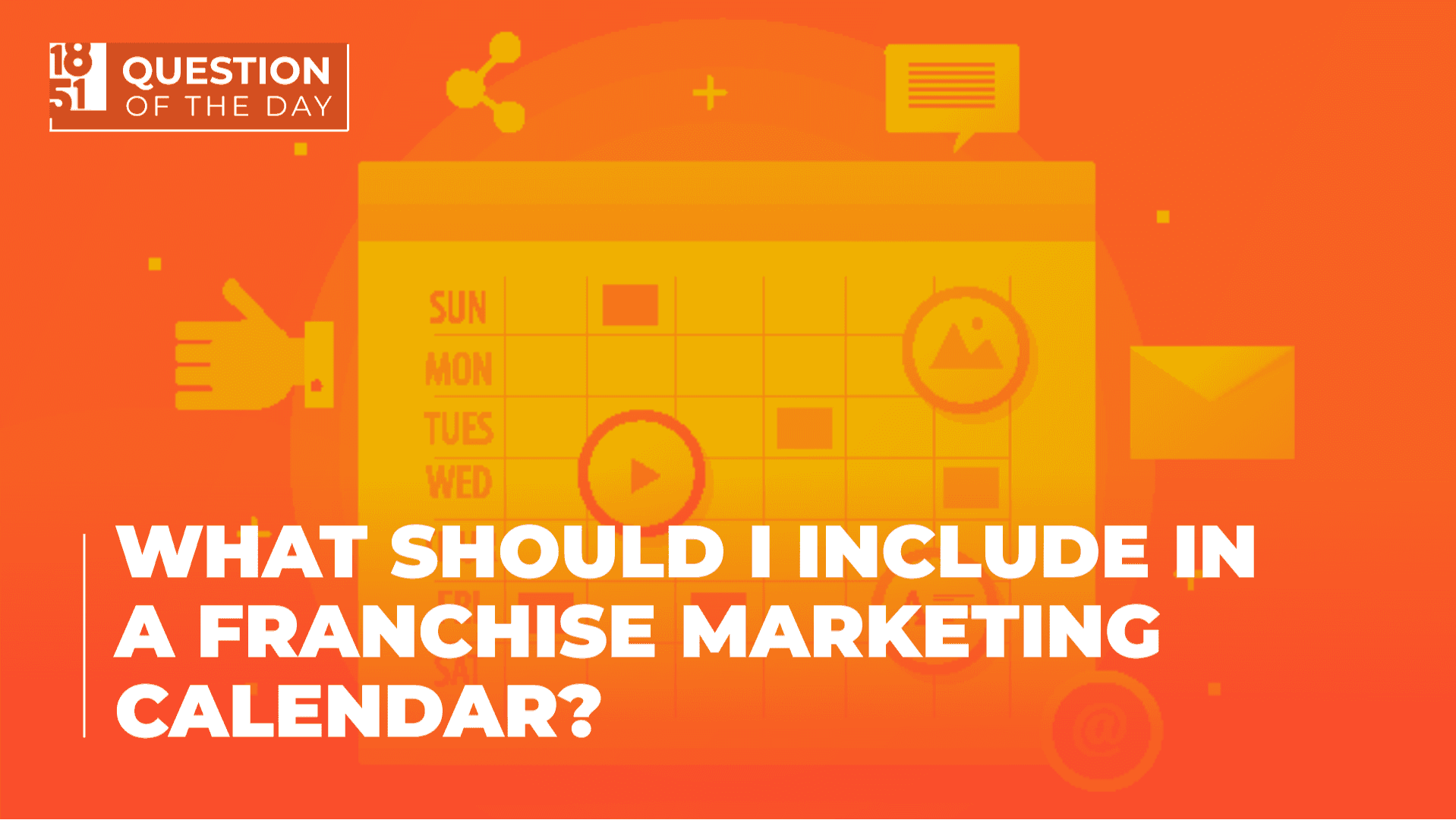
A franchise marketing calendar does more than schedule promotions and social posts. It helps franchise systems stay organized, align messaging across locations and give franchisees a roadmap for local execution throughout the year. For franchisors trying to answer the question, “What should I include in a franchise marketing calendar?” the challenge is finding the balance between national consistency and local flexibility.
According to Andrew Titus, president of United Franchise Group, the best marketing calendars are built around collaboration, long-term planning and clear communication between the corporate office and franchisees.
A Franchise Marketing Calendar Should Align Every Marketing Channel
Titus said one of the biggest mistakes franchisors make is treating the marketing calendar as a simple list of promotions rather than a systemwide strategy tool.
“The marketing calendar needs to align with every aspect of how the company is running and marketing the business,” he said. “Whether it’s PR, promotions, digital initiatives or social media, everything should work together. It can’t just be an email campaign or a few social posts. It needs to be a true multichannel marketing approach.”
That means a franchise marketing calendar should outline far more than social media topics. National campaigns, local promotions, PR pushes, seasonal initiatives, digital advertising and budget expectations should all connect back to the same larger strategy.
Titus also recommends building themes into the calendar to create consistency throughout the year. “I think it’s good to have a theme to the calendar,” he said. “Maybe each month has a different theme or each quarter has a different theme. Then you can build out the channels and approved budgets you’re going to use to support it.”
For franchisors asking, “What should I include in a franchise marketing calendar?” one of the biggest priorities should be clarity. Franchisees need to know what campaigns are mandatory, what can be customized locally and how each initiative fits into the broader brand strategy.
National Campaigns Need Local Flexibility
While national marketing creates baseline visibility for the brand, Titus said local marketing is what makes a franchise feel connected to the community it serves.
“We encourage each of our franchisees to upload pictures of their work on their local site to show what they’ve done in that market,” Titus said. “When they’re dealing with a large company, they’re part of a franchise system with 300-plus locations in 11 countries that’s been around for 26 years. But when they’re working with a local business or someone who only wants to do business with someone in their community, they can also market themselves as independently owned and operated and local to that area.”
Franchisees have to be able to lean on the brand name without sounding distant from the people they serve. The calendar should give them a national message to work from, along with space for local projects, customer stories and community outreach.
As franchise systems grow, that flexibility becomes even more important. Titus said many emerging brands naturally build their early marketing around the region where the first locations opened, but that approach eventually has to evolve.
“When franchise systems start, they usually grow around the first location and kind of spiderweb from there,” Titus said. “If you start in Florida, the marketing calendar is naturally going to feel Florida-focused. But as you expand across the country, it has to change.”
As brands expand, regional differences become harder to overlook. An October message built around colder weather might work well in Idaho, for example, but feel out of place in Florida.
Franchisee Feedback Should Shape the Calendar
Another major piece of what should be included in a franchise marketing calendar is franchisee input. Titus said corporate teams often overlook how valuable local operator feedback can be.
“So many times, people at the corporate office look at themselves as the experts,” Titus said. “And yes, they are very knowledgeable, but the real experts are the people doing it day in and day out in their local markets.”
At United Franchise Group, franchisees help guide decisions tied to the advertising fund and collaborate closely with the marketing department. Titus believes that communication helps create stronger campaigns and better systemwide alignment.
Planning ahead is equally important. Titus said many franchisors wait too long to finalize the following year’s calendar because they are focused on finishing the current year strong.
“If you’re going to do sales in January, February and March, you better be marketing for that in October,” Titus said. That lead time gives franchisees enough time to prepare budgets, build local promotions and execute campaigns effectively instead of scrambling after the year has already started.
Practical Takeaways for Franchisors
If you’re asking, “What should I include in a franchise marketing calendar?” these practical steps can help:
- Build the calendar around multichannel campaigns instead of isolated promotions or social posts.
- Clearly separate mandatory national initiatives from customizable local marketing opportunities.
- Gather franchisee feedback early and finalize the calendar before the new year begins so operators have time to prepare.
For more information on franchise marketing, check out these related articles on 1851 Franchise: