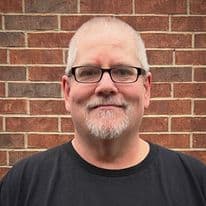
For Courtney Brown, a U.S. Marine Corps veteran, discipline sets the pace. He is a franchisee of Wild Bill’s Craft Beverage Co., a traveling craft-soda brand known for stainless-steel mugs, refill stations and a regular presence at fairs, festivals and fan conventions. Brown joined the company on Jan. 4, 2018, on the corporate side, with a brief pause during COVID. In January 2025, he made the jump to ownership and became a Wild Bill’s franchisee in Tampa, Florida. The job didn’t change his rhythm so much as his stakes: the load-ins, forecasting and crew training he learned at corporate now fuel a business with his name on it.
Resetting the Week
The workweek starts with a reset, not a rest. “Mondays and Tuesdays, we’re unloading from the previous weekend. We reload on Tuesday or Wednesday for the upcoming weekend,” Brown said. “We’re doing safety checks, planning lodging and making sure we have all the accurate equipment needed, because some events require generators and portable water tanks. It’s all our checks and prechecks.”
By the time the trucks are staged, the back office is buttoned up, too; payroll closes on Monday, reports are filed and an accountant touchpoint keeps weekly and quarterly numbers on track.
Territory and Event Mix
Brown’s territory is broad and his calendar busy. “I’ve been operating the Southeast since 2018 — North Carolina, Georgia, Alabama and Florida,” he said. “I’m doing all sorts of events — fairs, festivals, art shows. We do NASCAR, IndyCar — anything that you can pretty much think of that’s an event, we’re there.”
Some runs demand hard choices. Renaissance fairs can deliver, but the multiday format locks up gear. “Once you commit, you’re committed and that stand is out of operation,” he said.
Load-Ins, Not Luck
Load-ins are as much choreography as muscle. “Every event is different. The bigger the event, the more complicated the load-in,” Brown said. “Convention centers are the most challenging because you’re loading inside a venue. You have to try to get in and get out before 300 or 400 vendors come in behind you.” His crew moves a 25-foot trailer fast on those days; outdoors, the work eases — especially on pavement. “For the most part, it’s routine once you master it.”
Forecast First, Then Stock
Forecasting is where Brown’s experience earns its keep. “In a convention center, our projections are a lot higher,” he said. “I go off our historical data. If we don’t have historical data and this is a first-time event, I pull as much information as I can — connecting with the promoter on projected ticket sales and expected attendance, then looking at show hours.”
That groundwork turns into concrete orders and a weather-adjusted plan. “Once I get that data, I pack out sufficient inventory,” he said. “If it’s hot outside, then I know people are going to drink more — so I’m going to need more ice, more syrups. If it’s cooler, I can scale back.”
Merch assortment is tailored to the venue and pace. “Indoor events, I typically take more options — six to seven mug options at higher price points ranging,” Brown said. “Outdoors is more traditional — two to three basic options at a lower price.”
Show-Day Ops
Show day turns plans into flow. At a crush like MegaCon Orlando, Brown splits roles to keep lines moving. “I’m running four to five people on a stand. I’m running two stands, so I’m coming with a team of 10,” he said. “I have two cashiers, one person managing inventory in the back of house — restocking the mugs, making sure the CO₂ is good, keeping both capers situated with ice. I have one person out front issuing ice to people who already have mugs and one person outside managing the line flow, explaining the purchase process and the product.”
Smaller outdoor shows may run with one operator, especially with newer, lighter stands that tow behind a van or SUV.
Troubleshooting on the Fly
Redundancy keeps revenue alive when hardware fails.
“If it’s made, it will break down,” Brown said. “Most of the time, it’s our flow jets. We have seven taps; one will go out and we can turn that tap off and still offer six other flavors. We’ve had CO₂ gauges break; at that point, the system’s completely down. We bring spare parts. You really need to be able to change out a part and get it back up and running within 10 to 15 minutes, tops.”
To keep uptime high when he isn’t on site, Brown arms his crew with an on-demand playbook. “We make training videos and put them in digital files so they can view those files when they’re out there,” he said. “Start with basic troubleshooting and then call me if you have higher questions.”
Tear-Down and Turnaround
The exit is as disciplined as the setup. “Most promoters give you a certain time you’re allowed to tear down,” Brown said. “If it’s a two-person team, one person gets the truck and trailer and the other starts breaking down everything they can — cleaning, putting everything back neatly.”
With a 25-foot trailer, “teardown takes about 45 minutes to an hour on a good day.” Safety closes the night. “I try not to have anybody drive directly home after the show,” he said, “unless we’re local.”
Fueling the Pipeline and the Payoff
Filling the pipeline is a team effort with the franchisor. “The most beneficial thing is the prospecting because if you don’t have events, you can’t make money,” Brown said. “Corporate provides resources—marketing, event forecasting—whatever areas you need support.”
As for the model’s fit, Brown sees room to tailor it. “You decide your own success,” he said. “You can design it to be a full-time job or additional income… or you can go all in and fully book your calendar with events.”
However, the biggest payoff isn’t just weekend revenue — it’s the transferable skill set that makes the next venture easier.
“Once you learn cash-flow management, how to run P&Ls and manage staff, you have the fundamentals to do other businesses later,” Brown said. “You can scale it as big as you want or keep it small and simple.”
Brown’s year is a loop of preparation, execution and review, but it’s never on autopilot. He treats every show as a fresh plan to build, prove and refine, balancing tight logistics with a service mindset that keeps lines moving and guests returning. With strong forecasting, trained crews and a steady event pipeline, he’s built a model that scales when he wants it to and eases off when he doesn’t — discipline first, flexibility by design.
To find out more information on costs to buy this franchise, please visit https://1851franchise.com/wild-bills.