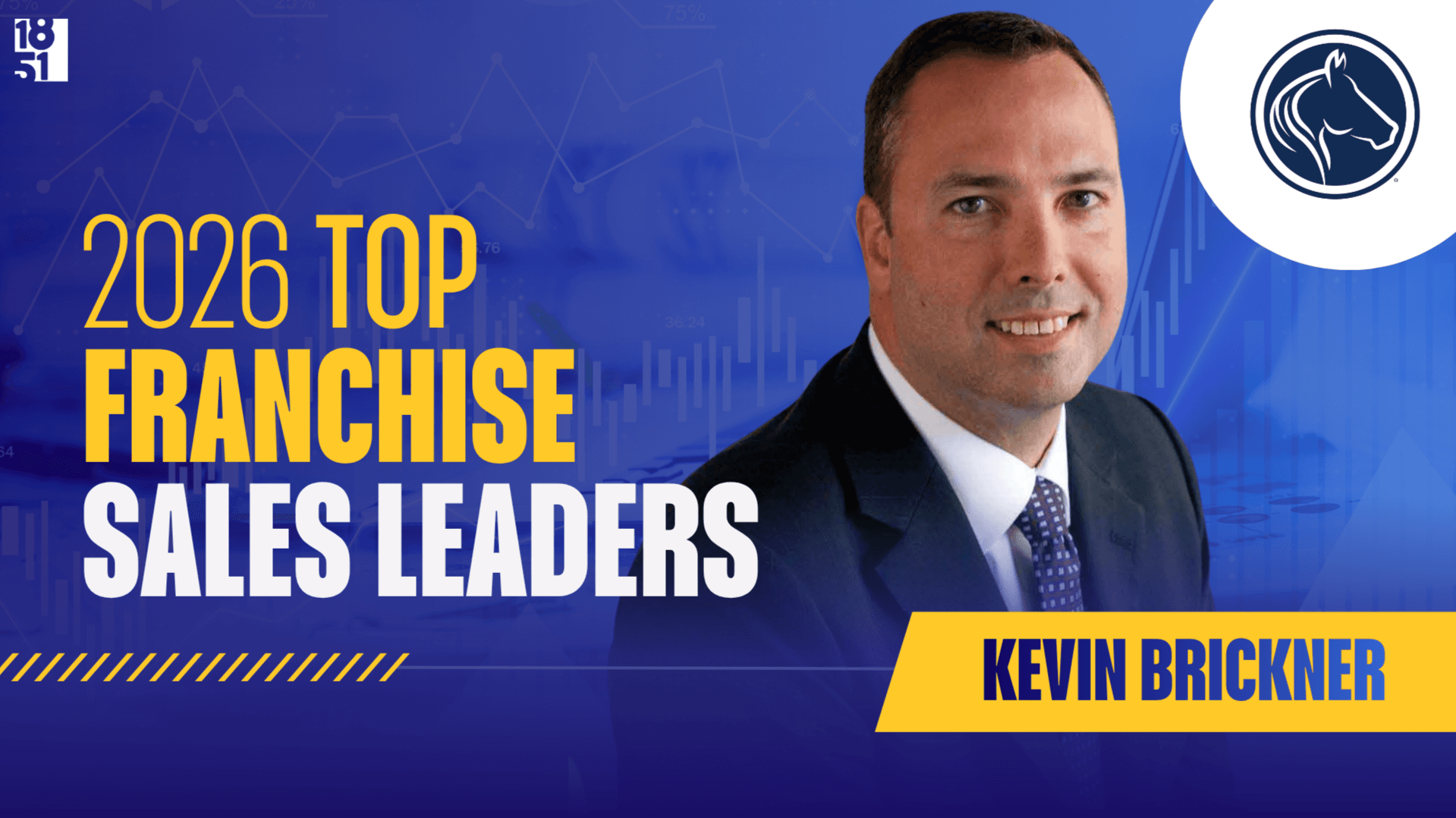
Franchise Sales Leader: Kevin Brickner
Brand: The Goddard School
For Kevin Brickner, franchise development is both a decades-long career and a mission with a personal connection. Before joining Goddard Systems, LLC four years ago, Brickner spent nearly 25 years with Wyndham Hotels & Resorts, building expertise across franchise sales, retention and development while creating new revenue streams, supporting existing franchisees and leading high-performing sales teams.
His move to Goddard Systems, the manager of The Goddard School franchise system, brought that experience into a brand he already knew from the consumer side. Brickner's own children attended a Goddard School, giving him a firsthand look at the impact the brand can have on children and families. Today, as vice president of franchise sales, he is helping thoughtfully scale the franchise system with new and existing franchisees who share its commitment to early childhood education.
1851 Franchise spoke with Brickner to learn more about how AI is reshaping the franchise buyer journey, why personalization and organizational alignment matter in franchise development and how emerging brands can accelerate growth without compromising franchisee quality.
1851 Franchise: Can you tell us about your background and how you entered the franchise world?
Kevin Brickner: I entered the franchise world when I joined Wyndham Hotels & Resorts, where I spent nearly 25 years building my expertise in franchise sales, retention and development. During that time, I focused on creating new revenue streams, extending existing franchisees, driving strategic growth and leading high-performing sales teams.
Four years ago, I had the opportunity to join Goddard Systems, LLC, the manager of The Goddard School franchise system. The opportunity was especially meaningful to me because my own children attended a Goddard School in our community. Their experience played an important role in preparing them for success in school and in life, so I had already seen the impact of the brand firsthand.
Today, I help extend that experience to more children and families across the country. We're thoughtfully scaling our business model with both new and existing franchisees who share our commitment to early childhood education excellence and serving communities throughout the U.S.
1851: The franchise buyer has changed dramatically over the past few years. What are the biggest shifts you're seeing in today's candidates, and how has your sales approach evolved to meet them?
Brickner: The biggest shift is that today's franchise candidates are arriving at the first conversation with far more knowledge. They have already researched the brand and are increasingly using AI platforms such as ChatGPT, Gemini and Perplexity to answer questions they might once have asked a salesperson.
That means brands need to be present well before a candidate submits an inquiry. We are monitoring the types of questions candidates are asking AI and developing content that addresses those interests across our channels. By providing useful and credible information, we have a greater opportunity to become part of the candidate's research journey and give them a trusted source to explore further.
As candidates have become more educated, our sales approach has become more personalized. We no longer assume the first conversation should begin with a sales deck and a list of brand statistics. Instead, we focus on building rapport, establishing credibility and understanding why the candidate is exploring franchise ownership.
We want to uncover both the emotional and financial motivations driving their interest in The Goddard School. That insight allows us to identify mutual fit earlier and tailor the rest of the process to the candidate's individual goals. When we present the opportunity, we don't simply explain what differentiates Goddard. We connect those differentiators to the priorities the candidate has shared and help them evaluate whether the opportunity aligns with their vision. At the same time, we help candidates understand and evaluate their readiness to meet the operational responsibilities of ownership.
1851: What do you believe separates the highest-performing franchise sales organizations from those that struggle to consistently attract qualified franchisees?
Brickner: I believe three things distinguish the highest-performing franchise sales organizations.
The first is a clear understanding of the ideal franchisee. They know the qualities, experience, financial profile and values that define their target candidate, and they continually evolve their recruiting strategies to reach those individuals. Just as importantly, they remain disciplined in maintaining their standards rather than compromising long-term fit to achieve a short-term sales goal.
The second is a strong industry reputation that is reflected throughout the entire candidate journey. Every interaction throughout the franchise sales process should reinforce the quality and credibility of the brand. The candidate experience should reflect the same high standards franchisees will ultimately be expected to deliver to their customers. When candidates have an exceptional experience, they are more likely to share it with friends, family members and professional contacts who may also be strong prospective franchisees.
The third is organizational alignment. High-performing organizations approach growth as a company-wide priority. Franchise development cannot operate in isolation. It depends on collaboration, support from leaders across the company and working together toward a shared goal. For us, that's making The Goddard School experience accessible to even more families across the country.
1851: Trust has become one of the biggest factors in franchise recruitment. How does your team build credibility with candidates throughout the discovery process, and what mistakes do you see brands making?
Brickner: We build credibility by approaching each candidate conversation with curiosity rather than a sales pitch. Today's candidates are well-informed, so we come prepared, ask thoughtful questions and create a comfortable environment where they can have an open and honest conversation with us.
We also adapt to each candidate's communication style so they feel heard and understood. The biggest mistake brands make is relying too heavily on a script or treating every candidate the same. That approach can prevent them from learning the candidate's story, assessing mutual fit early and tailoring the process to the individual's goals. Trust is built through preparation, active listening and transparency.
1851: Looking back on 2026, what was the most impactful change your franchise development team made, whether through technology, process improvements, marketing or candidate experience, and what results did it deliver?
Brickner: The most impactful change our franchise development team made in 2026 was reducing friction throughout the process for both prospective franchisees and our sales team.
We expanded our content strategy to address the questions prospects were actively asking online, helping credible information on The Goddard School appear in AI overviews and search results. We also streamlined our website lead form so financially qualified prospects could immediately schedule an introductory conversation with their regional sales director. This eliminated the need to wait for a follow-up call or text and enabled candidates to take the next step when their interest was highest.
We continued to identify opportunities throughout the discovery process to deliver information faster, simplify next steps and help our sales directors guide candidates more efficiently. These improvements created a more seamless candidate experience and helped drive a record-breaking year so far for franchise licenses awarded.
We view this as an ongoing effort, not a one-time initiative. Continuous improvement is part of our mindset, and we are always looking for new ways to make the process better.
1851: If you could give one piece of advice to an emerging franchise brand looking to accelerate development without sacrificing franchisee quality, what would it be and why?
Brickner: My advice would be to approach franchise development from the candidate's perspective. Step into your prospects' shoes and ask: Where would I look for information? What would I want to know? Is it easy to understand the opportunity and take the next step? The answers will help you identify where to strengthen your value proposition and remove friction from the candidate journey.
At the same time, lean on your current franchisees. Many of them recently went through the process, and if they reflect your ideal franchisee profile, their perspective is especially valuable.
I've always believed that feedback is a gift. Brands that stay connected to the candidate and franchisee experience can continue improving their processes, attract stronger prospects and grow without compromising quality.
Want to learn more about how 1851 helps franchisees find the right franchise opportunity? Visit www.1851growthclub.com and start your journey.