Growing a Franchise
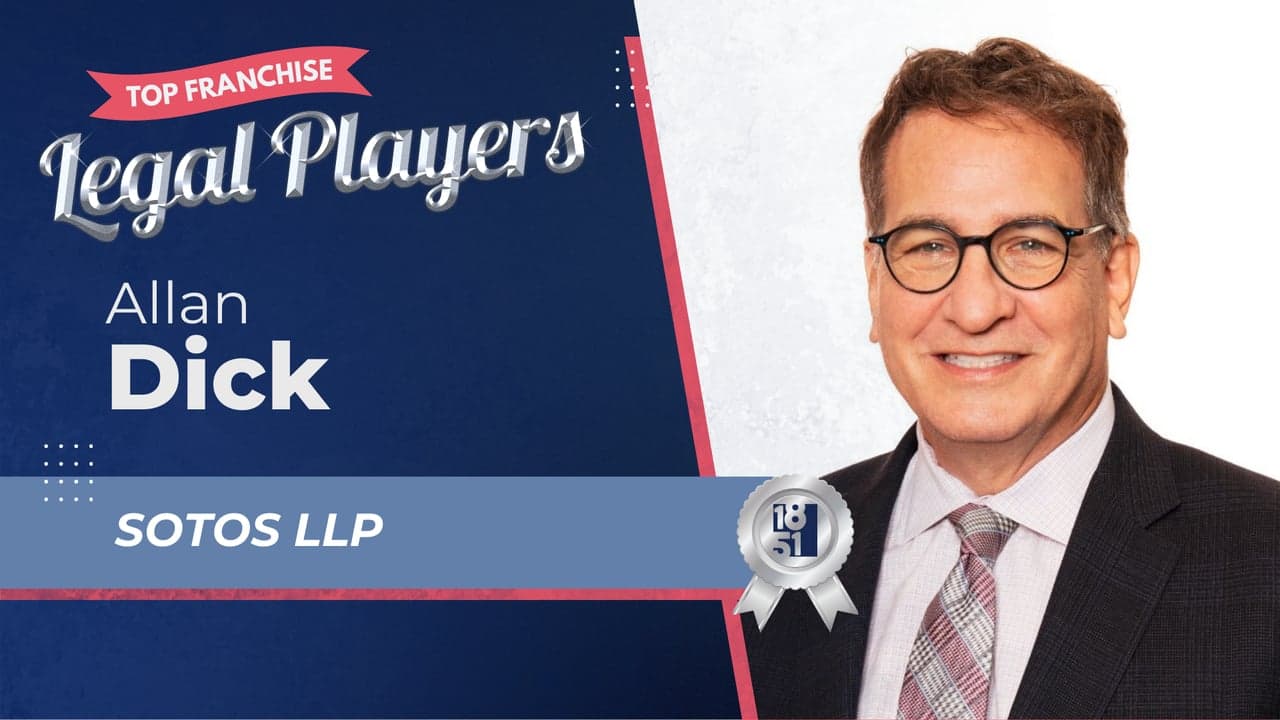
2025’s Top Franchise Legal Players: Allan Dick - Sotos LLP
1851 Franchise’s annual roundup of the top legal players in the industry is back. Meet Allan Dick and hear his insights on legal issues in the franchise space.
Growing a Franchise
1851 Franchise’s annual roundup of the top legal players in the industry is back. Meet Allan Dick and hear his insights on legal issues in the franchise space.
Legal Player: Allan Dick
Firm: Sotos LLP
Allan Dick is a partner at Sotos LLP and a career franchise litigator who cut his teeth in 1986 handling disputes for one of Canada’s largest restaurant franchisors. That early exposure set the tone for a practice built inside the industry, not at its edges. He treats franchise law as one piece of a broader business brief, advising brands and owners on issues that span operations, growth and risk. His lens is practical: protect the brand by teaching franchisees why controls exist, tie standards to systemwide success and make sure every rule has a business reason franchisees can see.
1851 Franchise reached out to Dick to learn how franchisors can protect their brand and avoid legal mistakes. Check out his insights below.
1851 Franchise: How did you fall into franchising?
Allan Dick: A commercial partner in a firm I was a young associate with in 1986 was counsel to one of Canada’s largest restaurant franchisors and had a practice in the area. I became his go-to litigator and expanded my practice in franchising from there.
1851: What do you see as the most important things franchisors should do to protect their brand?
Dick: During training, franchisors should make it a point to explain to franchisees why they have the controls they do and why it is crucial to every franchisee in the network that all franchisees follow brand standards. Once franchisees understand the importance of brand and the controls that go with protecting the brand, they are more likely to adhere to standards and protect the brand.
1851: How important is the information in Item 19?
Dick: The question most prospective franchisees want answered is: “How much money am I going to make?” Item 19 is intended to give the prospect information to assist it in assessing the opportunity being offered to it. Information in Item 19 is no substitute for due diligence. Prospective franchisees must do their own due diligence which is specific to their proposed territory or site. In Canada, very few franchisors give earnings projections in regulated provinces because of the technical requirements in the statutes which must be met to make an earnings claim valid.
1851: What is the single largest legal mistake brands make?
Dick: Franchisors are most interested in top lines; franchisees, bottom lines. Franchisors are best off growing with existing successful franchisees. Franchisees will invest in the brand if they make money. Franchisors need to pay attention to their franchisees’ bottom lines and promote best practices of their successful franchisees.
1851: How do you stand out as a franchise law firm?
Dick: I prefer to say that we do legal work for businesses which operate in the franchise industry where franchise law is but one component. We live franchising every day just as our clients do. Our insight into the industry allows us to advise on all their business issues and opportunities, with a depth of understanding which I believe is second to none.
1851: What is the best business advice you have received in your career?
Dick: There is turnover in the list of top businesses decade after decade. Being successful today does not make you successful tomorrow. Businesses (and law firms) should be spending a substantial amount of concentrated time on strategic planning.
1851 Franchise’s Supplier Database connects franchisors and franchisees with top legal experts. If you need guidance on agreements, compliance or disputes, click here for more information.
Sign up for the 1851 Franchise newsletter to get our biggest stories before everyone else
By signing up, you agree to our user agreement (including class action waiver and arbitration provisions), and acknowledge our privacy policy.