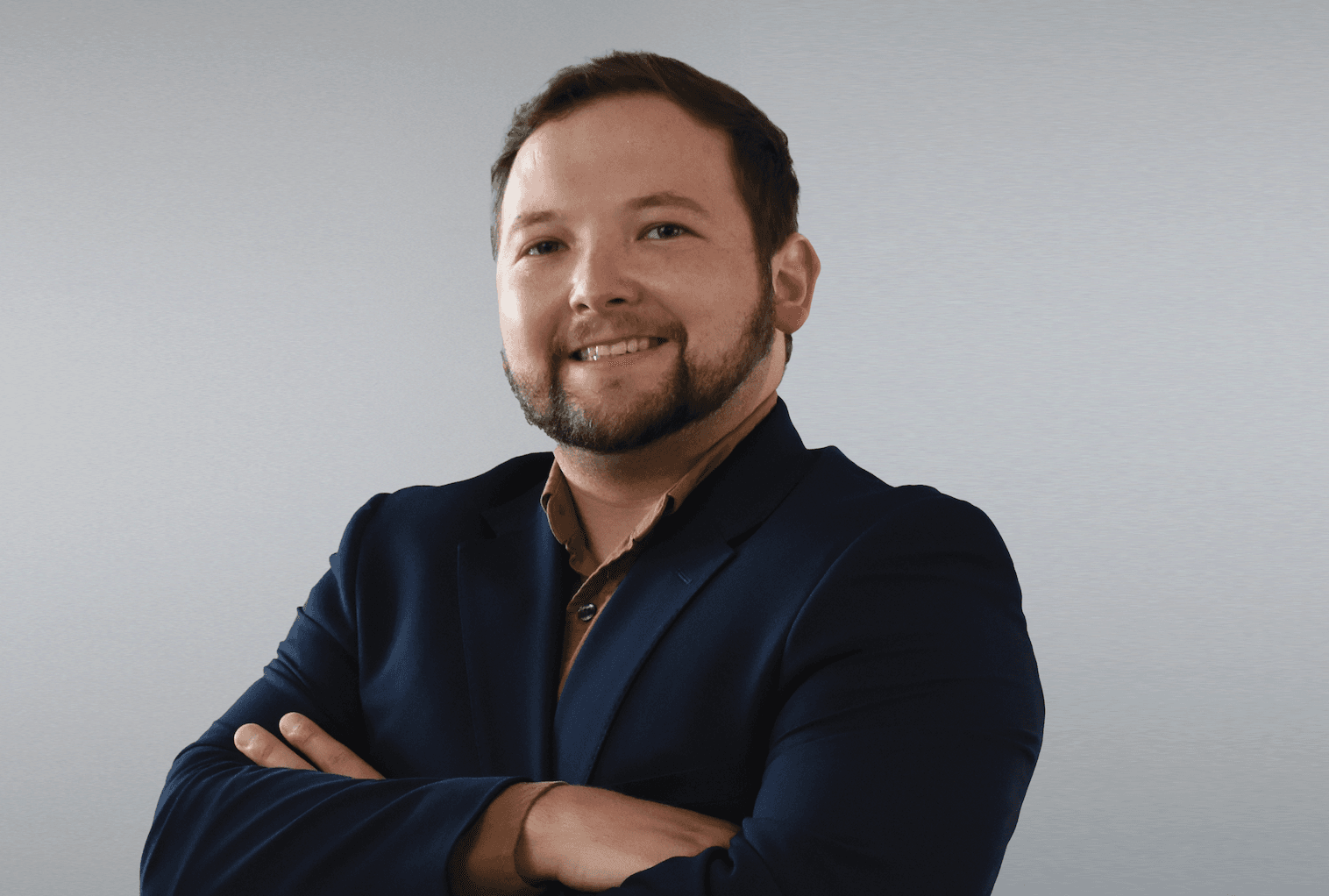
Often for entrepreneurs with growing businesses, there comes a time when two decisions have to be made. The first is deciding to franchise, and the second is whether to join a franchise group to scale even faster. This was the reality for Matt O’Rourke, who never truly saw himself as a business owner to begin with.
"I grew up thinking, 'I'm going to go work for one place, put in 35 years, and retire with the same company,'" O’Rourke said in a recent interview with 1851 Franchise publisher Nick Powills during an episode of the ‘Meet the Franchise’ podcast.
As it turns out, O’Rourke’s prediction was proved false when he began successfully scaling his own plumbing business in Ann Arbor, Michigan. Growing to seven locations, things were going well financially, but behind the scenes, the complexity and demanding nature of growth were causing pain points to develop.
“What I started to learn and realize as I was going through the process of business development was that I was taking my best plumbers and putting them into positions that I had not trained them for,” O’Rourke said. “I was putting them into what you would probably consider a general manager role as I started opening up these remote plumbing locations, and I started spinning my wheels.”
After a chance golf encounter with a franchise attorney, O’Rourke pivoted his attention to franchising as a compelling business decision. Crafting a franchise disclosure document, along with operations manuals and curriculum, O’Rourke prepared to enter the world of franchising. In 2020, BELFOR Franchise Group approached O’Rourke with a unique offer: a campus, training facilities, and a 24-hour call center. A powerhouse in the essential residential and commercial services market, BELFOR operates a diverse portfolio of 15 brands. Beyond property restoration and cleaning, their offerings cover waste management, climate-controlled storage, and specialty trades, with household names like 1-800 WATER DAMAGE, Chem-Dry, DUCTZ, Helpful Heroes, Z PLUMBERZ, among others.
“Ultimately, my vision and dream at this point was not only to be the largest plumbing contractor in North America or the world, but it was seeing how each trade, no matter if it was electrical, HVAC, carpet cleaning, or drywall repair, was fundamentally the same outside of the scope of service and skill set,” said O’Rourke.
Now, O’Rourke is an instrumental figure in BELFOR, helping launch several brands into the same key position for growth. Still, the reputation for franchise groups can be hard to shake, with some pointing to a thinning of culture, customer service, and flexibility in the name of simplicity. O’Rourke, however, argues that BELFOR does not fall into these traps, and instead has found a voice in the camaraderie of the trades as its fuel.
“It's been a great journey. I've learned a lot,” O’Rourke said. “I really truly feel like at BELFOR Franchise Group, we're all contractors who are in franchising, not so much franchisors who get into the contracting trades.”
Read more from this episode, where O’Rourke and Powills touch on early beginnings, what support actually means, and how AI for its own sake can never compare to meaningful human connection. A transcript of their interview has been provided below. It has been edited for brevity, clarity and style.
Nick Powills: How did you accidentally fall into franchising? What's your franchise backstory?
Matt O'Rourke: I'm a plumbing contractor by trade, Nick. Through starting a business and being in the trades and the home service industry, specifically plumbing, I was growing the brand pretty large throughout Michigan, Ohio, and even into Canada.
What I started to learn and realize as I was going through the process of business development was that I was taking my best plumbers and putting them into positions that I had not trained them for. I was putting them into what you would probably consider a general manager role as I started opening up these remote plumbing locations, and I started spinning my wheels.
We were growing top-line revenue. We were doing really well in terms of creating opportunities, but we really weren't seeing the results on the bottom line. I just happened to be golfing one day, complaining, for lack of better words, about the situation, and one of the people I was with happened to be a franchise attorney.
That's the beautiful thing about golfing, right? I had four hours of devoted attention that he didn't charge me for. I asked questions, and ultimately I figured franchising was probably the right path forward in terms of still creating opportunity for the tradespeople that were working with me by having that person working on the business, not so much in the business.
So that's what ultimately started my journey into the franchising space. Of course, I got the Franchise Disclosure Document done, got the operations manuals, and really worked on that curriculum, not knowing what it was going to take to take this across the country and register it in every state. I didn't learn that part of the franchise business quite yet.
So then I paused for about a year, and through that, I was approached by BELFOR Franchise Group about acquiring the plumbing company and ultimately franchising it. That took about a year of negotiations and really asking myself, did I really want to go back to working for somebody instead of doing it on my own?
Ultimately, my vision and dream at this point was not only to be the largest plumbing contractor in North America or the world, but to see how each trade, no matter if it was electrical, HVAC, carpet cleaning, or drywall repair, was fundamentally the same outside of the scope of service and skill set. When I saw the campus at BELFOR Franchise Group, the training facilities, the flood house, and the indoor commercial kitchen for the Hoods brand, this was a no-brainer for me as a tradesperson. Through that, I was ultimately asked to develop all of the brands and help with setting the foundation for many of our brands.
It's been a great journey. I've learned a lot, and I really truly feel like at BELFOR Franchise Group, we're all contractors who are in franchising, not so much franchisors who get into the contracting trades.
Powills: There are so many things I want to unpack from this. As a business owner, you're hitting these levels of frustration, and there's a double-edged sword to that because you're letting your best plumbers go help you expand, but the business isn't growing at the same pace as they are. It's almost like the false pressure you put on yourself to grow caused it to get to that point.
How are you balancing that? You have this vision, and it's not coming true. Obviously, franchising could be a pathway to do it, even if you went down that path and never sold to BELFOR. How are you managing that in your own brain?
O'Rourke: That's a great question. I think where it stemmed from was that, originally, when I was in nursing school, I decided that wasn't for me. Fortunately, I worked at a hospital, and at that time there was a reality TV show called Trading Spaces on TV. That's ultimately what piqued my interest in, "Hey, this is something that looks like I could do and want to do," and I always wanted to own my own business.
Once I started the apprenticeship and got into the trades, I noticed that there wasn't much loyalty among the plumbers. I learned from some of the best tradespeople, in my opinion, but they all looked at this as just a job.
I grew up thinking, "I'm going to go work for one place, put in 35 years, and retire with the same company."
Then I started to see that's not how it was in this industry. There are good operators, but the majority of plumbing companies and other trades companies are small mom-and-pops, and plumbers will leave for $1 or $2 more an hour. I've always had the passion for how to get young people in the trades, develop them, show them a career path, and ultimately help them grow.
I started feeling I had to create that opportunity in order to retain them. I didn't want them going off and starting a business on their own, because in my opinion, if we did it together, that's how we could ultimately make it a career path and get young people into the industry. We've been seeing this coming for quite a while: that we're going to have a problem with not having enough people in the trades.
I juggled a lot. I was trying to do a lot of what I was asking them to do to make up for the shortfall or lack of training I had provided. Then I took the best plumbers out of the trucks that helped me get there. I completely fast-forwarded an org chart, so to speak, and didn't have the right boxes or the right people to fill those boxes.
Powills: If I changed the logo on your shirt to Chick-fil-A, that's ultimately what they did. They faced a restaurant industry where people would leave for another buck an hour, which creates turnover in their model. What they basically said was, "Look, come in with next to nothing in investment, and we're 50/50 partners." What's fascinating about the Chick-fil-A model is that, at the end of the day, the operators own nothing. They hand them the keys; they're not equity partners in the business, which is backward in franchising.
I think about the problem you were trying to solve: How can I make people feel like they have ownership and are operators?
The next question I have as I think through this is that most franchisors in today's world want to sell multi-units. But the magic is that Chick-fil-A operator who says, "This is my location, I'm going to pump as much energy into this as possible, and I'm going to maximize the return."
When you're looking at a candidate, are you looking for someone who doesn't want to scale? They want to scale their business locally, but you need them to be the customer service pro and not get their head stuck in the pressure that you went through, right?
O'Rourke: 100%. Some candidates look at entering the franchise and see that they could have an HVAC company, a plumbing company, an electrical company, or a carpet cleaning company. They look at the customer and think, "Hey, I can do a lot more than just plumbing."
What I really focused on was that plumbing is a $300-billion-plus industry. You've got drain cleaning, plumbing retail, water heaters, excavation, and new construction. My stance has always been, "We're not going to do HVAC or electrical; we're going to be experts in plumbing and go that route."
When I look at where we're at today, when you get a good operator, you can start sharing resources. As I tell people, you have a consumer who has a need, whether it's plumbing, HVAC, or drywall repair. Then we have the skill set, tradesperson, or labor to do that, and our owners are right in the middle.
They're the ones making sure that both the customer experience and the employee experience are positive. If both are positive, the chances of being successful are very high. Retention is key. The top franchisees across all of our brands don't lose people.
We spend a lot of time, effort, and money investing in our team. You can't have turnover. It's about trying to set expectations upfront. What is it going to take in terms of cash and risk factor? You've got personal liability risk and cash or liquidity risk, and you have to find the right fit for that candidate or potential franchisee to help them see what it looks like.
In today's world, we're getting a lot of people from corporate America. AI scares people, so you get a lot of software engineers. They haven't owned or started a business. They are probably very technically competent and educated, and they know management skills. But when you're a business owner, you're out on an island a lot of times, especially during those first two years. You have to have the right mindset going into it regarding whether this is really what you want to do, because once you jump in, you're in, and trying to undo that can be a challenge.
Powills: If I were placing a wager today, I would bet high that three to five years from now, the next millionaires are going to be tradespeople and the people who figure out AI. Those are going to be the next two categories. In the trades, it's because it is a depleting workforce.
It feels like you guys are at the forefront if you maintain that position and own the future of the trades, which I think is going to create future millionaires.
O'Rourke: There's absolutely no question. This has been going on a lot longer than just the recent focus on Google and AI. It's crazy that when I first started, we had Atlas books, payphones, classified ads, and Yellow Pages. Now, fast-forward to today, many of the same metrics, KPIs, and costs are no different.
In the trades, I think a lot of folks looking in from the outside think, "Oh, I'm going to do this or that." Amazon tried it by offering services, and retail box stores have tried it. Unless you're in it and living the day-to-day, it's a challenge to grasp.
Take AI, for example. We actually tried an AI answering service for about 24 hours. It was hysterical to listen to consumers calling. When you have water pouring out of your ceiling, Nick, nobody wants to speak to AI. They want a human. You have to have that empathy.
As private equity, Google, or AI platforms try to come in, they'll never replicate that personal touch or the work-life balance for tradespeople. Making sure that when someone has a bowling league or a kid's event they can attend, those are all manual, relationship-driven interactions. AI isn't going to be able to do that.
We're finding that networking and old-fashioned guerrilla marketing—creating relationships—are what work right now. Going back to your first question about candidates, that's really who we're looking for: someone who is in the community, wants to be involved in the community, and keeps that small-town mindset on the radar.
For the ones who want to take over the state and grow super large, multi-unit ownership may be a better opportunity than taking one brand or scope of service and growing it large. Diversifying your service might be the path moving forward.
Powills: The marketing side is tough because 70% of your business is going to be reactive. Something breaks, the customer experiences high anxiety, and they need a solution. In the past, they went to the Yellow Pages and made a phone call; then it shifted to Google, but Google is a competitive landscape. It comes down to speed of response and price, with speed of response usually mattering most. Then it comes down to the experience and whether they would use the service again.
From a franchise standpoint, what I wrote down while you were talking was: "Mom-and-pop feel with big-brand support." The risk in any business where you need the operator to care about their community is that we shouldn't dismiss the mom-and-pops. We want to celebrate them while building the infrastructure so the customer experience is stronger. It's about being human, supported by process, data, and technology. That's how you differentiate your positioning.
O'Rourke: 100%. The poor mom-and-pops were instrumental in building this country. There are groups and associations out there with good intentions, but I also feel they exist to monetize the lack of support or education that smaller companies face.
The worst part is that I have to do continuing education in some states, and even at 48 years old, I'm still the youngest person in the room. Some of these mom-and-pop owners are looking to retire, and when I ask what their plan is, they say they're just going to stop answering the phone. They don't even understand the equity, goodwill, and customer lists they've built. Unfortunately, their financials may not be the cleanest, so private equity leaves them alone, and they just don't know what to do.
The operators who do get acquired by private equity get an earn-out, and once that's done, they leave, causing the plumbers to scatter. Private equity entered the trades in the early 2000s, fizzled out, and now it's back in full force.
You have to find that balance. Using big brands builds credibility and trust while maintaining a local feeling and touch to create community opportunities and careers for tradespeople. That's how we get them to six figures. Jumping around for a dollar an hour, paying commission, or following online influencers isn't reality. All those metrics and KPIs are attainable, but execution is the hard part. How do you keep an employee inspired, show them a career path, and ensure the business grows at a rate that matches their expectations?
Powills: The biggest asset and the biggest risk ends up being the mom-and-pop mindset. If they make enough money where their lifestyle is comfortable, customer service can slip because they feel like they don't need to take on another job.
How do you keep them motivated to adjust the growth curve, build more infrastructure, and give a plumber the scaffolding to become a general manager, so they're duplicating themselves without duplicating their time?
O'Rourke: That is exactly what we try to coach. In order to bring someone up to a general manager role, you have to add trucks.
Markets differ significantly; Des Moines, Iowa, is very different from Miami, Florida, or mid-sized markets. You have to evaluate what a territory can conservatively support.
I don't look at profit as much as I look at cash flow. You can be very profitable and still run out of cash.
We franchise 13 brands, and while they are all slightly different, the foundation is the same. Knowing the pros and cons of each model sets up our potential franchisees so they understand what they're getting into.
When an owner reaches that $1 million mark, some are content making enough money to buy a case of beer and go fishing. I encourage them not to squeeze that single operation dry, but to add another truck. If they are performing to expectations, let them maintain their balance and add another truck rather than forcing them to do more than they want to.
Powills: That goes back to the mom-and-pop owner who just stops picking up the phone. The benefit for the owners who just want the beer and to go fishing is showing them that they have an asset working in the background. Let the business grow under the brand logo, because there is a valuation multiple that will be paid at the end, as opposed to just shutting down the phones.
You have perfected how to execute these business models and then add a brand onto it, which is the magic for a franchisee.
Your personal story—transitioning from nursing school, learning plumbing, growing a business, experiencing the pain points, franchising, selling the business, and now leading a major group—is the exact journey your franchisees aspire to take. I would elevate your story, because you are the avatar of what people should aspire to be.
O'Rourke: Absolutely. Acquisition to conversion is one of the fastest marketing and growth strategies. That's how BELFOR Property Restoration grew. While that specific model isn't a franchise, the majority of those locations came from acquiring an existing restoration company and converting it. Short of Helpful Heroes, almost all of our franchise brands were acquisitions that we converted. In many cases, the original owner-operator is now the brand president and founder.
We aim to provide value through our support structure. Part of our royalty covers a 24-hour call center. If an owner is at a movie theater or out with family and can't answer, the call rolls over to our internal center so every call is answered. When a consumer has an emergency like flowing water, speed of response is critical. Getting there today outweighs price nine times out of 10.
Powills: Matt, I love your story. Thank you so much for sharing it. You bet on the jockey, not on the horse, and here you have two jockeys: a holding company managing process, data, and technology, and leaders like you who protect the investment. I'm grateful for your time today.
O'Rourke: I appreciate that, Nick.
Watch the full episode above or on YouTube.