
Bonchon
SPONSORED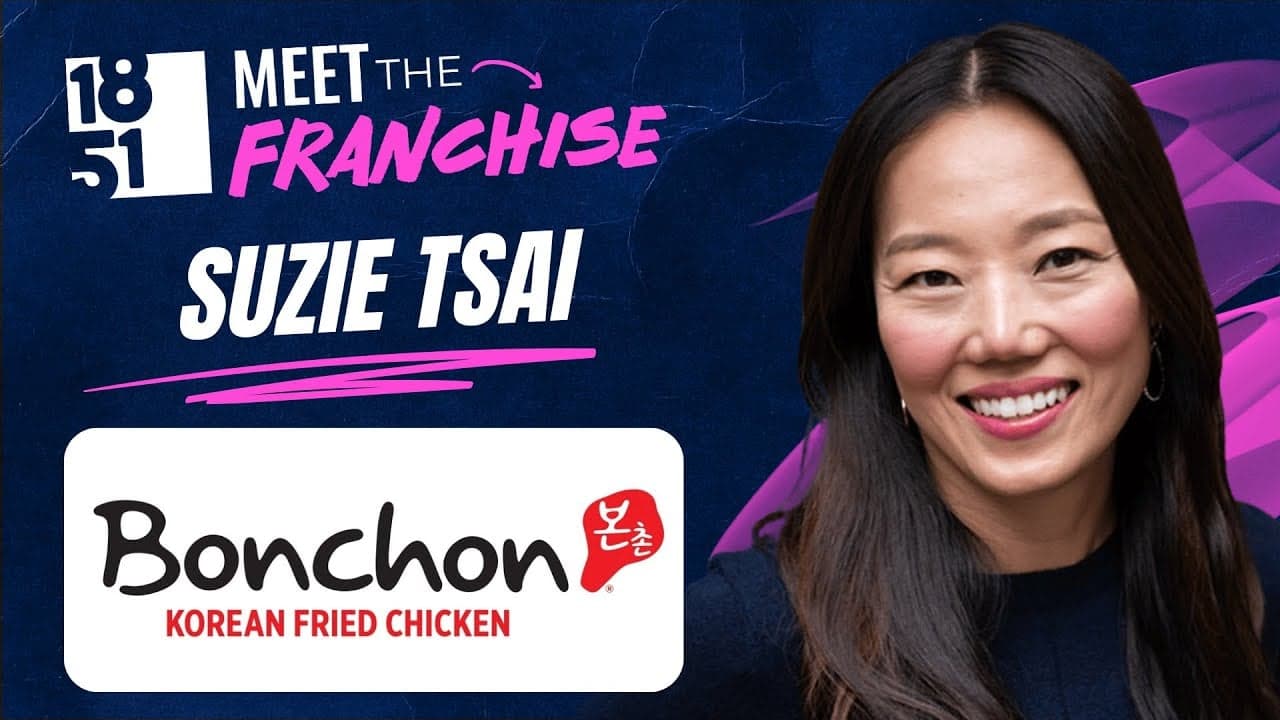
Why Bonchon Is Winning Now by Building for the Average Franchisee
Bonchon CEO Suzie Tsai explains how simplifying operations, driving traffic without price hikes and focusing on franchisee success is fueling growth.
Some restaurant brands are relying on price increases to drive comp sales, but Bonchon is focusing on traffic and franchisee support to create a model that works for the “average” operator.
“I used to think if I only had A-plus franchisees, everything would be perfect,” said CEO Suzie Tsai. “You have to build a model that works for the average operator.”
The global Korean fried chicken franchise is leaning into that philosophy as it grows across the United States. Tsai, who brings nearly two decades of experience from Brinker International, said her leadership approach has shifted from chasing top performers to building a system that is easier to execute consistently. Instead of designing for the highest-performing operators, the brand is making sure everyday franchisees can succeed, even in a challenging economic environment.
“At Bonchon, we have a lot of owner-operators. This is their life savings. This is how their family earns a living,” Tsai said. “There’s so much heart in that, and we have tremendous respect for them. Whether it’s sophisticated operators at scale or single-unit owners, every unit matters. We work closely with those owner-operators because every day matters to them and every dollar matters.”
The brand is seeing double-digit comp growth driven primarily by traffic, not price increases, at a time when many restaurant concepts are struggling with declining guest counts. Tsai said the company made a deliberate decision not to pass rising costs onto customers, instead working with franchisees to find other ways to drive demand.
“We’re seeing increased traffic, strong sales and a sense of enjoyment from our franchise partners,” Tsai said. “We’ve done some things like introducing new items in the past year, and they’re loving that. I think they’re seeing their guests being happy inside, because we haven’t done that in a while. So all that excitement is coming back, and it’s been great. And now, of course, our mission is to bring more of that.”
Tsai joined 1851 Franchise publisher Nick Powills on a recent episode of the “Meet the Franchise” podcast to discuss building a scalable franchise model, the importance of simplicity in restaurant operations and how Bonchon is driving traffic without relying on price increases. The transcript of the interview has been provided below. It has been edited for brevity, clarity and style.
Nick Powills: How did you accidentally fall into franchising? What’s your franchise backstory? How did you even get here?
Suzie Tsai: It was not an accident. I think it was very fortunate, actually. When I joined Brinker International and started working on the Chili’s business, Chili’s obviously had both domestic and international franchisees, and I had a lot of experience working with the international franchisees on their global business side.
So it was a great experience to get from multiple countries. At the time, Brinker had four different brands, and all four brands were international, working with master franchisees in each of those countries. So that’s where I got my first franchise experience.
Powills: I hear big value. To be at Brinker, most leaders that move up the ranks go from smaller brands, and then they step up. For you to have the benefit of seeing complete infrastructure has to give you a different lens now in a leadership seat. Share maybe what that experience has been like to have that backdrop and be able to rely on it when you’re having a tough moment or you’re trying to navigate something as a leader.
Tsai: What a blessing of a backdrop and background I was able to have from Brinker and, of course, a company created by Norman Brinker. I still talk to Doug Brooks, the former CEO and chairman of Brinker. It’s just like going to restaurant school when you go to Brinker, and there are so many of us that came out of that school.
So many of them are still there, and it’s not only provided tremendous experience and knowledge, but it’s ongoing. I do look back to that playbook every time and go, what would Norman Brinker have said? What would Doug Brooks have done in these situations? What did we do at Chili’s or On The Border or any of those concepts in situations like this?
So it’s been such a good thing to have in my world, and I do feel like I got one of the best educations from the school of Brinker and Chili’s. It’s fantastic now that they’re doing amazing. I love talking about them, and the very platform that they’re doing amazing with, 3 for $10.99, was created when I was there. So it’s something that I look at and go, wow, that was an amazing idea, and it’s doing amazing now. So there’s so much that comes out of that.
Powills: I have three comments, and I want you to respond. You said the word “playbook.” I don’t think success in restaurants or business requires reinvention. There have been so many great businesses created, so the blueprint is there.
If I oversimplify great restaurant business: real estate, are we trying to save pennies early that impact dollars later? Brand, do we create a wow moment for the customer? Operations, can we deliver on expectations?
Brinker already knows how to build great restaurants. It’s not hard to identify. So many brands mess it up because they try to reinvent the wheel. How does that relate to where you are now as a leader?
Tsai: You’re so right, Nick. It’s definitely not reinvention. The playbook, as you call it, is very simple, yet hard to duplicate, hard to reproduce and hard to apply.
Every situation is different, even though we know what Restaurant 101 is. There are so many outside forces we cannot control, especially in the restaurant world, that challenge us and dictate how we navigate.
That’s the thing. Even though there is that playbook, we’re constantly dealing with new situations. But that’s what makes the restaurant business so exciting and fun. That’s why we wake up every day and go right back to the restaurant we love and figure it out all over again. Then tomorrow comes, you turn that open sign on again, and you do it all over again.
Powills: When you think about the ideal franchisee, you can celebrate the grit of a one-unit operator, but you also know from Brinker you’re looking for someone who can build multi-unit operations. Talk about that.
Tsai: They can be very different, operator versus sophisticated multi-unit companies. But at the end of the day, everyone is in it for the same thing, to bring people together and make money, and that money can be used for good things.
At Bonchon, we have a lot of owner-operators. This is their life savings. This is how their family earns a living. There’s so much heart in that, and we have tremendous respect for them. Whether it’s sophisticated operators at scale or single-unit owners, every unit matters. We work closely with those owner-operators because every day matters to them and every dollar matters.
Powills: I’ve been thinking about the persona of excellence. I’m oversimplifying, but I think curiosity and the ability to learn are the most critical traits. How does that connect with you?
Tsai: You’re so right. It’s all about curiosity and learning. It’s the people who never stop learning and never accept where they are. For me, it’s actually been the opposite experience at Bonchon. I came in thinking I had done this for close to 20 years and had seen everything. But once I visited our restaurants and saw the daily life of our franchisees, it changed everything.
I had to learn from them. They are the true experts delivering the product, operations and brand. They are living the brand every day. It humbled me. Now I see my role as learning from them, making things easier for them and providing the support they need to be profitable and enjoy what they do.
Powills: That’s what creates magic. It has to be two-way learning. I would take a single-unit franchisee with curiosity over a multi-unit franchisee who thinks they know everything.
Tsai: You’re so right. I used to think if I only had A-plus franchisees, everything would be perfect.
I had a conversation with David Barr, and he said something that really stuck with me. He said, “Franchising is the licensing of a business model that produces predictable cash flow to an average franchisee with average intelligence, average work ethic, on an average day.” That was powerful. You have to build a model that works for the average operator.
Powills: That ties into operations too. McDonald’s built a system that anyone could follow. Sometimes the answer isn’t more products. It’s operationalizing what we already have.
Tsai: Exactly. Brands like McDonald’s and In-N-Out keep it simple. That’s what we all strive for, to take out the complexity and just deliver great food and great service.
Powills: We chase superstars, but average builds excellence.
Tsai: That’s right. And superstars can’t always teach others because they don’t know why they’re different. Consistency and resilience are harder. Those who focus on that tend to be more stable and successful over time.
Powills: I think the biggest franchisees succeed because they’ve mastered consistency, not because they’re number one.
Tsai: And guests feel it. You can walk into a restaurant and feel that rhythm and flow.
Powills: What’s the state of Bonchon today?
Suzie Tsai: We do measure comp store sales, like everyone else, but we’re doing very well. We’ve focused on quality over quantity. We’re seeing double-digit comp growth year over year, driven by traffic, which we’re even happier about. We have not taken price increases. Instead, we worked with franchisees to drive traffic in other ways. We’re seeing increased traffic, strong sales and a sense of enjoyment from our franchise partners.
We’ve done some things like introducing new items in the past year, and they’re loving that. I think they’re seeing their guests being happy inside, because we haven’t done that in a while. So all that excitement is coming back, and it’s been great. And now, of course, our mission is to bring more of that.
Powills: You like what you’re supporting. You’re supporting our product, our restaurants and the people who love making and serving it. It’s been nice to be able to make an impact with what we’re doing and what we’re serving.
Sometimes those simple things mean so much to our business. There are a lot of segments where we want to add more energy to our brand, and there continues to be excitement around Korean culture and Korean food, and being part of that.
One, I love the traffic story, because most brands I’m hearing from that are weathering the current storm are doing it through price, and they’re talking about declining traffic numbers.
If you fast-forward five years, these metrics are going to matter. When you index against the rest of the restaurant industry, many brands are finding comp sales, but not necessarily through traffic.
Second, I love the Korean culture piece. There’s a bigger story there. You see international brands breaking into the U.S., and there’s an initial core customer base tied to the country of origin.
Over time, more mainstream customers start buying into the brand and are willing to try something different. You can see that in the data. First-time users continue to climb, and that becomes a traffic driver. As long as people like the food, they come back.
Tsai: Absolutely.
Powills: I appreciate this conversation. More than the business side, I love the human side, because we can showcase not just the food, but the people behind it. I’m grateful you gave me so much time. Thank you.
Tsai: That’s another thing. It’s not just the restaurant business. There is a very important and critical human side to it and what it all means. It’s great to talk about that and unpack it, to talk more about people and emotions around food in the restaurant business.
Watch the full interview above or on YouTube.
To find out more information on costs to buy this franchise, please visit https://franchising.bonchon.com/.
Bonchon
SPONSOREDBonchon CEO Suzie Tsai explains how simplifying operations, driving traffic without price hikes and focusing on franchisee success is fueling growth.
Some restaurant brands are relying on price increases to drive comp sales, but Bonchon is focusing on traffic and franchisee support to create a model that works for the “average” operator.
“I used to think if I only had A-plus franchisees, everything would be perfect,” said CEO Suzie Tsai. “You have to build a model that works for the average operator.”
The global Korean fried chicken franchise is leaning into that philosophy as it grows across the United States. Tsai, who brings nearly two decades of experience from Brinker International, said her leadership approach has shifted from chasing top performers to building a system that is easier to execute consistently. Instead of designing for the highest-performing operators, the brand is making sure everyday franchisees can succeed, even in a challenging economic environment.
“At Bonchon, we have a lot of owner-operators. This is their life savings. This is how their family earns a living,” Tsai said. “There’s so much heart in that, and we have tremendous respect for them. Whether it’s sophisticated operators at scale or single-unit owners, every unit matters. We work closely with those owner-operators because every day matters to them and every dollar matters.”
The brand is seeing double-digit comp growth driven primarily by traffic, not price increases, at a time when many restaurant concepts are struggling with declining guest counts. Tsai said the company made a deliberate decision not to pass rising costs onto customers, instead working with franchisees to find other ways to drive demand.
“We’re seeing increased traffic, strong sales and a sense of enjoyment from our franchise partners,” Tsai said. “We’ve done some things like introducing new items in the past year, and they’re loving that. I think they’re seeing their guests being happy inside, because we haven’t done that in a while. So all that excitement is coming back, and it’s been great. And now, of course, our mission is to bring more of that.”
Tsai joined 1851 Franchise publisher Nick Powills on a recent episode of the “Meet the Franchise” podcast to discuss building a scalable franchise model, the importance of simplicity in restaurant operations and how Bonchon is driving traffic without relying on price increases. The transcript of the interview has been provided below. It has been edited for brevity, clarity and style.
Nick Powills: How did you accidentally fall into franchising? What’s your franchise backstory? How did you even get here?
Suzie Tsai: It was not an accident. I think it was very fortunate, actually. When I joined Brinker International and started working on the Chili’s business, Chili’s obviously had both domestic and international franchisees, and I had a lot of experience working with the international franchisees on their global business side.
So it was a great experience to get from multiple countries. At the time, Brinker had four different brands, and all four brands were international, working with master franchisees in each of those countries. So that’s where I got my first franchise experience.
Powills: I hear big value. To be at Brinker, most leaders that move up the ranks go from smaller brands, and then they step up. For you to have the benefit of seeing complete infrastructure has to give you a different lens now in a leadership seat. Share maybe what that experience has been like to have that backdrop and be able to rely on it when you’re having a tough moment or you’re trying to navigate something as a leader.
Tsai: What a blessing of a backdrop and background I was able to have from Brinker and, of course, a company created by Norman Brinker. I still talk to Doug Brooks, the former CEO and chairman of Brinker. It’s just like going to restaurant school when you go to Brinker, and there are so many of us that came out of that school.
So many of them are still there, and it’s not only provided tremendous experience and knowledge, but it’s ongoing. I do look back to that playbook every time and go, what would Norman Brinker have said? What would Doug Brooks have done in these situations? What did we do at Chili’s or On The Border or any of those concepts in situations like this?
So it’s been such a good thing to have in my world, and I do feel like I got one of the best educations from the school of Brinker and Chili’s. It’s fantastic now that they’re doing amazing. I love talking about them, and the very platform that they’re doing amazing with, 3 for $10.99, was created when I was there. So it’s something that I look at and go, wow, that was an amazing idea, and it’s doing amazing now. So there’s so much that comes out of that.
Powills: I have three comments, and I want you to respond. You said the word “playbook.” I don’t think success in restaurants or business requires reinvention. There have been so many great businesses created, so the blueprint is there.
If I oversimplify great restaurant business: real estate, are we trying to save pennies early that impact dollars later? Brand, do we create a wow moment for the customer? Operations, can we deliver on expectations?
Brinker already knows how to build great restaurants. It’s not hard to identify. So many brands mess it up because they try to reinvent the wheel. How does that relate to where you are now as a leader?
Tsai: You’re so right, Nick. It’s definitely not reinvention. The playbook, as you call it, is very simple, yet hard to duplicate, hard to reproduce and hard to apply.
Every situation is different, even though we know what Restaurant 101 is. There are so many outside forces we cannot control, especially in the restaurant world, that challenge us and dictate how we navigate.
That’s the thing. Even though there is that playbook, we’re constantly dealing with new situations. But that’s what makes the restaurant business so exciting and fun. That’s why we wake up every day and go right back to the restaurant we love and figure it out all over again. Then tomorrow comes, you turn that open sign on again, and you do it all over again.
Powills: When you think about the ideal franchisee, you can celebrate the grit of a one-unit operator, but you also know from Brinker you’re looking for someone who can build multi-unit operations. Talk about that.
Tsai: They can be very different, operator versus sophisticated multi-unit companies. But at the end of the day, everyone is in it for the same thing, to bring people together and make money, and that money can be used for good things.
At Bonchon, we have a lot of owner-operators. This is their life savings. This is how their family earns a living. There’s so much heart in that, and we have tremendous respect for them. Whether it’s sophisticated operators at scale or single-unit owners, every unit matters. We work closely with those owner-operators because every day matters to them and every dollar matters.
Powills: I’ve been thinking about the persona of excellence. I’m oversimplifying, but I think curiosity and the ability to learn are the most critical traits. How does that connect with you?
Tsai: You’re so right. It’s all about curiosity and learning. It’s the people who never stop learning and never accept where they are. For me, it’s actually been the opposite experience at Bonchon. I came in thinking I had done this for close to 20 years and had seen everything. But once I visited our restaurants and saw the daily life of our franchisees, it changed everything.
I had to learn from them. They are the true experts delivering the product, operations and brand. They are living the brand every day. It humbled me. Now I see my role as learning from them, making things easier for them and providing the support they need to be profitable and enjoy what they do.
Powills: That’s what creates magic. It has to be two-way learning. I would take a single-unit franchisee with curiosity over a multi-unit franchisee who thinks they know everything.
Tsai: You’re so right. I used to think if I only had A-plus franchisees, everything would be perfect.
I had a conversation with David Barr, and he said something that really stuck with me. He said, “Franchising is the licensing of a business model that produces predictable cash flow to an average franchisee with average intelligence, average work ethic, on an average day.” That was powerful. You have to build a model that works for the average operator.
Powills: That ties into operations too. McDonald’s built a system that anyone could follow. Sometimes the answer isn’t more products. It’s operationalizing what we already have.
Tsai: Exactly. Brands like McDonald’s and In-N-Out keep it simple. That’s what we all strive for, to take out the complexity and just deliver great food and great service.
Powills: We chase superstars, but average builds excellence.
Tsai: That’s right. And superstars can’t always teach others because they don’t know why they’re different. Consistency and resilience are harder. Those who focus on that tend to be more stable and successful over time.
Powills: I think the biggest franchisees succeed because they’ve mastered consistency, not because they’re number one.
Tsai: And guests feel it. You can walk into a restaurant and feel that rhythm and flow.
Powills: What’s the state of Bonchon today?
Suzie Tsai: We do measure comp store sales, like everyone else, but we’re doing very well. We’ve focused on quality over quantity. We’re seeing double-digit comp growth year over year, driven by traffic, which we’re even happier about. We have not taken price increases. Instead, we worked with franchisees to drive traffic in other ways. We’re seeing increased traffic, strong sales and a sense of enjoyment from our franchise partners.
We’ve done some things like introducing new items in the past year, and they’re loving that. I think they’re seeing their guests being happy inside, because we haven’t done that in a while. So all that excitement is coming back, and it’s been great. And now, of course, our mission is to bring more of that.
Powills: You like what you’re supporting. You’re supporting our product, our restaurants and the people who love making and serving it. It’s been nice to be able to make an impact with what we’re doing and what we’re serving.
Sometimes those simple things mean so much to our business. There are a lot of segments where we want to add more energy to our brand, and there continues to be excitement around Korean culture and Korean food, and being part of that.
One, I love the traffic story, because most brands I’m hearing from that are weathering the current storm are doing it through price, and they’re talking about declining traffic numbers.
If you fast-forward five years, these metrics are going to matter. When you index against the rest of the restaurant industry, many brands are finding comp sales, but not necessarily through traffic.
Second, I love the Korean culture piece. There’s a bigger story there. You see international brands breaking into the U.S., and there’s an initial core customer base tied to the country of origin.
Over time, more mainstream customers start buying into the brand and are willing to try something different. You can see that in the data. First-time users continue to climb, and that becomes a traffic driver. As long as people like the food, they come back.
Tsai: Absolutely.
Powills: I appreciate this conversation. More than the business side, I love the human side, because we can showcase not just the food, but the people behind it. I’m grateful you gave me so much time. Thank you.
Tsai: That’s another thing. It’s not just the restaurant business. There is a very important and critical human side to it and what it all means. It’s great to talk about that and unpack it, to talk more about people and emotions around food in the restaurant business.
Watch the full interview above or on YouTube.
To find out more information on costs to buy this franchise, please visit https://franchising.bonchon.com/.
Sign up for the 1851 Franchise newsletter to get our biggest stories before everyone else
By signing up, you agree to our user agreement (including class action waiver and arbitration provisions), and acknowledge our privacy policy.
No related articles found