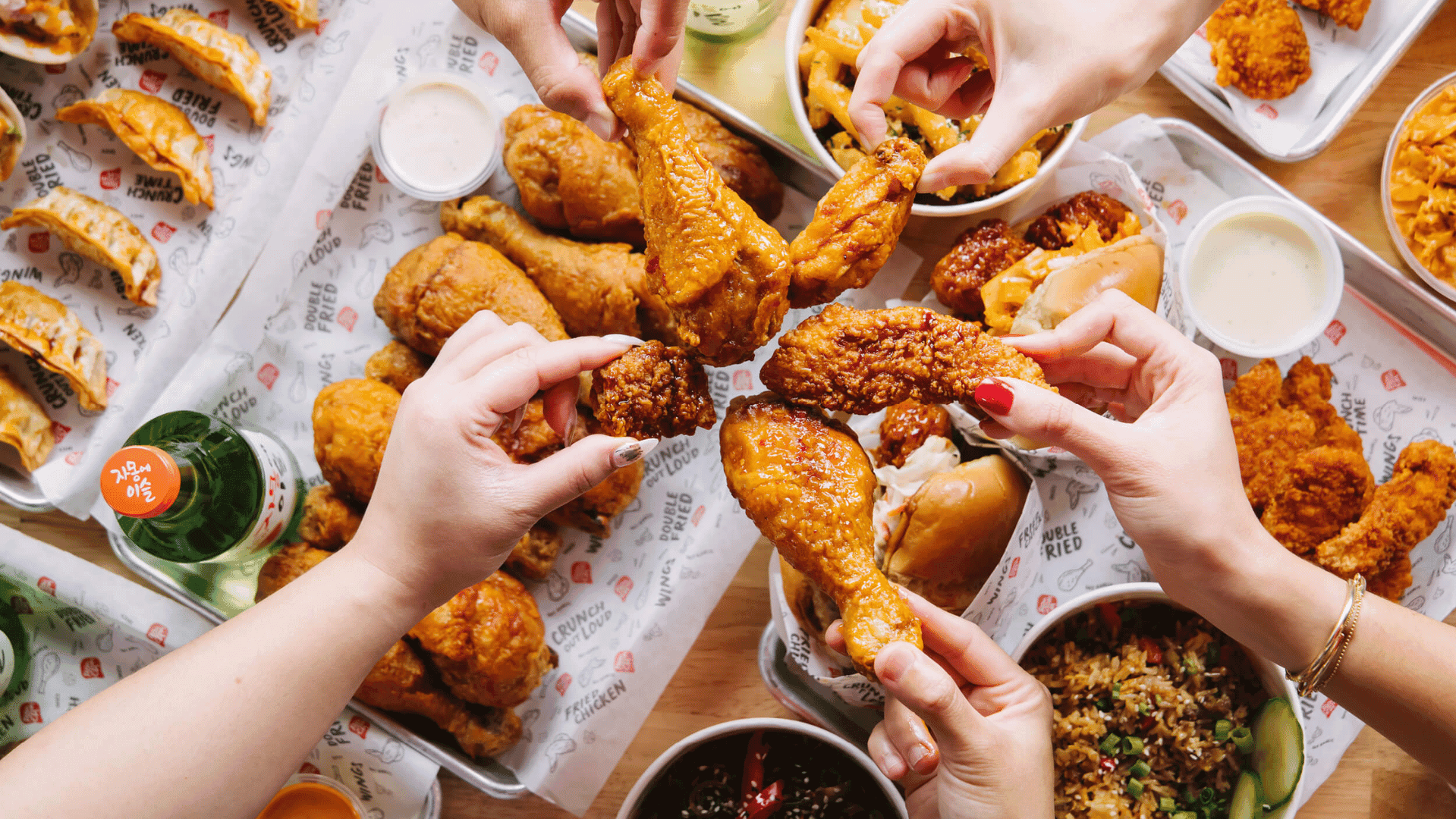
Bonchon Korean Fried Chicken, the global Korean fried chicken franchise, is at a crucial inflection point. With more than 500 global locations and continuous expansion across the U.S., it is uniquely positioned to dominate the fried chicken segment, bringing an unmatched, double-fried, hand-sauced experience to an industry that, for many, is falling flat. This also creates a window for franchisees.
For many Americans, fried chicken restaurants are reliable. Theoretically, this is great, but when they’re reliable in the sense of being reliably underwhelming, a different picture is painted. Not only is Bonchon providing a unique experience, but it’s doing so at the prime time — amidst a powerful cultural moment.
“We’re at an inflection point in the Bonchon story. For years, the brand grew organically through guest love and a product that speaks for itself,” said Blas Escarcega, chief development officer. “Now, as K-culture is having a moment across the U.S., Bonchon is pairing this momentum with a sophisticated, data-driven development strategy. As we work to identify partners who believe in this brand as much as we do and are excited to deliver on the Bonchon experience, we have the rise of Korean culture, a refreshed prototype and honed financials by our side, turning the momentum into a scalable legacy for our owners.”
From South Korean Origins to a Global Icon
Bonchon is building momentum in the U.S., but its story starts long before it reached American soil. Over 20 years ago, the brand was founded in Busan. It became famous thanks to its signature double-frying technique, which renders more fat and creates a crispier, paper-thin crust, and iconic sauces, which are hand-brushed onto the chicken to ensure proper distribution and avoid flooding or overpowering the dish.
In the mid-2000s, Bonchon arrived in the U.S. with a dream to bring the warmth of Korean comfort food to more guests around the world. The first location in New York saw incredible performance, and the brand only continued to grow from there.
Now, Bonchon is recognized by many as the gold standard for fried chicken, and it continues to shine in the over $63 billion U.S. chicken segment. With this strong brand identity and decades of experience, Bonchon is growing globally, focusing on meeting its guests' demands while ensuring it offers a powerful franchise opportunity for entrepreneurs.
CEO Suzie Tsai, who brings experience at companies like Brinker International and On The Border, is leading an institutional-grade investment opportunity while maintaining focus on franchisees. This blend of business and personal allows Bonchon to maintain a warm, welcoming and collaborative culture while ensuring operators throughout the system have the infrastructure necessary to build real assets.
“We’re taking a 20-year tradition of culinary excellence and giving it institutional-grade infrastructure,” Escarcega said. “It’s rare to find a brand that has this much organic soul while being so ready for healthy growth. We’ve carefully outlined what the ‘Bonchon of the future’ looks like, and we’re looking forward to a future with strong site selection, attractive sales-to-investment ratios and a runway for growth across the country.”
Data Supports Smart Expansion
With a careful strategy in mind, Bonchon is not just opening restaurants wherever it can. Rather, the development team has focused on high-demand hubs like California, Nevada, Arizona, Texas, Tennessee, the Carolinas, Georgia, Florida, New York and New Jersey as it works to build on existing restaurant presence and brand awareness.
Once in a specific market, Bonchon also leverages specific occupancy and traffic data to ensure franchisees aren’t just “guessing” on location. Rather, they’re choosing a site that makes sense for their unique market and ultimately setting themselves up for success.
“Real estate availability does not dictate where the brand goes,” Escarcega said. “We lead with data. We’re using analytics to understand the markets we’re looking to enter and identify spaces that will appeal to dual-income families or large groups of millennials.”
This strategic approach supports success at the unit level, but it also sets the stage for tighter supply chain operations and shared brand awareness. With a smaller number of states in question, supplies are tight, and marketing dollars are concentrated. For a franchise owner, this means they’re getting not just a vetted site but one that puts them in a prime position to succeed.
“Our internal philosophy is simple: the franchisee is our primary customer. If they don't win, we don't win,” Escarcega said. “We aren't just giving franchisees a playbook and a logo. We are providing the financial and analytical muscle needed to dominate the local market from day one.”
Local Success Is Driven by Unmatched Crunch and Higher Tickets
Once established in their communities, Bonchon franchisees bring a cultural experience and an unmatched level of crunch to the table. By double-frying and hand-brushing sauce onto each piece of chicken, and offering authentic Korean side dishes to go with each meal, Bonchon catches the attention of guests seeking something different.
While quality and flavor stay at the forefront of the guest experience, the brand has ensured franchise owners are positioned to deliver on the Bonchon promise without sacrificing efficiency or their own financial success over time.
“Our fast-casual prototype is a game-changer, allowing Bonchon to fit into higher-visibility urban spaces and even non-traditional spots in airports or colleges,” Escarcega said. “We’re minimizing build-out costs while maximizing exposure and revenue opportunities for franchisees to boost ticket sizes and encourage a quicker return on investment.”
An Operations-Driven Vision for the Future
With its refreshed model and an energized leadership team, Bonchon is preparing for substantial nationwide growth and is looking for the right people to partner with. By focusing on processes and franchisee support, the team has built a model that lends itself to sophisticated multi-unit operators and supports true market domination.
While operational excellence is certainly a priority, Bonchon also recognizes the value of community-minded leaders and is looking to partner with those who understand the value proposition and are excited to bring Bonchon to their own communities.
“Bonchon is not seeking someone looking to buy a job or be the ‘caregiver’ to a single restaurant,” Escarcega said. “Our most successful franchisees are those who want to own the category and are ready to build and lead great teams. Entrepreneurs who have the capital and grit to follow the Bonchon system and build an impressive footprint have the opportunity to be a part of this growth story while building a multi-unit legacy that can be carried on for generations.”
The estimated initial investment to open a fast casual Bonchon restaurant ranges from $772,536 to $1,073,926.
To find out more information on costs to buy this franchise, please visit https://1851franchise.com/bonchon.