
BooXkeeping
SPONSORED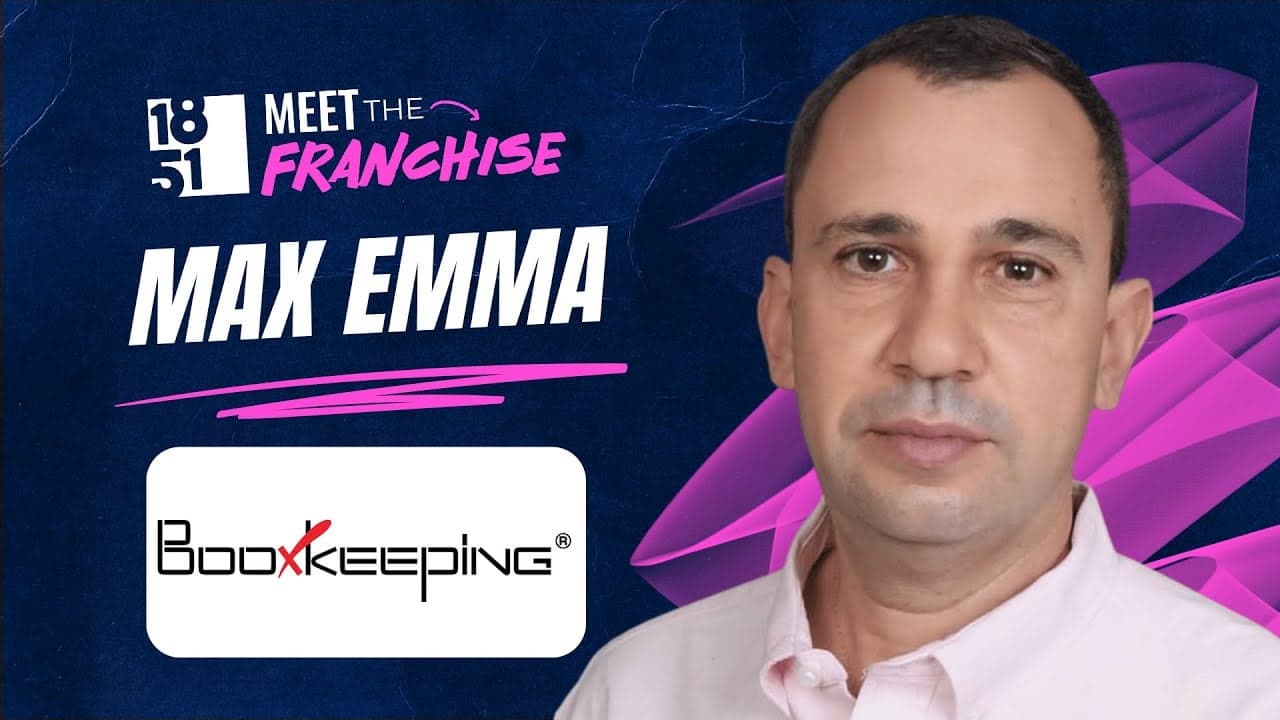
Future of Bookkeeping and Franchising with Max Emma
Emma discusses how the brand is redefining bookkeeping through franchise ownership - empowering professionals to build businesses with purpose and financial freedom.
When Max Emma co-founded BooXkeeping with his wife, Elena, he saw an opportunity to transform an essential business function into a scalable, supportive franchise system. Today, BooXkeeping stands as the only bookkeeping franchise in the United States, becoming a preferred provider for over 110 franchise brands nationwide.
“We’ve tripled the number of franchisees in the last 12 to 14 months,” Emma said. “I think we have the momentum right now. More and more clients realize bookkeeping can be outsourced and they can save money — all while our franchisees gain the tools and support to grow profitable businesses.”
Founded more than 20 years ago by two entrepreneurial immigrants with deep roots in finance and accounting, BooXkeeping provides outsourced bookkeeping services that eliminate the burden of tracking expenses and managing records. The company offers a rare combination of high-tech efficiency and human touch.
“We’re constantly expanding our capacity,” Emma said. “We now have access to more qualified employees in Colombia who all work U.S. time zones. That helps us support our franchisees even more efficiently.”
According to Emma, the ideal BooXkeeping franchisee is a “corporate refugee” — someone ready to leave traditional employment for the freedom of business ownership but who values structure, mentorship and community. Each new franchisee enters the brand’s comprehensive “3-6-9-12” model, which includes three months of accounting education, six months of waived royalties, nine months of sales training and 12 months of executive coaching.
“We train every franchisee from the ground up,” Emma said. “Elena even provides executive coaching that companies like PepsiCo pay thousands a month for — our franchisees get it free for a year. The goal is to help them reach peak performance while building a business they love.”
As BooXkeeping evolves, technology — particularly artificial intelligence — is playing an increasing role in the company’s growth. But rather than viewing AI as a threat, Emma sees it as an ally. “It helps us do in one hour what used to take four,” he said. “We pass those savings on to clients and franchisees. But at the end of the day, people still want human connection. That’s where our franchisees shine.”
Looking ahead, Emma and his team are introducing innovations designed to accelerate franchisee success from day one, including providing new owners with existing books of business to generate immediate cash flow.
“We’re reinventing how our franchisees launch,” Emma said. “They’ll start with clients from day one, become cash-flow positive faster and learn how to scale from there. We’re in this for the long haul.”
Ultimately, Emma says, BooXkeeping’s mission is about more than financial management — it’s about freedom.
“Our mission is to give our franchisees four freedoms: time, money, relationships, and purpose,” he said. “We’re not just building a bookkeeping company; we’re building a community of people who can live the lives they want.”
Emma joined 1851 Franchise Publisher Nick Powills on an episode of the “Meet the Franchise” podcast to discuss BooXkeeping’s rapid growth, how AI is shaping the future of bookkeeping and why the brand is built around the idea of freedom and support. A transcript of the interview has been provided below. It has been edited for brevity, clarity and style.
Nick Powills: I’m honored to talk to one of the smartest people I know in franchising — the quietly smartest person I know in franchising. Max, thanks for doing this.
Max Emma: Of course. Thank you so much.
Powills: We’ve done videos before, and there’s so much I want to cover. I want to skip ahead to the state of the union of BooXkeeping. What is going on with the business? Give me a sense of that, and then we’ll get into the heart of things. What’s the good news?
Emma: We tripled the number of franchisees in the last 12 to 14 months, which is great. I think we have momentum right now. I see more and more demand for bookkeeping services because clients realize it can be outsourced and they can save money. Unfortunately, that can mean eliminating some positions, but those would be eliminated anyway — the question is how much they’re going to pay for bookkeeping services.
Since BooXkeeping helps our franchisees find clients, we’re also seeing demand in buying BooXkeeping franchises. It’s our own positive cycle, which I’m very happy about. We also opened another office in Colombia, so we now have access to more qualified employees. They are all employees of BooXkeeping, and the beauty is they work in U.S. time zones. Since we provide staff to our franchisees, that makes our lives easier and thus makes the lives of our franchisees easier.
Powills: Paint the picture of the ideal franchisee. Who are they? What do they look like? What do you want out of them?
Emma: Not everybody is franchise-ready. Someone who is very Type A and doesn’t want to listen to anybody probably won’t do well with any franchise, because a very important part of franchising is following the rules and the blueprint.
For me, the avatar would be a “corporate refugee” who, for whatever reason, is leaving a job and wants to get into their own business while someone holds their hand. BooXkeeping provides full training. We have the “3-6-9-12” model: three months of accounting education, six months of no minimum royalties, nine months of sales training and 12 months of executive coaching. Training isn’t an issue. We also help with clientele and provide staff if needed. But the person has to listen and be ready to learn.
Powills: I want to break that down again. I’m thinking about the avatar of this franchise buyer. Traditional entrepreneurs don’t follow tracks; they disrupt. You and I are much more in the disruptor zone. Then you have the “corporate refugee,” who knows the contribution they’re giving to their company — they could work 50 hours one week and 30 the next and their salary doesn’t change much. There’s frustration there.
The biggest gap is that when you’re not an entrepreneur, you go from being an expert in one category — sales, marketing, ops, HR, accounting — to needing to be an expert in all of them on day one. What I heard you say is that you saw that problem across brands — you service them, and you help some find franchise owners when it’s not a fit for you — and you built a structure. Is that what you mean by starting with executive coaching and working backward? Are you letting people use training wheels before taking them off?
Emma: First, when we interview franchisees, it goes both ways. It’s not a one-way street. They’re choosing the right franchise, and we’re choosing the right franchisee. Our agreement is a 10-year agreement, so I have to see this person and talk to them for at least 10 years. I want to be comfortable and enjoy being around this person. I’m selfish in the interview process because I want to be with people who share our goals — growing ourselves and growing the business.
A lot of people have potential but just don’t know how to execute. This could be a long conversation, but I don’t think the educational system — at least when I went to university — gave me any training on how to run my own business. I got a degree in finance, did really well — straight A’s — but I don’t remember a single class that taught me how to be an entrepreneur. I think I had a class about entrepreneurship, but it had nothing to do with actually running a business.
So we give practical education — not theory like “entrepreneurship started in 1753.” We teach how to make the right decisions — at least the ones that feel right today. They might be wrong, but that’s fine because you’ll learn from it. Someone said, “‘Yes’ is the destination; ‘no’ is how you get there.” After a few years, you’re going to know your closing ratio. Let’s say you close only 2% of all leads. I’m actually looking for those 98 “no’s” because I know that 99 and 100 will statistically be closed agreements for me. It’s different for everybody, depends on the industry and the person, but training is super important.
Executive coaching is about getting our franchisees to peak performance. My co-founder Elena does this for companies like PepsiCo and other big companies. She’s a PhD, and companies pay up to $5,000 a month for this training. My franchisees and employees get it for free for at least one year. If you consider that, it’s actually more financial value than the franchise fee people pay us. I’m fine with that — I’m willing to invest in franchisees because we’re in it for the long haul, at least 10 years.
Powills: It’s a phenomenal answer. We could get philosophical about how other brands use franchise fees, but we don’t need to. The point is you’re creating a return on investment from day one with infrastructure. Universities teach theory and foundations, not how to get your hands dirty. You’re almost an active MBA program where the franchisee gets paid at the end, not the other way around.
Curious: You said things are moving in a positive direction. Is AI transformation going to open a larger pool of franchise candidates who could look at your business and say, “This is the solve for me”?
Emma: Honestly, I think so. Friends and colleagues send me articles saying bookkeeping will be eliminated by AI and it’s the end of an era. I agree AI will take some jobs, but I believe AI is my friend, not my enemy. We have to embrace it, and we do at BooXkeeping. What took three or four hours four or five years ago now takes one hour because AI makes it faster. We pass the savings on to our clients.
Maybe we won’t charge $500 for a service — perhaps $200 — but now we can do two and a half clients in the same time. As AI grows, maybe it takes 30 minutes and every client pays BooXkeeping $50 a month because everything else is done by AI. (By the way, this is not a promise to do your bookkeeping for $50 today — please don’t hold me to that.) I believe AI will do 80% to 85% of the work. Our plan is to go with the flow and continue passing savings to our franchisees and clients.
For now, BooXkeeping provides bookkeeping services for over 100 franchise brands in the U.S. At the end of the day, clients want to talk to a live person. When my team talks to them, we know about their families and what’s happening in their lives. You can’t get the same results with AI. People are paying for that human connection while most of the other work is done in the background by AI.
QuickBooks uses a lot of AI — that’s why it’s faster than five or six years ago, or even a year ago — and next year it’ll be better. There are bank feeds and backend processes. A lot of our competition, especially those who’ve been around a long time, refuse to embrace it. They’re like, “We’ll do it the same way we did 20 years ago.” I like that AI is here; it keeps us on our toes. We are a technology-forward company. I use AI as much as I can — honestly, I don’t have enough time to learn everything and it would make my life even easier — but I’m definitely not afraid of it. In the foreseeable future, people will still want human-to-human communication.
Powills: I think there’s going to be a trickle-down effect into franchising or business ownership even if you don’t buy a franchise. It will create more entrepreneurs. Younger folks are already finding ways — influencer marketing, even things like OnlyFans — to build businesses that pay them more than a traditional career. Older folks are navigating job disruption and fear that AI will eliminate jobs.
It’s like doing math before a calculator — it was harder. Now add AI; it makes some things easier to get to the answer. When we wrote research papers in high school, we went to libraries and used encyclopedias and a card catalog. Wikipedia disrupted that but didn’t remove information — it crowdsourced learning. I think AI will tighten things up in accounting.
The magic piece that remains essential — which you solve — is people still need people. They need coaching and a shoulder to cry on. AI won’t answer that. If AI creates turbulence, turbulence creates entrepreneurs. Entrepreneurs will look for businesses. You’ve built the infrastructure that can latch onto what they’ve built in their careers and help them figure out wealth creation for their families. You’re perfectly positioned.
Emma: I agree. Even if AI takes over the world, people still need to eat, so McDonald’s will still be there. I can see two or three people working at McDonald’s and everything else done by robots. That’s even better for franchises because of lower labor costs. The people who are freed up can open their own businesses.
Last week, a new franchisee wanted to be creative about territory. I remember doing the same exercise four or five years ago — it took me a day to analyze an unknown city’s ZIP codes and carve the best territory. I used AI — five minutes, and I was done. I just bought myself seven and a half hours. The result was way better than my manual work. Then I ran it through another AI — I like pitting one AI against another — and got an even better answer. You have to embrace AI; you can’t fight it. If there are fewer employees needed, you’ll be more profitable as a franchisee.
Powills: It may change the value of money and time. If labor costs less, maybe a McDonald’s hamburger actually costs less in the future. Then we won’t need to make as much money to buy it. Wealth will transition to how we use our time. I often say: Why race to retire at 65? Your 40s and 50s are your best health years to do what you want. We’ll need to transform what retirement means, how we pay bills and what things cost. I think that’s what you’re talking about.
Emma: Absolutely. Our mission statement at BooXkeeping is to provide our franchisees four freedoms: freedom of time, money, relationships and purpose. They’re integrated — you can’t have one without the others. That’s my “why.” I’m not doing this to get all the financials right — that’s boring. I’d have quit before I opened the company. I’m seeking the same freedom. I want to live my life today because we don’t know what happens tomorrow.
We teach our franchisees that you don’t have to work long hours — you have to work smart. Yes, you’ll put in hours if you want the business to succeed, but the days of seven days a week, 12 hours a day are past. People were dying young because of that. I don’t want that for anyone — not my franchisees, friends or family.
Powills: We think about our parents in the workforce — work, work, work — but maybe they weren’t working more; they just didn’t have the tools, so things took longer. The silver lining is franchisees get some of their life back, make enough to feed their families, save and do what they want. Those who want to press can reinvest and scale. I think five years from now will be very different — and better.
The support structure you talked about at the beginning is the most overlooked and undervalued piece by franchisors when it should be the most overvalued. If you oversupport the franchisee, you onboard them faster, give them tools to succeed — and Max makes more money. It’s not a hard equation.
Emma: It’s not a legal term — franchising isn’t a partnership — but I always tell franchisees to imagine we’re business partners. You happen to own 90% and we own 10%. Ten percent of zero is zero, so I definitely want you to succeed. Franchises make money on royalties. The franchise fee is written off; it actually costs more to get a franchise started for the franchisor than the franchise fee covers. Very few franchisors make money until around 100 units — that’s what I just read. Before 100 franchises are sold and operating, it usually costs more to get a franchise going.
Powills: A lot of franchisors don’t understand that, so they cut corners early, don’t reinvest and think they’re doing it for immediate lifestyle, when the upside-down line can be grossly different.
Great opening statement. What do the next 12 months look like? How optimistic are you? What hurdles do you foresee, and how will you overcome them?
Emma: Many potential franchisees look for SBA financing. BooXkeeping isn’t a very expensive brand, but having money to either buy clientele from day one or operate the business helps. A big hurdle is money being expensive — I’m talking about interest rates. As soon as interest rates come down, we’ll see more activity in the business world in general and for BooXkeeping in particular, because people can finance businesses more easily. When money was 2% to 3%, a lot of people were buying businesses because it was cheap. Now it’s more expensive.
There are things not up to me. What I can do — what our team is doing — is reimagining how we do business. We’re starting to offer franchisees clients from day one. When they buy the business, they have a book of business and start making money from day one — becoming cash-flow positive before they even “open the door.” McDonald’s can’t bus hundreds of people to a new store on opening day. We can give clients from day one. They’ll start making money, learn how to do it — because we provide trained staff — and we’ll teach them how to scale. Instead of just working in the business, they can work on the business and go get more clients. We’re in the last stages of reinventing that, which will be a huge change for the next 12 months.
We’re completing a rebranding exercise. BooXkeeping is a great brand — I co-founded it and love it — but we haven’t reimagined social media and other items for a while. We also just finished a huge internal project. We have an internal system called BooksDesk that we’ve had for years to support employees and franchisees — essentially an internal CRM. We just launched BooksDesk 2.0 with a mobile app and everything needed. Speaking of AI and technology, this will give franchisees a lot of free time to spend growing their businesses. It literally went live two weeks ago. We’re finishing training and it will be fully live across the company by November 1.
Powills: I want to go back to what you just said for anyone watching. One fear of becoming a franchisee is: “I’ll invest money, but how do I make money?” In your McDonald’s example, you open the doors, the logo and site bring some customers, then it’s a math equation — spend on marketing to get trial, then service them well to keep them.
What I heard from you is you’re building a formula so a buyer comes in and you feed them immediately. You give them the ability to buy into a book of business and then train them to maintain it, keep it, and grow it — as long as they follow your way. That cuts out a big fear. Did I get that right?
Emma: Yes, but I won’t sell a book of business to just anyone. If someone buys a book of business and plans to stay there, I don’t want them as franchisees. I want them to triple or quadruple it — to learn and build on it — because I want their 90% and our 10% to increase every month. If they just stay put — “we’re making a little money, so we’ll stay here” — they won’t be successful. I’d rather pass on that candidate and choose someone else. We’re saying quite a few “no’s.” People don’t like to hear that, but I’m doing it to protect the brand and the system.
Powills: In our last few minutes: I’m a teacher or a football coach. Can I buy into this business, or do I need an accounting/finance background?
Emma: You don’t need an accounting background. I’m not an accountant — don’t tell anyone! When I opened the business, I knew we had to hire a bookkeeper to do the work. I’m really good at going out and selling the services. But if you’ve never seen a financial statement, you’re afraid of numbers, and you hate numbers, this probably isn’t for you.
You don’t have to be a bookkeeper. We have people who are retired police officers and corporate refugees who’ve seen financial statements but aren’t accountants — they’re doing great because of the infrastructure we put behind them. We allow them to build relationships in their markets while we build infrastructure to make them stronger.
If you don’t like language, becoming a copywriter isn’t a good job. Same here — it’s not for everyone, but you absolutely don’t have to be a finance or accounting person. We fully train you and provide three months of accounting school.
Powills: I’ll close on this because it ties everything up. Even with AI, business adjustments and you perfecting the opportunity to create cash flow on day one, you still have to have passion connected to money to make it work. That won’t be disrupted. People have to care about what they do to make money from it. AI doesn’t disrupt that. You still have to care about what you’re doing, right?
Emma: Absolutely. You have to wake up every morning thinking, “I’m so happy I’m here. I want to get it done.” If you hate kids, buying a child care business is probably not a good strategy.
Powills: As I said at the beginning, you’re among the smartest people I know in franchising. It’s the way you break things down and look at each layer of how franchising works. If someone has watched this far, it costs nothing to fill out a form on the franchise website and have a conversation — you’ll get connected to Max. At the very least, he’ll help guide you in the right direction. If you say, “I hate numbers,” he’ll ask what you like. If you say, “I like puppies,” he’ll tell you to buy the dog business. That’s how this works.
Max, as always, this was great. Time flew by. We didn’t use AI to speed this one up — we still went 30 minutes. Thanks for doing this. I appreciate you.
Emma: Thanks for sharing your story, Nick. It’s always a pleasure talking to you.
Powills: I’m Nick. This was another episode of “Meet the Franchise.”
Watch the full interview here.
BooXkeeping
SPONSOREDEmma discusses how the brand is redefining bookkeeping through franchise ownership - empowering professionals to build businesses with purpose and financial freedom.
When Max Emma co-founded BooXkeeping with his wife, Elena, he saw an opportunity to transform an essential business function into a scalable, supportive franchise system. Today, BooXkeeping stands as the only bookkeeping franchise in the United States, becoming a preferred provider for over 110 franchise brands nationwide.
“We’ve tripled the number of franchisees in the last 12 to 14 months,” Emma said. “I think we have the momentum right now. More and more clients realize bookkeeping can be outsourced and they can save money — all while our franchisees gain the tools and support to grow profitable businesses.”
Founded more than 20 years ago by two entrepreneurial immigrants with deep roots in finance and accounting, BooXkeeping provides outsourced bookkeeping services that eliminate the burden of tracking expenses and managing records. The company offers a rare combination of high-tech efficiency and human touch.
“We’re constantly expanding our capacity,” Emma said. “We now have access to more qualified employees in Colombia who all work U.S. time zones. That helps us support our franchisees even more efficiently.”
According to Emma, the ideal BooXkeeping franchisee is a “corporate refugee” — someone ready to leave traditional employment for the freedom of business ownership but who values structure, mentorship and community. Each new franchisee enters the brand’s comprehensive “3-6-9-12” model, which includes three months of accounting education, six months of waived royalties, nine months of sales training and 12 months of executive coaching.
“We train every franchisee from the ground up,” Emma said. “Elena even provides executive coaching that companies like PepsiCo pay thousands a month for — our franchisees get it free for a year. The goal is to help them reach peak performance while building a business they love.”
As BooXkeeping evolves, technology — particularly artificial intelligence — is playing an increasing role in the company’s growth. But rather than viewing AI as a threat, Emma sees it as an ally. “It helps us do in one hour what used to take four,” he said. “We pass those savings on to clients and franchisees. But at the end of the day, people still want human connection. That’s where our franchisees shine.”
Looking ahead, Emma and his team are introducing innovations designed to accelerate franchisee success from day one, including providing new owners with existing books of business to generate immediate cash flow.
“We’re reinventing how our franchisees launch,” Emma said. “They’ll start with clients from day one, become cash-flow positive faster and learn how to scale from there. We’re in this for the long haul.”
Ultimately, Emma says, BooXkeeping’s mission is about more than financial management — it’s about freedom.
“Our mission is to give our franchisees four freedoms: time, money, relationships, and purpose,” he said. “We’re not just building a bookkeeping company; we’re building a community of people who can live the lives they want.”
Emma joined 1851 Franchise Publisher Nick Powills on an episode of the “Meet the Franchise” podcast to discuss BooXkeeping’s rapid growth, how AI is shaping the future of bookkeeping and why the brand is built around the idea of freedom and support. A transcript of the interview has been provided below. It has been edited for brevity, clarity and style.
Nick Powills: I’m honored to talk to one of the smartest people I know in franchising — the quietly smartest person I know in franchising. Max, thanks for doing this.
Max Emma: Of course. Thank you so much.
Powills: We’ve done videos before, and there’s so much I want to cover. I want to skip ahead to the state of the union of BooXkeeping. What is going on with the business? Give me a sense of that, and then we’ll get into the heart of things. What’s the good news?
Emma: We tripled the number of franchisees in the last 12 to 14 months, which is great. I think we have momentum right now. I see more and more demand for bookkeeping services because clients realize it can be outsourced and they can save money. Unfortunately, that can mean eliminating some positions, but those would be eliminated anyway — the question is how much they’re going to pay for bookkeeping services.
Since BooXkeeping helps our franchisees find clients, we’re also seeing demand in buying BooXkeeping franchises. It’s our own positive cycle, which I’m very happy about. We also opened another office in Colombia, so we now have access to more qualified employees. They are all employees of BooXkeeping, and the beauty is they work in U.S. time zones. Since we provide staff to our franchisees, that makes our lives easier and thus makes the lives of our franchisees easier.
Powills: Paint the picture of the ideal franchisee. Who are they? What do they look like? What do you want out of them?
Emma: Not everybody is franchise-ready. Someone who is very Type A and doesn’t want to listen to anybody probably won’t do well with any franchise, because a very important part of franchising is following the rules and the blueprint.
For me, the avatar would be a “corporate refugee” who, for whatever reason, is leaving a job and wants to get into their own business while someone holds their hand. BooXkeeping provides full training. We have the “3-6-9-12” model: three months of accounting education, six months of no minimum royalties, nine months of sales training and 12 months of executive coaching. Training isn’t an issue. We also help with clientele and provide staff if needed. But the person has to listen and be ready to learn.
Powills: I want to break that down again. I’m thinking about the avatar of this franchise buyer. Traditional entrepreneurs don’t follow tracks; they disrupt. You and I are much more in the disruptor zone. Then you have the “corporate refugee,” who knows the contribution they’re giving to their company — they could work 50 hours one week and 30 the next and their salary doesn’t change much. There’s frustration there.
The biggest gap is that when you’re not an entrepreneur, you go from being an expert in one category — sales, marketing, ops, HR, accounting — to needing to be an expert in all of them on day one. What I heard you say is that you saw that problem across brands — you service them, and you help some find franchise owners when it’s not a fit for you — and you built a structure. Is that what you mean by starting with executive coaching and working backward? Are you letting people use training wheels before taking them off?
Emma: First, when we interview franchisees, it goes both ways. It’s not a one-way street. They’re choosing the right franchise, and we’re choosing the right franchisee. Our agreement is a 10-year agreement, so I have to see this person and talk to them for at least 10 years. I want to be comfortable and enjoy being around this person. I’m selfish in the interview process because I want to be with people who share our goals — growing ourselves and growing the business.
A lot of people have potential but just don’t know how to execute. This could be a long conversation, but I don’t think the educational system — at least when I went to university — gave me any training on how to run my own business. I got a degree in finance, did really well — straight A’s — but I don’t remember a single class that taught me how to be an entrepreneur. I think I had a class about entrepreneurship, but it had nothing to do with actually running a business.
So we give practical education — not theory like “entrepreneurship started in 1753.” We teach how to make the right decisions — at least the ones that feel right today. They might be wrong, but that’s fine because you’ll learn from it. Someone said, “‘Yes’ is the destination; ‘no’ is how you get there.” After a few years, you’re going to know your closing ratio. Let’s say you close only 2% of all leads. I’m actually looking for those 98 “no’s” because I know that 99 and 100 will statistically be closed agreements for me. It’s different for everybody, depends on the industry and the person, but training is super important.
Executive coaching is about getting our franchisees to peak performance. My co-founder Elena does this for companies like PepsiCo and other big companies. She’s a PhD, and companies pay up to $5,000 a month for this training. My franchisees and employees get it for free for at least one year. If you consider that, it’s actually more financial value than the franchise fee people pay us. I’m fine with that — I’m willing to invest in franchisees because we’re in it for the long haul, at least 10 years.
Powills: It’s a phenomenal answer. We could get philosophical about how other brands use franchise fees, but we don’t need to. The point is you’re creating a return on investment from day one with infrastructure. Universities teach theory and foundations, not how to get your hands dirty. You’re almost an active MBA program where the franchisee gets paid at the end, not the other way around.
Curious: You said things are moving in a positive direction. Is AI transformation going to open a larger pool of franchise candidates who could look at your business and say, “This is the solve for me”?
Emma: Honestly, I think so. Friends and colleagues send me articles saying bookkeeping will be eliminated by AI and it’s the end of an era. I agree AI will take some jobs, but I believe AI is my friend, not my enemy. We have to embrace it, and we do at BooXkeeping. What took three or four hours four or five years ago now takes one hour because AI makes it faster. We pass the savings on to our clients.
Maybe we won’t charge $500 for a service — perhaps $200 — but now we can do two and a half clients in the same time. As AI grows, maybe it takes 30 minutes and every client pays BooXkeeping $50 a month because everything else is done by AI. (By the way, this is not a promise to do your bookkeeping for $50 today — please don’t hold me to that.) I believe AI will do 80% to 85% of the work. Our plan is to go with the flow and continue passing savings to our franchisees and clients.
For now, BooXkeeping provides bookkeeping services for over 100 franchise brands in the U.S. At the end of the day, clients want to talk to a live person. When my team talks to them, we know about their families and what’s happening in their lives. You can’t get the same results with AI. People are paying for that human connection while most of the other work is done in the background by AI.
QuickBooks uses a lot of AI — that’s why it’s faster than five or six years ago, or even a year ago — and next year it’ll be better. There are bank feeds and backend processes. A lot of our competition, especially those who’ve been around a long time, refuse to embrace it. They’re like, “We’ll do it the same way we did 20 years ago.” I like that AI is here; it keeps us on our toes. We are a technology-forward company. I use AI as much as I can — honestly, I don’t have enough time to learn everything and it would make my life even easier — but I’m definitely not afraid of it. In the foreseeable future, people will still want human-to-human communication.
Powills: I think there’s going to be a trickle-down effect into franchising or business ownership even if you don’t buy a franchise. It will create more entrepreneurs. Younger folks are already finding ways — influencer marketing, even things like OnlyFans — to build businesses that pay them more than a traditional career. Older folks are navigating job disruption and fear that AI will eliminate jobs.
It’s like doing math before a calculator — it was harder. Now add AI; it makes some things easier to get to the answer. When we wrote research papers in high school, we went to libraries and used encyclopedias and a card catalog. Wikipedia disrupted that but didn’t remove information — it crowdsourced learning. I think AI will tighten things up in accounting.
The magic piece that remains essential — which you solve — is people still need people. They need coaching and a shoulder to cry on. AI won’t answer that. If AI creates turbulence, turbulence creates entrepreneurs. Entrepreneurs will look for businesses. You’ve built the infrastructure that can latch onto what they’ve built in their careers and help them figure out wealth creation for their families. You’re perfectly positioned.
Emma: I agree. Even if AI takes over the world, people still need to eat, so McDonald’s will still be there. I can see two or three people working at McDonald’s and everything else done by robots. That’s even better for franchises because of lower labor costs. The people who are freed up can open their own businesses.
Last week, a new franchisee wanted to be creative about territory. I remember doing the same exercise four or five years ago — it took me a day to analyze an unknown city’s ZIP codes and carve the best territory. I used AI — five minutes, and I was done. I just bought myself seven and a half hours. The result was way better than my manual work. Then I ran it through another AI — I like pitting one AI against another — and got an even better answer. You have to embrace AI; you can’t fight it. If there are fewer employees needed, you’ll be more profitable as a franchisee.
Powills: It may change the value of money and time. If labor costs less, maybe a McDonald’s hamburger actually costs less in the future. Then we won’t need to make as much money to buy it. Wealth will transition to how we use our time. I often say: Why race to retire at 65? Your 40s and 50s are your best health years to do what you want. We’ll need to transform what retirement means, how we pay bills and what things cost. I think that’s what you’re talking about.
Emma: Absolutely. Our mission statement at BooXkeeping is to provide our franchisees four freedoms: freedom of time, money, relationships and purpose. They’re integrated — you can’t have one without the others. That’s my “why.” I’m not doing this to get all the financials right — that’s boring. I’d have quit before I opened the company. I’m seeking the same freedom. I want to live my life today because we don’t know what happens tomorrow.
We teach our franchisees that you don’t have to work long hours — you have to work smart. Yes, you’ll put in hours if you want the business to succeed, but the days of seven days a week, 12 hours a day are past. People were dying young because of that. I don’t want that for anyone — not my franchisees, friends or family.
Powills: We think about our parents in the workforce — work, work, work — but maybe they weren’t working more; they just didn’t have the tools, so things took longer. The silver lining is franchisees get some of their life back, make enough to feed their families, save and do what they want. Those who want to press can reinvest and scale. I think five years from now will be very different — and better.
The support structure you talked about at the beginning is the most overlooked and undervalued piece by franchisors when it should be the most overvalued. If you oversupport the franchisee, you onboard them faster, give them tools to succeed — and Max makes more money. It’s not a hard equation.
Emma: It’s not a legal term — franchising isn’t a partnership — but I always tell franchisees to imagine we’re business partners. You happen to own 90% and we own 10%. Ten percent of zero is zero, so I definitely want you to succeed. Franchises make money on royalties. The franchise fee is written off; it actually costs more to get a franchise started for the franchisor than the franchise fee covers. Very few franchisors make money until around 100 units — that’s what I just read. Before 100 franchises are sold and operating, it usually costs more to get a franchise going.
Powills: A lot of franchisors don’t understand that, so they cut corners early, don’t reinvest and think they’re doing it for immediate lifestyle, when the upside-down line can be grossly different.
Great opening statement. What do the next 12 months look like? How optimistic are you? What hurdles do you foresee, and how will you overcome them?
Emma: Many potential franchisees look for SBA financing. BooXkeeping isn’t a very expensive brand, but having money to either buy clientele from day one or operate the business helps. A big hurdle is money being expensive — I’m talking about interest rates. As soon as interest rates come down, we’ll see more activity in the business world in general and for BooXkeeping in particular, because people can finance businesses more easily. When money was 2% to 3%, a lot of people were buying businesses because it was cheap. Now it’s more expensive.
There are things not up to me. What I can do — what our team is doing — is reimagining how we do business. We’re starting to offer franchisees clients from day one. When they buy the business, they have a book of business and start making money from day one — becoming cash-flow positive before they even “open the door.” McDonald’s can’t bus hundreds of people to a new store on opening day. We can give clients from day one. They’ll start making money, learn how to do it — because we provide trained staff — and we’ll teach them how to scale. Instead of just working in the business, they can work on the business and go get more clients. We’re in the last stages of reinventing that, which will be a huge change for the next 12 months.
We’re completing a rebranding exercise. BooXkeeping is a great brand — I co-founded it and love it — but we haven’t reimagined social media and other items for a while. We also just finished a huge internal project. We have an internal system called BooksDesk that we’ve had for years to support employees and franchisees — essentially an internal CRM. We just launched BooksDesk 2.0 with a mobile app and everything needed. Speaking of AI and technology, this will give franchisees a lot of free time to spend growing their businesses. It literally went live two weeks ago. We’re finishing training and it will be fully live across the company by November 1.
Powills: I want to go back to what you just said for anyone watching. One fear of becoming a franchisee is: “I’ll invest money, but how do I make money?” In your McDonald’s example, you open the doors, the logo and site bring some customers, then it’s a math equation — spend on marketing to get trial, then service them well to keep them.
What I heard from you is you’re building a formula so a buyer comes in and you feed them immediately. You give them the ability to buy into a book of business and then train them to maintain it, keep it, and grow it — as long as they follow your way. That cuts out a big fear. Did I get that right?
Emma: Yes, but I won’t sell a book of business to just anyone. If someone buys a book of business and plans to stay there, I don’t want them as franchisees. I want them to triple or quadruple it — to learn and build on it — because I want their 90% and our 10% to increase every month. If they just stay put — “we’re making a little money, so we’ll stay here” — they won’t be successful. I’d rather pass on that candidate and choose someone else. We’re saying quite a few “no’s.” People don’t like to hear that, but I’m doing it to protect the brand and the system.
Powills: In our last few minutes: I’m a teacher or a football coach. Can I buy into this business, or do I need an accounting/finance background?
Emma: You don’t need an accounting background. I’m not an accountant — don’t tell anyone! When I opened the business, I knew we had to hire a bookkeeper to do the work. I’m really good at going out and selling the services. But if you’ve never seen a financial statement, you’re afraid of numbers, and you hate numbers, this probably isn’t for you.
You don’t have to be a bookkeeper. We have people who are retired police officers and corporate refugees who’ve seen financial statements but aren’t accountants — they’re doing great because of the infrastructure we put behind them. We allow them to build relationships in their markets while we build infrastructure to make them stronger.
If you don’t like language, becoming a copywriter isn’t a good job. Same here — it’s not for everyone, but you absolutely don’t have to be a finance or accounting person. We fully train you and provide three months of accounting school.
Powills: I’ll close on this because it ties everything up. Even with AI, business adjustments and you perfecting the opportunity to create cash flow on day one, you still have to have passion connected to money to make it work. That won’t be disrupted. People have to care about what they do to make money from it. AI doesn’t disrupt that. You still have to care about what you’re doing, right?
Emma: Absolutely. You have to wake up every morning thinking, “I’m so happy I’m here. I want to get it done.” If you hate kids, buying a child care business is probably not a good strategy.
Powills: As I said at the beginning, you’re among the smartest people I know in franchising. It’s the way you break things down and look at each layer of how franchising works. If someone has watched this far, it costs nothing to fill out a form on the franchise website and have a conversation — you’ll get connected to Max. At the very least, he’ll help guide you in the right direction. If you say, “I hate numbers,” he’ll ask what you like. If you say, “I like puppies,” he’ll tell you to buy the dog business. That’s how this works.
Max, as always, this was great. Time flew by. We didn’t use AI to speed this one up — we still went 30 minutes. Thanks for doing this. I appreciate you.
Emma: Thanks for sharing your story, Nick. It’s always a pleasure talking to you.
Powills: I’m Nick. This was another episode of “Meet the Franchise.”
Watch the full interview here.
Sign up for the 1851 Franchise newsletter to get our biggest stories before everyone else
By signing up, you agree to our user agreement (including class action waiver and arbitration provisions), and acknowledge our privacy policy.

No related articles found