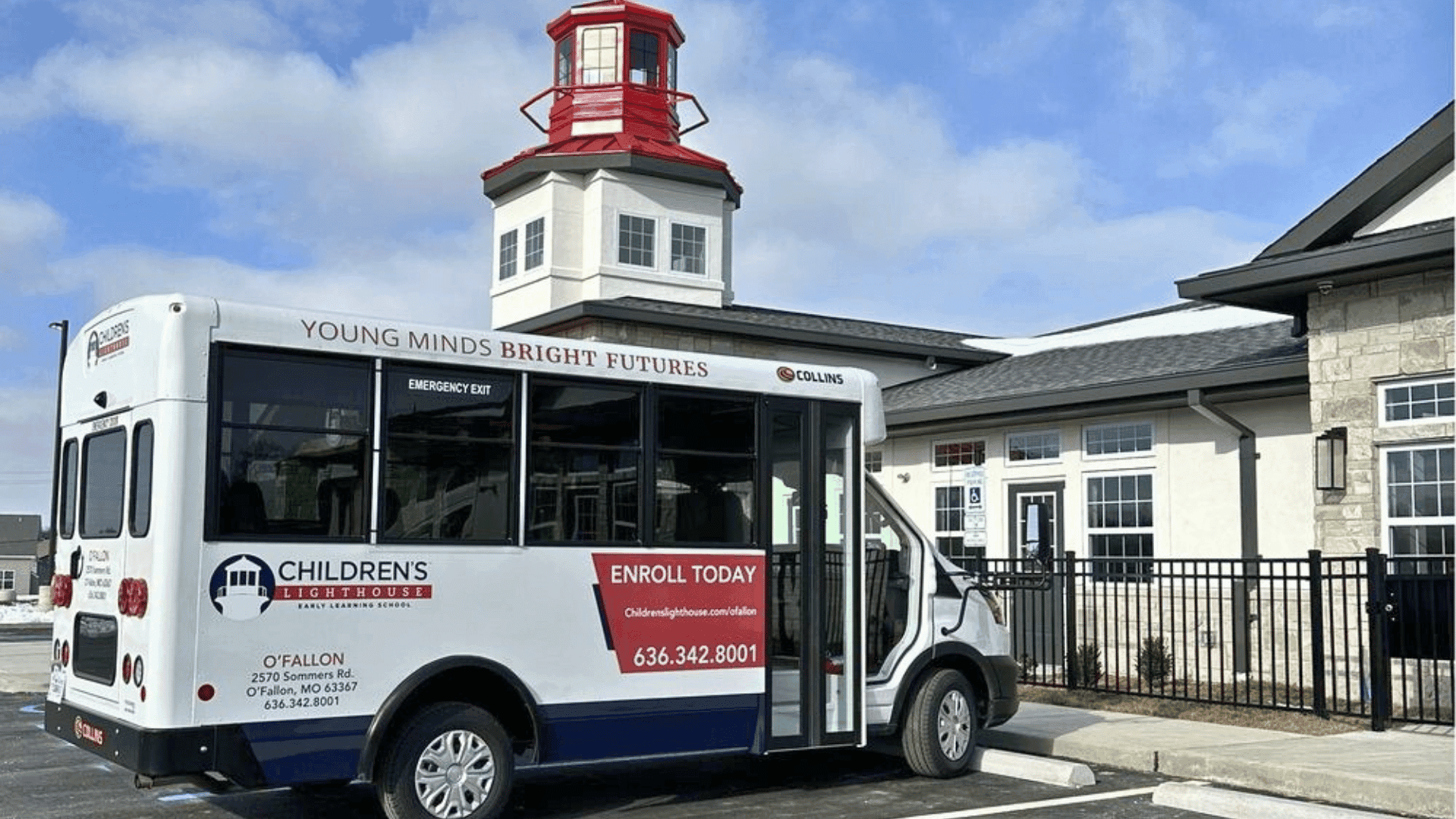
For prospective franchisees exploring the early education industry, one of the biggest questions is often: Will I be able to secure financing? According to lenders, the answer becomes much easier when a franchise system demonstrates long-term stability, strong unit performance and consistent franchisee success, and that is exactly where Children’s Lighthouse stands out.
With a FUND score of 805, a 97.3% compounded historical unit success rate and five consecutive years of 100% annual unit success, Children’s Lighthouse has positioned itself among the top-performing franchise systems in the country. Those metrics directly impact how banks and SBA lenders evaluate financing opportunities for franchise candidates.
Why Early Education Is an Attractive Category
Samantha Martin, Senior Business Development Officer at Huntington Bank, explained that, from a lender’s perspective, demand for quality childcare remains resilient regardless of broader economic conditions.
“What I like about early education is that it is very stable,” Martin said. “Most families have dual-income households and they need reliable, quality childcare. Regardless of what the economy is doing, people are going to need this.”
That recurring need creates recurring revenue, which is something lenders pay close attention to. “Once you get a child in the school, you want to keep them from infant to pre-K,” Martin said. “When you layer in a brand with a successful track record and they have nearly 100 units and a 97% success rate, you have a great industry and you have a great track record.”
The FRANdata FUND report reinforces that point. Over the past eight years, Children’s Lighthouse achieved a 97.3% compounded historical unit success rate, placing the brand at “the upper end of the top quintile among all concepts in franchising.”
Why FUND Scores Matter to Banks
Lenders rely heavily on tools like the FUND score to evaluate risk. Martin noted that the FUND™ analysis evaluates multiple areas of franchise performance, including unit-level outcomes, franchisee success, franchisor financial health and operational stability.
The FRANdata report highlighted several factors contributing to Children’s Lighthouse’s strong rating, including:
- Strong franchisor financial performance
- Low transfer activity and no refranchising
- Recurring revenue self-sufficiency
- Strong franchisee-franchisor relationships
- Consistent average unit revenue growth
The Advantage of a Proven Franchise Model
One of the biggest differences between financing a franchise and financing an independent startup is predictability.
“Franchise lending has some predictability to it,” Martin said. “In Children’s Lighthouse’s case, they have nearly 100 units. You can see how those units have done over the past 20-plus years, and you can see that to understand the business and how successful the franchisees have been over a long period of time.”
By comparison, independent startups often rely heavily on projections and assumptions.
“When you are underwriting a new franchise or business, you are relying on projections,” Martin said. “Those can be all over the place. That track record makes you feel a lot better about lending to a new business.”
Lenders also value the infrastructure and support systems that come with established franchise brands. “If you are starting a new school or building a new school, having a team that is going to support you in getting that done, and all the training and support, the lender likes knowing that,” Martin said. “Banks like franchise businesses because there is another level of screening there from the franchisors.”
The Importance of Strong Revenue Growth
Martin pointed to Children’s Lighthouse’s revenue history as another reason lenders may view the brand favorably, with average unit revenues increasing from about $1.5 million in 2021 to $2 million in 2024 and a 9.9% compound annual growth rate that outpaced industry peers.
“Over time, these businesses want to show revenue growth because it means they are growing, succeeding and staying in business,” Martin said. “It is actually growing and improving.”
Martin also emphasized that franchisee satisfaction and operational stability matter just as much as top-line performance.
“In terms of system stability, it’s good to know how the franchisees rate the franchisor in terms of support and stability,” she said. “You want to lend money to a franchise that is doing all those things.”
What Candidates Often Misunderstand About Financing
For first-time franchisees, the financing process can feel intimidating, especially for those unfamiliar with SBA lending. “If it’s your first time borrowing money, you might think it’s like a mortgage,” Martin said. “But there is a lot more that is factored into addressing risk with a business loan like this. It’s not only about personal finances. It’s also about relevant business experience. Have they managed people, budgets, etc.? Would they do well in this industry? Are they a hard worker? Are they going to be kind and empathetic to parents?”
She noted that franchise systems help reduce risk because franchisors conduct their own screening and provide operational support throughout the process.
“A lot of lenders won’t even entertain an independent school,” Martin said. “A non-franchise route is going to have to rely on borrowing money from family and friends or getting investors. At the end of the day, banks want businesses that are repeatable. When you have brands like Children’s Lighthouse that have strong revenue growth and system stability, that is the kind of borrower that banks want to lend to.”
Register here for an upcoming Live Webinar with 1851 Publisher Nick Powills and Samantha Marin on June 23, at 1 pm ET/10 am PT, as they discuss why Children’s Lighthouses' strong revenue growth and high fund score make funding options more accessible for entrepreneurs.
To find out more information on costs to buy this franchise, please visit https://1851franchise.com/childrens-lighthouse.