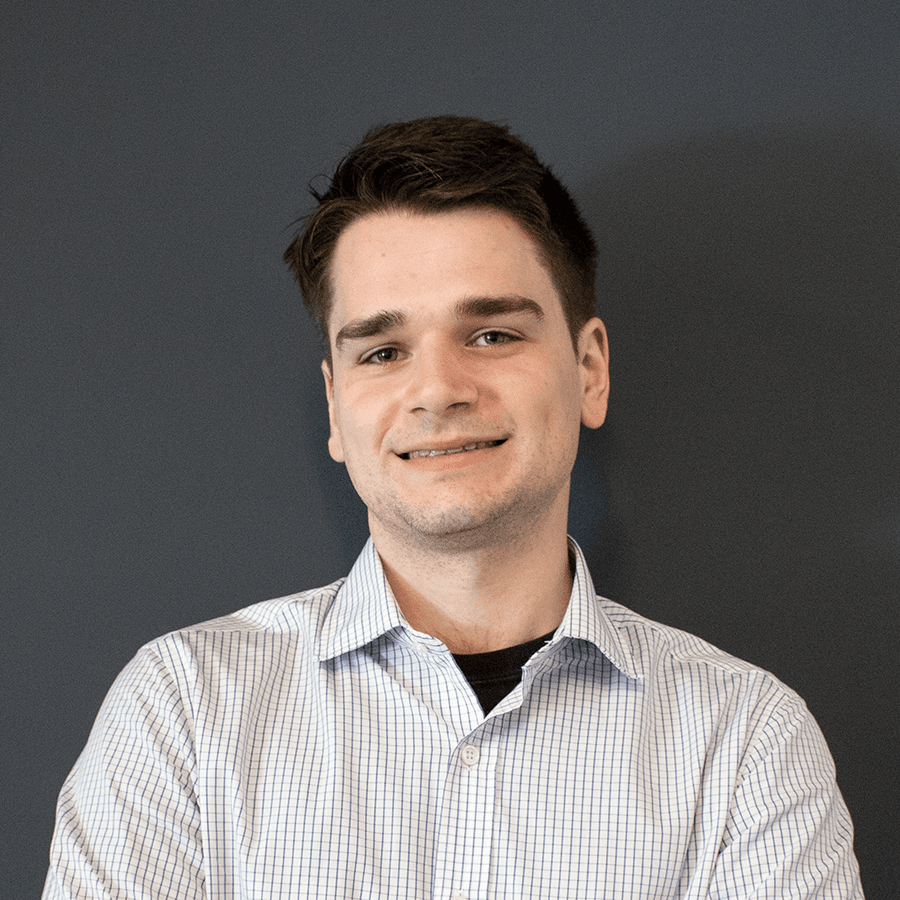
In a recent “Meet the Zee” webinar hosted by 1851 Franchise Publisher Nick Powills, Kansas-based Children’s Lighthouse franchisees Madison and Tyler Wiggins opened up about their bold decision to leave the corporate grind and invest in a future that aligned with their values — family, purpose, and community.
The couple, both just 28 years old, didn’t follow the traditional timeline of career-to-retirement. Instead, they decided to jump early. Now, as the owners of two Children’s Lighthouse schools in Kansas City, they’re balancing the demands of business ownership with their mission to bring premium, emotionally supportive early education to local families just like theirs.
From Corporate to Purpose-Driven
Both Madison and Tyler came from strong corporate backgrounds, but as working parents with two young children, they knew the lifestyle wasn’t sustainable long-term.
“You leave your kids every day and think, ‘I’m going to work for someone else, I’m putting in the hours for someone else, I’m traveling for someone else.’ Then you realize — I could be putting the same effort into something I’m building for my family and my kids’ future,” Madison said. “I could be spending more time with them. You show up to the office and think, ‘If I put this effort into something of my own, I could create something that lasts and benefits my family for years to come.’”
The idea of building a legacy resonated. And with Madison’s father being a longtime franchising professional, they leaned on his advice: Don’t start from scratch — explore franchising. “You don’t want to be trying to learn how to run a business and an industry at the same time,” Tyler recalled her dad saying.
Why Children’s Lighthouse?
Interestingly, Madison and Tyler didn’t immediately consider the childcare sector — despite being frustrated with their own search for quality day care. They initially looked into home services franchises, believing the smaller investment felt safer. But after evaluating the return potential, Tyler realized, “That’s not what I’m risking this for… we may as well go big.”
When two Children’s Lighthouse schools unexpectedly came up for resale in their area, they had to act fast.
Making a snap decision on such a major investment came with “a tremendous amount of fear,” Tyler admitted. But they leaned into their entrepreneurial roots and long-term vision.
“There’s a lot of risk in starting a business, but we also saw a lot of risk in getting to 40 or 45 and realizing it was too late,” Tyler said. “By then, our first kid would be out of the house, and we would’ve missed the window to push ourselves upward. Starting a business almost felt like the safer bet when we thought about what we wanted for our family.”
What Set the Brand Apart
For the Wigginses, Children’s Lighthouse’s focus on preparing children for how to learn — not just what to learn — was a game-changer. “Social and emotional development often gets neglected in childcare, and it was great to find a brand that values that and bakes it into their curriculum,” Tyler said.
They were also impressed by the culture and support offered by the corporate team. “They’re kind, down-to-earth, and they’ve been incredibly helpful throughout this process,” Madison said. “We came in with no childcare experience — aside from me being an overprotective mom who Googled licensing regulations when sending my kids to day care.”
Building a Legacy — and Looking Ahead
Now three months into operating both locations, the Wigginses are settling into their rhythm — with Madison leading one facility and Tyler the other. They’re clear-eyed about the challenges but remain focused on their north star: growing a business that gives back to their community and supports their family.
“We want to continue improving our two locations — make them the best in the area,” Tyler said. “From there, we’re open to expanding. Whether that’s a third location or supporting others in the system, we want to keep growing. But we want to do it the right way — not just for growth’s sake.”
To find out more information on costs to buy this franchise, visit: https://1851franchise.com/childrens-lighthouse.
A transcript of Wiggins’ interview with Powills appears below. It has been edited for brevity, clarity and style.
Nick Powills: All right, Madison, Tyler — I'm very excited to talk to you both for many reasons, including the fact that you got into franchising so young. But let’s start with your franchise story, because I think it starts with parenting. So I’d love to hear your background. How did you even fall into franchising?
Madison Wiggins: My dad has been in franchising for the last 20 years. I’ve seen how beneficial franchising can be when starting a business — especially when you're starting out young. I was in corporate America for about five years and realized maybe there was something else out there. We had two kids and were sending them to day care every day. Then we started looking into what it would look like to start a business.
As you do when you have great people around you, you ask for advice. The biggest piece of advice we got was, “If you're going to start a business, maybe go the franchise route.” And that's kind of how we fell into it.
Nick: Okay, we’ll dive into growing up in a franchise family in a second, but I’m curious — five years in corporate America, and you, Madison, had already seen what entrepreneurship looked like. You’re both in these corporate careers. Was something grabbing you on the other side? What were those conversations like between the two of you?
Madison: You leave your kids every day and think, “I’m going to work for someone else, I’m putting in the hours for someone else, I’m traveling for someone else.” Then you realize — I could be putting the same effort into something I’m building for my family and my kids’ future. I could be spending more time with them. You show up to the office and think, “If I put this effort into something of my own, I could create something that lasts and benefits my family for years to come.”
Tyler Wiggins: And we were fortunate. We both had pretty solid corporate careers. I still work my corporate job — it’s stable, predictable, and gives us the freedom to start something on our own, even knowing we won’t be cash-flow positive for a while.
For me, the conversation was: We could keep saving her paycheck every week, but where does that put us in five years? Versus if we sacrifice that paycheck now to try to build something of our own — that has a different long-term payoff. And that’s been especially helpful since we’re trying to start two daycares at once, not just one.
Nick: If you didn’t have Madison’s family background in franchising, would that have made this decision harder?
Tyler: Yeah, probably. My grandfather started a veterinary practice, and my dad had a truck brokerage company — neither were franchises; both were true startups. So their stories looked different from Madison’s. What I understand about franchising is that it might be slower growth, but it’s a more guaranteed path. Of course, nothing is ever guaranteed, but it felt safer.
Having her family involved was helpful because they have a tremendous amount of experience. You mentioned we’re pretty young — imposter syndrome is a real thing. Having someone we could run ideas past — someone to validate we were thinking about things the right way — that was tremendously beneficial. Our story would’ve looked very different without that support.
Nick: You're both from entrepreneurial families. I think about this in terms of my own kids — what are they watching mom and dad go through? Are they thinking, “Do I build a career first, or go straight into building something of my own?” That’s what I’m intrigued by — you guys saw this model and still said, “Okay, we’ve got our college degrees and careers, but how do we build something bigger for our family?”
Tyler: Yeah, a few things come up with that. Madison and I always pictured her being a stay-at-home mom at some point. Since we started dating at 16, we’ve said that we never wanted work to get in the way of our family development. That’s not a sacrifice we’re willing to make.
So we structured our lives assuming we’d live on one income, which made it easier to take this risk. A lot of 28-year-olds want a lifestyle that takes two incomes to afford, but we were already making lifestyle sacrifices for financial stability. That helped us make the jump.
Nick: Were there any moments where you thought, “Should we not do this?” Did fear creep in as you approached the decision point?
Tyler: A tremendous amount of fear, obviously. I don’t know if you know the full story of how we got into this, but we were looking at different franchises, and we happened to talk to Children’s Lighthouse at the same time two units were coming onto the market in Kansas City. We had to act fast. It was a snap decision, and we evaluated afterward whether it was right. We feel like it was, but it definitely wasn’t guaranteed. It was a leap of faith in every sense of the word.
Nick: I’ve interviewed hundreds of franchisees, especially those over 60, and when I ask what they would have done differently, it’s always, “I would have done this earlier.” There’s always something that gets in the way. But your pressure decision — two schools on the market, say yes or no — maybe helped you get over the fear.
Tyler: Yeah. There’s a lot of risk in starting a business, but we also saw a lot of risk in getting to 40 or 45 and realizing it was too late. By then, our first kid would be out of the house, and we would’ve missed the window to push ourselves upward. Starting a business almost felt like the safer bet when we thought about what we wanted for our family.
Nick: So many people don’t make that decision. There are a million reasons not to. Okay, you make the decision that franchising is of interest — how did you go about finding the right fit?
Tyler: I started looking into starting a business about a year before we found Children’s Lighthouse. Originally, I planned to start a business from scratch — mostly in the home services industry. I talked with her dad and some other mentors. I’d say, “Does this idea make sense? Here are the pros and cons — help me think it through.”
One thing her dad said was, “Have you looked at the failure rate of startups?” And I said, “Well no — I’m obviously not going to fail.” He said, “Well, most people don’t fail immediately — they fail after three or five years.”
Then he asked if I’d ever considered franchising. I told him franchises didn’t seem very interesting — they’re tried-and-true business models, and you’re just executing. But his advice stuck: “You don’t want to learn how to run a business and learn an industry at the same time. You don’t have experience in either right now.”
And he was right — I couldn’t argue. So I started looking into home services franchises and quickly realized these franchise companies are legitimate companies in their own right — and you’re their customer. I felt out of my depth talking to people who knew a lot more than I did. That’s when I started pulling in her dad to help me vet some of the brands.
Frankly, he saw through a lot of the stuff I would’ve been convinced by and might’ve put real money into. I’m extremely grateful he was willing to do that, and grateful I could put my pride aside and say, “Hey, I need help.”
Madison: And in the background of that happening, we were complaining about how expensive childcare was — and how hard it was to find. Eventually, we ended up on a call with a couple of day care brands.
Nick: So now you’re looking at childcare franchises. You’ve got more knowledge and guardrails. Were you looking at bigger brands? Did you even know Children’s Lighthouse existed?
Madison: Yeah, we knew of Children’s Lighthouse — we’d heard of it in the area. But honestly, I didn’t take the day care idea seriously at first. We’re pretty risk-averse, and home services felt like a smaller investment with smaller risk. That’s where my dad pushed us — he said, “Take a little more risk. Step outside your comfort zone.”
It became clear that I would be the one running day-to-day, and we’d need childcare anyway. So we thought — why not combine business ownership and motherhood? I could be around my kids. So we started looking into the premium day care space.
I didn’t even attend the Discovery Day, to be honest. I thought, “We’re not doing this.” Then Tyler called me on a Wednesday and said, “I’m going to Texas on Friday to meet with corporate.” I don’t even think I knew he’d been talking to them yet.
Tyler: Yeah, it was a fast decision — one we’re glad we had the chance to make. We saw that Children’s Lighthouse didn’t have as many locations in our area, compared to other premium brands. That felt like an opportunity — to bring the true Children’s Lighthouse brand and curriculum to Kansas City. We’ve seen the benefits our kids have gotten from premium childcare, and we wanted our community to have access to that too.
And just to talk about the risk difference between home services and childcare — obviously the investment is a lot larger. In home services, we were looking at small, home-based businesses we’d pay for out-of-pocket. We figured we were young enough to recover from a bad decision.
But then I started asking — what’s the upside here? I’d see success stories like, “This guy is making $95,000 a year,” and I’d think — that’s not what I’m risking this for. I know entrepreneurship means sacrifice. That’s not a level I’m willing to sacrifice for.
So the way I see it, the difference between falling 1,000 feet and 10,000 feet is the same — you’re done either way. So you may as well go big.
Nick: Right. The upside potential is greater in childcare. Home services can be limited — often a “man in a van” type of business. You’d have to give up your salary to make a little money per unit as you scale, and that’s hard. In your category, if you do it right, there’s real ROI — and Kansas City has room to grow. Did you go to other Discovery Days? Was there anything that turned you off?
Tyler: We talked to a few other premium childcare providers — I won’t name them — but what stood out about Children’s Lighthouse was their approach to curriculum. It wasn’t “We’re going to teach everything kids will learn in kindergarten.” It was, “We’re going to prepare them for how they’re going to learn in kindergarten.”
Social and emotional development often gets neglected in childcare, and it was great to find a brand that values that and bakes it into their curriculum.
And, again, the timing worked out — these two units became available from someone who clearly wanted out of the industry. It was the intersection of a unique opportunity and us being prepared to take it.
Madison: And I think it’s important to mention the corporate team. They’re kind, down-to-earth, and they’ve been incredibly helpful throughout this process. We came in with no childcare experience — aside from me being an overprotective mom who Googled licensing regulations when sending my kids to day care.
But the team helped us navigate it all. We jumped in with both feet, and they’ve supported us every step of the way.
Nick: That’s a good way to phrase it — you’re a Google-trained daycare mom. So now you’re here — you’ve made the decision, and the corporate team is supporting you. Let’s talk about your ramp-up and what your first year looked like. What were the toughest parts?
Madison: I think I underestimated how long it would take to turn around some of the challenges we inherited. I thought I’d be able to fix everything in 30 days — turns out that’s not how it works. You’re dealing with people — with families and children — and that takes time and trust.
Another thing was staffing. Everyone warned us that staffing would be hard, and they were right. It’s still one of the hardest parts of the job. But we’ve learned a lot. We’ve learned how to better vet candidates, how to retain our best teachers, and how to build a culture that people want to be part of.
Tyler: And on the operations side, it was a big lift. We were improving systems, updating processes, training staff, working through licensing updates — there was a lot going on all at once. It wasn’t glamorous, but we kept showing up.
Nick: What’s your approach to leadership? How do you keep the team motivated and engaged?
Madison: We really try to lead with empathy. These are people taking care of children — it’s important, emotional, and sometimes exhausting work. I’ve worked hard to be present and supportive. I try to know what’s going on in each classroom, recognize people’s efforts, and be transparent when things are hard.
We’ve also worked to create a culture of accountability — where people feel ownership of their role. That doesn’t happen overnight, but we’ve seen a huge change over the past year.
Tyler: And we believe in hiring people who are better than us in specific areas. We’ve got directors and teachers who are amazing at what they do. Our job is to give them the tools, the support, and the runway to do their jobs well.
Nick: That’s a strong perspective — and very true in franchising. So let’s talk about what success looks like for you. What’s your vision for the future?
Tyler: We want to continue improving our two locations — make them the best in the area. From there, we’re open to expanding. Whether that’s a third location or supporting others in the system, we want to keep growing. But we want to do it the right way — not just for growth’s sake.
Madison: Yeah, and we’re proud of what we’ve built so far. It hasn’t been easy, but it’s been meaningful. We see the impact we’re making in families’ lives — and that’s what drives us. We want to be a trusted part of our community, where people know their kids are safe, loved, and learning.
Nick: Well, you two are doing a great job — and your story is going to inspire a lot of people. Thanks for sharing it with us.
Tyler: Thanks for having us.
Madison: Thank you!
Watch the full webinar here.
To find out more information on costs to buy this franchise, please visit https://1851franchise.com/childrens-lighthouse.