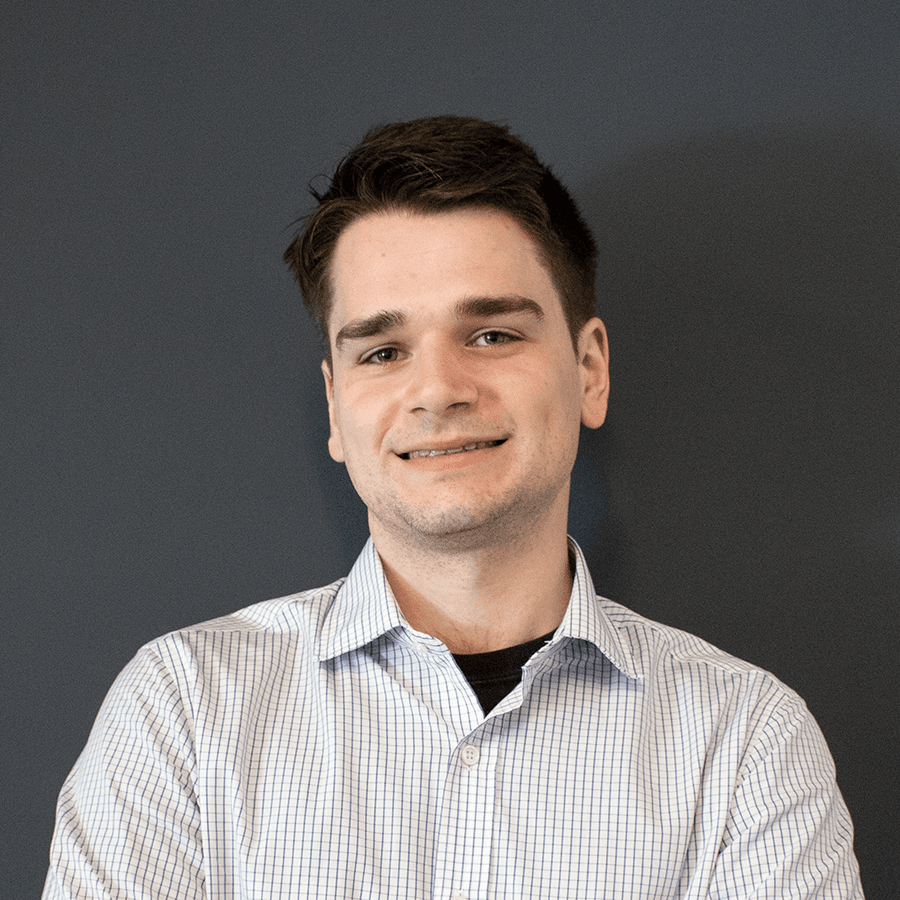
1851 Franchise Publisher Nick Powills recently sat down with Latisha King, Director of Field Operations at Children’s Lighthouse, to discuss how the brand’s dedicated Franchise Business Coach (FBC) program ensures franchisees are never alone on their journey. In this “Meet the Franchise” webinar, King shares her perspective on support, culture, and the traits that make franchisees thrive in this unique early education system.
From Classroom Teacher to Franchise Support Leader
King has more than 25 years of experience in early education, much of it within Children’s Lighthouse. Her journey with the brand began in 2002, when she was a young mom who simply wanted to teach.
“I raised all three of my boys through Children’s Lighthouse, if you want to say that,” she said. “I worked my way up from the classroom to Assistant Director, then became a School Director in 2007. In 2018, I joined the franchise office because I wanted to use all the knowledge I had gained to help other people run a successful business.”
That “boots on the ground” background, she notes, gives her credibility with franchisees. “I was in it day-to-day,” King said. “I understand the struggles to staff, or when several people call in on the same day and the kids are still coming. I’ve experienced it. So when an owner calls me and says, ‘How do I handle this?’ I can say, ‘Here’s what worked for me.’”
The Role of the Franchise Business Coach
King now leads a team of five FBCs who support franchisees in every aspect of operations.
“We play a big part in the beginning when franchisees are going through training and onboarding,” she said. “Once they open, that’s when the Franchise Business Coach steps in. They’re there to help owners with day-to-day business and provide as much information as possible so they can be successful.”
King describes her own day-to-day as busy and rewarding. “I’m fielding calls, answering questions, and supporting the FBCs. If an owner has a question about labor percentage or how to improve something, we talk through it. We give recommendations on what they can look at in their operations and how to overcome challenges.”
The key message: Franchisees always have someone to lean on. “Nothing’s too crazy that comes across our desk,” she said. “Lean into us. Ask. That’s what we’re here for.”
Lessons in Leadership, Empathy, and Culture
Part coach, part psychologist — that’s how Powills describes King’s role with Children’s Lighthouse. King leans into it. “Every day is a challenge,” she said. “I feel the most helpful when I’m getting a lot of calls, and we can overcome those challenges together. That’s a good day.”
When asked what characteristics make for a great franchisee, King highlights flexibility, humility, and trust in their team. “Every day won’t be perfect,” she said. “The best owners aren’t micromanagers. They coach their school directors and give them the tools to run the business successfully, instead of trying to do everything themselves.”
She emphasizes that positive culture drives performance. “Some of our most successful schools are the ones with the best culture. It starts at the top,” she said. “People want to work for great people, and if you provide what they need and support them, they’ll stay motivated.”
Supporting Through Storms
King also reflects on her leadership during the COVID-19 pandemic. “That was a trying time for everyone. But we kept in constant contact with every school and every owner. We read every executive order, held daily Zoom calls, and figured out solutions together,” she said. “None of our schools closed during that time, which is amazing.”
Powills notes that many brands lost sight of empathy after COVID, but Children’s Lighthouse maintained its family-first mindset. King agrees. “From the beginning, this has always felt like a family. We always look at what’s best for the franchisee. That’s at the heart of everything we do.”
A Different Kind of Support
So what sets Children’s Lighthouse support apart from other brands?
“Our business coaches have fewer schools than many other systems,” King said. “That means more personalized support. And our president has allowed us to grow the team as needed. If we need another coach to make sure franchisees get the help they need, we do it. That’s the great thing about us — we’re willing to put the right people in place to provide the best support possible.”
For King, the takeaway is simple: “Positive culture creates positive outcomes. And at Children’s Lighthouse, that culture starts at the top and trickles down to every franchisee.”
A transcript of King’s interview with Powills appears below. It has been edited for brevity, clarity and style.
Nick Powills: Right, Latisha. What I’d like to start off with is your backstory. Now you’re in a role of supporting franchisees, which we’ll get into, but how did you get to this point? What’s your backstory on how you got here?
Latisha King: My backstory is I’ve been in this industry for, I’d say, 25 years now. I actually started with Children’s Lighthouse back in 2002.
I was a young mom and I just wanted to teach — I loved children. I was lucky enough to get an opportunity to start working for Children’s Lighthouse, and it pretty much went from there. I raised all three of my boys through Children’s Lighthouse, if you want to say that.
I worked my way up from the classroom to being an assistant director, and then became a school director in 2007. I just kept moving up from there.
In 2018, I came to the franchise office because I really wanted to continue being part of Children’s Lighthouse in a different way. I wanted to use all the knowledge I had gained over the years from so many great people before me. I wanted to share that knowledge, train, and help others run a successful business.
Powills: I think that gives you an interesting perspective — one, having your children go through Children’s Lighthouse, two, working as an educator, and now being in a role that supports franchisees. Take me through your day-to-day today, and then we’ll get into the process and the impact.
King: Definitely. A lot of what we do for franchisees happens at the very beginning, when they’re going through development and training. We help train and onboard them and their leadership teams, making sure they’re ready to run a successful school.
Once they open, that’s when we bring on the Franchise Business Coach. Right now, I supervise and lead a team of five Franchise Business Coaches. We’re there to help owners along the way with their day-to-day business and provide as much information as possible. We just want them to be successful.
My day-to-day is busy. I’m fielding calls, providing information to the FBCs when they have questions. For example, if an owner has a question about labor percentages and how to improve them, we talk it through. We make recommendations, point out things to look at in daily operations, and help them find solutions.
Powills: When a franchisee comes to you with a turbulent challenge — which is inevitable in business ownership — part of the advantage of a franchise system is that they can lean back on the franchisor. Does it give you a different lens, because you grew up in the system, where no one can say, “You don’t know what it’s like”?
King: That’s so true. I was in it day-to-day. I understand the struggles of trying to staff, or when several people call in sick on the same day but the kids are still coming. I’ve been through it.
I also had the benefit of great mentors — regional managers, CEOs, presidents. I learned a lot from them. And I learned some things the hard way too, like everyone does. So when an owner calls me and says, “You’ve probably experienced this before, how did you handle it?” I can give them real solutions based on experience.
I get those calls often. And it’s great to know I can help them any way possible.
Powills: With all this coaching you do, it almost sounds like, “Lay down on the couch, I’m going to be your psychologist to help you through this.” So, for someone looking at the business, what would you tell them to get comfortable with before jumping in?
King: We know this industry very well. We’ve been through just about everything — even the most challenging times — and we’ve overcome them.
I tell them: Things are going to happen. You can only control what you can control. As long as you learn something and put processes and systems in place, you’ll be fine. That’s one of the great things about us — we have so many systems already in place. It’s probably been done before, so we always have a solution.
Lean on us. That’s what we’re here for. Nothing’s too crazy to come across our desk.
Powills: What makes a good day for you? Meaning, what kind of feedback from a franchisee, or what event, makes you feel like it’s a really good day?
King: Honestly, I take every day as a good day. Every day is a challenge. But I feel the most helpful when I’m getting a lot of calls and questions, when challenges are happening and we can work through them. Those are the good days.
Every day is different in this industry, especially in my role supporting business coaches, owners, schools, and all the systems we have in place. I’m thankful to be with a company that allows me to collaborate, think outside the box, and implement new ideas. Even if it’s not the industry standard, if I know we can do it better, we try it.
So for me, every day can be a good day, depending on what gets done.
Powills: Money doesn’t have to be the driver of this next question. When you think of a great franchise owner — not necessarily the number one in the system, but someone who makes you feel really good — what are the characteristics you see? Two parts: one, what makes them enjoyable to work with, and two, what makes them a top performer in the system?
King: Number one is being open and flexible. Understanding that every day is different and won’t always be perfect. Being humble and adaptable in each situation.
Another big one is not being a micromanager. In this industry, every school has a director running the day-to-day. As the owner, you’re the CEO. Your role is to coach and support your director so they can run the business successfully. You shouldn’t have to be there every single day, micromanaging every detail.
The best owners know when to step in and when to step back. They provide what their schools need, follow the systems we give them, and supply the necessary tools — whether that’s money for supplies, a new procedure, or just support when it’s needed.
Powills: Sometimes in business, owners forget that the support and structure you give your team is how you make more money. If your team feels unsupported or unmotivated, they won’t work as hard. On the flip side, if you’re too removed from the business, that also hurts.
I think the advice to franchisees is that your job is to facilitate a local culture that follows the system, but also keeps motivation high for your team. That’s how you get people to want something bigger.
King: Yes, exactly. Culture is huge. Setting the right tone is everything.
We have a lot of multi-unit owners who are very successful, and people want to work for them because they’re great leaders. That’s been true for me my whole life — I’ve always wanted to work for great people. Employees will want to work for you if you create a great place to work, support them, and provide what they need.
Powills: If I extract pieces of your answer, it seems like the ideal franchisee traits are cultural: don’t micromanage, support your team, be willing to carry the business when needed. Positive culture creates positive outcomes — and financials.
King: Yes. That’s so true. We see it every day. Some of our most successful schools are the ones with the best culture. It always starts at the top.
Even here at the franchisor, we have great culture. I have leaders I can go to anytime who support me and back me up. It starts at the top and trickles down. That’s what I push franchisees to understand.
Powills: I’m curious about something. You moved to the corporate side in 2018, which meant you had to battle the worst storm of our careers in 2020. In your role, you were probably fielding calls like, “My whole life is crumbling — everything is invested into this business — and on top of that, I have chaos in my personal life.”
It was such a strange intersection. Beyond COVID, once things started to “return,” business moved so fast. Whenever I ask people if they’ve had a chance to reflect on what they went through, most say no — they just had to keep moving.
When you think back, what are some of the things you’re most proud of as a leader in how you navigated that storm and helped franchisees get to the other side?
King: Oh my gosh, yes. That was such a trying time for everyone — nothing about it was normal.
The great thing is that we stayed on track every single day with every school and every owner. We were there for them, working side by side to get through it. Some schools lost enrollment, some didn’t have the revenue they needed, and they had to make adjustments. But we fought through that storm together.
None of our schools closed during that time — which is amazing. They operated every day they could, and they did a great job. That’s a true test: we’ve fought through storms before, and we’ll keep fighting through whatever comes our way. Every day brings new challenges, and we figure out how to overcome them.
Powills: It was also a true test of empathy. You had to put your own fear aside while answering panicked calls and moving at a completely different pace than you were used to. You had to support franchisees and also show empathy on top of that.
Back then, the entire industry was dedicated to franchisees winning. Some brands held onto that culture, and some didn’t. I think Children’s Lighthouse has done a great job of keeping that sense of “we’re in this for our franchisees.”
That empathy and dedication probably explains why Children’s Lighthouse recovered so strongly from COVID.
King: Yes, absolutely. And honestly, that family feeling has always been here. Even when I started in 2002, it felt like family.
Children’s Lighthouse has always been about doing what’s best — whether it was for corporate schools back then or for franchisees today. That’s a huge part of what we talk about. We always want to do what’s best for them, to be there to support them and help them through hurdles.
And because I came from the schools, I’m always thinking: “Will this work in the schools? Will this take up too much time?” That perspective helps me make sure whatever we do is practical and supports franchisees in real, meaningful ways.
Powills: Culture and business model — those are what make a franchise grow. And really, culture drives the business model.
I’ve used this example before, but early in my career I was looking at a restaurant brand I was excited about. Then Hurricane Katrina hit. A nine-unit franchisee in New Orleans lost every store.
I asked their head of sales, “What are you going to do for that franchisee?” And he said, “That’s the beauty of franchising. We don’t have to do anything — that’s his loss, not ours.”
That stuck with me. Some leaders carried that same mentality into COVID. But when you don’t support your franchisees, your staff and your culture dissipate.
What I’m hearing from you, Latisha, is the opposite: you felt supported from the top, you felt like your voice mattered. And that culture trickles down to franchisees, giving them confidence that they’ll be supported through an unpredictable business world.
King: Yes, definitely. And that’s who we are. From the beginning, that’s the leadership I’ve seen and adopted myself — open, supportive, and willing to listen.
I listen to our business coaches who are out in the field every day. They’re hearing and seeing everything firsthand. I’m always there to support them and figure things out together.
Powills: Let’s close with this: if you look at nearly every franchise sales website, they all claim to have “superior support.” But the reality is, not everyone can be number one.
If a candidate asks, “How does Children’s Lighthouse support differently or better than others?” — how do you answer that?
King: I’d say the biggest difference is our ratio of support. Our Franchise Business Coaches oversee fewer schools than what I’ve seen across the industry. In some brands, one consultant might have dozens of locations. That makes it harder to give personalized attention.
At Children’s Lighthouse, we structure things differently. Our president has made sure we have the resources to keep that support ratio low. If that means hiring more people, we do it. If a business coach should only have 15 schools, then that’s how we set it up.
That allows us to provide deeper, more hands-on support. We’re willing to put as many people in place as necessary to make sure franchisees succeed.
Powills: So really, the support team itself is supported — and that’s an important question candidates should ask. “Do the people who are supposed to support me feel supported?” If the answer is yes, then you know that team is going to be there for you as a franchisee.
King: Exactly.
Powills: Latisha, this was awesome. I always say, you bet on the jockey, not on the horse. And when you meet good human beings, you know you’re in good hands.
I’m grateful you shared your story with us today.
King: Thank you so much. I appreciate it.
Powills: For Latisha, I’m Nick. This was another episode of “Meet the Franchise.” Take care.
Watch the full interview here.
To find out more information on costs to buy this franchise, please visit https://1851franchise.com/childrens-lighthouse.