
Children's Lighthouse
SPONSORED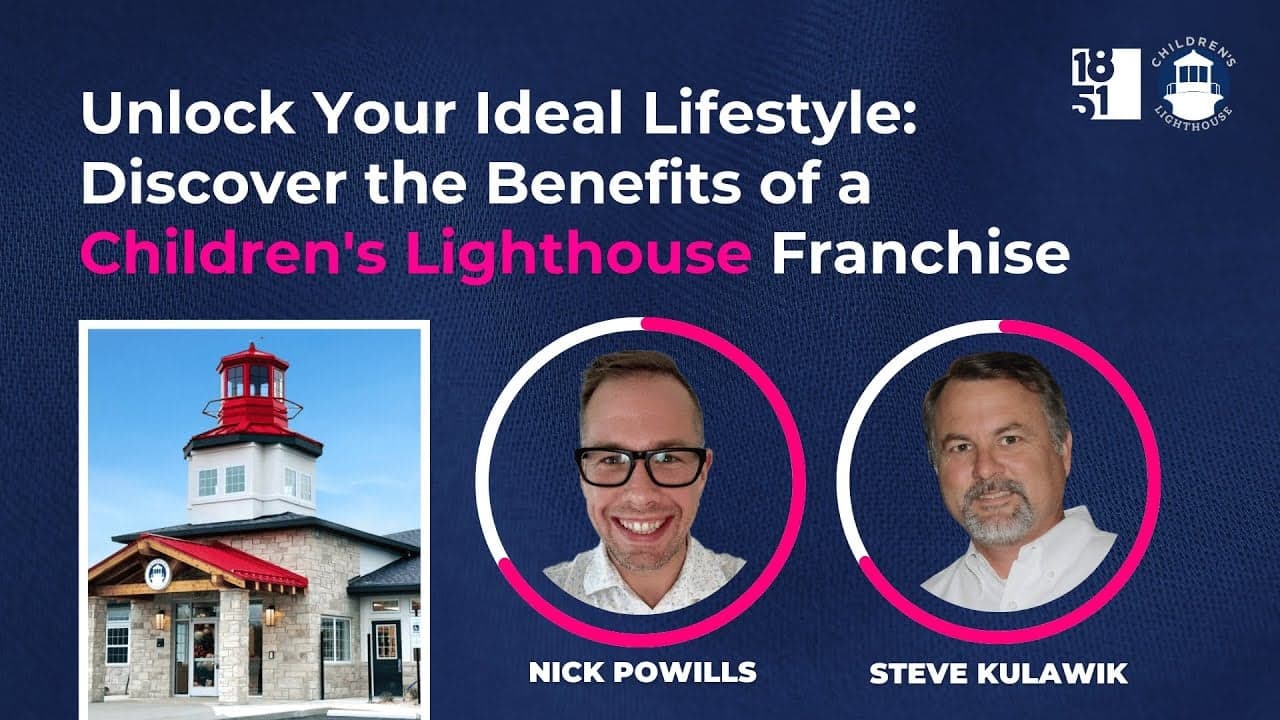
Unlocking Success: Steve Kulawik’s Journey With Children’s Lighthouse
How one franchisee went from Army veteran to attorney to early childhood education entrepreneur — and found fulfillment along the way.
For prospective entrepreneurs weighing the decision to dive into business ownership, the thought of leaving a stable career can be daunting. But for Steve Kulawik, a longtime Children’s Lighthouse franchisee, the risk was worth the reward — and then some. In a recent webinar hosted by 1851 Franchise Publisher Nick Powills, Kulawik candidly shared his inspiring story of transition, growth, and lasting impact.
Kulawik’s career didn’t begin in education. After serving in the Army, he became a CPA, then earned his law degree and practiced as a litigator. His wife, meanwhile, had spent her career in early childhood education. When she began consulting on a childcare project, it sparked an idea: What if they opened their own school?
“We started thinking, ‘We’ve been talking about this — maybe it’s time to do it,’” Kulawik said. But the idea of building a business from scratch quickly led them to explore franchising. After vetting several brands, they chose Children’s Lighthouse. “The model was awesome. It was small, family-oriented, and we felt like we could really be part of something.”
Kulawik’s background in accounting and law gave him a unique advantage when evaluating the franchise opportunity. “As a CPA, I could really analyze the FDD and forecasts,” he said. “As a lawyer, I could assess the people we were talking to. And what stood out about Children’s Lighthouse was how genuine they were.”
He recalled meeting founder Mike Brown, who personally traveled from Dallas to San Antonio to spend a full day with the Kulawiks. “It felt like I was talking to my best friend. It made taking the plunge a whole lot easier.”
Starting a Children’s Lighthouse school required a significant investment — financially and emotionally. Kulawik described the early days as intense but rewarding. “[When we first opened], we were there every day,” he said. “But it was different from the stress of my legal career. It was our business, our impact.”
Over time, the Kulawiks built a team and gained the freedom to step back. “Now it feels like we’re semi-retired,” he said. “You’re not open nights or weekends. Once you’ve got good managers in place, you can oversee things without being there every day.”
When asked about managing challenges, Kulawik shared one of his most valuable lessons: “Give your problems the shortest lifespan possible. Whether it’s issuing a refund or having a tough conversation, just do the right thing, deal with it, and move on.”
He explained that this philosophy even shaped his decision to not pursue legal action against a competitor who was poaching staff. “I said, ‘We’re not doing this for two years of stress and legal fees. Let’s focus on what we do well — and move on.’ And it worked.”
While some franchise systems lose their tight-knit feel as they grow, Kulawik says Children’s Lighthouse has remained true to its roots. “It still feels like family. The Browns have maintained that culture. I don’t have any fear of it turning into something it’s not.”
He emphasized the brand’s recession-resistant business model, strong community impact, and ongoing support as major differentiators. “People always need childcare. Even during COVID, we adapted. And our families came back — every one of them, and then some.”
Now 20 years into franchising, Kulawik is eyeing future growth. He and his wife already have another territory reserved and are scouting for the right piece of land. But even if expansion takes time, they feel fulfilled.
“We’re already living the dream,” he said. “We get to make a difference in kids’ lives, we’ve built something we’re proud of, and we still have freedom. It’s hard to walk away from that.”
Whether you're just dipping your toes into franchise ownership or looking for a brand with real purpose, Kulawik’s journey is a powerful example of what’s possible when passion meets a proven model.
A transcript of Kulawik’s interview with Powills appears below. It has been edited for brevity, clarity and style.
Nick Powills: All right, Steve, question one is the only scripted one, then we go unscripted for the rest of this. But it usually opens up the best part of the story, which is: how did you accidentally fall into franchising? What's your franchise backstory?
Steve Kulawik: Well, my wife and I had discussed opening up a childcare business for a while. She was in the business for a long time. When I met her, when we were teenagers, she was working at a childcare center. She just developed into that business — she went through several different larger childcare companies and ended up being a director at one. Then she had our own children, and I was going to school and law school, started working, and she helped some ladies open up a school. They asked her to be a consultant and said they wanted to open their own daycare, and she said, "Yeah, I'll help you." So she helped them out, got them up and running, and then it kind of got us thinking, you know, we should do this. We’ve been talking about it.
So we looked into opening up our own school, and looking at the land, the buildings, the marketing — some things we didn’t know we didn’t know — and ended up looking into franchises. That's basically how we fell into it. We looked at some of the bigger franchises and ended up, at the end, talking with Children’s Lighthouse. Their model was awesome. They were very small, family-oriented. We were the sixth franchise school in the organization, so we were there pretty early on. We decided that was the way to go. It was going to be easier — the pitfalls were already covered up for us. Mistakes had been made, and the franchise had already handled all that. They offered us this model that was pretty much, “Here you go. Get after it.” So that's what we did.
Powills: Love that. Now I have a million follow-up questions. Great opening story. So obviously, you built up a successful career. You have to, to be able to afford this category of franchise. This is a different level of franchise. This is not a chuck-in-a-truck business. You're mixing passions and aligning it to where you want to get to financially. When you're evaluating these things, and you're looking at businesses, you said you were looking at starting your own or buying a franchise. Take me through some of the turbulence in your decision-making when you were getting up to that starting line. What eventually made you say yes? What was going through your head as you were thinking, I built up a career, I want to go to the next level?
Kulawik: Yeah, it was a tough decision. My wife and I built our lives together. We met when we were 15 or 16. I went into the Army right out of high school. Right after the Army, I went to college, became a CPA, worked in that industry a few years, went to law school, and worked as a litigator for a while. So I had a stable career, we had a stable family, we had several children at that time. It was a tough decision. But we had saved and saved and saved, and built this nest egg that we could do something with, or we could just keep building on it. I could keep working as an attorney and busting my butt every day, and eventually retire — if it didn’t kill us first.
So yeah, it was a tough decision, but Children’s Lighthouse made it a lot easier with their personal attention to us. The first time I talked to Mike Brown, who was the founder and the president — [the current president, Michael Brown’s father] — it was like I was talking to my best friend. He drove down here from Dallas to San Antonio, and we spent the whole day together driving around, looking at sites. Just real comfortable. He made it real easy to take that plunge. But there’s always that question in the back of your mind — wow, here we go. We have to write this check, borrow several million dollars, and almost start over in a sense. So yeah, that’s what was going through our heads.
Powills: If you reflect back on your career — military, CPA, attorney — I almost think like lifting weights: if you lift a 100-pound weight first, then you lift a 50-pound weight, it’s not that hard. You’ve stressed yourself to a max in a career, so when you become a business owner, you're able to rely back on those experiences. And as an attorney, part of your job is to cut through and find the truth. So now you have a guy that’s flown down, and I'm sure you're evaluating him — is this the real deal, am I building a relationship with someone I can trust? Are you able to rely on all the elements you built up in a career to help you make that decision to get into this?
Kulawik: Oh yeah, absolutely. From getting the FDD, looking at the financials, the forecasts — as a CPA, I was able to analyze that down to the nth degree. Doing our own budgets, our own pro formas, forecasting — having that background was a godsend. On the legal side, everyone I spoke to there — obviously, one of my jobs as an attorney is to assess people, pull the truth out of them, determine whether they're being honest or just giving you the pie-in-the-sky story to sign up. But they were genuine — still are genuine. From Michael to Mike to his brothers and Pat, Mike's brother who helped start the company — it was such a different experience than speaking with other larger brands.
I could tell the motive of Children’s Lighthouse was absolutely, totally 180 degrees different than the motive of some of the other brands I spoke with. Lighthouse was more like, "We want you to be part of our family. We want to grow with you and build this kind of community within our franchise." The others were more like, "If we sell one more franchise, we get a new airplane to fly around in" — literally what I was told. Totally different. Being able to assess those different levels and get down to the truth of what’s going on was a big deal.
I’ve been doing this for a long time — I’m 20 years into franchising. And on that last statement — there are so many brands that are in the business of selling franchises, which I understand. Especially when there's private equity behind it — you're running toward raising funds for the next fancy exit. But what I’ve found, zooming out as an industry expert, is that Children’s Lighthouse is attractive because it’s run with a family mindset. So there's less of that BS in the sales process and more of a real match — especially when you’re dealing with high-net-worth individuals. You have to have had some success to get to this level. That really stands out.
Powills: You said something earlier — that you could have stayed in your career and maybe died in it. I don’t want to make this seem easy for anyone watching. The reality is, this isn’t some fancy business where you're absentee. This business is not easy. But when you compare how you felt emotionally in your career and say, “I could ride this out or make a change,” has it met your expectations in terms of happiness?
Kulawik: Yes, absolutely. The business still requires a lot of input from the owner. You have to keep your finger on it, no matter how many managers you have or how good they are. For the first five to seven years, we were heavily involved in the business — there every day. Getting it started was something new. Even with a business background, legal background, military leadership experience — it was totally different. But to us, it was different in a good way. More rewarding. Fun.
Fast forward to now — we’ve been in this thing almost 20 years. It’s absolutely different than working in corporate America or in a law firm. You’re preparing for trials and depositions, working weekends to start a trial on Monday. This is totally different.
You can get to a point where you’re semi-retired. With good management in place and training passed down through staff, it all starts to meld into this perfect setting. You’re overseeing your business, but you’re not there on a daily basis.
I joke with my director and teachers — I can’t even do your job! I can do everything else, but not that. It requires a special person.
Our expectations have been blown out of the water in terms of lifestyle and stress. Don’t get me wrong — there are still stressful times, still fires to put out. But it’s been a great experience and a great career for us. But it’s different when you’re putting out fires on your land, for your wealth — not someone else’s.
Powills: Exactly. Here’s a weird analogy — it’s fresh in my mind. We were just in the Bahamas at Atlantis, and I went in the lazy river with my 10-year-old. They’ve got these rapids, and my son wanted to jump out — he was scared. “I don’t want to go down this,” he said. I told him, “It’s called a lazy river.” He hadn’t been through that part before. But once he went through it, he wanted to do it over and over again. In your career, you probably understood what was coming — but did you still have to have that internal conversation and say, “Okay, I know there are rapids ahead, but I’m going to go through this and come out better on the other side?”
Kulawik: Oh yes, definitely. Especially early on. There were times we questioned what we did. Like, “Why are we in this business?” But you get through it. You learn from those experiences. The next one is easier, and less stressful. You just start understanding how to handle things.
One of my rules that I live by and that I tell our management team: give your problems the shortest lifespan possible. Whether you have to refund money or swallow your pride — do the right thing, handle it, and move on. That’s been a really good rule to live by in this business. Because you can get caught up in upset parents, disgruntled employees — it can drag on for months or years. Or you can deal with it, do what you have to do, and move on.
Powills: Not to disrupt the legal community, but I think you just gave good advice on whether or not to sue someone, too.
Kulawik: Exactly! We had a competitor poaching our employees. We heard they were telling one of our former teachers, “For every teacher you get from them, we’ll give you $100.” My directors and even my wife said, “Just sue them.” But I said, “Why? Then we’re in this for two years, spending money, time, and dealing with turmoil.” I told them, “Let’s just do what we do — we’re good at it. We’ll replace those teachers. We probably didn’t want them anyway.” And we did. It worked out great.
Powills: That’s the best advice that’s ever come out of one of these podcasts. Just move on. It’s such a simple life lesson — but so valuable. This isn’t a food brand where you’re working late nights. You’ve got set hours. Are there moments during that downtime where you think, “This is why I did this?”
Kulawik: Oh yeah, for sure. This business is great. It’s almost like a best-kept secret. We’re not open at night, not open on weekends. And during the week, we can handle things from anywhere. We go into the schools when we need to. It’s a good feeling to have that freedom — to run a business, make a good living, and help your staff do the same. We try to reward them as much as we can.
Powills: Not a weird question, but — what year did you buy your franchise?
Kulawik: We signed the first franchise agreement in 2005 and opened our school in 2007.
Powills: So, part of the audience might be people on the edge of the diving board — do I do this or not? They might be scared of today’s economic conditions. But people who find success usually think, “This too shall pass.” You opened in 2007, then 2008 hit. Then COVID. You’ve seen a lot. How do you advise someone who’s stuck, trying to get comfortable?
Kulawik: I sometimes get calls from potential franchisees. They want to know what the business is like. My initial advice is: do it. If you’re really committed and want to make a difference in children’s lives, be your own boss, build a legacy — do it. Interest rates may be high now, but they’ll go down. You can refinance.
When we opened, we had a variable SBA loan at almost 9%. Then 2008 hit, everything crashed, and the rate dropped to 4.5% — and stayed there for years. When rates started going back up, I refinanced. Some people didn’t. But my point is — there’s always a way to make smart decisions.
Things go up and down. Sometimes enrollment is 240, sometimes 190. We had a school destroyed in a Texas freeze and had to close for three months and rebuild. We adapted. We used other schools, had teachers babysit kids if needed — and every parent came back, and then some.
There are always ups and downs. Roll with them. It’s a marathon, not a sprint. Stick with it. And it’s a business that’s almost recession-proof. In 2008 and other hard times, we didn’t really feel the effects. Like barbers — people still need childcare. So my advice? Do it. If you want to, take the first step and get after it.
Nick Powills: You mentioned how you felt culturally with other bigger brands. Is there a fear that this gets too big? Or do you feel like the family-run nature protects that culture?
Steve Kulawik: Yes, I think so. My wife and I have talked about it, and other franchisees too — we’ve all been in for a while. We’ve said, “We’re getting bigger,” but it doesn’t feel like it. It still feels small. Like seven of us in a franchise meeting — not 80.
That’s thanks to the Brown family and the way they’ve maintained a close-knit, family-oriented atmosphere. Unless they sold to a big private equity firm — which I don’t see happening — I don’t think it’ll turn into one of those other brands. You can never say never, but it’s not something I or the other owners I talk to worry about.
Powills: Final question — what’s the dream now? Where do you go from here?
Kulawik: We have another territory we’ve had a franchise agreement on for a while. It’s just a matter of finding the right land. We’re getting close. We want to open another school. We’ve been waiting for interest rates to come down and land prices to get more in line. But short of that — we’re already living the dream. I’m 56, my wife’s 55. We’ve got kids ranging from 17 to 30, and a grandchild.
We’ve talked about maybe selling after our youngest finishes high school. But then we think — we’re kind of retired already. We can still run the business, provide the same level of care and service.
We love it. We go into the schools, see the children, see our great staff — it’s like a big family. It’s hard to let go of that. So from here, we just keep marching. Do good things. Help other franchisees. Support the franchisor. And keep enjoying it.
Powills: What a wonderful story. Sometimes it’s hard to zoom out and look back. But military? Check. CPA? Check. Lawyer? Check. Franchise owner for 20 years? Check. Built a great family, married your high school sweetheart — you just kept going. The regret people have later in life isn’t about missed opportunities — it’s not taking them. And it sounds like you’ve lived a life of embracing what’s in front of you. That’s awesome. I’m grateful you shared your story.
Kulawik: Well, I appreciate it. And thank you for the recap. You’re right — we don’t zoom out often and look at life like that. Thank you.
Watch the full webinar here.
Children's Lighthouse
SPONSOREDHow one franchisee went from Army veteran to attorney to early childhood education entrepreneur — and found fulfillment along the way.
For prospective entrepreneurs weighing the decision to dive into business ownership, the thought of leaving a stable career can be daunting. But for Steve Kulawik, a longtime Children’s Lighthouse franchisee, the risk was worth the reward — and then some. In a recent webinar hosted by 1851 Franchise Publisher Nick Powills, Kulawik candidly shared his inspiring story of transition, growth, and lasting impact.
Kulawik’s career didn’t begin in education. After serving in the Army, he became a CPA, then earned his law degree and practiced as a litigator. His wife, meanwhile, had spent her career in early childhood education. When she began consulting on a childcare project, it sparked an idea: What if they opened their own school?
“We started thinking, ‘We’ve been talking about this — maybe it’s time to do it,’” Kulawik said. But the idea of building a business from scratch quickly led them to explore franchising. After vetting several brands, they chose Children’s Lighthouse. “The model was awesome. It was small, family-oriented, and we felt like we could really be part of something.”
Kulawik’s background in accounting and law gave him a unique advantage when evaluating the franchise opportunity. “As a CPA, I could really analyze the FDD and forecasts,” he said. “As a lawyer, I could assess the people we were talking to. And what stood out about Children’s Lighthouse was how genuine they were.”
He recalled meeting founder Mike Brown, who personally traveled from Dallas to San Antonio to spend a full day with the Kulawiks. “It felt like I was talking to my best friend. It made taking the plunge a whole lot easier.”
Starting a Children’s Lighthouse school required a significant investment — financially and emotionally. Kulawik described the early days as intense but rewarding. “[When we first opened], we were there every day,” he said. “But it was different from the stress of my legal career. It was our business, our impact.”
Over time, the Kulawiks built a team and gained the freedom to step back. “Now it feels like we’re semi-retired,” he said. “You’re not open nights or weekends. Once you’ve got good managers in place, you can oversee things without being there every day.”
When asked about managing challenges, Kulawik shared one of his most valuable lessons: “Give your problems the shortest lifespan possible. Whether it’s issuing a refund or having a tough conversation, just do the right thing, deal with it, and move on.”
He explained that this philosophy even shaped his decision to not pursue legal action against a competitor who was poaching staff. “I said, ‘We’re not doing this for two years of stress and legal fees. Let’s focus on what we do well — and move on.’ And it worked.”
While some franchise systems lose their tight-knit feel as they grow, Kulawik says Children’s Lighthouse has remained true to its roots. “It still feels like family. The Browns have maintained that culture. I don’t have any fear of it turning into something it’s not.”
He emphasized the brand’s recession-resistant business model, strong community impact, and ongoing support as major differentiators. “People always need childcare. Even during COVID, we adapted. And our families came back — every one of them, and then some.”
Now 20 years into franchising, Kulawik is eyeing future growth. He and his wife already have another territory reserved and are scouting for the right piece of land. But even if expansion takes time, they feel fulfilled.
“We’re already living the dream,” he said. “We get to make a difference in kids’ lives, we’ve built something we’re proud of, and we still have freedom. It’s hard to walk away from that.”
Whether you're just dipping your toes into franchise ownership or looking for a brand with real purpose, Kulawik’s journey is a powerful example of what’s possible when passion meets a proven model.
A transcript of Kulawik’s interview with Powills appears below. It has been edited for brevity, clarity and style.
Nick Powills: All right, Steve, question one is the only scripted one, then we go unscripted for the rest of this. But it usually opens up the best part of the story, which is: how did you accidentally fall into franchising? What's your franchise backstory?
Steve Kulawik: Well, my wife and I had discussed opening up a childcare business for a while. She was in the business for a long time. When I met her, when we were teenagers, she was working at a childcare center. She just developed into that business — she went through several different larger childcare companies and ended up being a director at one. Then she had our own children, and I was going to school and law school, started working, and she helped some ladies open up a school. They asked her to be a consultant and said they wanted to open their own daycare, and she said, "Yeah, I'll help you." So she helped them out, got them up and running, and then it kind of got us thinking, you know, we should do this. We’ve been talking about it.
So we looked into opening up our own school, and looking at the land, the buildings, the marketing — some things we didn’t know we didn’t know — and ended up looking into franchises. That's basically how we fell into it. We looked at some of the bigger franchises and ended up, at the end, talking with Children’s Lighthouse. Their model was awesome. They were very small, family-oriented. We were the sixth franchise school in the organization, so we were there pretty early on. We decided that was the way to go. It was going to be easier — the pitfalls were already covered up for us. Mistakes had been made, and the franchise had already handled all that. They offered us this model that was pretty much, “Here you go. Get after it.” So that's what we did.
Powills: Love that. Now I have a million follow-up questions. Great opening story. So obviously, you built up a successful career. You have to, to be able to afford this category of franchise. This is a different level of franchise. This is not a chuck-in-a-truck business. You're mixing passions and aligning it to where you want to get to financially. When you're evaluating these things, and you're looking at businesses, you said you were looking at starting your own or buying a franchise. Take me through some of the turbulence in your decision-making when you were getting up to that starting line. What eventually made you say yes? What was going through your head as you were thinking, I built up a career, I want to go to the next level?
Kulawik: Yeah, it was a tough decision. My wife and I built our lives together. We met when we were 15 or 16. I went into the Army right out of high school. Right after the Army, I went to college, became a CPA, worked in that industry a few years, went to law school, and worked as a litigator for a while. So I had a stable career, we had a stable family, we had several children at that time. It was a tough decision. But we had saved and saved and saved, and built this nest egg that we could do something with, or we could just keep building on it. I could keep working as an attorney and busting my butt every day, and eventually retire — if it didn’t kill us first.
So yeah, it was a tough decision, but Children’s Lighthouse made it a lot easier with their personal attention to us. The first time I talked to Mike Brown, who was the founder and the president — [the current president, Michael Brown’s father] — it was like I was talking to my best friend. He drove down here from Dallas to San Antonio, and we spent the whole day together driving around, looking at sites. Just real comfortable. He made it real easy to take that plunge. But there’s always that question in the back of your mind — wow, here we go. We have to write this check, borrow several million dollars, and almost start over in a sense. So yeah, that’s what was going through our heads.
Powills: If you reflect back on your career — military, CPA, attorney — I almost think like lifting weights: if you lift a 100-pound weight first, then you lift a 50-pound weight, it’s not that hard. You’ve stressed yourself to a max in a career, so when you become a business owner, you're able to rely back on those experiences. And as an attorney, part of your job is to cut through and find the truth. So now you have a guy that’s flown down, and I'm sure you're evaluating him — is this the real deal, am I building a relationship with someone I can trust? Are you able to rely on all the elements you built up in a career to help you make that decision to get into this?
Kulawik: Oh yeah, absolutely. From getting the FDD, looking at the financials, the forecasts — as a CPA, I was able to analyze that down to the nth degree. Doing our own budgets, our own pro formas, forecasting — having that background was a godsend. On the legal side, everyone I spoke to there — obviously, one of my jobs as an attorney is to assess people, pull the truth out of them, determine whether they're being honest or just giving you the pie-in-the-sky story to sign up. But they were genuine — still are genuine. From Michael to Mike to his brothers and Pat, Mike's brother who helped start the company — it was such a different experience than speaking with other larger brands.
I could tell the motive of Children’s Lighthouse was absolutely, totally 180 degrees different than the motive of some of the other brands I spoke with. Lighthouse was more like, "We want you to be part of our family. We want to grow with you and build this kind of community within our franchise." The others were more like, "If we sell one more franchise, we get a new airplane to fly around in" — literally what I was told. Totally different. Being able to assess those different levels and get down to the truth of what’s going on was a big deal.
I’ve been doing this for a long time — I’m 20 years into franchising. And on that last statement — there are so many brands that are in the business of selling franchises, which I understand. Especially when there's private equity behind it — you're running toward raising funds for the next fancy exit. But what I’ve found, zooming out as an industry expert, is that Children’s Lighthouse is attractive because it’s run with a family mindset. So there's less of that BS in the sales process and more of a real match — especially when you’re dealing with high-net-worth individuals. You have to have had some success to get to this level. That really stands out.
Powills: You said something earlier — that you could have stayed in your career and maybe died in it. I don’t want to make this seem easy for anyone watching. The reality is, this isn’t some fancy business where you're absentee. This business is not easy. But when you compare how you felt emotionally in your career and say, “I could ride this out or make a change,” has it met your expectations in terms of happiness?
Kulawik: Yes, absolutely. The business still requires a lot of input from the owner. You have to keep your finger on it, no matter how many managers you have or how good they are. For the first five to seven years, we were heavily involved in the business — there every day. Getting it started was something new. Even with a business background, legal background, military leadership experience — it was totally different. But to us, it was different in a good way. More rewarding. Fun.
Fast forward to now — we’ve been in this thing almost 20 years. It’s absolutely different than working in corporate America or in a law firm. You’re preparing for trials and depositions, working weekends to start a trial on Monday. This is totally different.
You can get to a point where you’re semi-retired. With good management in place and training passed down through staff, it all starts to meld into this perfect setting. You’re overseeing your business, but you’re not there on a daily basis.
I joke with my director and teachers — I can’t even do your job! I can do everything else, but not that. It requires a special person.
Our expectations have been blown out of the water in terms of lifestyle and stress. Don’t get me wrong — there are still stressful times, still fires to put out. But it’s been a great experience and a great career for us. But it’s different when you’re putting out fires on your land, for your wealth — not someone else’s.
Powills: Exactly. Here’s a weird analogy — it’s fresh in my mind. We were just in the Bahamas at Atlantis, and I went in the lazy river with my 10-year-old. They’ve got these rapids, and my son wanted to jump out — he was scared. “I don’t want to go down this,” he said. I told him, “It’s called a lazy river.” He hadn’t been through that part before. But once he went through it, he wanted to do it over and over again. In your career, you probably understood what was coming — but did you still have to have that internal conversation and say, “Okay, I know there are rapids ahead, but I’m going to go through this and come out better on the other side?”
Kulawik: Oh yes, definitely. Especially early on. There were times we questioned what we did. Like, “Why are we in this business?” But you get through it. You learn from those experiences. The next one is easier, and less stressful. You just start understanding how to handle things.
One of my rules that I live by and that I tell our management team: give your problems the shortest lifespan possible. Whether you have to refund money or swallow your pride — do the right thing, handle it, and move on. That’s been a really good rule to live by in this business. Because you can get caught up in upset parents, disgruntled employees — it can drag on for months or years. Or you can deal with it, do what you have to do, and move on.
Powills: Not to disrupt the legal community, but I think you just gave good advice on whether or not to sue someone, too.
Kulawik: Exactly! We had a competitor poaching our employees. We heard they were telling one of our former teachers, “For every teacher you get from them, we’ll give you $100.” My directors and even my wife said, “Just sue them.” But I said, “Why? Then we’re in this for two years, spending money, time, and dealing with turmoil.” I told them, “Let’s just do what we do — we’re good at it. We’ll replace those teachers. We probably didn’t want them anyway.” And we did. It worked out great.
Powills: That’s the best advice that’s ever come out of one of these podcasts. Just move on. It’s such a simple life lesson — but so valuable. This isn’t a food brand where you’re working late nights. You’ve got set hours. Are there moments during that downtime where you think, “This is why I did this?”
Kulawik: Oh yeah, for sure. This business is great. It’s almost like a best-kept secret. We’re not open at night, not open on weekends. And during the week, we can handle things from anywhere. We go into the schools when we need to. It’s a good feeling to have that freedom — to run a business, make a good living, and help your staff do the same. We try to reward them as much as we can.
Powills: Not a weird question, but — what year did you buy your franchise?
Kulawik: We signed the first franchise agreement in 2005 and opened our school in 2007.
Powills: So, part of the audience might be people on the edge of the diving board — do I do this or not? They might be scared of today’s economic conditions. But people who find success usually think, “This too shall pass.” You opened in 2007, then 2008 hit. Then COVID. You’ve seen a lot. How do you advise someone who’s stuck, trying to get comfortable?
Kulawik: I sometimes get calls from potential franchisees. They want to know what the business is like. My initial advice is: do it. If you’re really committed and want to make a difference in children’s lives, be your own boss, build a legacy — do it. Interest rates may be high now, but they’ll go down. You can refinance.
When we opened, we had a variable SBA loan at almost 9%. Then 2008 hit, everything crashed, and the rate dropped to 4.5% — and stayed there for years. When rates started going back up, I refinanced. Some people didn’t. But my point is — there’s always a way to make smart decisions.
Things go up and down. Sometimes enrollment is 240, sometimes 190. We had a school destroyed in a Texas freeze and had to close for three months and rebuild. We adapted. We used other schools, had teachers babysit kids if needed — and every parent came back, and then some.
There are always ups and downs. Roll with them. It’s a marathon, not a sprint. Stick with it. And it’s a business that’s almost recession-proof. In 2008 and other hard times, we didn’t really feel the effects. Like barbers — people still need childcare. So my advice? Do it. If you want to, take the first step and get after it.
Nick Powills: You mentioned how you felt culturally with other bigger brands. Is there a fear that this gets too big? Or do you feel like the family-run nature protects that culture?
Steve Kulawik: Yes, I think so. My wife and I have talked about it, and other franchisees too — we’ve all been in for a while. We’ve said, “We’re getting bigger,” but it doesn’t feel like it. It still feels small. Like seven of us in a franchise meeting — not 80.
That’s thanks to the Brown family and the way they’ve maintained a close-knit, family-oriented atmosphere. Unless they sold to a big private equity firm — which I don’t see happening — I don’t think it’ll turn into one of those other brands. You can never say never, but it’s not something I or the other owners I talk to worry about.
Powills: Final question — what’s the dream now? Where do you go from here?
Kulawik: We have another territory we’ve had a franchise agreement on for a while. It’s just a matter of finding the right land. We’re getting close. We want to open another school. We’ve been waiting for interest rates to come down and land prices to get more in line. But short of that — we’re already living the dream. I’m 56, my wife’s 55. We’ve got kids ranging from 17 to 30, and a grandchild.
We’ve talked about maybe selling after our youngest finishes high school. But then we think — we’re kind of retired already. We can still run the business, provide the same level of care and service.
We love it. We go into the schools, see the children, see our great staff — it’s like a big family. It’s hard to let go of that. So from here, we just keep marching. Do good things. Help other franchisees. Support the franchisor. And keep enjoying it.
Powills: What a wonderful story. Sometimes it’s hard to zoom out and look back. But military? Check. CPA? Check. Lawyer? Check. Franchise owner for 20 years? Check. Built a great family, married your high school sweetheart — you just kept going. The regret people have later in life isn’t about missed opportunities — it’s not taking them. And it sounds like you’ve lived a life of embracing what’s in front of you. That’s awesome. I’m grateful you shared your story.
Kulawik: Well, I appreciate it. And thank you for the recap. You’re right — we don’t zoom out often and look at life like that. Thank you.
Watch the full webinar here.
Sign up for the 1851 Franchise newsletter to get our biggest stories before everyone else
By signing up, you agree to our user agreement (including class action waiver and arbitration provisions), and acknowledge our privacy policy.

No related articles found