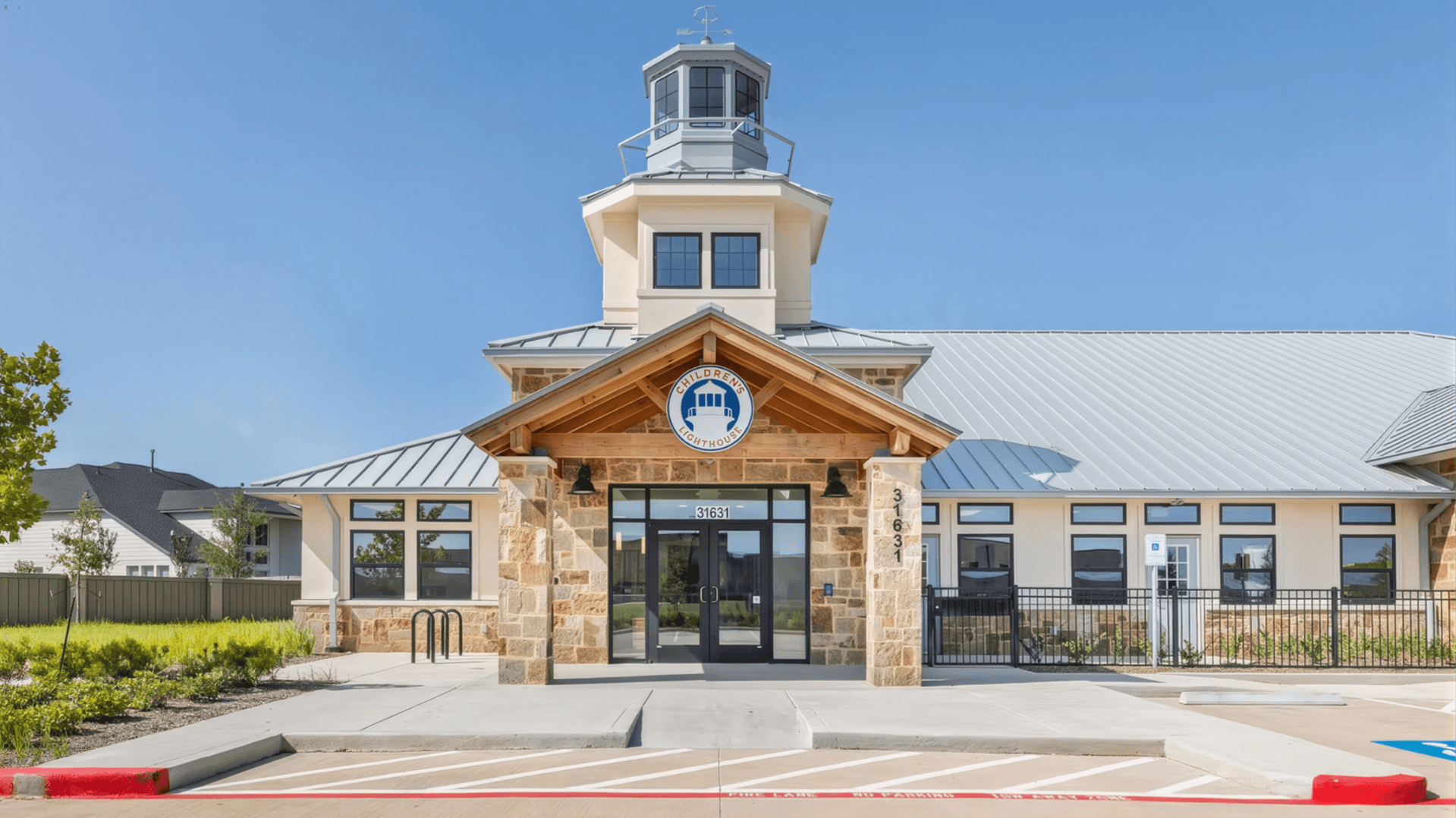
For nearly 30 years, Children’s Lighthouse has been building its presence in early education. Now, the brand is heading into another stage of growth at a time when demand for childcare is high and there are still attractive territories available for development.
New schools are already in development across the country as Children’s Lighthouse moves into new states. The brand is also investing in technology and franchisee support, with Austin, Indianapolis, Nashville, Orlando, Raleigh, and Charlotte among its priority markets.
At the same time, the underlying need for high-quality childcare remains exceptionally strong.
“First, it’s a business that has incredible demand. The number of parents that have a need for our services is at a record level,” said Matt Kelton, Vice President of Franchise Development. “We have waitlists all over the country. We’re looking for long-term growth. We’re not looking at 10 quarters in the future; we’re looking at 10 years in the future.”
Demand Is Already Here
One of the biggest reasons the timing is attractive is simple: Children’s Lighthouse does not need to manufacture demand for its service.
Working parents need dependable childcare, and many fast-growing communities across the country still lack sufficient high-quality early education options. More than two-thirds of U.S. children under age 6 live in households where both parents work, and Children’s Lighthouse continues to see the impact of that demand firsthand through waitlists across its system.
That need could become even more pronounced as workplace dynamics continue to change.
While artificial intelligence is disrupting everything from technology and finance to marketing and customer service, childcare remains fundamentally dependent on people. At the same time, return-to-office policies are requiring some parents who previously worked remotely to once again find reliable care outside the home.
“Parents are going to continue to have to work and earn an income,” Kelton said. “I was just talking to somebody who works in finance. She worked remote during COVID, but she’s being called back to the office. That is happening a lot in the tech world. So our demand is going to continue to grow.”
And unlike many industries being reshaped by automation, the fundamental service Children’s Lighthouse provides cannot simply be replaced by technology. “AI is not changing diapers,” Kelton said. “There is still a human interaction of teaching kids, loving them, and helping them grow. People are asking themselves, ‘What is going to be around in five or 10 years?’ This is an industry that isn’t going anywhere.”
Children’s Lighthouse Offers More Than Basic Childcare
Demand for childcare alone does not make every concept an equally compelling investment. Parents are also increasingly thoughtful about the quality of the environment, education, and developmental support their children receive.
That is where Children’s Lighthouse has spent nearly three decades differentiating itself.
Rather than positioning its schools as traditional daycare centers, Children’s Lighthouse provides a comprehensive early learning experience through its proprietary Lighthouse Pathways® curriculum. Its programs include Lighthouse BRIGHT® for infants and toddlers, Lighthouse CARES® for preschool-aged children, and xSTREAM Quest® for school-age students.
Together, the programs allow Children’s Lighthouse to serve families from infancy through age 12 while emphasizing academic readiness, character development, and social-emotional growth. “There just aren’t many concepts out there with a proprietary curriculum designed to grow with the child,” Kelton said. “That’s a big reason our families stay with us long-term.”
Prime Growth Markets Are Still Available
The best time to join a franchise system is not only when the brand is performing well. Territory availability matters, too.
Children’s Lighthouse is currently targeting several of the country’s growing metropolitan areas, including Austin, Indianapolis, Nashville, Orlando, Raleigh, and Charlotte. These markets share characteristics the brand believes create an attractive foundation for new schools: expanding suburban communities, concentrations of young families, dual-income households, and unmet childcare demand.
“There’s a lot of growth and a lot of childcare deserts,” Kelton said. “We are targeting fast-growing areas, and these are the cities that are high on that list.”
Children’s Lighthouse is already demonstrating its ability to expand beyond its established footprint. The brand entered Indiana and Missouri for the first time through its 2025 development activity and broke ground on its first Tennessee school in 2026.
In Texas, Children’s Lighthouse continues to build on decades of brand awareness while following families into growing suburban communities. In Florida and the Carolinas, population growth and suburban expansion are creating additional opportunities to establish schools where families need them.
The opportunity is particularly notable for entrepreneurs interested in eventually developing multiple locations. “Ours is really an executive model. Franchisees are at a CEO-level role,” Kelton said. “Franchisees hire directors who run the day-to-day activities. You have an executive team that runs the school, and they have years of experience. Once you get to two or three schools, you can hire an executive director who manages those directors. Our largest franchisee has 10 schools.”
Owners Can Build Value Beyond the Business Itself
There is another long-term component to the Children’s Lighthouse opportunity that differentiates it from many service franchises: real estate.
A traditional Children’s Lighthouse school is approximately 10,000 square feet and typically sits on nearly two acres. Depending on the development structure, franchisees can have an opportunity to build equity in the underlying commercial real estate alongside the operating business.
For investors accustomed to thinking in terms of assets and long-term wealth creation, that can change the economics of the opportunity.
“In 15 years, you can potentially sell it for a significant multiple of what you paid for it,” Kelton said. “It’s really an intriguing model. Banks like it. Private equity loves it. And you’re still offering a critical service to your community.”
Rather than building a business solely around the possibility of a short-term exit, Children’s Lighthouse is designed for entrepreneurs who want to create something durable.
“We’re not a brand that investors want to flip,” Kelton said. “We’re a long-term play with a unique model and a unique family culture, and we’re building a brand franchisees want to grow with over time.”
The Window Is Open Now
No franchise investment comes without risk, and prospective owners should carefully evaluate the opportunity, market and financial requirements before investing. But for entrepreneurs already interested in essential-service businesses and early childhood education, several favorable trends are coming together at Children’s Lighthouse.
“We’re laying the foundation for where this brand will be five, 10 and 20 years from now,” Kelton said. “The momentum we’re seeing today is really a reflection of the strength of our franchisees, our team, and the growing need for the services we provide.”
For the right entrepreneur, joining during that stage of growth creates an opportunity to participate in what comes next while building an asset intended to last.
“At the end of the day, our schools are full and our families are happy. That’s the best validation there is,” Kelton said. “When you invest in Children’s Lighthouse, you’re investing in an opportunity that is both financially sound and personally rewarding.”
To find out more information on costs to buy this franchise, please visit 1851franchise.com/childrens-lighthouse.