Franchisor Stories
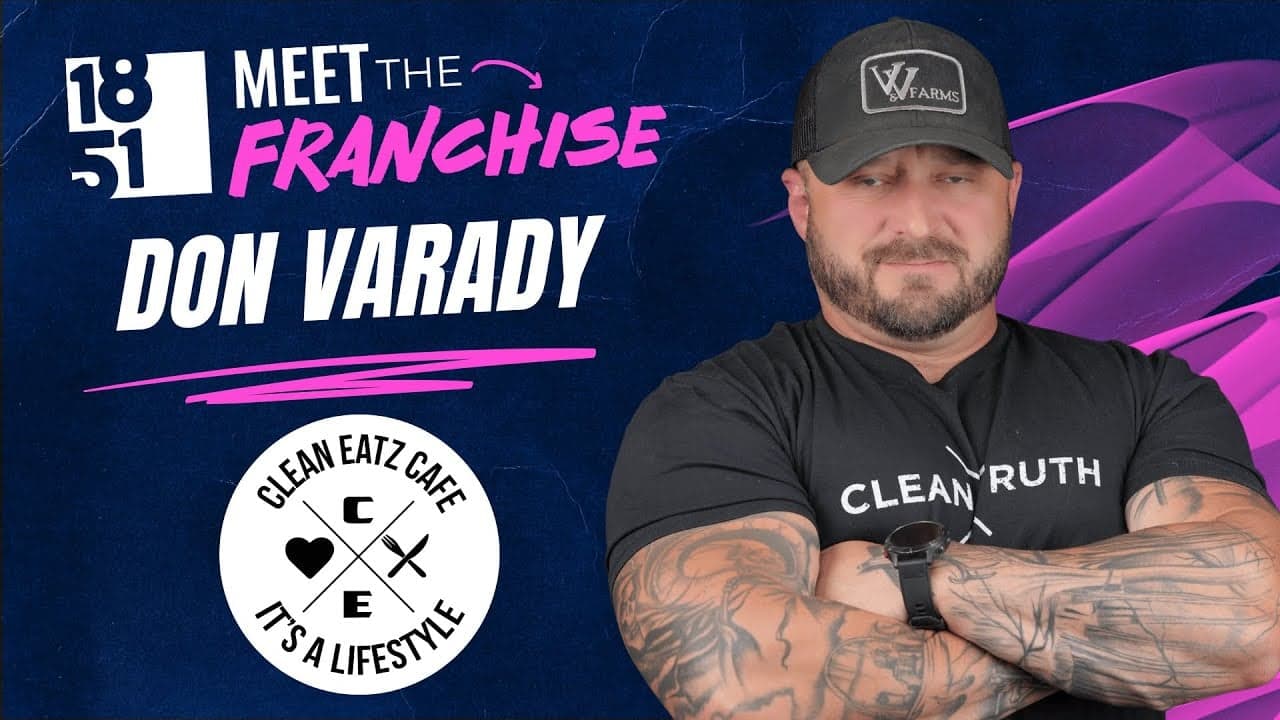
How Clean Eatz Built a Health-Focused Franchise Model Designed for Sustainable Growth
Co-founder and CEO Don Varady shares how Clean Eatz evolved from a local fitness café into a 120-plus-unit franchise system.
Franchisor Stories
Co-founder and CEO Don Varady shares how Clean Eatz evolved from a local fitness café into a 120-plus-unit franchise system.
Clean Eatz did not start with ambitions of becoming a national franchise brand. When Don Varady and his wife, Evonne, relocated a health-focused café concept from St. Louis to Wilmington, North Carolina, their goal was simple: create a gathering place for fitness enthusiasts, bodybuilders and health-conscious consumers.
“We had zero ambitions of franchising,” Varady said. “All we wanted to do was hang out with like-minded people. We used to say we were building a Grand Central Station for bodybuilders and fitness freaks.”
Today, Clean Eatz has grown into a franchise system with more than 120 locations across 23 states. The brand’s business model combines multiple revenue streams, including meal plans, grab-and-go meals, café offerings, catering and retail products, helping franchisees diversify revenue while serving consumers seeking convenient, macro-balanced nutrition.
The company is now targeting expansion across key growth markets while continuing to refine its operating model to improve profitability and reduce investment costs for future franchisees.
Varady joined 1851 Franchise Publisher Nick Powills on a recent episode of the “Meet the Franchise” podcast to discuss the brand’s origins, lessons learned from franchising, the importance of responsible growth and how Clean Eatz continues evolving to meet changing consumer demands. A transcript of the conversation — edited for brevity, clarity and style — is below.
Nick Powills: How did you accidentally fall into franchising?
Don Varady: It’s actually a pretty wild story.
My wife and I moved a business concept from St. Louis to Wilmington and opened our first café. About a year later, we were discussing opening a second location when we met with a local equipment supplier. About 30 minutes into the conversation, he interrupted us and said, “I don’t think you should do that.”
We were completely caught off guard. He said, “Instead of opening another location, I think you should franchise this. You’ve built something that’s duplicatable.”
At the time, we knew absolutely nothing about franchising. We met with a local group that helped emerging brands launch franchise systems, and we just said yes. Honestly, we didn’t even think about it. We wrote a check for about $25,000, which was almost all the money we had at the time. Later that night, I started panicking because we hadn’t done any due diligence whatsoever.
Fortunately, everything worked out. But that was how we got started.
Powills: What was it like navigating all the uncertainty that comes with franchising?
Varady: I don’t know if it was fear as much as it was fear of the unknown. My wife and I have always been the type of people who bet on ourselves. We’ve always believed we would figure it out one way or another. The uncertainty came from not knowing what we didn’t know. Were we choosing the right partners? Were we building the right systems? Were we making the right decisions?
But a few months after launching the franchise program, things started moving quickly. We were told that if we sold three or four franchises in the first year, we’d be doing well. We sold eight. And every one of those deals came from organic relationships and raving fans of the brand.
Powills: How important were those early franchisees to shaping the system?
Varady: They were incredibly important. The first few franchisees knew how new everything was. We were honest with them about that. We told them, “You’re going to help us build this.”
At the time, we didn’t have sophisticated systems. We had barely launched our own website. Every location in the system runs the same meal plan menu every week, and the technology behind that today is light years ahead of where it started. In the early days, my wife would literally write recipes and menus on notebook paper, take screenshots and send them to franchisees. Over time, that evolved into spreadsheets, digital systems and eventually the infrastructure we have today.
Powills: Clean Eatz looks very different today than it did in the beginning.
Varady: Absolutely.
The original concept was built around the fitness community because that’s who we were. I was competing as a bodybuilder. My wife was competing in figure competitions.
The restaurant was basically a hangout spot for gym members. We had autographed bodybuilding photos on the walls. Our tables were covered with bodybuilding magazine pages. It looked exactly like what it was: a gym crowd restaurant.
As the business grew, though, we started seeing families, young professionals, parents and older consumers coming in. That’s when we realized the concept could appeal to a much broader audience. When we decided to franchise, we intentionally softened the brand so it could have national appeal rather than being limited to one specific niche.
Powills: You’ve talked before about growing responsibly. What does that mean?
Varady: Responsible growth became really important to me as we scaled. Early on, like most franchisors, I was focused on unit count. I wanted to see how many locations we could open.
But once we got to around 75 or 80 locations, I started realizing we needed to strengthen the foundation. In 2019, we actually stopped selling franchises for an entire year. We focused on improving systems, support and infrastructure before accelerating growth again. That decision helped position us for the next phase of expansion. Sometimes slowing down is the fastest way to move forward.
Powills: How do you think about franchisee selection?
Varady: We’ve always been very selective. We’ve said no more often than we’ve said yes.
One thing we started doing was asking candidates to record video responses instead of simply completing questionnaires. A lot of people thought it was unusual, but it helped us understand who they really were.
Our brand is built around people. The way someone communicates, their personality and how they connect with others matters tremendously. We’re a lifestyle brand. The videos also helped us understand whether someone would be comfortable marketing themselves and engaging with their community, because that’s critical to success in this business.
Powills: The restaurant industry has faced significant challenges over the last few years. How has Clean Eatz adapted?
Varady: We’ve had to evolve. Our model weathered some of the post-COVID challenges better than many restaurant concepts because our meal plan business already had strong digital components.
But eventually rising interest rates, higher construction costs and inflation started affecting everyone. At one point, our all-in investment costs climbed above $700,000. Even with strong unit economics, that became a difficult number for prospective franchisees to accept.
So we redesigned the prototype. We reduced square footage, lowered equipment costs and transitioned to a more streamlined quick-service operating model. Customers can now order directly from a front-facing production line, which improves efficiency while reducing buildout costs. That’s helped create new momentum while positioning the model for future growth.
Powills: What keeps you motivated after all these years?
Varady: The challenge. I enjoy figuring out what comes next.
But even more importantly, I love seeing the impact we have on people’s lives. We’re helping people improve their health, build better habits and create stronger communities. You can’t put a price tag on that. We’ve had opportunities to sell the business over the years, but we’re not done yet. There’s still a lot we want to accomplish.
Powills: What message would you share with franchisees who may be facing challenges?
Varady: Remember why you started. I actually wrote about this recently in our franchise newsletter. Think back to Discovery Day. Think about the excitement you had when you first joined the brand.
There are going to be ups and downs. There are going to be difficult days. I’ve had plenty of them myself. But I always come back to the same question: Why am I here?
You sleep on it, wake up the next morning and get back to work. That’s entrepreneurship. That’s business. And that’s how you keep moving forward.
Powills: Thanks for joining us, Don.
Varady: I appreciate it. Thanks for having me.
Watch the full Meet the Franchise episode to learn more about Clean Eatz’s franchise opportunity.
Sign up for the 1851 Franchise newsletter to get our biggest stories before everyone else
By signing up, you agree to our user agreement (including class action waiver and arbitration provisions), and acknowledge our privacy policy.