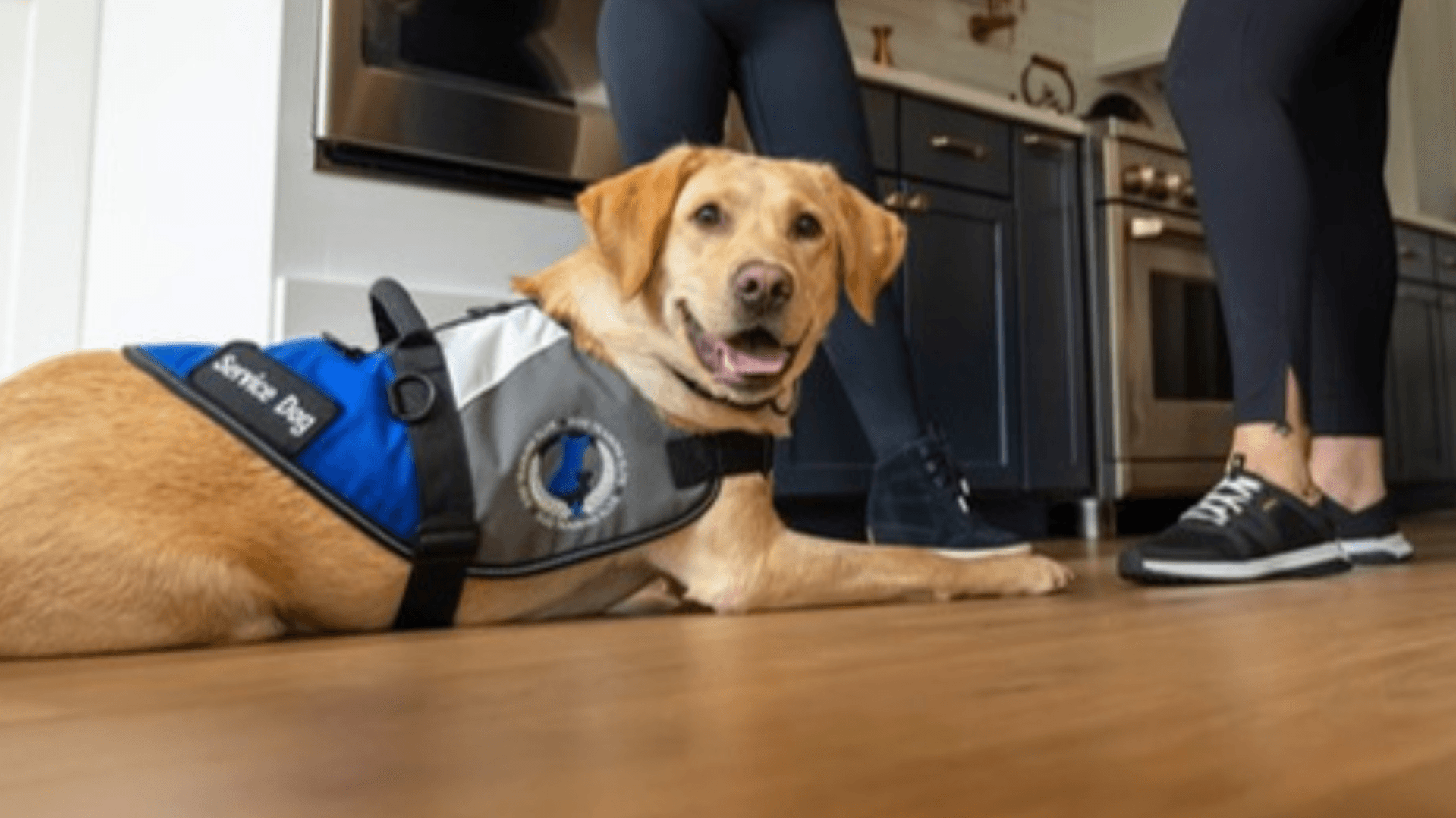
Dog Training Elite, the 240-plus-unit dog training franchise, has trained thousands of dogs nationwide, including service dogs for veterans living with post-traumatic stress disorder. Depending on each veteran's needs, the dogs may be trained to retrieve dropped items, recognize the physical signs of an impending panic attack, perform deep pressure therapy or assist with mobility tasks.
For James, a military veteran in the St. Louis area, that support has come from a Goldendoodle named Teddy. After serving in Afghanistan, James returned home with PTSD, a below-the-knee amputation, chronic back issues and anxiety. He uses both a prosthetic leg and, at times, a wheelchair. Before bringing Teddy home as a puppy, James contacted Dog Training Elite with a clear goal: he wanted to train his future companion as a psychiatric service dog.
"We've been with them from the get-go," said Matt Willis, owner of Dog Training Elite St. Louis. “We started puppy training when Teddy was about 10 weeks old and then moved into the service dog program. They've just done great. [James] is more outgoing now. He's got his buddy there to help him out. It always fosters independence, especially with someone who has the challenges he has, both mentally and physically.”
James now works as a crossing guard at a local school, where Teddy accompanies him in his service vest. While Teddy is present as James’ service dog and often helps carry James' belongings, the local students have also come to recognize him. He is now a fixture of the community.
Training Dogs to Recognize PTSD Symptoms
Training a psychiatric service dog extends beyond teaching obedience. The dog must learn to recognize subtle physical changes that often occur before a panic attack or dissociative episode. Many veterans experiencing PTSD may not realize an episode is beginning or, if they do, may not be able to ask for help in the moment. Instead, trainers teach dogs to identify behaviors such as leg shaking or other physical cues that signal rising anxiety.
"When someone is heading toward a panic attack, their rational thinking is over," Willis said. “We have to look for body cues. Maybe their leg starts tapping. So, I'm training a dog to look for that leg tap.”
Teddy is trained to perform deep pressure therapy, which is firm physical contact that activates the parasympathetic nervous system and transitions the body out of a “fight-or-flight” state. As part of his service dog training, Teddy learned to watch for signs like leg tapping and respond by applying deep pressure, which can help James calm back down.
Building Independence Through Service Dog Training
In addition to psychiatric support, service dogs can help with everyday mobility tasks. Dog Training Elite teaches service dogs a conditioned retrieve, an intensive training process that allows them to pick up and deliver objects their handlers need. During this portion of training, dogs learn to retrieve items ranging from keys and cell phones to water bottles, hats and other household objects.
"Anything that James needs, Teddy will go grab and bring to him," Willis said. “Recently, they were at the crossing guard station, and he was carrying James' lunchbox by the handle in his mouth. It was pretty cute.”
Willis said the biggest changes he sees have less to do with the tasks the dogs perform and more to do with the confidence clients gain during training. Because service dogs must practice in real-world settings, handlers spend time working in stores, parks and other public places they may have previously avoided.
“I've seen clients who were shut-ins,” Willis said. “They couldn't stand to be around other people. Through the training, they build confidence and independence, and they get out more. We have to do community training, so we're pulling these people out of their comfort zone.”
Expanding Access for More Veterans
Dog Training Elite St. Louis is now working to help even more veterans receive trained service dogs. After receiving a $25,000 charitable donation, the franchise launched a program that will provide partial scholarships toward service dog training for 10 veterans. The goal is to reduce the financial burden for those seeking psychiatric or mobility service dogs.
"The system, especially the Department of Veterans Affairs, is overloaded, overwhelmed and unable to help a lot of our veterans," Willis said. “These people need support, and a service dog fills a void that they have in their recovery.”
For many veterans, that support can come in the form of a loyal companion who retrieves dropped items, responds during moments of anxiety and helps them move through life with greater confidence each day.
To find out more information on costs to buy this franchise, please visit https://1851franchise.com/dogtrainingelite.