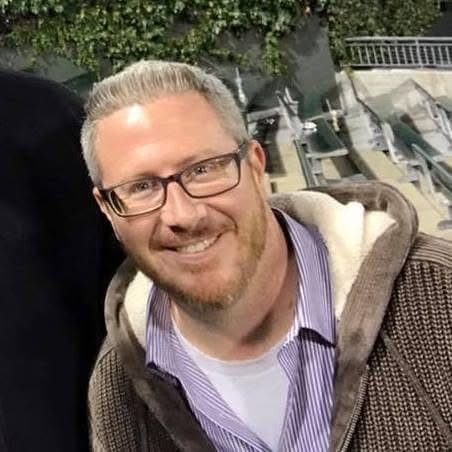
Carlos Hesano didn’t intend on franchising. But he knew a great system when he saw it — and then built a career around it.

A chance opportunity about two decades ago plucked Hesano from Michigan and dropped him on the west coast of Florida, where he’d go on to launch a 20-year franchising run across a variety of brands, verticals and roles. But the franchise model — particularly the equation that drives growth — proved alluring. And he never looked back.

Hesano stands out as a rare serial entrepreneur, cracking a franchising code to success that would help him grow in ownership seemingly regardless of the industry. He successfully built and enabled franchising efforts in the early cell phone sphere (Wireless Toyz), wellness sector (LaVida Massage), restoration realm (DRYmedic Restoration) and more.

It’s the type of story worthy of a deep dive. Following the blueprint for success he’d honed as a successful entrepreneur, Hesano launched DRYmedic Restoration in 2014, partnering with Authority Brands to franchise his model in 2022. Today, there are more than 60 DRYmedic locations.

A hallmark of franchising has always been the ability for owners to run a tested system. A firm believer in the strength of a great system as a key asset, Hesano is clear about the repeatable elements of his success as a serial entrepreneur, even in turbulent economic times.

“I’m a serial entrepreneur with a background in marketing, finance, legal and other skill sets that helped me grow my business day to day and add value to the franchisor. But I’ve always used this analogy: We give you the recipe, but you’ve got to do the cooking. You just have to find the right recipe,” Hesano said. “We see a clear delineation between our top performers and the people who follow the system. If you stack those up and draw a line, they’re straight across. Following the system — if it's the right system — is the key to success.”

Hesano joined 1851 Franchise Publisher Nick Powills on the “Meet the Franchise” podcast to discuss his unique franchising journey as a serial entrepreneur, how it helped him build and scale DRYmedic and what prospective franchisees can learn from his successful franchising formula. A transcript of Hesano’s interview with Powills, edited for length and clarity, has been provided below. 

Nick Powills: All right, Carlos. I like starting with you and then we'll get into the business. This question, as scripted as it is, always winds up having a fascinating story behind it. How did you accidentally fall into franchising? What’s your franchise backstory?

Carlos Hesano: I would say it definitely qualifies as an accident.

Back in 2003 or 2004, I was operating a couple of businesses I owned. And an opportunity came about to join a national franchise named Wireless Toyz. They were a cell phone provider that offered multiple carriers under one roof for the end user.

I got interested in understanding their business model, went through their onboarding process, did Discovery Days and the whole gamut and started to identify potential markets where I could open this business. At the time, I was living in Michigan — and there wasn’t anything available in the state.

So, I started looking at other areas throughout the country. Where did I want to open one of these units? Naturally, being a resident of Michigan all those years, I went as far south as I could and tried to figure out how to get myself into a warm climate.

As I was doing that due diligence, the franchisor was offering area development opportunities. I looked at the maps and thought, I’ve got this big aspiration to get into franchising. I like the model. I like what their FDD looked like — though it wasn’t even called an FDD at that time.

Long story short, I put a team together to not only buy a couple of franchise units but to buy the rights to develop the west coast of Florida — roughly Port Richey down to Naples, about 16 counties. I moved down there almost immediately and opened a bunch of units. We broke every record the company had. We opened 24 doors in about 18 months. My brothers and I owned a handful of the units and it was a crash course in franchising — my first opportunity to operate as a franchisee and, more importantly, as an area developer.

We got very familiar with that process and the type of opportunity we were offering. So, they offered me a consulting position within the company and I ultimately opened about 80 of their 200 stores across the country. I was a multi-unit franchisee, an area developer and a corporate consultant making a big impact on that company.

Fast forward from 2004 through 2009. Obviously, it goes without saying what happened in 2008. Things fell apart. It was strange because my businesses were operating year over year at an increase. We were growing and doing a phenomenal job as a market. The 2008 crash affected us — but not like other businesses in different verticals.

During that time, we sold what was called a regional carrier, Alltel Wireless. Verizon came around and bought Alltel for about $28.6 billion. They came to us — and I get the chills telling you this — and said, “You’ve got 30 days to sell all your Alltel — and you’re not getting Verizon.” They were 42.3% of my business. I thought, “Oh my God. I made it through this economic crash. My businesses are still up year over year. We’re paying rent and SBA loans and now Alltel comes in on behalf of Verizon and says, ‘You’re done.’” This is where resilience shows its face. “What am I going to do?” We ended up having to close a bunch of the stores because we lost a massive piece of our revenue.

A couple of my brothers were down there. I’m the oldest of four boys. We made some decisions: Carlos has to go back home to Michigan, where our roots and families are — where there are opportunities — and hit the reset button.

At that time, a dear friend of mine who was one of the co-founders of Wireless Toyz, Richard Simtob, and I linked up and started doing all things franchising. We helped prepare FDDs, ops manuals, opex manuals — everything you can imagine — for multiple franchise brands. We sold units for those brands from 2009 until about 2012. We worked with one of the massage franchisors, similar to Massage Envy. We sold a couple units for them.

Then we had some differences — nothing catastrophic — but I thought, “I’ve been through this before. I want to align myself with a different type of franchisor mindset.” So, I joined a company called LaVida Massage, which recently sold to Hand & Stone. They rebranded most of their locations.

I did the same thing again. I opened a unit in Bloomfield, Michigan that quickly became one of the top units in the country. We were in the top three every month for years. I sold dozens of franchises for them. I was a consultant for the corporate office — marketing platforms, opex, everything. I continued my journey in franchising.

We owned that unit until around 2019. We sold it just before COVID — thank God — because those businesses shut down and were trying to figure out how to pivot.

But I stayed in franchising. In 2013, I came across the restoration industry. I had a deep background in real estate — I’d been licensed for 20-some years — and founded DRYmedic at the end of 2013. We started doing business at the beginning of 2014. We set it up as a licensing opportunity, put up a handful of locations in the Detroit area and grew exponentially year over year. 

Along that path, with the type of growth we were seeing, we consolidated into one business. In 2021, we decided it made sense to put the company up for sale. There was a ton of money in the economy — trillions of dollars pumped in during COVID — and we thought it was the right time.

We went to market and got a ton of offers. Restoration is a hot vertical and remains one. We picked the best partner: Authority Brands, who we’re affiliated with today. The acquisition closed almost three years ago to the day — Nov. 4, 2022 — a kind of happy birthday week for us. We started franchising immediately with Authority Brands. They’re a phenomenal, private equity-backed company with an abundance of resources and knowledge.

We took all of that wisdom and background we had in franchising and used it to grow DRYmedic to where it is today.

Powills: There’s a lot I want to unpack, but I’ll keep this structured. I hear more background on successful equation than anything else. You go Wireless Toyz to massage to restoration. But it doesn’t matter. It seems like you have an equation that works. Most franchisees don’t have an equation. And most franchisors don’t give them one. When you decided to become a franchisee, what was that equation? What is the secret to building successful units?

Hesano: It’s a great question. I think choosing the right franchisor is a massive part of it. Do they have systems? Processes? KPIs? Resources to give you the platform you need to grow your business?

Identifying that through validation of other franchisees, and through the information in the FDD, helps you quantify and justify that you’re aligning with the right franchisor who can provide a recipe for success. 

I’ve always used this analogy: We give you the recipe, but you’ve got to do the cooking. You just have to find the right recipe.

Powills: You make it very simple. But you were the top-performing franchisee with Wireless Toyz. That recipe exists for every franchisee. You took it and actually listened to it. So, if we’re trying to diagnose the difference between good and great, is it as simple as those who follow the system are at the top and those who don’t are at the bottom?

Hesano: With the right franchisor, absolutely. If I told you how many times we tell franchisees and prospective franchisees to follow the system? It’s thousands of times a week out of our office.

We see a clear delineation between our top performers and the people who follow the system. If you stack those up and draw a line, they’re straight across. Following the system — if it's the right system — is the key to success.

Now that said, a franchisee’s background plays a big role. I’m a serial entrepreneur with a background in marketing, finance, legal and other skill sets that helped me grow my business day to day and add value to the franchisor.

One of the key things we’ve done at DRYmedic is build an org chart and systemized approach where we identify the skill sets franchisees have (or more importantly, don’t have). We play musical chairs with the org chart. One franchisee may be a strong marketer. Another may be a strong field operator or salesperson. We put people in the right seats and give them the tools to hire people smarter than them for the other seats.

Powills: If we’re trying to reach a conclusion on the difference between you and someone else, part of it is, yes, the franchise has to be strong and have clear positioning. But when I think about following a system, franchising leans into “entrepreneur.” Your version of entrepreneur versus someone else’s is vastly different. You can bust through brick walls. Franchisees are asked to be entrepreneurial but stay within the confines of the system.

If, during discovery, we sell too much “entrepreneur,” that’s where someone thinks, I can do this better. Versus, “I paid a giant franchise fee. Follow the system.” It’s hard, and at the beginning of the relationship, even if you say “the best franchisees follow the system,” it might go in one ear and out the other for someone who considers themselves an entrepreneur…

Hesano: I said serial entrepreneur.

Powills: That’s right.

Hesano: I would distinguish between the two. This isn’t an official definition. It’s my opinion. But there are entrepreneurs who want to create financial freedom and freedom of time through owning a business. That’s the basic definition of entrepreneur. They may not have all the skill sets.

Then you compare that to a serial entrepreneur: someone who has owned dozens of businesses, is involved in multiple verticals and has diversity in investment portfolios. That’s a different aura of entrepreneurship.

You will find people who add value to your system who are sometimes smarter. I always use the Little Caesars analogy. They were on their deathbed 20 or 25 years ago. Then a franchisee in Ohio said, “I’m not going down like this.” He put up a sign for $5 pizza and created huge traffic. He was selling $5 pizza but also $4 breadsticks and $2 two-liters. Little Caesars took note and realized it worked.

We’re very open-minded. We want strong people — entrepreneurs and serial entrepreneurs —  in the system. Restoration in Arizona is different from restoration in Florida. Weather differences drive franchisees to be in tune with their local market and give us feedback. 

We love strong people and pay attention to the value they add. That happens every day through communication, feedback and strength.

Powills: I want to get into the State of the Union. My perception of restoration and why it works — looking at your three verticals — is that restoration is large ticket because you’re solving big issues. And there’s still more demand than supply. What’s the state of the business right now for a prospective franchisee?

Hesano: We’re close to 70 locations. The vast majority are open. We have three franchise groups in training right now at our training center.

We have a ton of interest and people in the pipeline. We’re seeing constant evolution through technology. AI is playing a big role recently. We’re adapting to APIs and technological changes that help us grow. We like to look at ourselves as a technology and marketing company that offers restoration services. If we put those first, the end product comes more naturally.

A big part of our strategy was proof of concept: open locations quickly, have them ramp up, create profitability and then scale. We’re at the cusp of that with an aggressive approach to market over the next three to five years. 

The company is on a great trajectory. We have a healthy, happy network. We work hard every day. In the office at 6:30 a.m. and finish when we finish.

Powills: Your backstory is important. If a franchise buyer is watching, they want to know your recipe — more than a five-minute version — because there’s a reason you got into this business. As a serial entrepreneur, you’re seeing things others want to understand. And now that you’ve latched onto a giant resource company with data across many brands, you’ve latched onto something that can turn this into a rocket ship. Someone watching this will want to ask: What did you see and how can I see the same thing?

Hesano: A few differentiators stuck out. We looked at 2008 and learned lessons. The last thing people stop paying for is their home and home insurance. They’ll get rid of second homes, cars, jewelry — anything discretionary — but your home and business are your most valuable assets.

We also saw climate change — hurricanes, weather events. I grew up in Michigan and never thought about tornadoes here. In the last five years, we’ve had several. Weather events were driving business.

And then two of the most important things: failing infrastructure and awareness. Baby Boomer homes are 40 to 50 years old and failing. New construction isn’t built the same as it used to be.

And awareness, especially around mold. When I bought a foreclosed home in 2009, I didn’t know mold was dangerous. Now, I think, “Did I take five years off my life?” People now understand mold’s health impacts. When people experience water damage, they know mold is the secondary damage. Instead of mopping up a pipe break, they call a professional.

Those factors — awareness, insurance coverage, infrastructure — made restoration a great industry to be in.

Watch the full interview here.

Carlos Hesano didn’t intend on franchising. But he knew a great system when he saw it — and then built a career around it.

A chance opportunity about two decades ago plucked Hesano from Michigan and dropped him on the west coast of Florida, where he’d go on to launch a 20-year franchising run across a variety of brands, verticals and roles. But the franchise model — particularly the equation that drives growth — proved alluring. And he never looked back.

Hesano stands out as a rare serial entrepreneur, cracking a franchising code to success that would help him grow in ownership seemingly regardless of the industry. He successfully built and enabled franchising efforts in the early cell phone sphere (Wireless Toyz), wellness sector (LaVida Massage), restoration realm (DRYmedic Restoration) and more.

It’s the type of story worthy of a deep dive. Following the blueprint for success he’d honed as a successful entrepreneur, Hesano launched DRYmedic Restoration in 2014, partnering with Authority Brands to franchise his model in 2022. Today, there are more than 60 DRYmedic locations.

A hallmark of franchising has always been the ability for owners to run a tested system. A firm believer in the strength of a great system as a key asset, Hesano is clear about the repeatable elements of his success as a serial entrepreneur, even in turbulent economic times.

“I’m a serial entrepreneur with a background in marketing, finance, legal and other skill sets that helped me grow my business day to day and add value to the franchisor. But I’ve always used this analogy: We give you the recipe, but you’ve got to do the cooking. You just have to find the right recipe,” Hesano said. “We see a clear delineation between our top performers and the people who follow the system. If you stack those up and draw a line, they’re straight across. Following the system — if it's the right system — is the key to success.”

Hesano joined 1851 Franchise Publisher Nick Powills on the “Meet the Franchise” podcast to discuss his unique franchising journey as a serial entrepreneur, how it helped him build and scale DRYmedic and what prospective franchisees can learn from his successful franchising formula. A transcript of Hesano’s interview with Powills, edited for length and clarity, has been provided below. 

Nick Powills: All right, Carlos. I like starting with you and then we'll get into the business. This question, as scripted as it is, always winds up having a fascinating story behind it. How did you accidentally fall into franchising? What’s your franchise backstory?

Carlos Hesano: I would say it definitely qualifies as an accident.

Back in 2003 or 2004, I was operating a couple of businesses I owned. And an opportunity came about to join a national franchise named Wireless Toyz. They were a cell phone provider that offered multiple carriers under one roof for the end user.

I got interested in understanding their business model, went through their onboarding process, did Discovery Days and the whole gamut and started to identify potential markets where I could open this business. At the time, I was living in Michigan — and there wasn’t anything available in the state.

So, I started looking at other areas throughout the country. Where did I want to open one of these units? Naturally, being a resident of Michigan all those years, I went as far south as I could and tried to figure out how to get myself into a warm climate.

As I was doing that due diligence, the franchisor was offering area development opportunities. I looked at the maps and thought, I’ve got this big aspiration to get into franchising. I like the model. I like what their FDD looked like — though it wasn’t even called an FDD at that time.

Long story short, I put a team together to not only buy a couple of franchise units but to buy the rights to develop the west coast of Florida — roughly Port Richey down to Naples, about 16 counties. I moved down there almost immediately and opened a bunch of units. We broke every record the company had. We opened 24 doors in about 18 months. My brothers and I owned a handful of the units and it was a crash course in franchising — my first opportunity to operate as a franchisee and, more importantly, as an area developer.

We got very familiar with that process and the type of opportunity we were offering. So, they offered me a consulting position within the company and I ultimately opened about 80 of their 200 stores across the country. I was a multi-unit franchisee, an area developer and a corporate consultant making a big impact on that company.

Fast forward from 2004 through 2009. Obviously, it goes without saying what happened in 2008. Things fell apart. It was strange because my businesses were operating year over year at an increase. We were growing and doing a phenomenal job as a market. The 2008 crash affected us — but not like other businesses in different verticals.

During that time, we sold what was called a regional carrier, Alltel Wireless. Verizon came around and bought Alltel for about $28.6 billion. They came to us — and I get the chills telling you this — and said, “You’ve got 30 days to sell all your Alltel — and you’re not getting Verizon.” They were 42.3% of my business. I thought, “Oh my God. I made it through this economic crash. My businesses are still up year over year. We’re paying rent and SBA loans and now Alltel comes in on behalf of Verizon and says, ‘You’re done.’” This is where resilience shows its face. “What am I going to do?” We ended up having to close a bunch of the stores because we lost a massive piece of our revenue.

A couple of my brothers were down there. I’m the oldest of four boys. We made some decisions: Carlos has to go back home to Michigan, where our roots and families are — where there are opportunities — and hit the reset button.

At that time, a dear friend of mine who was one of the co-founders of Wireless Toyz, Richard Simtob, and I linked up and started doing all things franchising. We helped prepare FDDs, ops manuals, opex manuals — everything you can imagine — for multiple franchise brands. We sold units for those brands from 2009 until about 2012. We worked with one of the massage franchisors, similar to Massage Envy. We sold a couple units for them.

Then we had some differences — nothing catastrophic — but I thought, “I’ve been through this before. I want to align myself with a different type of franchisor mindset.” So, I joined a company called LaVida Massage, which recently sold to Hand & Stone. They rebranded most of their locations.

I did the same thing again. I opened a unit in Bloomfield, Michigan that quickly became one of the top units in the country. We were in the top three every month for years. I sold dozens of franchises for them. I was a consultant for the corporate office — marketing platforms, opex, everything. I continued my journey in franchising.

We owned that unit until around 2019. We sold it just before COVID — thank God — because those businesses shut down and were trying to figure out how to pivot.

But I stayed in franchising. In 2013, I came across the restoration industry. I had a deep background in real estate — I’d been licensed for 20-some years — and founded DRYmedic at the end of 2013. We started doing business at the beginning of 2014. We set it up as a licensing opportunity, put up a handful of locations in the Detroit area and grew exponentially year over year. 

Along that path, with the type of growth we were seeing, we consolidated into one business. In 2021, we decided it made sense to put the company up for sale. There was a ton of money in the economy — trillions of dollars pumped in during COVID — and we thought it was the right time.

We went to market and got a ton of offers. Restoration is a hot vertical and remains one. We picked the best partner: Authority Brands, who we’re affiliated with today. The acquisition closed almost three years ago to the day — Nov. 4, 2022 — a kind of happy birthday week for us. We started franchising immediately with Authority Brands. They’re a phenomenal, private equity-backed company with an abundance of resources and knowledge.

We took all of that wisdom and background we had in franchising and used it to grow DRYmedic to where it is today.

Powills: There’s a lot I want to unpack, but I’ll keep this structured. I hear more background on successful equation than anything else. You go Wireless Toyz to massage to restoration. But it doesn’t matter. It seems like you have an equation that works. Most franchisees don’t have an equation. And most franchisors don’t give them one. When you decided to become a franchisee, what was that equation? What is the secret to building successful units?

Hesano: It’s a great question. I think choosing the right franchisor is a massive part of it. Do they have systems? Processes? KPIs? Resources to give you the platform you need to grow your business?

Identifying that through validation of other franchisees, and through the information in the FDD, helps you quantify and justify that you’re aligning with the right franchisor who can provide a recipe for success. 

I’ve always used this analogy: We give you the recipe, but you’ve got to do the cooking. You just have to find the right recipe.

Powills: You make it very simple. But you were the top-performing franchisee with Wireless Toyz. That recipe exists for every franchisee. You took it and actually listened to it. So, if we’re trying to diagnose the difference between good and great, is it as simple as those who follow the system are at the top and those who don’t are at the bottom?

Hesano: With the right franchisor, absolutely. If I told you how many times we tell franchisees and prospective franchisees to follow the system? It’s thousands of times a week out of our office.

We see a clear delineation between our top performers and the people who follow the system. If you stack those up and draw a line, they’re straight across. Following the system — if it's the right system — is the key to success.

Now that said, a franchisee’s background plays a big role. I’m a serial entrepreneur with a background in marketing, finance, legal and other skill sets that helped me grow my business day to day and add value to the franchisor.

One of the key things we’ve done at DRYmedic is build an org chart and systemized approach where we identify the skill sets franchisees have (or more importantly, don’t have). We play musical chairs with the org chart. One franchisee may be a strong marketer. Another may be a strong field operator or salesperson. We put people in the right seats and give them the tools to hire people smarter than them for the other seats.

Powills: If we’re trying to reach a conclusion on the difference between you and someone else, part of it is, yes, the franchise has to be strong and have clear positioning. But when I think about following a system, franchising leans into “entrepreneur.” Your version of entrepreneur versus someone else’s is vastly different. You can bust through brick walls. Franchisees are asked to be entrepreneurial but stay within the confines of the system.

If, during discovery, we sell too much “entrepreneur,” that’s where someone thinks, I can do this better. Versus, “I paid a giant franchise fee. Follow the system.” It’s hard, and at the beginning of the relationship, even if you say “the best franchisees follow the system,” it might go in one ear and out the other for someone who considers themselves an entrepreneur…

Hesano: I said serial entrepreneur.

Powills: That’s right.

Hesano: I would distinguish between the two. This isn’t an official definition. It’s my opinion. But there are entrepreneurs who want to create financial freedom and freedom of time through owning a business. That’s the basic definition of entrepreneur. They may not have all the skill sets.

Then you compare that to a serial entrepreneur: someone who has owned dozens of businesses, is involved in multiple verticals and has diversity in investment portfolios. That’s a different aura of entrepreneurship.

You will find people who add value to your system who are sometimes smarter. I always use the Little Caesars analogy. They were on their deathbed 20 or 25 years ago. Then a franchisee in Ohio said, “I’m not going down like this.” He put up a sign for $5 pizza and created huge traffic. He was selling $5 pizza but also $4 breadsticks and $2 two-liters. Little Caesars took note and realized it worked.

We’re very open-minded. We want strong people — entrepreneurs and serial entrepreneurs —  in the system. Restoration in Arizona is different from restoration in Florida. Weather differences drive franchisees to be in tune with their local market and give us feedback. 

We love strong people and pay attention to the value they add. That happens every day through communication, feedback and strength.

Powills: I want to get into the State of the Union. My perception of restoration and why it works — looking at your three verticals — is that restoration is large ticket because you’re solving big issues. And there’s still more demand than supply. What’s the state of the business right now for a prospective franchisee?

Hesano: We’re close to 70 locations. The vast majority are open. We have three franchise groups in training right now at our training center.

We have a ton of interest and people in the pipeline. We’re seeing constant evolution through technology. AI is playing a big role recently. We’re adapting to APIs and technological changes that help us grow. We like to look at ourselves as a technology and marketing company that offers restoration services. If we put those first, the end product comes more naturally.

A big part of our strategy was proof of concept: open locations quickly, have them ramp up, create profitability and then scale. We’re at the cusp of that with an aggressive approach to market over the next three to five years. 

The company is on a great trajectory. We have a healthy, happy network. We work hard every day. In the office at 6:30 a.m. and finish when we finish.

Powills: Your backstory is important. If a franchise buyer is watching, they want to know your recipe — more than a five-minute version — because there’s a reason you got into this business. As a serial entrepreneur, you’re seeing things others want to understand. And now that you’ve latched onto a giant resource company with data across many brands, you’ve latched onto something that can turn this into a rocket ship. Someone watching this will want to ask: What did you see and how can I see the same thing?

Hesano: A few differentiators stuck out. We looked at 2008 and learned lessons. The last thing people stop paying for is their home and home insurance. They’ll get rid of second homes, cars, jewelry — anything discretionary — but your home and business are your most valuable assets.

We also saw climate change — hurricanes, weather events. I grew up in Michigan and never thought about tornadoes here. In the last five years, we’ve had several. Weather events were driving business.

And then two of the most important things: failing infrastructure and awareness. Baby Boomer homes are 40 to 50 years old and failing. New construction isn’t built the same as it used to be.

And awareness, especially around mold. When I bought a foreclosed home in 2009, I didn’t know mold was dangerous. Now, I think, “Did I take five years off my life?” People now understand mold’s health impacts. When people experience water damage, they know mold is the secondary damage. Instead of mopping up a pipe break, they call a professional.

Those factors — awareness, insurance coverage, infrastructure — made restoration a great industry to be in.

Watch the full interview here.

Don’t Miss the Next Big Franchise Story

Sign up for the 1851 Franchise newsletter to get our biggest stories before everyone else

By signing up, you agree to our user agreement (including class action waiver and arbitration provisions), and acknowledge our privacy policy.

Jim Ryan

About the Author

Jim Ryan

Follow

All Articles

No related articles found