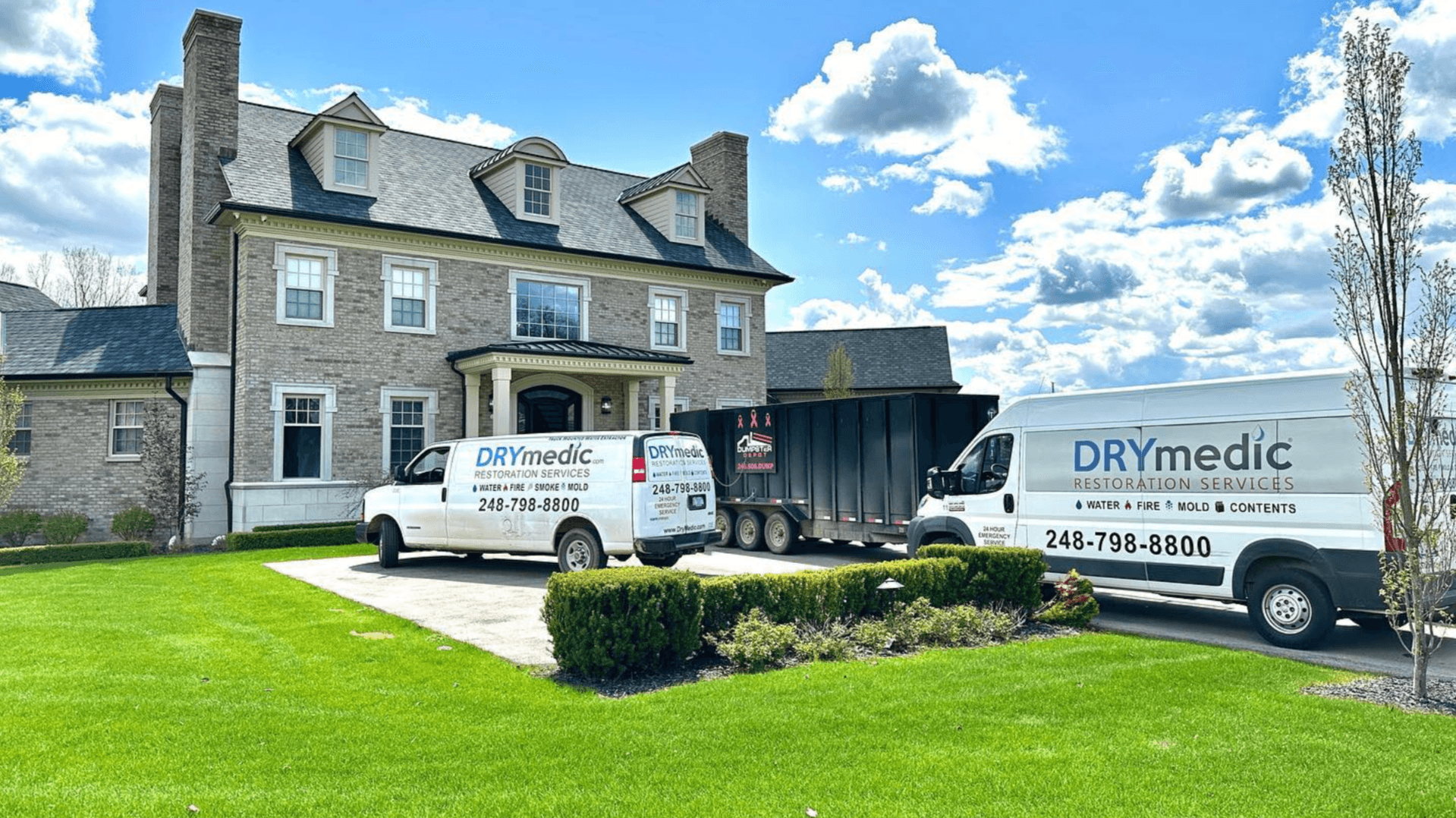
For entrepreneurs interested in the restoration industry, DRYmedic Restoration offers a service-based business focused on residential and commercial mitigation, remediation and reconstruction services following water, fire, smoke and mold damage. The brand combines emergency restoration services with opportunities to expand into additional service lines over time, creating multiple avenues for business growth.
The franchise is designed for owners who want to build a restoration business backed by established systems, training and national brand support. Franchisees begin by offering mitigation services and, after meeting the franchisor's qualifications, may add contents restoration and reconstruction services as their business matures.
The estimated initial investment required to begin the operation of a DRYmedic Restoration franchise ranges from $196,325 to $318,860. Item 7 of the 2026 Franchise Disclosure Document (FDD) breaks these costs down as follows:
Type of Expenditure
Minimum
Maximum
Franchise Fee
$45,000
$45,000
Initial Brand Fund Contribution
$3,570
$3,570
DASH Initial Setup Fee
$2,000
$2,700
Software
$3,240
$8,240
Technology Requirements (Hardware)
$800
$2,000
Telephone Services
$315
$525
Internet Services
$300
$525
Equipment & Vehicle Outfitting Fee
$80,000
$80,000
Additional Equipment & Supplies
$0
$10,000
Vehicle
$12,000
$17,000
Signage for Vehicle
$2,000
$5,000
Travel Expenses for Initial Training
$2,500
$6,000
Startup Supplies
$500
$5,000
Rent/Lease of Real Estate
$3,000
$10,000
Leasehold Improvements
$0
$5,000
Signage Costs
$100
$500
Insurance
$3,000
$12,000
Health, Safety & Industry Certifications
$1,500
$4,800
Professional Fees & Licensing
$4,500
$20,000
Full-Time Manager
(Mitigation Manager/Foreman)
$0
$25,000
Additional Funds (3 Months)
$32,000
$56,000
The total investment depends on several factors, such as whether the owner hires a full-time mitigation manager, purchases additional equipment or starts the business from home before moving into commercial space.
Franchisees are not required to begin in a commercial location. Depending on the business, owners may operate from home at first before relocating under the terms outlined in the franchise agreement.
Ongoing Fees
Once the business opens, franchisees can expect several recurring fees outlined in Item 6 of the FDD:
Type of Fee
Amount
Royalty Fee
Paid monthly: 7% of the first $1,000,000 in annual gross revenue from mitigation and contents services, 6% of annual gross revenue between $1,000,001 and $5,000,000, and 5% above $5,000,000. Reconstruction services are subject to a 3% royalty.
Brand Fund Contribution
Paid monthly: Beginning in month seven, the greater of the applicable contribution percentage or $595 through month 24, then based on the applicable contribution percentage thereafter.
Local Marketing
Paid monthly: $13,500 during the first three months, then $54,000 annually (prorated for partial years).
Website Fee
Paid monthly: $350
Technology Fees
Paid monthly: DASH software is $700 for the primary location, plus $350 for each secondary location. The Technology Fee is currently $100.
The local marketing requirement is structured to support both systemwide brand awareness and local business development. The FDD notes that portions of the annual marketing spend are directed toward digital advertising, search engine optimization, direct mail and other approved marketing efforts, while franchisees also have flexibility in how they allocate part of their local marketing budget.
A Business Model Built for Restoration Work
A significant portion of the initial investment is dedicated to equipment and vehicle outfitting, reflecting the nature of the restoration industry. Franchisees receive an initial equipment package, vehicle outfitting and technical equipment needed to begin performing mitigation services, while additional equipment can be rented or subcontracted until demand supports purchasing it outright.
Franchisees also receive training before opening and are expected to obtain certain health, safety and industry certifications. The FDD recommends OSHA training before opening and notes that water restoration certification through the Institute of Inspection, Cleaning and Restoration Certification (IICRC) is required before performing water restoration work. Additional certifications for fire, smoke and mold restoration are recommended before opening and required before providing those services.
The business initially focuses on mitigation services, including water, fire, smoke and mold restoration. After operating for at least 12 months and meeting the franchisor's qualifications, franchisees may receive approval to add contents restoration and reconstruction services. Expanding into those service lines requires additional equipment, training and insurance, but it also creates opportunities to expand the business over time.
How Much Can Franchisees Make?
According to Item 19 of the 2026 FDD, the 34 franchisees representing 59 territories that operated for the full 2025 fiscal year generated average territory gross revenue of $505,438. The top 25% of territories averaged $1,666,356 in gross revenue, while the highest-performing territory reported $2,953,213 in gross revenue.
Because some franchisees operate more than one territory, the FDD also reports results on a per-franchisee basis. Those 34 franchisees generated average gross revenue of $877,084, with the top quartile averaging $1,841,628. As with any franchise investment, individual results vary based on factors such as market conditions, territory size, owner involvement and operational execution.
A Restoration Franchise Built for Long-Term Growth
Restoration services are needed year-round and serve both residential and commercial customers. As outlined in the FDD, DRYmedic Restoration franchisees begin by offering mitigation services and have the opportunity to expand into additional restoration work as their businesses develop and they meet the franchisor's operational requirements.
How Much Does It Cost to Open a DRYmedic Restoration Franchise?
With an initial investment ranging from $196,325 to $318,860, DRYmedic gives entrepreneurs a way to enter the restoration industry with a scalable, service-based business.
For entrepreneurs interested in the restoration industry, DRYmedic Restoration offers a service-based business focused on residential and commercial mitigation, remediation and reconstruction services following water, fire, smoke and mold damage. The brand combines emergency restoration services with opportunities to expand into additional service lines over time, creating multiple avenues for business growth.
The franchise is designed for owners who want to build a restoration business backed by established systems, training and national brand support. Franchisees begin by offering mitigation services and, after meeting the franchisor's qualifications, may add contents restoration and reconstruction services as their business matures.
The estimated initial investment required to begin the operation of a DRYmedic Restoration franchise ranges from $196,325 to $318,860. Item 7 of the 2026 Franchise Disclosure Document (FDD) breaks these costs down as follows:
Type of Expenditure
Minimum
Maximum
Franchise Fee
$45,000
$45,000
Initial Brand Fund Contribution
$3,570
$3,570
DASH Initial Setup Fee
$2,000
$2,700
Software
$3,240
$8,240
Technology Requirements (Hardware)
$800
$2,000
Telephone Services
$315
$525
Internet Services
$300
$525
Equipment & Vehicle Outfitting Fee
$80,000
$80,000
Additional Equipment & Supplies
$0
$10,000
Vehicle
$12,000
$17,000
Signage for Vehicle
$2,000
$5,000
Travel Expenses for Initial Training
$2,500
$6,000
Startup Supplies
$500
$5,000
Rent/Lease of Real Estate
$3,000
$10,000
Leasehold Improvements
$0
$5,000
Signage Costs
$100
$500
Insurance
$3,000
$12,000
Health, Safety & Industry Certifications
$1,500
$4,800
Professional Fees & Licensing
$4,500
$20,000
Full-Time Manager
(Mitigation Manager/Foreman)
$0
$25,000
Additional Funds (3 Months)
$32,000
$56,000
The total investment depends on several factors, such as whether the owner hires a full-time mitigation manager, purchases additional equipment or starts the business from home before moving into commercial space.
Franchisees are not required to begin in a commercial location. Depending on the business, owners may operate from home at first before relocating under the terms outlined in the franchise agreement.
Ongoing Fees
Once the business opens, franchisees can expect several recurring fees outlined in Item 6 of the FDD:
Type of Fee
Amount
Royalty Fee
Paid monthly: 7% of the first $1,000,000 in annual gross revenue from mitigation and contents services, 6% of annual gross revenue between $1,000,001 and $5,000,000, and 5% above $5,000,000. Reconstruction services are subject to a 3% royalty.
Brand Fund Contribution
Paid monthly: Beginning in month seven, the greater of the applicable contribution percentage or $595 through month 24, then based on the applicable contribution percentage thereafter.
Local Marketing
Paid monthly: $13,500 during the first three months, then $54,000 annually (prorated for partial years).
Website Fee
Paid monthly: $350
Technology Fees
Paid monthly: DASH software is $700 for the primary location, plus $350 for each secondary location. The Technology Fee is currently $100.
The local marketing requirement is structured to support both systemwide brand awareness and local business development. The FDD notes that portions of the annual marketing spend are directed toward digital advertising, search engine optimization, direct mail and other approved marketing efforts, while franchisees also have flexibility in how they allocate part of their local marketing budget.
A Business Model Built for Restoration Work
A significant portion of the initial investment is dedicated to equipment and vehicle outfitting, reflecting the nature of the restoration industry. Franchisees receive an initial equipment package, vehicle outfitting and technical equipment needed to begin performing mitigation services, while additional equipment can be rented or subcontracted until demand supports purchasing it outright.
Franchisees also receive training before opening and are expected to obtain certain health, safety and industry certifications. The FDD recommends OSHA training before opening and notes that water restoration certification through the Institute of Inspection, Cleaning and Restoration Certification (IICRC) is required before performing water restoration work. Additional certifications for fire, smoke and mold restoration are recommended before opening and required before providing those services.
The business initially focuses on mitigation services, including water, fire, smoke and mold restoration. After operating for at least 12 months and meeting the franchisor's qualifications, franchisees may receive approval to add contents restoration and reconstruction services. Expanding into those service lines requires additional equipment, training and insurance, but it also creates opportunities to expand the business over time.
How Much Can Franchisees Make?
According to Item 19 of the 2026 FDD, the 34 franchisees representing 59 territories that operated for the full 2025 fiscal year generated average territory gross revenue of $505,438. The top 25% of territories averaged $1,666,356 in gross revenue, while the highest-performing territory reported $2,953,213 in gross revenue.
Because some franchisees operate more than one territory, the FDD also reports results on a per-franchisee basis. Those 34 franchisees generated average gross revenue of $877,084, with the top quartile averaging $1,841,628. As with any franchise investment, individual results vary based on factors such as market conditions, territory size, owner involvement and operational execution.
A Restoration Franchise Built for Long-Term Growth
Restoration services are needed year-round and serve both residential and commercial customers. As outlined in the FDD, DRYmedic Restoration franchisees begin by offering mitigation services and have the opportunity to expand into additional restoration work as their businesses develop and they meet the franchisor's operational requirements.