
Filta Environmental Kitchen Solutions
SPONSORED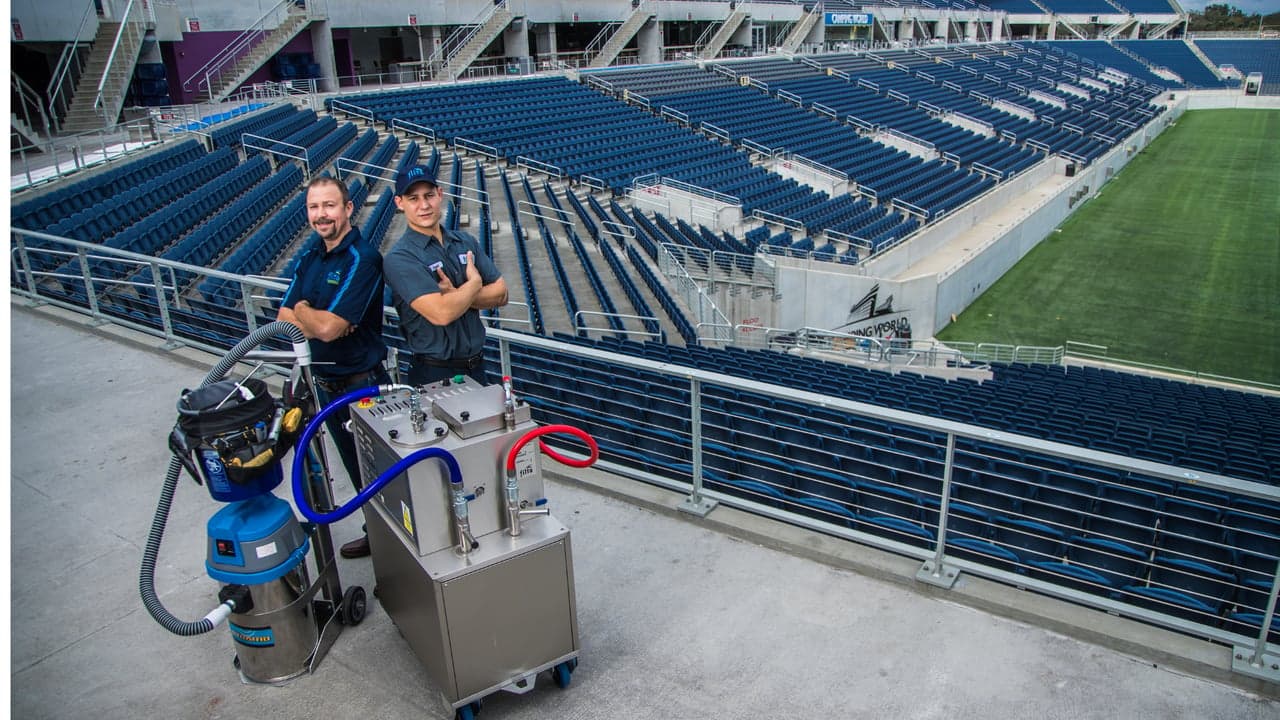
Why Iconic Dallas Kitchens Keep Renewing With Filta
In three years, this Dallas-Fort Worth franchise nearly tripled its business by solving a problem every commercial kitchen has.
Filta Environmental Kitchen Solutions has landed in some of North Texas’ best-known kitchens by taking on a job operators hate but can’t ignore: fryer cleaning and oil management. Across Dallas-Fort Worth, hospitals, entertainment venues, universities and high-volume restaurants keep turning to the same back-of-house partner because the service removes a universal pain point, reduces disruption and helps kitchens stay inspection-ready. In a market that loves its hometown names — including PGA star Scottie Scheffler — Filta’s traction is coming from something far less flashy: consistency in the places customers never see.
That demand is what pulled Filta franchise owner Max Paltsev into the business and what keeps major institutions renewing. His team serves an unusual mix of customers, from Billy Bob’s Texas to large hospital systems, but the underlying “why” stays the same: safer kitchens, less downtime and a routine operators don’t have to manage internally.
Fryer cleaning is time-consuming and hazardous, yet it’s nonnegotiable in a working kitchen. Paltsev said the job quietly taxes teams and creates risk because it pulls staff away from production while involving hot oil, chemicals and repetitive maintenance.
“Cleaning fryers is the most time-consuming, the most dangerous and the most unwanted job,” Paltsev said. “It is also nonnegotiable, often required several times a week.”
Filta’s pitch is straightforward. A technician shows up with the equipment, filters the oil, cleans the fryer and leaves it ready to run again, often in less than 20 minutes per fryer, while the kitchen keeps service moving. When operators weigh staff time, chemicals and burn risk, Paltsev said the decision is often easy.
“The net cost of having us do it versus them doing it is about $10 per fryer,” he said. “More than 80% of the time, if we provide a free demonstration of our service — going out and cleaning one of their fryers for free — we’ll get them as a customer.”
That also reframes the competitive landscape.
“We’re the only game in town,” Paltsev said. “Our biggest competitor is the guy or gal behind the fryer.”
For prospective franchisees, the bigger story is that Filta is not a one-time service. It’s a route-based business built on recurring relationships and renewal behavior, which can make revenue more predictable than many B2B operators expect.
Paltsev said his background in tech made the model easy to understand once he looked past the day-to-day work and focused on the fundamentals.
“When I looked at Filta’s business model, if I were to strip away used oil and fryer cleaning and guys in vans going out and doing things, and just put it in an Excel spreadsheet and redact all the names, you would think it is a software business,” he said. “The fundamentals are what you’d expect from a subscription business: predictable revenue, customers who stay, and room to grow within each account.”
He bought the full Dallas-Fort Worth territory in early 2023, and he said the business has nearly tripled since then and is growing about 50% annually. Once kitchens sign on, they tend to stay — more than 95% continue service, he said.
“We actually got our contracts renewed with Parkland, with UT Southwestern Medical System and with JPS,” he said. “Those are all staples of Dallas. We have agreements with all the major hospital systems in the Dallas-Fort Worth area. Those are state-funded systems and we got rave reviews and contract extensions from all of them.”
Beyond health care, Filta supports entertainment and large-venue foodservice, including operators connected to Legends, the hospitality group that manages major stadium and event operations. Paltsev said the decision often comes down to time saved once leaders see how quickly the service pays for itself in labor, safety and reduced disruption.
For some institutions, the value goes beyond labor and safety. Filta tracks what happens to the oil it filters and collects, then gives customers traceability and environmental impact reports that spell out the results.
“I think what is really great about Filta is that we can provide traceability reports and environmental impact reports to our customers,” Paltsev said. “It is amazing how that tiny little thing, where it said we saved half a tree and a pound of pesticide, all of a sudden is a big deal to them. To me personally, when I looked at it for the first time, I found it fascinating. All the things you don’t think about, but our customers love it.”
For large institutions with sustainability goals, reporting turns routine maintenance into something they can document internally without adding work for the kitchen team.
Filta’s value to franchisees is not just the work itself, but the structure around it. New owners step into an established system built to help them learn the service, run routes efficiently and build accounts the right way. The model is designed to be operationally repeatable, with training, processes and ongoing support that help owners standardize service quality as they add customers and grow route density. Territory protections also matter in a market like Dallas-Fort Worth, where scale comes from filling in a region methodically rather than chasing one-off jobs.
Dallas-Fort Worth is large enough to support meaningful route density, and Paltsev said the region’s growth adds to the long-term opportunity.
“I am very bullish on the Dallas-Fort Worth market,” he said. “I am bullish on Filta in general because of the quality of service we provide and our retention rate.”
He also stressed realistic expectations for new owners, particularly those building from scratch.
“If you are starting from scratch, patience is extremely important and being financially prepared is important,” Paltsev said. “It is not a rocket ship.”
According to Paltsev, a profitable route typically takes about 25 customers. From there, growth comes down to the basics — hiring the right techs, keeping the schedule tight and executing the same way every visit. For franchise prospects, the North Texas results point to a simple draw: an essential service that repeats week after week, across just about any kind of kitchen.
To find out more information on the costs to buy this franchise, please visit https://1851franchise.com/filta.
Filta Environmental Kitchen Solutions
SPONSOREDIn three years, this Dallas-Fort Worth franchise nearly tripled its business by solving a problem every commercial kitchen has.
Filta Environmental Kitchen Solutions has landed in some of North Texas’ best-known kitchens by taking on a job operators hate but can’t ignore: fryer cleaning and oil management. Across Dallas-Fort Worth, hospitals, entertainment venues, universities and high-volume restaurants keep turning to the same back-of-house partner because the service removes a universal pain point, reduces disruption and helps kitchens stay inspection-ready. In a market that loves its hometown names — including PGA star Scottie Scheffler — Filta’s traction is coming from something far less flashy: consistency in the places customers never see.
That demand is what pulled Filta franchise owner Max Paltsev into the business and what keeps major institutions renewing. His team serves an unusual mix of customers, from Billy Bob’s Texas to large hospital systems, but the underlying “why” stays the same: safer kitchens, less downtime and a routine operators don’t have to manage internally.
Fryer cleaning is time-consuming and hazardous, yet it’s nonnegotiable in a working kitchen. Paltsev said the job quietly taxes teams and creates risk because it pulls staff away from production while involving hot oil, chemicals and repetitive maintenance.
“Cleaning fryers is the most time-consuming, the most dangerous and the most unwanted job,” Paltsev said. “It is also nonnegotiable, often required several times a week.”
Filta’s pitch is straightforward. A technician shows up with the equipment, filters the oil, cleans the fryer and leaves it ready to run again, often in less than 20 minutes per fryer, while the kitchen keeps service moving. When operators weigh staff time, chemicals and burn risk, Paltsev said the decision is often easy.
“The net cost of having us do it versus them doing it is about $10 per fryer,” he said. “More than 80% of the time, if we provide a free demonstration of our service — going out and cleaning one of their fryers for free — we’ll get them as a customer.”
That also reframes the competitive landscape.
“We’re the only game in town,” Paltsev said. “Our biggest competitor is the guy or gal behind the fryer.”
For prospective franchisees, the bigger story is that Filta is not a one-time service. It’s a route-based business built on recurring relationships and renewal behavior, which can make revenue more predictable than many B2B operators expect.
Paltsev said his background in tech made the model easy to understand once he looked past the day-to-day work and focused on the fundamentals.
“When I looked at Filta’s business model, if I were to strip away used oil and fryer cleaning and guys in vans going out and doing things, and just put it in an Excel spreadsheet and redact all the names, you would think it is a software business,” he said. “The fundamentals are what you’d expect from a subscription business: predictable revenue, customers who stay, and room to grow within each account.”
He bought the full Dallas-Fort Worth territory in early 2023, and he said the business has nearly tripled since then and is growing about 50% annually. Once kitchens sign on, they tend to stay — more than 95% continue service, he said.
“We actually got our contracts renewed with Parkland, with UT Southwestern Medical System and with JPS,” he said. “Those are all staples of Dallas. We have agreements with all the major hospital systems in the Dallas-Fort Worth area. Those are state-funded systems and we got rave reviews and contract extensions from all of them.”
Beyond health care, Filta supports entertainment and large-venue foodservice, including operators connected to Legends, the hospitality group that manages major stadium and event operations. Paltsev said the decision often comes down to time saved once leaders see how quickly the service pays for itself in labor, safety and reduced disruption.
For some institutions, the value goes beyond labor and safety. Filta tracks what happens to the oil it filters and collects, then gives customers traceability and environmental impact reports that spell out the results.
“I think what is really great about Filta is that we can provide traceability reports and environmental impact reports to our customers,” Paltsev said. “It is amazing how that tiny little thing, where it said we saved half a tree and a pound of pesticide, all of a sudden is a big deal to them. To me personally, when I looked at it for the first time, I found it fascinating. All the things you don’t think about, but our customers love it.”
For large institutions with sustainability goals, reporting turns routine maintenance into something they can document internally without adding work for the kitchen team.
Filta’s value to franchisees is not just the work itself, but the structure around it. New owners step into an established system built to help them learn the service, run routes efficiently and build accounts the right way. The model is designed to be operationally repeatable, with training, processes and ongoing support that help owners standardize service quality as they add customers and grow route density. Territory protections also matter in a market like Dallas-Fort Worth, where scale comes from filling in a region methodically rather than chasing one-off jobs.
Dallas-Fort Worth is large enough to support meaningful route density, and Paltsev said the region’s growth adds to the long-term opportunity.
“I am very bullish on the Dallas-Fort Worth market,” he said. “I am bullish on Filta in general because of the quality of service we provide and our retention rate.”
He also stressed realistic expectations for new owners, particularly those building from scratch.
“If you are starting from scratch, patience is extremely important and being financially prepared is important,” Paltsev said. “It is not a rocket ship.”
According to Paltsev, a profitable route typically takes about 25 customers. From there, growth comes down to the basics — hiring the right techs, keeping the schedule tight and executing the same way every visit. For franchise prospects, the North Texas results point to a simple draw: an essential service that repeats week after week, across just about any kind of kitchen.
To find out more information on the costs to buy this franchise, please visit https://1851franchise.com/filta.
Sign up for the 1851 Franchise newsletter to get our biggest stories before everyone else
By signing up, you agree to our user agreement (including class action waiver and arbitration provisions), and acknowledge our privacy policy.

No related articles found