Franchisee Stories
SPONSORED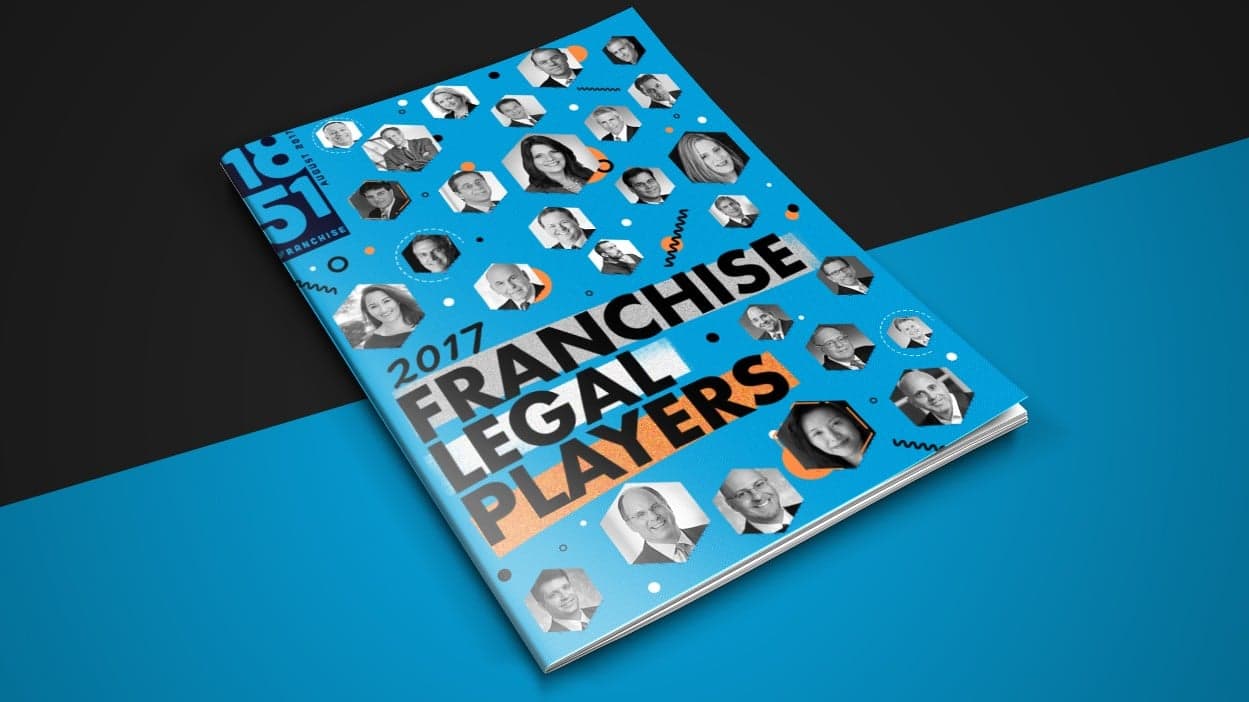
Franchising Under Attack Part 4
1851 Asks the Franchise Legal Players Why
Franchisee Stories
SPONSORED1851 Asks the Franchise Legal Players Why
According to the International Franchise Association (IFA) nearly 4 percent of all small businesses in the U.S. are franchises; Government might not understand the true impact
It is estimated that there are more than 900,000 franchise businesses across 300 business categories in the U.S. which provide nearly 18 million jobs and generate more than $2.1 trillion to the economy. Franchising is a huge industry, yet, quite often, policymakers don’t understand the fundamentals of franchising enough to be mindful of its impact and the impact of their ideas.
1851 interviewed its 2017 Franchise Legal Players, those charged with protecting the industry from a legal standpoint, about why they believe franchising is under attack:
Kate McComiskey, Assistant General Counsel Sylvan Learning: Franchising, like anything, is subject to the ebbs and flows of changes in the political and economic climate of the day. Certainly, there have been recent threats to the franchise business model, both with respect to franchisees and franchisors alike, but the way in which franchisees and franchisors have joined forces against the policymakers and regulators that seek to bring them down is remarkable. I am confident that, with all of us working together in unison, the franchise model will forge a way forward.
David Paris, Paris Ackerman: Regulations and controls over franchising have been progressing for decades. It is a multibillion dollar industry -- the industry players will find a way forward.
Lee Plave, Plave Koch: There have always been challenges from various places, sometimes even from within. The key to making progress for franchisors and franchisees is to attain operational excellence, which will cut down on the instances where something goes wrong and which is what regulators, lawmakers, plaintiffs’ counsel and courts seize upon.
Elizabeth Sigety, Fox Rothschild: I think there have been various challenges to franchising throughout the years. Now, most challenges have to do with a lack of understanding of the franchise model – especially on the joint employer front. I am an optimist generally, so I think we will pull through. There is just too much at stake.
Fredric Cohen, Cheng Cohen: It certainly has been targeted by those advancing particular agendas, whether it be service employee organizers, creative employment lawyers, or state and local legislatures, all of whom seem intent on taking advantage of a common misapprehension of the franchise relationship. That is new. What’s not new is the challenge that attack presents. Franchising has always needed to educate. In the current environment that need is heightened by the increased risks (some would suggest ‘existential’ risks—I’m not among them) we face. We as an industry need to do far better at helping all concerned to understand the role franchising plays in our economy, whether at the macro level or in a local community, and the true nature of the relationship. All franchising does at the end of the day is create jobs and afford opportunity. We need to get that message out far more effectively than we have done.
Stuart Hershman, DLA Piper: Franchising has definitely been under attack over the past two to three years, in particular in the “joint employer” area and in a few states where franchise-specific legislation has been introduced.
While attacks on franchising have occurred over the years, those attacks typically have been localized. What is most important about the joint employer issue is that it has not remained at the government level. The greatest challenge, in my opinion, comes from the numerous private plaintiff lawsuits, many of them purported class actions, seeking to hold franchisors responsible for the acts of their franchisees. I believe that most of these lawsuits have been inspired by the positions articulated by government agencies in support of the joint employer theory.
Sign up for the 1851 Franchise newsletter to get our biggest stories before everyone else
By signing up, you agree to our user agreement (including class action waiver and arbitration provisions), and acknowledge our privacy policy.

About the Author
Nick Powills, CFE, founded No Limit Agency in 2008 and serves as Chief Brand Strategist for the Chicago-based firm. No Limit is a full-service communications agency that establishes and elevates brands by bridging Public Relations, Social Media, Marketing, Advertising, Digital, and a lot of creativity, to best strategize well-rounded and successful campaigns for 50+ global franchise brands. By presenting visionary ideas and building real relationships, No Limit is able to create effective media branding strategies to help companies grow. Nick currently leads a staff of writers, media strategists, designers, social media experts and digital producers in an office think-tank where brands are humanized for strong, compelling media stories. Prior to starting No Limit at the age of 27, Nick spent four years working at a franchise PR agency where he mastered the art of building rapport with media outlets and creating newsworthy pitches for earned media placements. He holds a Bachelor of Journalism from Drake University in Iowa.