
GoodSpark
Why Franchise Growth Breaks When Unit Economics Don’t Work
A practical playbook for franchisors on building profitability first, creating enterprise value and scaling only after the numbers are right.
Most franchisors are taught to chase franchise sales. The logic sounds reasonable: more deals mean more revenue, more momentum and more visibility. But the brands that build lasting enterprise value don’t start with sales at all. They start with unit-level profitability.
Franchising only works when franchisees are able to build durable, profitable businesses inside each territory. Without that foundation, growth becomes fragile, expensive and difficult to sustain. The most successful franchise brands reverse the traditional mindset and build their entire system around the economics of the unit, not the volume of franchise agreements signed.
What follows is a practical framework for founders and franchisors who want to build a system that actually scales.
Franchising is often framed as a way to accelerate growth, but growth without economic alignment quickly creates strain. When franchisees struggle to generate profit, franchisors eventually feel it through support demands, stalled development and weakened brand value.
The right starting point is understanding what makes a single franchise location viable, repeatable and profitable. Until that is clear, everything else is guesswork.
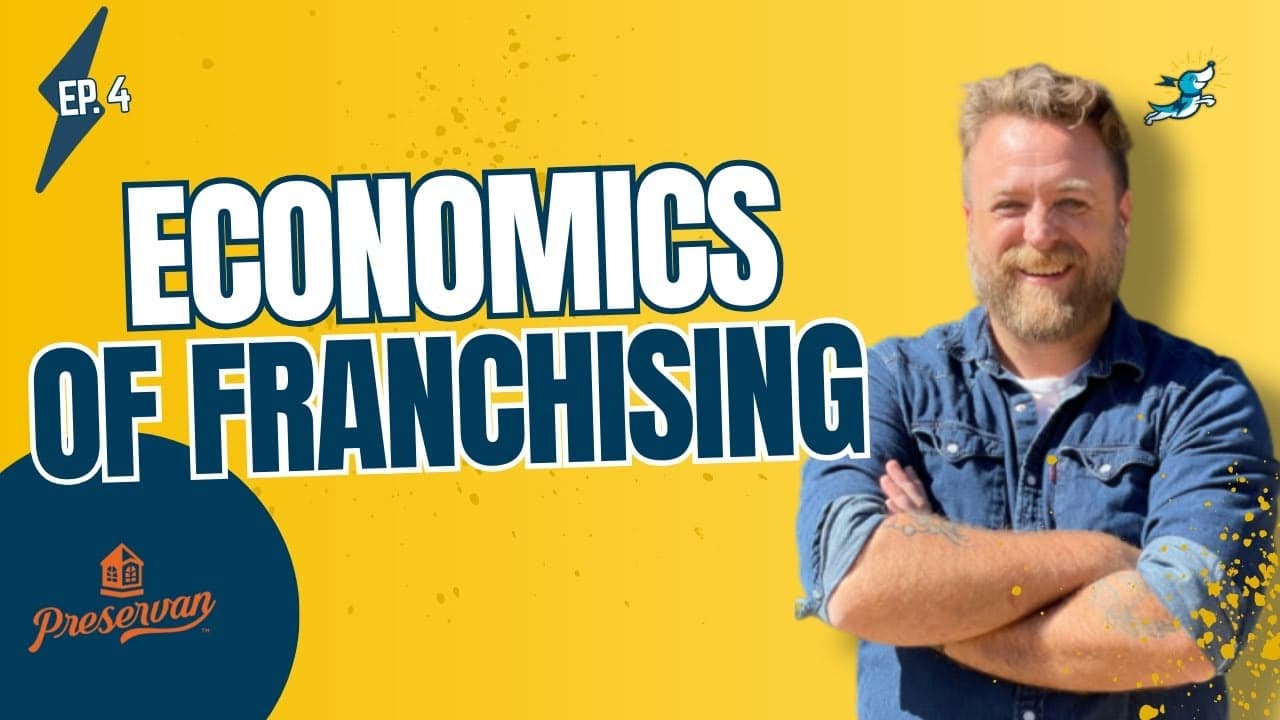
“You've got to start with the unit economics of your franchisee,” Preservan founder Ty McBride told GoodSpark Franchise Growth Accelerator CEO Charles Internicola in a recent episode of the “Building a Franchise Brand” podcast. “Because ultimately, however your model is designed, their success is going to directly affect whether or not you can be successful financially.”
When the unit works, the system works. When the unit struggles, no amount of franchise sales can fix it.
Unit economics don’t need to be complex to be effective. In most service-based businesses, profitability comes down to a handful of operational realities that can be measured, improved and scaled.
For Preservan, the model was built around production capacity rather than abstract growth targets. The focus wasn’t on how many franchisees the brand could sell, but how many productive vehicles could realistically operate within a territory and what those vehicles needed to generate in order for the business to work.
“We didn’t think about the number of franchisees,” McBride said. “We thought about the number of vehicles.”
Many emerging franchisors are drawn to the upfront appeal of initial franchise fees. Early on, those fees can feel like validation and momentum. Over time, they become a distraction.
Initial fees are not the value of a franchisee. The value lies in what that franchisee can build, sustain and reinvest over time.
“The value of your franchisee is not the initial franchise fee,” McBride said. “It is what they are going to produce for you over the long term.”
When franchisees are selected based solely on their ability to pay a fee, the system inherits risk. When they are selected based on their capacity to operate and grow a profitable business, the system gains durability.
Franchise agreements are long-term commitments. Unlike corporate locations, underperforming franchise units can’t simply be shut down when the economics don’t work. That reality raises the stakes on franchisee selection.
Successful systems look beyond personality fit and enthusiasm. They assess whether candidates have the capital, leadership ability and operational capacity to grow into the expectations of the model.
“If they don’t have that capital and capacity, you’re really losing traction,” McBride said. “You’re not creating enterprise value. You’re creating a detour.”
Growth that looks fast in the short term often slows dramatically once undercapitalized units begin to struggle.
Franchise brands that focus on enterprise value often appear to grow slowly at first. They pass on attractive markets, delay development pushes and invest heavily in franchisee support rather than visibility.
Over a longer horizon, those same brands tend to outperform their peers.
“You’re not just selling franchises,” Internicola said. “You’re creating enterprise value.”
Enterprise value comes from predictable unit performance, strong reporting, stable royalty streams and a system that can support scale without breaking.
One of the most dangerous gaps in franchising is the absence of a true franchisor pro forma. Many founders enter franchising without ever modeling what the business needs to look like at scale in order to be viable.
That includes understanding how many units must perform at what level in order to support staffing, systems, innovation and ongoing franchisee support.
“How do you know if that franchise fee’s enough?” McBride said. “How do you know if the royalties are the right number?”
Development dollars are finite. Every dollar spent chasing growth is a dollar not spent strengthening the system.
Preservan intentionally pulled back on development activity to focus on helping new franchisees succeed through their first full operating cycles. That decision delayed short-term sales but strengthened long-term positioning.
“We can go get more franchises, or we can focus on making sure franchisees have kick-ass years,” McBride said.
Strong performance eventually becomes the most effective sales tool a franchise system can have.
Franchising forces founders to shift from short-term operating cycles to long-term system building. Decisions made today often won’t show up in reported results for 12 to 24 months.
“I now do things for results in 2027 or 2028,” McBride said.
That mindset shift is uncomfortable for operators accustomed to faster feedback loops, but it is essential for building a sustainable franchise brand.
Every successful franchise system eventually arrives at the same conclusion: speed amplifies whatever foundation you build. If the economics are flawed, growth magnifies the damage. If the economics are sound, growth compounds the value.
“First right, then fast,” McBride said.
Franchising rewards patience, discipline and economic honesty. The brands that win aren’t the ones that sell the most franchises early. They’re the ones that build systems capable of lasting long after the initial excitement fades.
Watch the full podcast above or on YouTube.
For more information on GoodSpark and its services for developing franchises, visit https://www.goodsparkfranchise.com/.
GoodSpark
A practical playbook for franchisors on building profitability first, creating enterprise value and scaling only after the numbers are right.
Most franchisors are taught to chase franchise sales. The logic sounds reasonable: more deals mean more revenue, more momentum and more visibility. But the brands that build lasting enterprise value don’t start with sales at all. They start with unit-level profitability.
Franchising only works when franchisees are able to build durable, profitable businesses inside each territory. Without that foundation, growth becomes fragile, expensive and difficult to sustain. The most successful franchise brands reverse the traditional mindset and build their entire system around the economics of the unit, not the volume of franchise agreements signed.
What follows is a practical framework for founders and franchisors who want to build a system that actually scales.
Franchising is often framed as a way to accelerate growth, but growth without economic alignment quickly creates strain. When franchisees struggle to generate profit, franchisors eventually feel it through support demands, stalled development and weakened brand value.
The right starting point is understanding what makes a single franchise location viable, repeatable and profitable. Until that is clear, everything else is guesswork.
“You've got to start with the unit economics of your franchisee,” Preservan founder Ty McBride told GoodSpark Franchise Growth Accelerator CEO Charles Internicola in a recent episode of the “Building a Franchise Brand” podcast. “Because ultimately, however your model is designed, their success is going to directly affect whether or not you can be successful financially.”
When the unit works, the system works. When the unit struggles, no amount of franchise sales can fix it.
Unit economics don’t need to be complex to be effective. In most service-based businesses, profitability comes down to a handful of operational realities that can be measured, improved and scaled.
For Preservan, the model was built around production capacity rather than abstract growth targets. The focus wasn’t on how many franchisees the brand could sell, but how many productive vehicles could realistically operate within a territory and what those vehicles needed to generate in order for the business to work.
“We didn’t think about the number of franchisees,” McBride said. “We thought about the number of vehicles.”
Many emerging franchisors are drawn to the upfront appeal of initial franchise fees. Early on, those fees can feel like validation and momentum. Over time, they become a distraction.
Initial fees are not the value of a franchisee. The value lies in what that franchisee can build, sustain and reinvest over time.
“The value of your franchisee is not the initial franchise fee,” McBride said. “It is what they are going to produce for you over the long term.”
When franchisees are selected based solely on their ability to pay a fee, the system inherits risk. When they are selected based on their capacity to operate and grow a profitable business, the system gains durability.
Franchise agreements are long-term commitments. Unlike corporate locations, underperforming franchise units can’t simply be shut down when the economics don’t work. That reality raises the stakes on franchisee selection.
Successful systems look beyond personality fit and enthusiasm. They assess whether candidates have the capital, leadership ability and operational capacity to grow into the expectations of the model.
“If they don’t have that capital and capacity, you’re really losing traction,” McBride said. “You’re not creating enterprise value. You’re creating a detour.”
Growth that looks fast in the short term often slows dramatically once undercapitalized units begin to struggle.
Franchise brands that focus on enterprise value often appear to grow slowly at first. They pass on attractive markets, delay development pushes and invest heavily in franchisee support rather than visibility.
Over a longer horizon, those same brands tend to outperform their peers.
“You’re not just selling franchises,” Internicola said. “You’re creating enterprise value.”
Enterprise value comes from predictable unit performance, strong reporting, stable royalty streams and a system that can support scale without breaking.
One of the most dangerous gaps in franchising is the absence of a true franchisor pro forma. Many founders enter franchising without ever modeling what the business needs to look like at scale in order to be viable.
That includes understanding how many units must perform at what level in order to support staffing, systems, innovation and ongoing franchisee support.
“How do you know if that franchise fee’s enough?” McBride said. “How do you know if the royalties are the right number?”
Development dollars are finite. Every dollar spent chasing growth is a dollar not spent strengthening the system.
Preservan intentionally pulled back on development activity to focus on helping new franchisees succeed through their first full operating cycles. That decision delayed short-term sales but strengthened long-term positioning.
“We can go get more franchises, or we can focus on making sure franchisees have kick-ass years,” McBride said.
Strong performance eventually becomes the most effective sales tool a franchise system can have.
Franchising forces founders to shift from short-term operating cycles to long-term system building. Decisions made today often won’t show up in reported results for 12 to 24 months.
“I now do things for results in 2027 or 2028,” McBride said.
That mindset shift is uncomfortable for operators accustomed to faster feedback loops, but it is essential for building a sustainable franchise brand.
Every successful franchise system eventually arrives at the same conclusion: speed amplifies whatever foundation you build. If the economics are flawed, growth magnifies the damage. If the economics are sound, growth compounds the value.
“First right, then fast,” McBride said.
Franchising rewards patience, discipline and economic honesty. The brands that win aren’t the ones that sell the most franchises early. They’re the ones that build systems capable of lasting long after the initial excitement fades.
Watch the full podcast above or on YouTube.
For more information on GoodSpark and its services for developing franchises, visit https://www.goodsparkfranchise.com/.
Sign up for the 1851 Franchise newsletter to get our biggest stories before everyone else
By signing up, you agree to our user agreement (including class action waiver and arbitration provisions), and acknowledge our privacy policy.

No related articles found