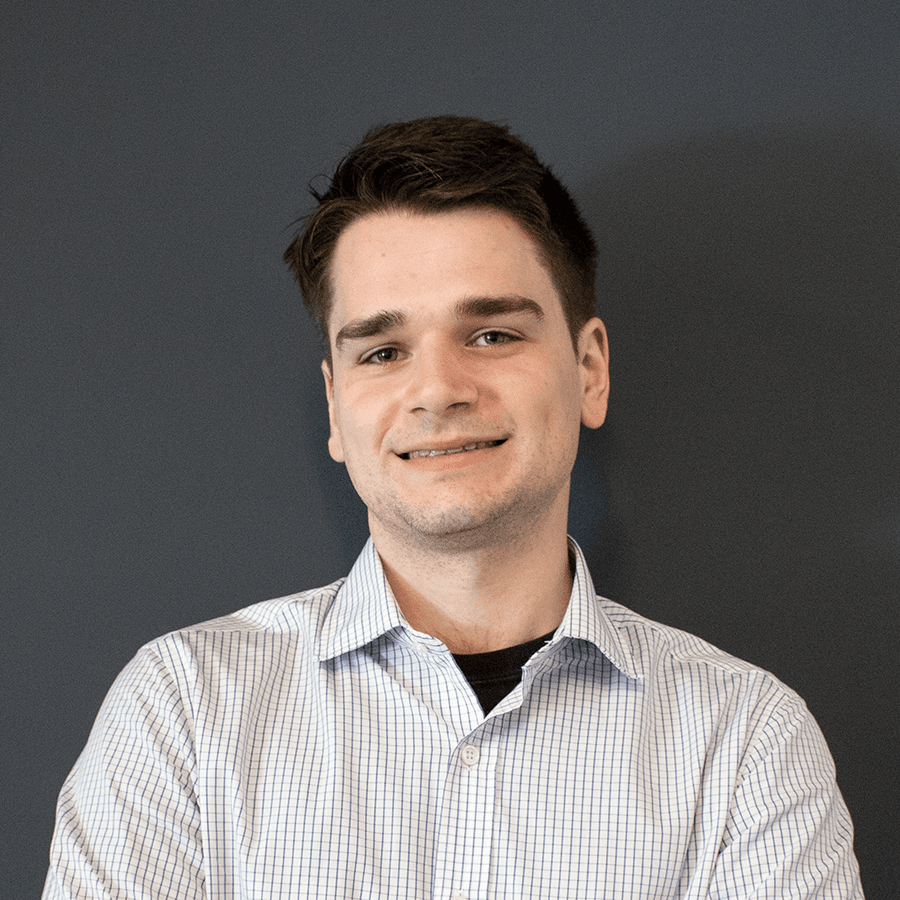
Founded in 1980, Homewatch CareGivers is a long-standing leader inside the expanding home-care franchise world, providing flexible non-medical services with an expansive menu of specializations. 

Now, Homewatch CareGivers is celebrating its 45th year with a future-facing overhaul under President and CEO Todd Houghton — adding a proprietary tech stack, codifying systemwide processes and reframing care around wellness to meet surging demand and a more discerning buyer. 

“We did all of that within the first 12 months,” Houghton said. “Now, at 36 months, we’ve almost doubled the size of our organization through offices. Our revenue has increased over the last three years by more than 75%.”

A franchise lifer who started as a seventh-grader helping his family grow an eight-unit cookie concept, Houghton brings an entrepreneurial, owner-empath mindset to the brand. He arrived three years ago with a mandate from the company’s equity partners to right-size systems and set the 45-year-old organization up to scale for the next era. That meant standardizing operations for legacy owners, building support programs to lift laggards and identifying — and replicating — the habits of top performers.

“I’ve been in [their] shoes; I’ve been in [their] seat. I know the stresses of making sure you have enough money to make payroll this week,” Houghton said. “Being able to level with them and have them understand that I’ve been there — and that they’re in business for themselves but not by themselves because I’ve carried the same journey — that matters.”

Acquired by Authority Brands in September 2017, Homewatch CareGivers pays special attention to training, support and creating a connected hub of franchisees that work together. They have been recognized by Franchise Times, Entrepreneur Media, Experience List and FranServe. 

On the service side, Houghton formalized Homewatch CareGivers Total Care Solutions, a continuum that meets clients wherever they are “in the care journey.” He introduced Active Care to proactively combat isolation and Wellness Care (an evolution of companion care) that emphasizes activity, strength and community. The push is backed by data: People are living longer but with more chronic conditions; the average length of stay has stretched from roughly nine to 10 months a decade ago to about 16 months today, a trend Houghton expects to accelerate as wellness becomes core to in-home support.

Differentiation, he argues, now matters as margins tighten and adult children — the “care influencers” — shop with sophisticated expectations. “The reason I point to the last five years is that’s when companies had to start developing differentiators,” Houghton said. “You have to bring in technology. You have to have supplemental services rather than just companion care and personal care.”

The brand also broadened its aperture, strategically dropping “Senior Care” from its name to reflect a pediatrics-through-geriatrics focus and a tech-comfortable younger clientele. While about 80% of revenue is still private pay, Houghton is pushing for broader payer recognition by capturing the right data to prove value across loneliness, safety and health metrics.

Looking ahead, he expects meaningful M&A. “When I got into it, there were — give or take — a dozen or so companies franchising in the space,” he said. “Today, there are close to 60 … Then take all the independents out there trying to do this as well. There’s got to be a consolidation.”

Houghton joined 1851 Franchise Publisher Nick Powills on a recent episode of the “Meet the Franchise” podcast. A transcript of the interview has been provided below. It has been edited for brevity, clarity and style.

Nick Powills: I like to start with you, Todd. If every human being in franchising goes back to the day before they were in franchising and tries to explain it — we can’t. So question one is scripted; everything else goes off script. How did you accidentally fall into franchising? What’s your franchise backstory?

Todd Houghton: I’ve been in franchising for more than 40 years. I was afforded the opportunity to get into franchising in seventh grade with my family. That’s where my journey started — as a franchisee of a cookie concept that we grew throughout the Midwest as part of being a franchisee with them, and we were the top multi-unit owner for about 12 years before we sold that and I continued my journey in franchising.

Powills: So that’s seventh grade until college?

Houghton: When I finished college, I decided I wanted to go a different path in franchising.

Powills: Here’s what I love about that story. I would imagine — and there’s got to be a data point on this — most people get into franchising because they want to change the projection of their life or the impact of wealth on their family or lifestyle. Your parents go through this. Out of curiosity, your parents are becoming franchisees — did you understand what that meant, and at what point did you understand it?

Houghton: I think it was a unique situation. I would say yes, I did understand. My parents made the decision to start with one location as a passive income thing for them. They both had other careers, and the intent was for me to learn business and get an education on that. When I moved into high school, I created a program for peers in high school who could come work and get credits at school. So I learned to manage people — you have HR aspects, operations aspects — all the things that go along with operating a brick-and-mortar food business.

Powills: Follow-up to that first statement. I did a franchisee interview last week. The guy and his wife were in the movie and TV business. He said, “Our kids could care less that we were in that. But when we opened up a restaurant, we were like rock stars.” Is that how you felt about your parents? It’s pretty cool to be able to say, “My parents own this cookie shop.”

Houghton: It was cool. We ultimately grew it to eight locations across the Midwest. It was an amazing learning experience for me at a very young age. Friends and peers in high school got to experience the relationship as well. Interestingly enough, I keep in touch with many people I went to high school with, and the number of them who have gone down the franchise route just from that experience is phenomenal.

Powills: You’re at a cocktail party. You work for a company in your current stage. Do you still identify more as an entrepreneur than an employee?

Houghton: Absolutely. I’m very entrepreneurial at heart. I lead my organization with that philosophy and thought process. A lot of it is: you’ve got to be a risk-taker regardless of where you’re at in the organization. If you want an organization to grow, you’ve got to have that entrepreneur-mind spirit — that’s being a risk-taker.

Powills: Years ago, when I started our company, I wrote a column called “Catch the Entrepreneur Before They Catch You.” The point is: entrepreneur doesn’t mean you have to go do it on your own. It means a business has to recognize that as a skill set and leverage it. You’ve got to take care of the entrepreneur and make them feel wanted and part of the system so you can leverage that superpower. Businesses almost poo-poo the idea of having an entrepreneur in your system — “We don’t want entrepreneurs; we want order-takers.” When an entrepreneurial mindset is in a system, there’s more detail to P&Ls; there’s a relationship — especially in franchising — with franchisees that recognizes what they feel like on a daily basis. When you interface with a franchisee, is that one of your superpowers — that you can get down to their level and understand their pains and the benefits of being a franchise owner?

Houghton: I’ve been in your shoes; I’ve been in your seat. I know the stresses of making sure you have enough money to make payroll this week. I know the stresses of making sure you have enough money to meet all your vendor bills. You can build that relationship, which is what franchising is all about. In my seat, I have a lot of influence with not a lot of authority in some cases. Being able to level with them and have them understand that I’ve been there — and that they’re in business for themselves but not by themselves because I’ve carried the same journey — that matters.

Powills: Let’s flip over to Homewatch CareGivers. Give me the state of the union. What’s going on with the business right now?

Houghton: I came over about three years ago to lead the company. Our equity partners saw us approaching our 45th year, which we’re celebrating this year, and wanted to make sure we right-size our systems and processes to keep scaling and be around for another 45 years or longer. We’re a legacy brand being around that long. The home care space has changed dramatically in just the last five years — and I’ve been in the space for about 14 years — so it was time to evolve and elevate the organization.

We first set out to evaluate the brand as a whole — our service lines, what we were doing, who we were servicing — and we formulated our Homewatch CareGivers Total Care Solutions to have a service line to meet people wherever they were in their care journey, so they could fulfill their dream of recovering or aging at home. Then we worked to overcome the challenge of staffing. We’re a people business — people are in the home taking care of people — but they come in short supply. So we brought technology in to supplement the care experience. We launched our tech stack, Homewatch Connect, comprising a wellness hub and sensors that go into homes to supplement services, keep clients engaged, and fight off loneliness and isolation, keeping them at home much longer.

We did all of that within the first 12 months. Now, at 36 months, we’ve almost doubled the size of our organization through offices. Our revenue has increased over the last three years by more than 75%. We don’t have all the territories ramped yet that we’ve grown with, but there’s phenomenal growth with those new territories coming in.

Powills: In a legacy brand you can miss foundational elements. You’ve exploded in growth. The only way you get there is with systems and processes. You get into this company, you have a playbook — “Here’s how we win, here’s what’s missing, here’s how we fix this and now grow.” Was building systems, processes and the tech stack the magic to setting up a really good business that can now grow?

Houghton: Yes. We identified quickly — within 90 days — that there were not a lot of systems and processes in place. Our legacy owners, when they came into the system, were told to find their way — and that’s exactly what they did. Where we were all supposed to be serving strawberry ice cream, we had some serving vanilla, chocolate and 31 flavors. We had to quickly dive in and bring processes in place.

Was that challenging? Yes. You’re facing franchisees who’ve been doing it one way for a long time. You have to explain the value, the reasoning and what it will do for them. We started rolling out new processes and systems that allow us to scale quickly. That comes from my historical experience as well. I’ve done that previously in organizations I’ve been with. I was fortunate to have the resources to do that, and if I didn’t, my equity company allowed me to bring them in because of what I was proposing.

Powills: As a kid falling into franchising and building a program in high school, you were communicating the benefits of franchising while remaining entrepreneurial. For a franchisee, they buy a box. If leadership changes and a new leader says, “Here’s what we’re going to do now,” there’s apprehension: “We hear you, but the last guy said do it this way.” If you rule with an iron thumb, it’s harder to get buy-in versus getting down to their level — “I’ve been here before; I know what it feels like.” To succeed, did you have to listen to venting, let it stabilize and then move to proof of concept?

Houghton: Regardless of where you are in the journey of leading the ship, you’re always going to have that happen. Any new process or program you want to put in place — whether refining or new to grow the business — you’ll have people on the journey who are going to bark, and they’re going to continue to bark. You have to let them bark, and once the barking subsides, then you can say, “Let’s move. Let’s go.”

Powills: Sales cures all sins, right?

Houghton: Usually.

Powills: I want to turn to senior care in general. The demand is extreme. If we go back to our parents when they were taking care of their parents, this didn’t even exist. Senior care has compounded in growth and impact — you said over the last five years, but go back 10 and you see how far it’s come. Differentiation didn’t matter as much; it was: Did you show up? Are you taking care of my aging parents with integrity? My perception is differentiation doesn’t matter as much; it’s more the culture about taking care of the people who take care of the people. How accurate is that? What’s your take?

Houghton: If we roll back to when I got in about 14 years ago, there wasn’t a lot of differentiation; it was a commodity. You could pick up the Yellow Pages, call one and if they could send somebody out, that’s what it was. The reason I point to the last five years is that’s when companies had to start developing differentiators. The demand is absolutely there, but margins are thinning quickly, so you have to have differentiators. You have to bring in technology. You have to have supplemental services rather than just companion care and personal care. People are living much longer than they ever have, but they’re much sicker — and they still want to live at home. You have dementia, Parkinson’s and other chronic illnesses. Your company has to have specialists to have that differentiator that keeps mom or dad at home longer.

We see that in length of stay. Ten years ago, length of stay was probably around nine or 10 months. Today, it’s about 16 months.

Powills: Wow.

Houghton: The reason is that the appropriate care level is being given to the person who needs the care. We’re equipped with providing the right level based on their specialty needs. We’ve done numerous studies in the last several years — through universities, health care systems, the consumer and what we call the “care influencer.” The consumer is the client — the person getting the care. The care influencer is the adult child managing the care, and their preferences have changed. It’s not so much just calling one company and saying, “I need somebody to come do this for mom.” Now it’s, “What do you do?” They’ve become a lot more sophisticated — thanks to the internet, thanks to AI recently, and thanks to the child-care segment. A lot of these adult children have put their kids into higher-end preschools and understand the difference between a high-end preschool and a daycare. It’s a similar analogy.

Powills: Because of all the work that’s been done — and take your 14 years of educating this category — when I was a kid, the phrase was, “You send grandma and grandpa to the old people’s home.” I don’t hear that from my kids today because we’re evolving it. There are now alternatives. I think it’s going to continue to evolve into a wellness category as well, because you talked about mental health and loneliness. I’d imagine length of stay will increase not just because of health issues but because of the positive impact a caregiver can have if there is loneliness. I think that’s the evolution. If I’m betting, I’d bet that number within five years goes from 16 months to beyond two years. What do you think?

Houghton: I fully agree with you. One of the things we did in our service lines on the front side that was new to the industry — we introduced Active Care, a tech-forward solution to focus on isolation and loneliness, looking at someone who might be a recent widow or widower. We don’t want them to self-isolate and age themselves quickly. What’s traditional in the industry — companion care — we’ve rebranded as Wellness Care. Looking out three and five years, it’s more than light house-keeping or meal prep; it’s getting that person out to SilverSneakers, to the gym, being more active, because everybody wants to live longer today. That’s a critical component. Overarching all of that will be continued technology so people can live at home in a safe, secure fashion.

The loneliness and isolation aspect is a passion of mine. Two-thirds of the senior population claim they’re lonely or isolated. That’s a huge number, and it’s the leading cause of suicide in men older than 65. Why can’t we — the industry as a whole, not just my brand (though my brand would be great) — be a more critical part of care? It will continue to change. A lot of it is education. We’re working at a higher level — and by “we,” I mean others in the industry I’m associated with — on how to get the appropriate data points to get payer sources outside private pay to understand the value. That’s going to be a big piece to shift and have more people get care.

We still run predominantly a private-pay model — about 80% private pay, 20% other payer sources. But with people living longer, the increased percentage wanting to age at home, and less savings for people as they age — private pay is not sustainable for 10 or 12 years. It has to shift somehow.

Powills: If it starts shifting to wellness or fitness or other components, that adds more joy. Then caregivers will start having more purpose, and stability should go up. Do you see an eventual consolidation? Will the best brands putting in technology and thinking about the future become the largest?

Houghton: I believe we’re going to have quite a bit of M&A in the next few years and consolidation. When I got into it, there were — give or take — a dozen or so companies franchising in the space. Today, there are close to 60 trying to franchise in the space — that’s just franchising. Then take all the independents out there trying to do this as well. There’s got to be consolidation. It’s just a matter, in franchising, of having all the stars align to do it right. You run into issues — if you’re acquiring somebody, you have overlapping territories. How do we overcome that? We need to evaluate that. All those things go into planning to look at what we can do to do those acquisitions.

Powills: Let’s shift to the franchise buyer. The biggest miss is visionaries — founders, leaders, franchisees — their stories get buried and we default to “buy my franchise.” For anybody who watched this, they’re hearing a visionary talk about stabilizing structure, technology and the future. What else do you want them to know about the business opportunity?

Houghton: You’re looking to get into business for yourself, but not by yourself. That’s a critical piece when evaluating any franchise. What kind of support are they providing? What is that box — and has the box evolved? That’s critical, because you see brands die when they don’t evolve. As someone looking at the opportunity, dig deeper. Ask the right questions. Know what the future looks like for you within the brand — those are key components.

Right now, on the business side, another advantage you have is market. If someone says, “I want senior care,” and they go to Brand X, and for whatever reason that territory is sold out, they start going down the list. As long as you’re there to say, “Let us show you our point of differentiation — yes, we have a territory available,” it should open a triggered conversation based on that trickle-down effect. Exposure matters — media, content, social. Almost every brand in senior care defaults to pictures of older people. We’re actually selling to the children of the older people. Let’s show that personality. Our franchisees are usually the age of the children of the older generation. When we can create that opportunity to have a visionary talk, it creates tremendous value to the buyer.

The franchisee has changed dramatically. When I first got into it, it was a lot of people retiring — approaching senior age themselves — who wanted to help other seniors. Today, it’s a much younger person looking to build a portfolio and generational wealth and opportunity for their kids. We’ve done a lot to identify personas through our fan sites and things like that. You get that feeling of “That could be me.” The person who used to be an accountant — that could be me; I could go into business for myself. Or the person who was a mechanic — I could go into business for myself because this brand brings those resources for me to be successful.

Powills: I think about Orangetheory Fitness or Massage Envy. The spa business existed; they figured out a way to pull it out and say, “This is supposed to be part of your life.” What you’re doing in wellness is a big move. It’s going to change the way we look at biometrics and biohacking. I think it’s going to impact the senior segment significantly. The business that cracks the code — where we’re not just here to help make the end-of-life time more comfortable, but to enhance what happens from 75 and beyond — that’s powerful. I love that you’re already thinking about that. Kudos to you.

Houghton: When I came in, we made the strategic move to drop “Senior Care” from the name and just go by Homewatch CareGivers. Strategically, we take care of pediatrics through geriatrics. If you have an adult child in their 20s living with autism — and in the past you had to put them into group homes because you couldn’t manage that care — today, you have options. In home care, we do all of those things, too. It’s not just the senior side. It’s about taking care of anybody who wants to live at home and live with dignity at home. That’s where a lot of the wellness comes in. That’s where technology comes in — because younger generations are much more connected, understand technology and want quick results or quick answers — talking to a doctor, nurse or caregiver. That’s why we’re positioning ourselves for that as we move into the future.

Powills: If I went back 14 years ago and predicted that you and I were going to talk passionately about senior care for 30 minutes, I wouldn’t have guessed it. But I love where the category is going, and I’m grateful you gave me some of your time and told some of your story.

Houghton: I appreciate you. I’m passionate about it. I love it.

Powills: For Todd, I’m Nick. It’s another episode of “Meet the Franchise.” Take care.

Watch the full interview here

Founded in 1980, Homewatch CareGivers is a long-standing leader inside the expanding home-care franchise world, providing flexible non-medical services with an expansive menu of specializations. 

Now, Homewatch CareGivers is celebrating its 45th year with a future-facing overhaul under President and CEO Todd Houghton — adding a proprietary tech stack, codifying systemwide processes and reframing care around wellness to meet surging demand and a more discerning buyer. 

“We did all of that within the first 12 months,” Houghton said. “Now, at 36 months, we’ve almost doubled the size of our organization through offices. Our revenue has increased over the last three years by more than 75%.”

A franchise lifer who started as a seventh-grader helping his family grow an eight-unit cookie concept, Houghton brings an entrepreneurial, owner-empath mindset to the brand. He arrived three years ago with a mandate from the company’s equity partners to right-size systems and set the 45-year-old organization up to scale for the next era. That meant standardizing operations for legacy owners, building support programs to lift laggards and identifying — and replicating — the habits of top performers.

“I’ve been in [their] shoes; I’ve been in [their] seat. I know the stresses of making sure you have enough money to make payroll this week,” Houghton said. “Being able to level with them and have them understand that I’ve been there — and that they’re in business for themselves but not by themselves because I’ve carried the same journey — that matters.”

Acquired by Authority Brands in September 2017, Homewatch CareGivers pays special attention to training, support and creating a connected hub of franchisees that work together. They have been recognized by Franchise Times, Entrepreneur Media, Experience List and FranServe. 

On the service side, Houghton formalized Homewatch CareGivers Total Care Solutions, a continuum that meets clients wherever they are “in the care journey.” He introduced Active Care to proactively combat isolation and Wellness Care (an evolution of companion care) that emphasizes activity, strength and community. The push is backed by data: People are living longer but with more chronic conditions; the average length of stay has stretched from roughly nine to 10 months a decade ago to about 16 months today, a trend Houghton expects to accelerate as wellness becomes core to in-home support.

Differentiation, he argues, now matters as margins tighten and adult children — the “care influencers” — shop with sophisticated expectations. “The reason I point to the last five years is that’s when companies had to start developing differentiators,” Houghton said. “You have to bring in technology. You have to have supplemental services rather than just companion care and personal care.”

The brand also broadened its aperture, strategically dropping “Senior Care” from its name to reflect a pediatrics-through-geriatrics focus and a tech-comfortable younger clientele. While about 80% of revenue is still private pay, Houghton is pushing for broader payer recognition by capturing the right data to prove value across loneliness, safety and health metrics.

Looking ahead, he expects meaningful M&A. “When I got into it, there were — give or take — a dozen or so companies franchising in the space,” he said. “Today, there are close to 60 … Then take all the independents out there trying to do this as well. There’s got to be a consolidation.”

Houghton joined 1851 Franchise Publisher Nick Powills on a recent episode of the “Meet the Franchise” podcast. A transcript of the interview has been provided below. It has been edited for brevity, clarity and style.

Nick Powills: I like to start with you, Todd. If every human being in franchising goes back to the day before they were in franchising and tries to explain it — we can’t. So question one is scripted; everything else goes off script. How did you accidentally fall into franchising? What’s your franchise backstory?

Todd Houghton: I’ve been in franchising for more than 40 years. I was afforded the opportunity to get into franchising in seventh grade with my family. That’s where my journey started — as a franchisee of a cookie concept that we grew throughout the Midwest as part of being a franchisee with them, and we were the top multi-unit owner for about 12 years before we sold that and I continued my journey in franchising.

Powills: So that’s seventh grade until college?

Houghton: When I finished college, I decided I wanted to go a different path in franchising.

Powills: Here’s what I love about that story. I would imagine — and there’s got to be a data point on this — most people get into franchising because they want to change the projection of their life or the impact of wealth on their family or lifestyle. Your parents go through this. Out of curiosity, your parents are becoming franchisees — did you understand what that meant, and at what point did you understand it?

Houghton: I think it was a unique situation. I would say yes, I did understand. My parents made the decision to start with one location as a passive income thing for them. They both had other careers, and the intent was for me to learn business and get an education on that. When I moved into high school, I created a program for peers in high school who could come work and get credits at school. So I learned to manage people — you have HR aspects, operations aspects — all the things that go along with operating a brick-and-mortar food business.

Powills: Follow-up to that first statement. I did a franchisee interview last week. The guy and his wife were in the movie and TV business. He said, “Our kids could care less that we were in that. But when we opened up a restaurant, we were like rock stars.” Is that how you felt about your parents? It’s pretty cool to be able to say, “My parents own this cookie shop.”

Houghton: It was cool. We ultimately grew it to eight locations across the Midwest. It was an amazing learning experience for me at a very young age. Friends and peers in high school got to experience the relationship as well. Interestingly enough, I keep in touch with many people I went to high school with, and the number of them who have gone down the franchise route just from that experience is phenomenal.

Powills: You’re at a cocktail party. You work for a company in your current stage. Do you still identify more as an entrepreneur than an employee?

Houghton: Absolutely. I’m very entrepreneurial at heart. I lead my organization with that philosophy and thought process. A lot of it is: you’ve got to be a risk-taker regardless of where you’re at in the organization. If you want an organization to grow, you’ve got to have that entrepreneur-mind spirit — that’s being a risk-taker.

Powills: Years ago, when I started our company, I wrote a column called “Catch the Entrepreneur Before They Catch You.” The point is: entrepreneur doesn’t mean you have to go do it on your own. It means a business has to recognize that as a skill set and leverage it. You’ve got to take care of the entrepreneur and make them feel wanted and part of the system so you can leverage that superpower. Businesses almost poo-poo the idea of having an entrepreneur in your system — “We don’t want entrepreneurs; we want order-takers.” When an entrepreneurial mindset is in a system, there’s more detail to P&Ls; there’s a relationship — especially in franchising — with franchisees that recognizes what they feel like on a daily basis. When you interface with a franchisee, is that one of your superpowers — that you can get down to their level and understand their pains and the benefits of being a franchise owner?

Houghton: I’ve been in your shoes; I’ve been in your seat. I know the stresses of making sure you have enough money to make payroll this week. I know the stresses of making sure you have enough money to meet all your vendor bills. You can build that relationship, which is what franchising is all about. In my seat, I have a lot of influence with not a lot of authority in some cases. Being able to level with them and have them understand that I’ve been there — and that they’re in business for themselves but not by themselves because I’ve carried the same journey — that matters.

Powills: Let’s flip over to Homewatch CareGivers. Give me the state of the union. What’s going on with the business right now?

Houghton: I came over about three years ago to lead the company. Our equity partners saw us approaching our 45th year, which we’re celebrating this year, and wanted to make sure we right-size our systems and processes to keep scaling and be around for another 45 years or longer. We’re a legacy brand being around that long. The home care space has changed dramatically in just the last five years — and I’ve been in the space for about 14 years — so it was time to evolve and elevate the organization.

We first set out to evaluate the brand as a whole — our service lines, what we were doing, who we were servicing — and we formulated our Homewatch CareGivers Total Care Solutions to have a service line to meet people wherever they were in their care journey, so they could fulfill their dream of recovering or aging at home. Then we worked to overcome the challenge of staffing. We’re a people business — people are in the home taking care of people — but they come in short supply. So we brought technology in to supplement the care experience. We launched our tech stack, Homewatch Connect, comprising a wellness hub and sensors that go into homes to supplement services, keep clients engaged, and fight off loneliness and isolation, keeping them at home much longer.

We did all of that within the first 12 months. Now, at 36 months, we’ve almost doubled the size of our organization through offices. Our revenue has increased over the last three years by more than 75%. We don’t have all the territories ramped yet that we’ve grown with, but there’s phenomenal growth with those new territories coming in.

Powills: In a legacy brand you can miss foundational elements. You’ve exploded in growth. The only way you get there is with systems and processes. You get into this company, you have a playbook — “Here’s how we win, here’s what’s missing, here’s how we fix this and now grow.” Was building systems, processes and the tech stack the magic to setting up a really good business that can now grow?

Houghton: Yes. We identified quickly — within 90 days — that there were not a lot of systems and processes in place. Our legacy owners, when they came into the system, were told to find their way — and that’s exactly what they did. Where we were all supposed to be serving strawberry ice cream, we had some serving vanilla, chocolate and 31 flavors. We had to quickly dive in and bring processes in place.

Was that challenging? Yes. You’re facing franchisees who’ve been doing it one way for a long time. You have to explain the value, the reasoning and what it will do for them. We started rolling out new processes and systems that allow us to scale quickly. That comes from my historical experience as well. I’ve done that previously in organizations I’ve been with. I was fortunate to have the resources to do that, and if I didn’t, my equity company allowed me to bring them in because of what I was proposing.

Powills: As a kid falling into franchising and building a program in high school, you were communicating the benefits of franchising while remaining entrepreneurial. For a franchisee, they buy a box. If leadership changes and a new leader says, “Here’s what we’re going to do now,” there’s apprehension: “We hear you, but the last guy said do it this way.” If you rule with an iron thumb, it’s harder to get buy-in versus getting down to their level — “I’ve been here before; I know what it feels like.” To succeed, did you have to listen to venting, let it stabilize and then move to proof of concept?

Houghton: Regardless of where you are in the journey of leading the ship, you’re always going to have that happen. Any new process or program you want to put in place — whether refining or new to grow the business — you’ll have people on the journey who are going to bark, and they’re going to continue to bark. You have to let them bark, and once the barking subsides, then you can say, “Let’s move. Let’s go.”

Powills: Sales cures all sins, right?

Houghton: Usually.

Powills: I want to turn to senior care in general. The demand is extreme. If we go back to our parents when they were taking care of their parents, this didn’t even exist. Senior care has compounded in growth and impact — you said over the last five years, but go back 10 and you see how far it’s come. Differentiation didn’t matter as much; it was: Did you show up? Are you taking care of my aging parents with integrity? My perception is differentiation doesn’t matter as much; it’s more the culture about taking care of the people who take care of the people. How accurate is that? What’s your take?

Houghton: If we roll back to when I got in about 14 years ago, there wasn’t a lot of differentiation; it was a commodity. You could pick up the Yellow Pages, call one and if they could send somebody out, that’s what it was. The reason I point to the last five years is that’s when companies had to start developing differentiators. The demand is absolutely there, but margins are thinning quickly, so you have to have differentiators. You have to bring in technology. You have to have supplemental services rather than just companion care and personal care. People are living much longer than they ever have, but they’re much sicker — and they still want to live at home. You have dementia, Parkinson’s and other chronic illnesses. Your company has to have specialists to have that differentiator that keeps mom or dad at home longer.

We see that in length of stay. Ten years ago, length of stay was probably around nine or 10 months. Today, it’s about 16 months.

Powills: Wow.

Houghton: The reason is that the appropriate care level is being given to the person who needs the care. We’re equipped with providing the right level based on their specialty needs. We’ve done numerous studies in the last several years — through universities, health care systems, the consumer and what we call the “care influencer.” The consumer is the client — the person getting the care. The care influencer is the adult child managing the care, and their preferences have changed. It’s not so much just calling one company and saying, “I need somebody to come do this for mom.” Now it’s, “What do you do?” They’ve become a lot more sophisticated — thanks to the internet, thanks to AI recently, and thanks to the child-care segment. A lot of these adult children have put their kids into higher-end preschools and understand the difference between a high-end preschool and a daycare. It’s a similar analogy.

Powills: Because of all the work that’s been done — and take your 14 years of educating this category — when I was a kid, the phrase was, “You send grandma and grandpa to the old people’s home.” I don’t hear that from my kids today because we’re evolving it. There are now alternatives. I think it’s going to continue to evolve into a wellness category as well, because you talked about mental health and loneliness. I’d imagine length of stay will increase not just because of health issues but because of the positive impact a caregiver can have if there is loneliness. I think that’s the evolution. If I’m betting, I’d bet that number within five years goes from 16 months to beyond two years. What do you think?

Houghton: I fully agree with you. One of the things we did in our service lines on the front side that was new to the industry — we introduced Active Care, a tech-forward solution to focus on isolation and loneliness, looking at someone who might be a recent widow or widower. We don’t want them to self-isolate and age themselves quickly. What’s traditional in the industry — companion care — we’ve rebranded as Wellness Care. Looking out three and five years, it’s more than light house-keeping or meal prep; it’s getting that person out to SilverSneakers, to the gym, being more active, because everybody wants to live longer today. That’s a critical component. Overarching all of that will be continued technology so people can live at home in a safe, secure fashion.

The loneliness and isolation aspect is a passion of mine. Two-thirds of the senior population claim they’re lonely or isolated. That’s a huge number, and it’s the leading cause of suicide in men older than 65. Why can’t we — the industry as a whole, not just my brand (though my brand would be great) — be a more critical part of care? It will continue to change. A lot of it is education. We’re working at a higher level — and by “we,” I mean others in the industry I’m associated with — on how to get the appropriate data points to get payer sources outside private pay to understand the value. That’s going to be a big piece to shift and have more people get care.

We still run predominantly a private-pay model — about 80% private pay, 20% other payer sources. But with people living longer, the increased percentage wanting to age at home, and less savings for people as they age — private pay is not sustainable for 10 or 12 years. It has to shift somehow.

Powills: If it starts shifting to wellness or fitness or other components, that adds more joy. Then caregivers will start having more purpose, and stability should go up. Do you see an eventual consolidation? Will the best brands putting in technology and thinking about the future become the largest?

Houghton: I believe we’re going to have quite a bit of M&A in the next few years and consolidation. When I got into it, there were — give or take — a dozen or so companies franchising in the space. Today, there are close to 60 trying to franchise in the space — that’s just franchising. Then take all the independents out there trying to do this as well. There’s got to be consolidation. It’s just a matter, in franchising, of having all the stars align to do it right. You run into issues — if you’re acquiring somebody, you have overlapping territories. How do we overcome that? We need to evaluate that. All those things go into planning to look at what we can do to do those acquisitions.

Powills: Let’s shift to the franchise buyer. The biggest miss is visionaries — founders, leaders, franchisees — their stories get buried and we default to “buy my franchise.” For anybody who watched this, they’re hearing a visionary talk about stabilizing structure, technology and the future. What else do you want them to know about the business opportunity?

Houghton: You’re looking to get into business for yourself, but not by yourself. That’s a critical piece when evaluating any franchise. What kind of support are they providing? What is that box — and has the box evolved? That’s critical, because you see brands die when they don’t evolve. As someone looking at the opportunity, dig deeper. Ask the right questions. Know what the future looks like for you within the brand — those are key components.

Right now, on the business side, another advantage you have is market. If someone says, “I want senior care,” and they go to Brand X, and for whatever reason that territory is sold out, they start going down the list. As long as you’re there to say, “Let us show you our point of differentiation — yes, we have a territory available,” it should open a triggered conversation based on that trickle-down effect. Exposure matters — media, content, social. Almost every brand in senior care defaults to pictures of older people. We’re actually selling to the children of the older people. Let’s show that personality. Our franchisees are usually the age of the children of the older generation. When we can create that opportunity to have a visionary talk, it creates tremendous value to the buyer.

The franchisee has changed dramatically. When I first got into it, it was a lot of people retiring — approaching senior age themselves — who wanted to help other seniors. Today, it’s a much younger person looking to build a portfolio and generational wealth and opportunity for their kids. We’ve done a lot to identify personas through our fan sites and things like that. You get that feeling of “That could be me.” The person who used to be an accountant — that could be me; I could go into business for myself. Or the person who was a mechanic — I could go into business for myself because this brand brings those resources for me to be successful.

Powills: I think about Orangetheory Fitness or Massage Envy. The spa business existed; they figured out a way to pull it out and say, “This is supposed to be part of your life.” What you’re doing in wellness is a big move. It’s going to change the way we look at biometrics and biohacking. I think it’s going to impact the senior segment significantly. The business that cracks the code — where we’re not just here to help make the end-of-life time more comfortable, but to enhance what happens from 75 and beyond — that’s powerful. I love that you’re already thinking about that. Kudos to you.

Houghton: When I came in, we made the strategic move to drop “Senior Care” from the name and just go by Homewatch CareGivers. Strategically, we take care of pediatrics through geriatrics. If you have an adult child in their 20s living with autism — and in the past you had to put them into group homes because you couldn’t manage that care — today, you have options. In home care, we do all of those things, too. It’s not just the senior side. It’s about taking care of anybody who wants to live at home and live with dignity at home. That’s where a lot of the wellness comes in. That’s where technology comes in — because younger generations are much more connected, understand technology and want quick results or quick answers — talking to a doctor, nurse or caregiver. That’s why we’re positioning ourselves for that as we move into the future.

Powills: If I went back 14 years ago and predicted that you and I were going to talk passionately about senior care for 30 minutes, I wouldn’t have guessed it. But I love where the category is going, and I’m grateful you gave me some of your time and told some of your story.

Houghton: I appreciate you. I’m passionate about it. I love it.

Powills: For Todd, I’m Nick. It’s another episode of “Meet the Franchise.” Take care.

Watch the full interview here

Don’t Miss the Next Big Franchise Story

Sign up for the 1851 Franchise newsletter to get our biggest stories before everyone else

By signing up, you agree to our user agreement (including class action waiver and arbitration provisions), and acknowledge our privacy policy.

Luca Piacentini

About the Author

Luca Piacentini

Follow

1851 Managing Editor

All Articles

No related articles found