Growing a Franchise
How AI Is Reshaping the Franchise Sales and Discovery Process
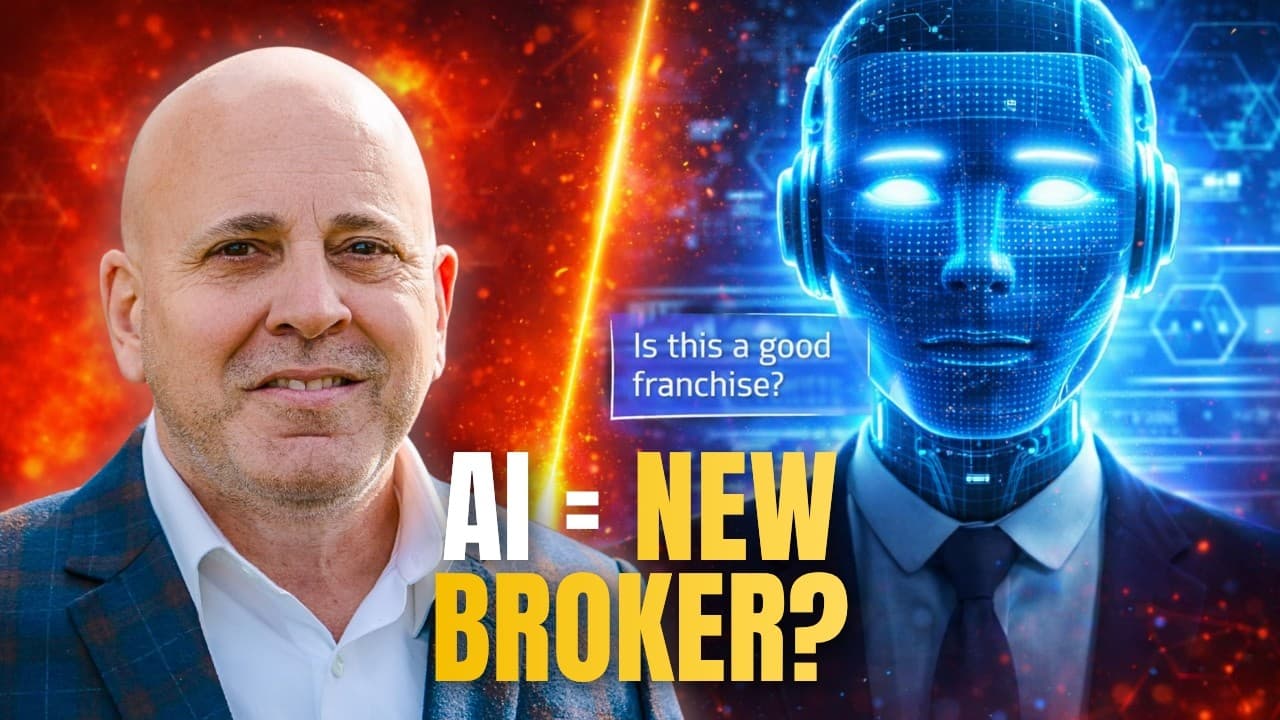
AI is quickly becoming a new franchise broker, changing how candidates research, compare and choose brands before ever speaking to a salesperson.
Growing a Franchise
AI is quickly becoming a new franchise broker, changing how candidates research, compare and choose brands before ever speaking to a salesperson.
Franchise sales are changing quickly as AI becomes a more active part of how candidates research brands. Prospective franchisees are using tools like ChatGPT and Gemini to ask about investment levels, risks and brand differences before they ever speak with a franchisor. Research that once played out through brokers, discovery days or website visits is now happening in real time through AI responses.
“Step one is understanding your current footprint,” said Nick Powills, chief growth officer at Mainland* and chief strategy officer at GoodSpark Franchise Growth Accelerator, on a recent podcast. “There are general searches you can run in Gemini, ChatGPT and Claude. Ask if your franchise is a good franchise, and you’ll get an answer. Then ask what the potential gaps are, and you’ll get that answer back as well.”
The challenge is that AI is doing more than repeating what is already out there. It is making connections, drawing comparisons and helping shape how brands are presented next to other options. As a result, website copy, press coverage and other outside content all play a role in how a brand is categorized. If that story is not clear and consistent, AI may fill in the gaps with outdated or incomplete information.
“The starting line is having a clear understanding of what AI is saying,” said Powills. “Be a candidate of your own franchise and evaluate the pros and cons.”
At the core of this shift is a change in where trust is built. Instead of relying solely on direct conversations, candidates are increasingly trusting AI to guide their research and validate opportunities. That places new pressure on franchisors to not only manage their brand story, but to ensure it is structured, consistent and visible across the sources AI relies on.
“There’s a big opportunity here. We’re at a starting point, or a major acceleration point, in a massive shift,” said Charles Internicola, CEO of GoodSpark. “Information is becoming inexpensive, and people can instantly ask AI about your brand or category. Your challenge, and your opportunity, is to intercept that and feed AI the information that genuinely tells your story and gets you ahead of the curve.”
For franchisors, that means rethinking franchise sales as a process that begins before outreach ever happens. It now starts with how AI understands and presents the brand.
A transcript of Internicola’s and Powills’ discussion has been provided below. It has been edited for brevity, clarity and style.
Charles Internicola: Franchise brands, and really every business, face AI as both a challenge and an opportunity. Today, we’re going to talk about four steps you should be taking right now to AI-proof your franchise sales process, make structured changes to your website and brand story, and energize your franchise sales process through AI SEO and AI-driven franchise sales.
It feels like the world is changing by the second. Progress in one week now feels like what used to take years. We’re going to talk about AI SEO, franchise sales and all the shifts happening right now with AI, LLM models and automation. How does it impact the franchise sales process, and how do you take advantage of it as a franchisor?
This is a big topic for our FranCamp conference in June, but the most important thing today is the foundation. If I’m a franchise brand, there’s the old world that existed just weeks ago, and now everything is AI-driven. The brand story, information about franchise sales, franchise opportunities, whether brokers still have a role and the entire discovery process are all changing. So where is the right starting point to build that foundation?
Nick Powills: Step one is understanding your current footprint. There are general searches you can run in Gemini, ChatGPT and Claude. Ask if your franchise is a good franchise, and you’ll get an answer. Then ask what the potential gaps are, and you’ll get that answer back as well.
As you work through the questions a candidate would ask, you start seeing how you show up. From there, you can decide if you like that narrative, how you would adjust it and what you should do from a process standpoint to create a new narrative. That gives you the pathway to build out the content that needs to integrate, both from a form and function standpoint.
Charles, you do a great job structuring websites so AI can read them, index them and use them as a reference point. Right now, there’s a game to be played. It goes back to early Google SEO, when it was critical before all the algorithm changes. Brands invested heavily to make sure they ranked for their name and category.
Over time, that shifted. The system took over, and there was less you could control outside of content. So first, understand your footprint. Second, understand the format so you know how to build for AI search. Third, put it to work and invest in it.
Franchise brands already have budget buckets like conferences, digital advertising, PR and content. Now there’s a new one, AI SEO. You either pull from other buckets or start budgeting differently. What’s going to happen is the value of the broker will start to decline. Brokers act as coaches, and AI is going to act as a coach. So you want to invest in influencing that “coach.” The starting line is having a clear understanding of what AI is saying. Be a candidate of your own franchise and evaluate the pros and cons.
Internicola: We’re going to move through this quickly, and if you haven’t been to FranCamp, this will be a major focus. Nick’s advice applies to every business. Start by going to different AI models and asking about your brand and your category. Ask what’s a good investment. Evaluate the information, where it’s coming from and how it’s being presented.
The key is shaping it in a genuine way. There’s a big opportunity here. We’re at a starting point, or a major acceleration point, in a massive shift. Information is becoming inexpensive, and people can instantly ask AI about your brand or category. Your challenge, and your opportunity, is to intercept that and feed AI the information that genuinely tells your story and gets you ahead of the curve.
Starting with strategy, understand your sales channels, including brokers. In many ways, AI is becoming the new franchise broker. That’s a mindset shift. The old funnel of trade shows, visits, portals, brokers, websites and traditional research is being disrupted. AI will not only explain your brand, it will evaluate FDDs and compare opportunities. These are data sets you need to understand.
So Nick, if I’m doing my own searches and seeing what AI says about my brand, what should I focus on and change?
Powills: First, build a landing page, an extension of your website, call it your AI FAQ. Start building a heavy content page that answers questions from a buyer’s perspective. Even if you’re just answering a few questions at first, it’s an easy win.
Second, start categorizing and archiving past content. For example, a brand we work with had a QSR magazine cover story that hasn’t been shown to candidates in years. It was a strong PR moment and still carries authority. Go back through your history and identify those signature pieces, then bring them back to life.
Build a blog or content section and aggregate those materials. Many brands have news sections filled with weak content. What matters is authority, and authority comes from credible human sources. Those are two strong starting points.
Internicola: That last point is critical. Authority comes from humans, and third-party validation adds credibility. You can even ask AI what pages it’s referencing about your company and what information would help it better understand your brand.
AI needs to understand what your brand is about, what category you fit into and how you compare. It’s going to classify you — service, retail, restaurant, investment level — in a very mechanical way. You need to feed that data.
Real content matters as well. Podcasts, conversations and older PR pieces all contribute. AI looks for that third-party validation. There are also technical elements like schema and metadata. AI bots are reading behind your pages, so you need to be aware of that.
AI is going to classify your brand, compare you to alternatives and predict buyer fit. Your messaging needs to reflect that. It also needs to go deeper and tell a real story. If you’re featured on third-party sites, bring that back onto your own website and reinforce it.
Nick, AI is constantly answering what the franchise is, who it’s for and why it’s better. Where do you see this going?
Powills: It’s still the Wild West. AI is only as good as the information it pulls, and it hasn’t fully established authority sources yet. For example, I asked ChatGPT to help with an NCAA bracket, and it gave answers with teams that weren’t even playing. It wanted to respond, but the data wasn’t reliable.
That’s the risk. If your content isn’t set up correctly, AI could misrepresent your brand. If there’s outdated or negative information online, even if it’s no longer relevant, AI may surface it. So you have to monitor and shape your presence carefully.
Internicola: It won’t always be this way, but right now it is the Wild West. You can shape your AI story, but you need to do so genuinely. Let’s go through the framework, starting with defining your category.
Powills: This is about going deeper. Saying “low-cost handyman franchise” isn’t enough. Instead, say something like “scalable home service platform for owner-operators.” That positions the opportunity differently and sets expectations. It allows AI to categorize you more accurately instead of lumping you in with everyone else.
Internicola: This is a mindset shift. Move away from generic language and define what makes your model scalable and what transformation it creates. You’re not just defining your category, you’re reshaping it.
Powills: AI ranks categories, not logos. This is your “why you, why now.” It should live in your footer and across your site so there’s consistency. It defines who you’re for and why the opportunity makes sense financially.
Internicola: If your site doesn’t clearly explain your opportunity, AI will overlook you. This is an easy fix. Next is engineering your entity graph.
Powills: This is about consistency across channels, PR, website, listings and everything else. Think about how brands repeat the same message everywhere. Franchise brands don’t always do this well. You need consistent storytelling across all platforms.
Internicola: AI looks for repetition and consistency. If your messaging appears across third-party sites and your own site, it builds authority. Align everything, your website, listings and PR.
Powills: Creating training-style content is critical. If you don’t train AI to tell your story, it won’t tell it correctly. It’s the same as brokers. If you don’t train them, they won’t sell your brand well.
Internicola: Exactly. Finally, build trust signals outside your website, podcasts, interviews, LinkedIn and press, but with real depth and authenticity.
Powills: Podcasts aren’t about audience size. One podcast can help you refine your message. You can turn that content into text, post it on your site and distribute it across channels. One piece can drive multiple outcomes.
Internicola: Thanks for joining us. Come to our FranCamp conference and start working on your website.
Watch the full episode above or on YouTube.
Sign up for the 1851 Franchise newsletter to get our biggest stories before everyone else
By signing up, you agree to our user agreement (including class action waiver and arbitration provisions), and acknowledge our privacy policy.