Buy a Franchise
SPONSORED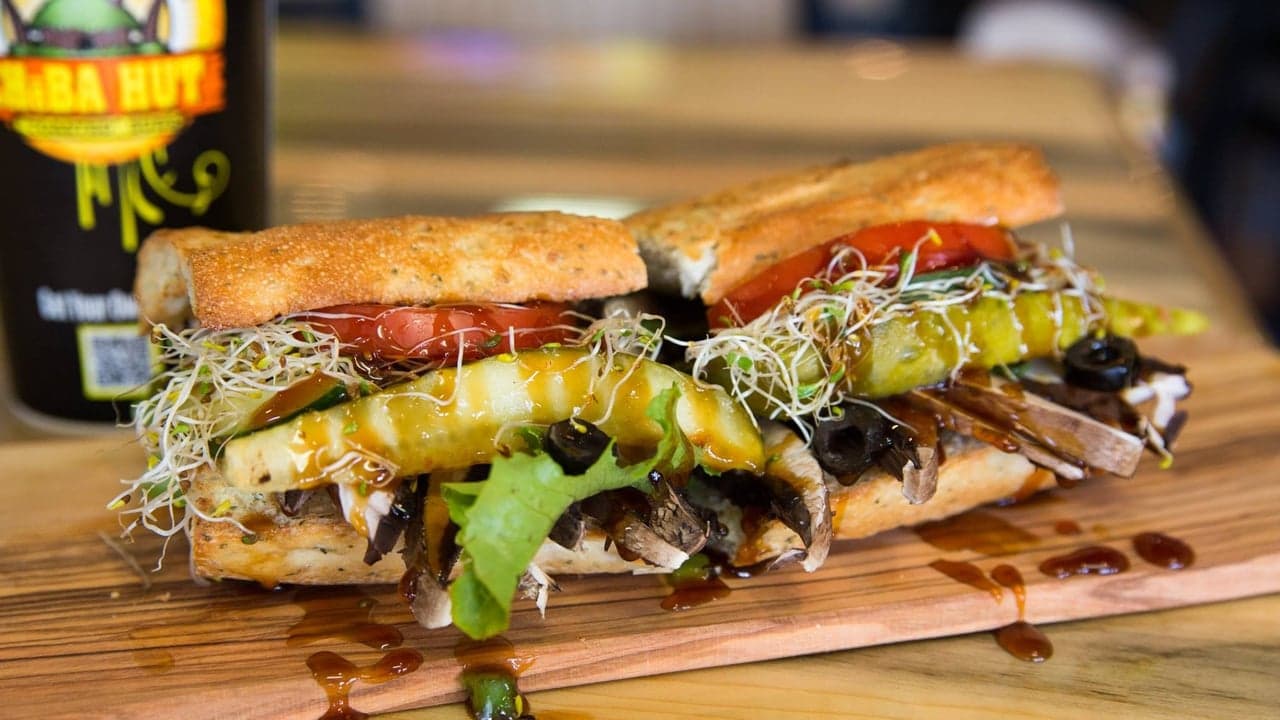
How Cheba Hut Found Broad Appeal with a Niche Theme
After two decades, the marijuana-themed sandwich shop remains a crowd favorite
Buy a Franchise
SPONSOREDAfter two decades, the marijuana-themed sandwich shop remains a crowd favorite
When Scott Jennings opened the first Cheba Hut sandwich shop in Arizona in 1998, “Legalize it” still seemed a far-fetched rallying cry, more a cultural (or counter-cultural) signifier than a political movement. At a time when virtually all restaurants were positioned firmly within the mainstream, Cheba Hut’s explicitly marijuana-themed branding wasn’t just different, it was risky, carrying the potential to alienate consumers who wouldn’t want to be associated with an illicit drug.
And yet, the branding had quite the opposite effect. Rather than turning off customers who didn’t share the brand’s celebrated hobby, Cheba Hut quickly found a wide base of customers across demographics who were excited to try something unique and authentic, something that didn’t feel like the result of focus groups and corporate strategy.
Of course, it helped that the food is good. Not just good, says Jennings, “we have [expletive] great food.” And customers seem to agree. In the 20 years since Jennings founded the brand, Cheba Hut has grown rapidly and consistently, establishing more than 20 locations across seven states.
Today, even as legal, fully incorporated marijuana dispensaries crop up in cities across America, Cheba Hut retains its outsider status.
“We want to keep our edge as we grow,” Jennings said. “We like to poke the bear and mess with people a little bit. We throw parties and we play good music; we’re keeping our street cred.”
And the brand has remained as popular as ever, enjoying large crowds for both lunch and dinner, something most sandwich brands struggle to achieve, if they even stay open for dinner.
“Dinner is a significant sales driver for,” said Cheba Hut COO Marc Torres. “We do 35 percent of our sales after 4 p.m., which is much higher than most other sandwich concepts.”
Much of Cheba Hut’s success at dinner time can be attributed to the full-service bars that most of its restaurants feature.
“Alcohol is one of our key differentiators,” Jennings said. “You don’t find a lot of sub shops with bars in them.”
Alcohol isn’t the only way that Cheba Hut is bucking trends in the quick-service segment. For one thing, it’s not very quick.
“We have signs up that say ‘It’ll be a miracle if you get your sub in five minutes,’” Jennings said. “We’re quick-service, but we’re not fast food.”
The extra wait has proven a non-issue for customers, who by and large are more interested in quality than speed. And Cheba Hut has made quality their top priority, appealing to adventurous and sophisticated eaters.
“We are foodies, and our customers are foodies,” Jennings said. “Our food can stand up to anybody’s. Our menu is designed to hit a number of different taste profiles. All of our food is made in-house with proprietary recipes and ingredients, and we encourage experimentation. Some of our best subs have come from franchisees.”
Even after 20 years, Jennings says Cheba Hut is continuing to innovate, finding new ways to subvert the QSR and sandwich segments and surprise and delight its customers, but the brand’s founding principle, to embody the relaxed, inclusive and decidedly non-corporate vibe of weed culture, remains its guiding light and the biggest draw for customers.
“We don’t care what you look like, we want our guests to be themselves and have fun, and people love that,” Jennings said. “People come to Cheba Hut in groups. They aren’t just filling their bellies, they are coming for the experience, and they want to share that with friends.”
Sign up for the 1851 Franchise newsletter to get our biggest stories before everyone else
By signing up, you agree to our user agreement (including class action waiver and arbitration provisions), and acknowledge our privacy policy.