Growing a Franchise
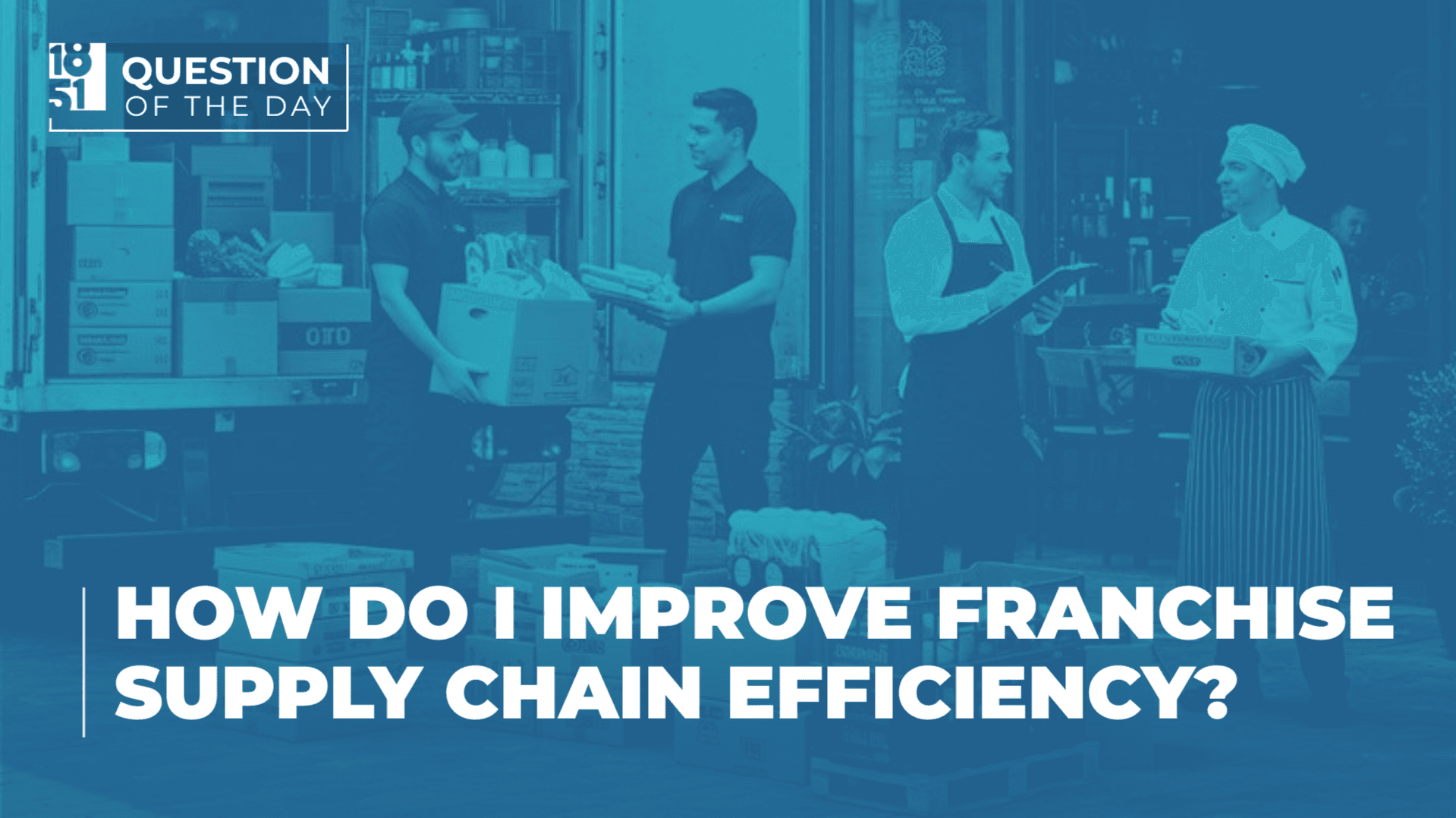
How Do I Improve Franchise Supply Chain Efficiency?
Key considerations for a resilient franchisee supply chain include scalability and a healthy balance between cost, quality and profitability.
Growing a Franchise
Key considerations for a resilient franchisee supply chain include scalability and a healthy balance between cost, quality and profitability.
How do I improve the franchisee supply chain? This is a question that has become more relevant in recent times due to ongoing supplier consolidation, unpredictable cost swings, and geopolitical disruptions. Now, franchisees are focusing on building adaptable and compliant supply networks.
“A few years ago, the main concern was simply getting product at all; now, it’s about building a supply network that can adapt and withstand shocks,” said Eleanor Vaida Gerhards, co-chair and partner of Fox Rothschild LLP’s franchising practice group. “There’s also been a noticeable shift on the regulatory front — tariffs, ESG sourcing mandates and food safety traceability requirements have added layers of complexity that many emerging brands weren’t initially set up to handle.”
The keys to successfully scaling and improving a franchise supply chain entail standardizing outsourcing beyond localized sourcing to centralized sourcing, anticipating and solving for logistical challenges and ensuring that legal governance keeps pace with expansion.
“In my experience, there are three things that become absolutely essential as a brand grows,” Gerhards said. “First, a centralized but flexible approved supplier program with clear qualification standards, audit protocols and performance metrics built into your supply agreements. Second, a distribution strategy that accounts for regional variation — what works for 50 units in the Southeast will likely break when you add units in the Mountain West or internationally.”
As the franchise supply chain expands, it is important for franchisees to make sure that their legal and compliance standards are set up to scale as well.
“Third — and this is something that often gets overlooked until it’s too late — is contractual infrastructure,” Gerhards said. “Franchise agreements, supply contracts and purchasing cooperative documents need to clearly allocate risk, define quality standards and give the franchisor meaningful enforcement tools, but without strangling franchisee autonomy.”
A good balance between costs, quality and profitability can be achieved through building cohesion through transparency, implementing tiered sourcing strategies and leveraging the collective buying power of purchasing cooperatives and structured rebates to lower the cost of goods sold.
For franchisors, having mandated suppliers is a key way to protect the quality of the brand and the customer experience. To maintain these benefits and acknowledge the local nature of the franchisee, franchisors can adopt a flexible approach where sourcing economics are transparent and there is flexibility between how sourcing is done for core items versus commodity items. And finally utilizing the buying power of the franchisee to drive down costs.
“I’ve found that transparency is the single most powerful tool in this area. When franchisees understand the “why” behind sourcing decisions — including what alternatives were considered and why they were rejected — you get buy-in rather than resistance,” Gerhards said. “The brands that get this wrong are the ones where franchisees start to believe the franchisor is making money off the supply chain instead of through it. That suspicion, once it takes root, is poison to system cohesion.”
A sustainable franchise supply chain strategy has to be holistic and strike the right balance between logistics and a strategic foresight that is supported by a scalable legal framework.
"One mistake I often see is treating supply chain governance purely as an operations issue, rather than recognizing its strategic and legal dimensions.” Gerhards said. “I’ve seen emerging franchisors bolt on supply chain terms as an afterthought in their FDD and franchise agreement, only to discover at 200 units that they lack the contractual authority to enforce sourcing standards or pivot suppliers quickly.”
One of the other pitfalls that Franchisors often step into is that of premature centralization where they force a national distribution model on a regional footprint before achieving the volume leverage required to secure low pricing.
“Another common error is over-centralizing too early — mandating a single national distributor before the system has the volume to command favorable terms, which can punish early franchisees on cost,” Gerhards said.
Franchisors need to make sure that they have real continuity plans that are resilient under real-world pressures. This necessitates active secondary vendor relationships with partners who are pre-qualified, contracted and ready.
For franchisors, improving supply chain efficiency is not just about chasing lower vendor costs. It also means putting the right standards, contracts and backup plans in place before the system outgrows them.
To find out more information about franchisee supply chains, please see these related articles on 1851:
Sign up for the 1851 Franchise newsletter to get our biggest stories before everyone else
By signing up, you agree to our user agreement (including class action waiver and arbitration provisions), and acknowledge our privacy policy.