Growing a Franchise
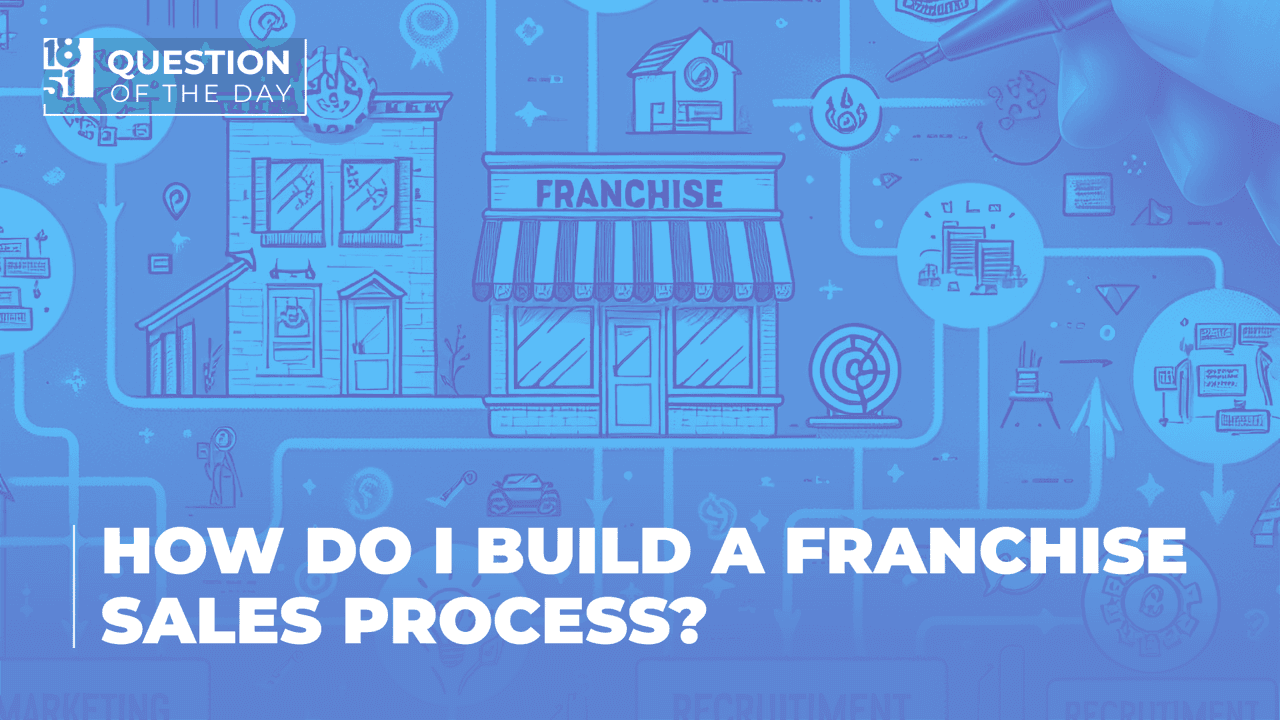
How to Build a Franchise Sales Process That Works and Scales
Franchise growth depends on a repeatable sales process that attracts the right operators and sets them up for long-term success.
Growing a Franchise
Franchise growth depends on a repeatable sales process that attracts the right operators and sets them up for long-term success.
Building a franchise sales process is not about speed. It is about consistency, alignment and long-term performance. Brands that approach development with structure tend to attract better candidates and create stronger outcomes at the unit level. Without that discipline, early growth can create problems that are difficult to fix later.
Before any sales efforts begin, the business itself must be ready to scale. That means the concept works financially, can operate without constant owner involvement and is simple enough for others to replicate.
“Building an effective franchise sales process starts with making sure the business is truly ready to franchise,” said Austin Titus, president of Accurate Franchising. “That means the model must be financially successful, able to run independently of the owner and structured in a way that a franchisee can realistically replicate.”
That preparation extends beyond performance into structure. Franchisors need documented systems, defined processes and clear expectations that can be taught and repeated across locations. From there, the foundation must be built correctly. Strategic planning, operations manuals, training systems, legal documents and franchise marketing materials must all be in place.
When those elements are established early, brands can scale with more control. It also creates a more consistent experience for candidates evaluating the opportunity.
A franchise sales process should not end when a deal is signed. The structure behind it needs to support franchisees after they enter the system.
“Once sales begin, the process must be supported by a clear development strategy, the right sales messaging and a team that knows how to present the opportunity effectively,” Titus said. “Most importantly, franchise sales should never be treated as the finish line.”
That approach shifts the focus from transactions to outcomes. Franchisors that think beyond the sale are better positioned to create consistency across locations and support long-term performance.
Generating leads is only one part of the process. Franchisors also need to ensure they are bringing in candidates who align with the brand and understand the business. One of the smartest ways to do this early is by fully leveraging their existing customer base before spending on paid advertising.
“Those people already know the brand, trust it and often become the most aligned early franchisees because they are buying into something they already believe in,” Titus said. “They tend to convert faster, ask better questions during the sales process and require less convincing on the value of the model because they have already experienced it firsthand.”
As brands expand their reach, diversification across channels becomes important. Relying too heavily on a single lead source can limit growth and reduce the quality of candidates entering the pipeline. Diversification can include things like lead-generation strategy across channels such as social media, Google Ads, YouTube, trade shows and in-person networking.
“Just as important, they need to filter for fit,” Titus said. “A good candidate is not simply someone with capital. It is someone who believes in the brand, understands the business and is a fit for the system. Early on, franchisors should be especially selective because the first franchisees will shape the brand’s momentum, reputation and future validation story.”
As the system grows, validation becomes one of the most important parts of the franchise sales process. Prospective franchisees want to hear directly from operators who are already in the system.
“It is often the strongest proof that the franchise opportunity works in the real world,” Titus said. “Especially for emerging brands, the first franchisees matter more than anything.”
If those early operators are successful, they become living proof that the system works. That validation becomes a powerful tool in the sales process and helps future candidates make more informed decisions. When a current franchisee can speak positively about their own experience, the entire system gets stronger.
A structured franchise sales process creates a stronger foundation for growth. It aligns the brand, the candidate and the expectations from the start.
When franchisors focus on preparation, candidate fit and real-world validation, they build a system that can scale without losing consistency. That approach does not just drive unit growth. It supports performance across the entire network.
Want to learn more about how 1851 helps franchisors grow their franchises with confidence? Visit www.1851growthclub.com and see what we can do for you.
Sign up for the 1851 Franchise newsletter to get our biggest stories before everyone else
By signing up, you agree to our user agreement (including class action waiver and arbitration provisions), and acknowledge our privacy policy.