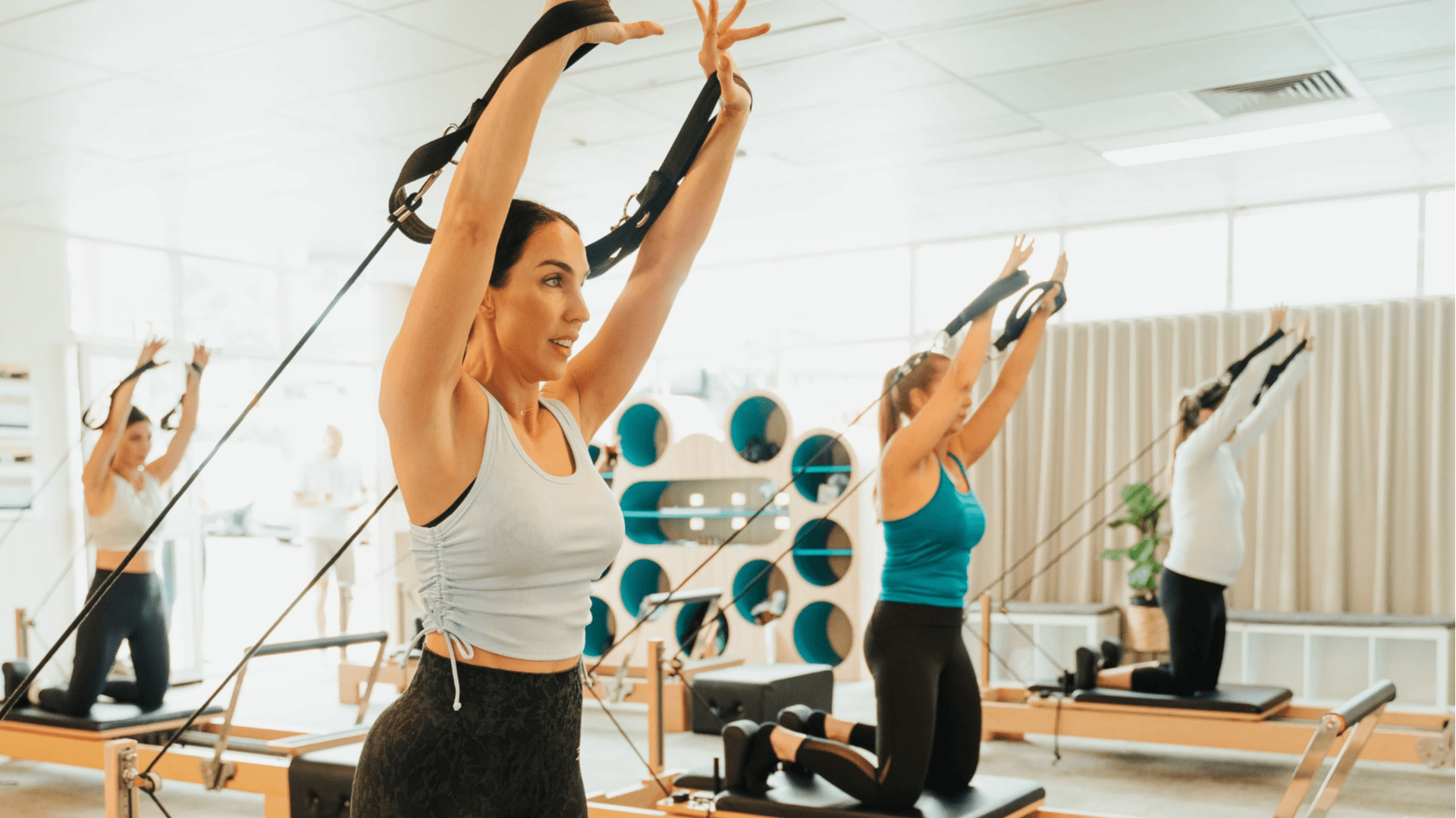
Reformer Pilates is booming. But for someone who has never stepped inside a Pilates studio, that popularity can also make the category feel intimidating. Social media is filled with experienced fitness influencers performing advanced movements on reformers. Traditional Pilates carries associations with dance and ballet. And for millions of people who have never felt comfortable in a gym, walking into any boutique fitness studio can feel like entering a space built for someone else.

inLIFE Wellness, the fast-growing reformer Pilates franchise, is taking a different approach.

Founded by Scott Capelin in Sydney in 2019 after more than two decades in the fitness industry, inLIFE was built around a simple idea: exercise should be a positive part of someone's day, not something they dread. The brand combines reformer Pilates with barre, strength training, cardio, mobility and recovery, while intentionally creating an environment where beginners feel just as comfortable as experienced members.

"I think there are more unfit people out there in the community than fit people, and we just want to be a place where people feel comfortable coming," Capelin said. "Fifty percent of people who come to us have never been to a gym or studio before."

That ability to bring new consumers into fitness, rather than simply compete for people already taking Pilates classes, is becoming one of inLIFE Wellness' strongest differentiators as the brand expands.

Making Pilates Feel Accessible to Everyone

For Capelin, reformer Pilates remains the foundation of the inLIFE experience. The discipline has existed for more than a century, but consumer interest has exploded over the past decade as Pilates has moved deeper into the mainstream. Capelin believes that staying true to what makes Pilates appealing, particularly its emphasis on controlled, lower-impact movement, gives inLIFE a strong foundation for long-term consumer demand.

"Reformer Pilates has been around for almost 120 years," Capelin said. "I say that because it's not a fad. It has stood the test of time. It's just become so much more commercial and mainstream."

At inLIFE Wellness, Reformer Pilates is positioned as something consumers can build from, regardless of where they begin. Adjustable resistance allows exercises to be modified for different ability levels, meaning a first-time member and a more experienced Pilates enthusiast can participate in the same studio environment without needing the same level of strength or experience.

That accessibility is particularly important given the customer inLIFE has attracted. According to brand research, roughly 70% of members had never tried reformer Pilates before joining, while approximately half had never previously held a gym membership.

Capelin sees those numbers as evidence that the traditional fitness industry has left a significant portion of the population underserved.

"If you look on Instagram, you see a lot of skinny fitness model influencers doing some pretty unachievable things on a Pilates machine," he said. “You have to wonder what makes somebody get to the age of 50 and, up until that point in their life, think the gym isn't for them.”

inLIFE's answer is not to make exercise less effective. It is to make the experience surrounding it less intimidating. The brand describes its philosophy as moving away from the traditional "sweat and grunt" fitness culture in favor of sustainable movement and a supportive environment where people across fitness levels can feel comfortable.

More Than Just Reformer Pilates

While Reformer Pilates gets many members through the door, variety is one of the biggest reasons inLIFE believes they stay.

Rather than operating as a single-modality studio, inLIFE has developed an extensive schedule that uses reformer Pilates as a foundation while incorporating other forms of movement.

"People come to inLIFE Wellness for Reformer Pilates, and that's why they stay," Capelin said. "But we've got this whole additional range of classes that are fresh, fun, unique and innovative, where reformer Pilates is the foundation, but we mix it up with strength training, circuit training, cardio work, interval training and barre."

The result is a class schedule designed to accommodate different goals, moods and fitness levels.

Members who want traditional reformer work can focus on Pilates. Someone looking for more strength can take Lift, which combines reformer exercises with weight training, or Total Body Conditioning, which centers on full-body resistance training. Shape combines Pilates with muscular endurance work, while Streamline incorporates dumbbells, resistance bands and bodyweight movements.

Those looking for a more energetic workout can choose Athletica, which alternates time on the reformer with Tabata-style intervals, or Powerhouse, which brings together Pilates and cardio boxing. Reformer Cardio Circuit alternates Pilates stations with exercises using equipment such as dumbbells, barbells, balls and bands.

At the other end of the spectrum, Zen Slow Flow combines gentle yoga-inspired movements with reformer stretching, giving members an opportunity to focus on mobility, flexibility, breathing and recovery.

Then there are formats such as Mash Up, which deliberately combines Pilates, barre, strength training, mat work, HIIT, boxing, bands, dumbbells and other exercises to keep both the body and mind engaged.

"From a consumer perspective, they're going to come in and get more than just Reformer Pilates," Capelin said. "My belief with innovation is you don't need to reinvent the wheel. You've got to be just 5% different and you're perceived as very different."

Building a Studio People Actually Want to Visit

Class variety is only one part of inLIFE's consumer proposition. The other is how members feel when they walk through the door.

Capelin's experience spans everything from large health clubs with thousands of members to small personal training studios. After decades in fitness, he came to believe that the industry sometimes focuses so heavily on the workout itself that it overlooks the emotional experience surrounding exercise.

inLIFE was designed to make the studio a positive highlight in a member's day or week. The goal is for people to feel comfortable, enjoy moving, interact with instructors and other members, have a laugh and leave feeling better than when they arrived.

"The big thing that our members get is variety at a price point that's great value, with a really positive, warm, welcoming and inclusive studio culture," Capelin said. "Gyms can be intimidating, and Pilates can also be intimidating to people at times because it's got a lot of connections with dancing and ballet."

The studio model is therefore intentionally community-oriented. Rather than working out alone in a large gym, members participate in small-group classes with direct instructor guidance and social accountability. The brand sees that combination of instruction and connection as particularly important for people who might otherwise struggle to maintain a fitness routine.

Even inLIFE's instructors often emerge from that community. Many began as members before becoming passionate enough about the experience to train as instructors themselves.

That creates a different dynamic inside the studio. The person leading a class may understand exactly what it feels like to walk into inLIFE as a beginner because they once did the same thing.

Variety and Culture Are Translating Into Retention

Ultimately, a fitness concept only works if people keep showing up. For inLIFE, member retention may be one of the strongest indicators that its consumer positioning is resonating.

"Our member retention is over double the industry average," Capelin said. “Industry-average member retention is six months, and we've got a 15-month member lifespan.”

That retention reflects several elements working together. Members have enough class variety to avoid doing the same workout indefinitely. Beginners can enter without feeling that they need to already understand Pilates. Experienced members can continue progressing. Strength, cardio and recovery can coexist within the same membership. And the social environment gives consumers another reason to return beyond the physical workout itself.

The brand has also positioned its membership around value. Capelin said an unlimited membership is priced at $199, giving members access to a much broader mix of exercise modalities than a traditional Pilates-only membership.

For inLIFE, that combination creates the behavior every fitness brand wants: joining becomes a routine, and the routine becomes a relationship with the studio.

Why the Consumer Experience Positions inLIFE for Growth

inLIFE's growth to approximately 70 locations provides perhaps the clearest evidence of the loyalty surrounding the brand. "We have 70 locations and we've done no franchise marketing," Capelin said. “I think we're doing really well with the culture piece and creating something people want to be part of. Most of our studios have come from instructors and members.”

That creates a powerful consumer-to-growth cycle.

A first-time member discovers reformer Pilates in an environment that does not make them feel out of place. They stay because there are enough class formats to keep the experience fresh. They develop relationships with instructors and other members. Some become instructors themselves. And in some cases, members and instructors ultimately become studio owners.

As inLIFE expands further into the United States, the opportunity is therefore not simply about participating in growing consumer interest in Pilates. The brand is trying to expand who feels that Pilates is for them in the first place.

"There's a market and a workout for everyone," Capelin said. "We just want to be a place where people feel comfortable coming."

To find out more information on costs to buy this franchise, please visit https://1851franchise.com/inlife-wellness

Reformer Pilates is booming. But for someone who has never stepped inside a Pilates studio, that popularity can also make the category feel intimidating. Social media is filled with experienced fitness influencers performing advanced movements on reformers. Traditional Pilates carries associations with dance and ballet. And for millions of people who have never felt comfortable in a gym, walking into any boutique fitness studio can feel like entering a space built for someone else.

inLIFE Wellness, the fast-growing reformer Pilates franchise, is taking a different approach.

Founded by Scott Capelin in Sydney in 2019 after more than two decades in the fitness industry, inLIFE was built around a simple idea: exercise should be a positive part of someone's day, not something they dread. The brand combines reformer Pilates with barre, strength training, cardio, mobility and recovery, while intentionally creating an environment where beginners feel just as comfortable as experienced members.

"I think there are more unfit people out there in the community than fit people, and we just want to be a place where people feel comfortable coming," Capelin said. "Fifty percent of people who come to us have never been to a gym or studio before."

That ability to bring new consumers into fitness, rather than simply compete for people already taking Pilates classes, is becoming one of inLIFE Wellness' strongest differentiators as the brand expands.

Making Pilates Feel Accessible to Everyone

For Capelin, reformer Pilates remains the foundation of the inLIFE experience. The discipline has existed for more than a century, but consumer interest has exploded over the past decade as Pilates has moved deeper into the mainstream. Capelin believes that staying true to what makes Pilates appealing, particularly its emphasis on controlled, lower-impact movement, gives inLIFE a strong foundation for long-term consumer demand.

"Reformer Pilates has been around for almost 120 years," Capelin said. "I say that because it's not a fad. It has stood the test of time. It's just become so much more commercial and mainstream."

At inLIFE Wellness, Reformer Pilates is positioned as something consumers can build from, regardless of where they begin. Adjustable resistance allows exercises to be modified for different ability levels, meaning a first-time member and a more experienced Pilates enthusiast can participate in the same studio environment without needing the same level of strength or experience.

That accessibility is particularly important given the customer inLIFE has attracted. According to brand research, roughly 70% of members had never tried reformer Pilates before joining, while approximately half had never previously held a gym membership.

Capelin sees those numbers as evidence that the traditional fitness industry has left a significant portion of the population underserved.

"If you look on Instagram, you see a lot of skinny fitness model influencers doing some pretty unachievable things on a Pilates machine," he said. “You have to wonder what makes somebody get to the age of 50 and, up until that point in their life, think the gym isn't for them.”

inLIFE's answer is not to make exercise less effective. It is to make the experience surrounding it less intimidating. The brand describes its philosophy as moving away from the traditional "sweat and grunt" fitness culture in favor of sustainable movement and a supportive environment where people across fitness levels can feel comfortable.

More Than Just Reformer Pilates

While Reformer Pilates gets many members through the door, variety is one of the biggest reasons inLIFE believes they stay.

Rather than operating as a single-modality studio, inLIFE has developed an extensive schedule that uses reformer Pilates as a foundation while incorporating other forms of movement.

"People come to inLIFE Wellness for Reformer Pilates, and that's why they stay," Capelin said. "But we've got this whole additional range of classes that are fresh, fun, unique and innovative, where reformer Pilates is the foundation, but we mix it up with strength training, circuit training, cardio work, interval training and barre."

The result is a class schedule designed to accommodate different goals, moods and fitness levels.

Members who want traditional reformer work can focus on Pilates. Someone looking for more strength can take Lift, which combines reformer exercises with weight training, or Total Body Conditioning, which centers on full-body resistance training. Shape combines Pilates with muscular endurance work, while Streamline incorporates dumbbells, resistance bands and bodyweight movements.

Those looking for a more energetic workout can choose Athletica, which alternates time on the reformer with Tabata-style intervals, or Powerhouse, which brings together Pilates and cardio boxing. Reformer Cardio Circuit alternates Pilates stations with exercises using equipment such as dumbbells, barbells, balls and bands.

At the other end of the spectrum, Zen Slow Flow combines gentle yoga-inspired movements with reformer stretching, giving members an opportunity to focus on mobility, flexibility, breathing and recovery.

Then there are formats such as Mash Up, which deliberately combines Pilates, barre, strength training, mat work, HIIT, boxing, bands, dumbbells and other exercises to keep both the body and mind engaged.

"From a consumer perspective, they're going to come in and get more than just Reformer Pilates," Capelin said. "My belief with innovation is you don't need to reinvent the wheel. You've got to be just 5% different and you're perceived as very different."

Building a Studio People Actually Want to Visit

Class variety is only one part of inLIFE's consumer proposition. The other is how members feel when they walk through the door.

Capelin's experience spans everything from large health clubs with thousands of members to small personal training studios. After decades in fitness, he came to believe that the industry sometimes focuses so heavily on the workout itself that it overlooks the emotional experience surrounding exercise.

inLIFE was designed to make the studio a positive highlight in a member's day or week. The goal is for people to feel comfortable, enjoy moving, interact with instructors and other members, have a laugh and leave feeling better than when they arrived.

"The big thing that our members get is variety at a price point that's great value, with a really positive, warm, welcoming and inclusive studio culture," Capelin said. "Gyms can be intimidating, and Pilates can also be intimidating to people at times because it's got a lot of connections with dancing and ballet."

The studio model is therefore intentionally community-oriented. Rather than working out alone in a large gym, members participate in small-group classes with direct instructor guidance and social accountability. The brand sees that combination of instruction and connection as particularly important for people who might otherwise struggle to maintain a fitness routine.

Even inLIFE's instructors often emerge from that community. Many began as members before becoming passionate enough about the experience to train as instructors themselves.

That creates a different dynamic inside the studio. The person leading a class may understand exactly what it feels like to walk into inLIFE as a beginner because they once did the same thing.

Variety and Culture Are Translating Into Retention

Ultimately, a fitness concept only works if people keep showing up. For inLIFE, member retention may be one of the strongest indicators that its consumer positioning is resonating.

"Our member retention is over double the industry average," Capelin said. “Industry-average member retention is six months, and we've got a 15-month member lifespan.”

That retention reflects several elements working together. Members have enough class variety to avoid doing the same workout indefinitely. Beginners can enter without feeling that they need to already understand Pilates. Experienced members can continue progressing. Strength, cardio and recovery can coexist within the same membership. And the social environment gives consumers another reason to return beyond the physical workout itself.

The brand has also positioned its membership around value. Capelin said an unlimited membership is priced at $199, giving members access to a much broader mix of exercise modalities than a traditional Pilates-only membership.

For inLIFE, that combination creates the behavior every fitness brand wants: joining becomes a routine, and the routine becomes a relationship with the studio.

Why the Consumer Experience Positions inLIFE for Growth

inLIFE's growth to approximately 70 locations provides perhaps the clearest evidence of the loyalty surrounding the brand. "We have 70 locations and we've done no franchise marketing," Capelin said. “I think we're doing really well with the culture piece and creating something people want to be part of. Most of our studios have come from instructors and members.”

That creates a powerful consumer-to-growth cycle.

A first-time member discovers reformer Pilates in an environment that does not make them feel out of place. They stay because there are enough class formats to keep the experience fresh. They develop relationships with instructors and other members. Some become instructors themselves. And in some cases, members and instructors ultimately become studio owners.

As inLIFE expands further into the United States, the opportunity is therefore not simply about participating in growing consumer interest in Pilates. The brand is trying to expand who feels that Pilates is for them in the first place.

"There's a market and a workout for everyone," Capelin said. "We just want to be a place where people feel comfortable coming."

To find out more information on costs to buy this franchise, please visit https://1851franchise.com/inlife-wellness

Don’t Miss the Next Big Franchise Story

Sign up for the 1851 Franchise newsletter to get our biggest stories before everyone else

By signing up, you agree to our user agreement (including class action waiver and arbitration provisions), and acknowledge our privacy policy.

Luca Piacentini

About the Author

Luca Piacentini

Follow

1851 Managing Editor

All Articles

No related articles found