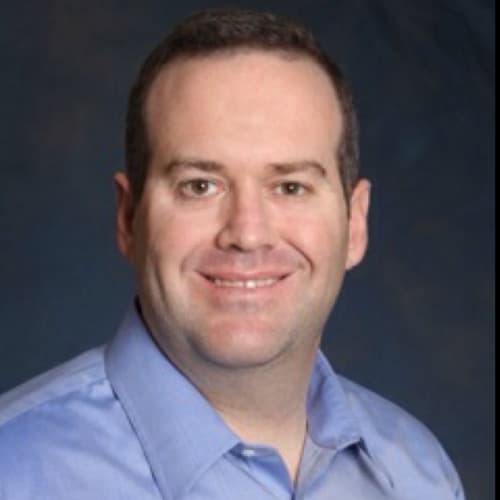
Franchise Sales Leader: JD Tulloch
Brand: Rush Bowls
JD Tulloch, vice president of franchise development and technology at Rush Bowls, started at the brand as an hourly employee. He was 18, attending the University of Colorado Boulder and working shifts before Rush Bowls had franchised a single location. He made bowls and closed the shop at night.
Tulloch said candidates now arrive with much of their research already done. Many have looked into the brand and the franchise industry before they ever fill out an inquiry form.
Tulloch spoke with 1851 Franchise about how the franchise buyer has changed and why he rebuilt the way his team prioritizes candidates.
1851 Franchise: Can you tell us about your background and how you entered the franchise world?
JD Tulloch: My path into franchising wasn't planned. I didn't come from a family of entrepreneurs and I wasn't talking about multi-unit operations at the dinner table. I came in through the back door. I started at Rush Bowls at 18 as an hourly employee while attending CU Boulder, before the brand had franchised a single unit. I was making bowls, running the blender and closing up at night. That kind of work teaches you things a classroom never could: how to move with urgency, how to treat a customer who's having a bad day.
What changed everything was watching the franchising process begin from the inside. I saw the first franchise agreements get signed and new owners come in — people who believed in the concept enough to bet their own capital on it. I saw how much rode on whether we gave them the tools and the systems to succeed. That's when something clicked. It wasn't a smoothie bowl brand anymore. It was people's livelihoods and their families' futures, and someone had to take that seriously.
So I started asking questions and leaning into every conversation I could have with the people building the franchise system. I studied the brand from the inside out, not just the menu and the operations but the economics, the real estate strategy and the franchisee relationships. Over time, the role I was playing started to look a lot like franchise development before I had the title. What I carry into every candidate conversation now is that I know this brand from the ground up. Not from a pitch deck, not from a Franchise Disclosure Document, but from standing behind the counter making the product with my own hands. That's hard to fake, and in a franchise built on trust it matters.
1851: The franchise buyer has changed dramatically over the past few years. What are the biggest shifts you're seeing, and how has your sales approach evolved?
Tulloch: Today's buyer comes in having already done 60% to 70% of their homework before they ever talk to us. They've watched our franchisee testimonial videos, found our FDD online and read it, and checked out our locations, all before filling out an inquiry form. The information advantage franchisors used to hold in the early stages is gone, and that's made us better. Our first conversation is no longer an introduction to the brand. It's a qualification conversation on both sides.
I'm not pitching Rush Bowls to a stranger. I'm talking to someone who already knows the concept and wants to know whether we believe in them and whether we're the right fit. That requires a different posture. Less broadcast, more dialogue. The other shift is the emotional driver. We've seen a meaningful increase in buyers motivated by something beyond financial return. They want ownership of their time and work that feels meaningful. Health, community and sustainability aren't marketing buzzwords for us. They're reasons people choose this brand over others with comparable economics. When a candidate tells me they want to build something they're proud of in their community, that's not a soft reason. That's a retention signal.
1851: What separates the highest-performing franchise sales organizations from those that struggle to attract qualified franchisees?
Tulloch: It starts with how the franchise development team is positioned inside the company. The first piece is whether franchise development is treated as a transactional function or a strategic one. In organizations that struggle, development sits in its own silo, the team is measured purely on deals closed and there's limited connection between what development promises during the sales process and what operations can actually deliver after the agreement is signed. That disconnect is lethal. Candidates talk to existing franchisees, and if what they hear during validation doesn't match what they were told during discovery, you have a massive problem. The best development organizations run on radical alignment between sales, operations, marketing and training. What we sell is what gets delivered, and that consistency turns franchisees into recruiters.
The second piece is what I'd call institutional storytelling. Struggling organizations rely on the franchisor's voice to carry the sales process, whether that's the sales team, brochures or pitch decks. High-performing systems build an ecosystem of proof that operates independently of what the development team says. Testimonial videos, social content that shows real locations and real customers, and validating franchisees who are enthusiastic and prepared to take calls. When a prospect is doing due diligence at 11 o'clock on a Tuesday night, the question is what they find when they go looking. The best organizations have intentionally engineered that discovery experience.
Those organizations also believe they're doing candidates a favor by bringing them into the system. No desperation, no pressure, no manufactured urgency. When a development team operates from a position of selectivity, candidates feel it.
1851: How does your team build credibility with candidates throughout the discovery process, and what mistakes do you see brands making?
Tulloch: Trust isn't built in a single conversation. It's built or destroyed across every touchpoint in the discovery process, starting long before a candidate speaks to anyone on my team. Our approach is simple. We lead with transparency and we never oversell. When a candidate asks a hard question about a market that's underperformed, an operational challenge we faced or a franchisee who struggled, we answer directly.
Candidates are sophisticated enough to know no brand has a perfect story. What they're testing is whether you'll be straight with them when things get hard. Pass that test and you've built the foundation of a long-term relationship. Fail it, and they catch you spinning or omitting, and you've lost them permanently. They'll tell others too.
The mistakes are predictable. The biggest is overpromising during the sales process and underdelivering after the agreement is signed. That poisons the validation pool for every candidate who comes after. The second is treating every candidate identically regardless of fit. When a brand is clearly willing to sell to anyone, it signals to qualified buyers that being in the system doesn't mean much. Selectivity is itself a trust signal. Brands that say yes to everyone end up with a franchisee base that says nothing good on validation calls.
1851: What was the most impactful change your franchise development team made this year, and what did it deliver?
Tulloch: The most impactful change was a simple one, and that's what made it effective. We stopped treating all leads equally and built a candidate prioritization framework. Before that, like a lot of development teams, we were working leads roughly in the order they came in. First come, first served. That sounds logical until you realize you're spending the same amount of time on a first-time buyer with $20,000 in liquid capital as on an experienced operator seeking a five-unit territory in a market we've been trying to enter.
We built a scoring model around four variables. Operator experience, liquid capital, geography relative to our expansion priorities and brand alignment. That changed the sequencing of every conversation we have. Our average time to close dropped because we spent our best energy on the candidates most likely to close and succeed. Our validation scores with franchisees went up because the franchisees we were adding were performing and saying positive things to the next wave of candidates.
What I'd want other development leaders to take from this is that the leverage in franchise sales isn't in working harder. It's in working the right opportunities with the right intensity at the right time. Teams that build discipline around prioritization outperform those chasing volume.
1851: What advice would you give an emerging brand looking to accelerate development without sacrificing franchisee quality?
Tulloch: Invest in your existing franchisees before you invest in finding new ones. That's probably not what people expect to hear from someone whose job is to grow the system, but it's the most strategically sound advice I can give. I've watched too many emerging brands make the opposite mistake. In an emerging brand, your existing franchisees are your development engine. They're your marketing department and your most credible voice to every candidate deciding whether to trust you with their life savings.
If your franchisees are thriving, supported and proud of what they've built, your development pipeline almost takes care of itself. Candidates feel that during validation. The energy of a healthy system is palpable, and it accelerates growth faster than any marketing campaign. So before you pour budget into lead generation, broker networks or trade show booths, walk your existing franchise system and ask honestly whether each franchisee in it would enthusiastically recommend your brand to someone they care about.
Want to learn more about how 1851 helps franchisees find the right franchise opportunity? Visit www.1851growthclub.com and start your journey.